



Community hub
Recent from talks
Knowledge base stats:
Talk channels stats:
Members stats:
Architecture of Peru
Peruvian architecture is the architecture carried out during any time in what is now Peru, and by Peruvian architects worldwide. Its diversity and long history spans from ancient Peru, the Inca Empire, Colonial Peru to the present day.
Peruvian colonial architecture is the conjunction of European styles exposed to the influence of indigenous imagery. Early academia has tended to view the Spanish architectural and religious takeover as complete and swift, but revisionist history emphasizes the lasting role of the indigenous in religious architecture. Two of the most well-known examples of the Renaissance period are the Cathedral of Santo Domingo and the Santa Clara church in Cusco.
After this period, cultural mixture reached richer expression in the Baroque. Some examples of Baroque architecture in Peru are the convent of San Francisco de Lima, the church of the Compañía and the facade of the University of Cuzco and, overall, the churches of San Agustín and Santa Rosa of Arequipa, its more beautiful exponents.
The wars of independence left a creative emptiness that Neoclassicism of French inspiration could just fill. The 20th century is characterized by eclecticism, to which the constructive functionalism has been against. The most considerable example is Plaza San Martín in Lima.
Peruvian architecture is surrounded by a wide range of elements from many architectures: its origins date back to the structures of the Incas, and later to colonial-era buildings, and Peruvian architects' transformation based on Baroque and Neoclassic European styles.
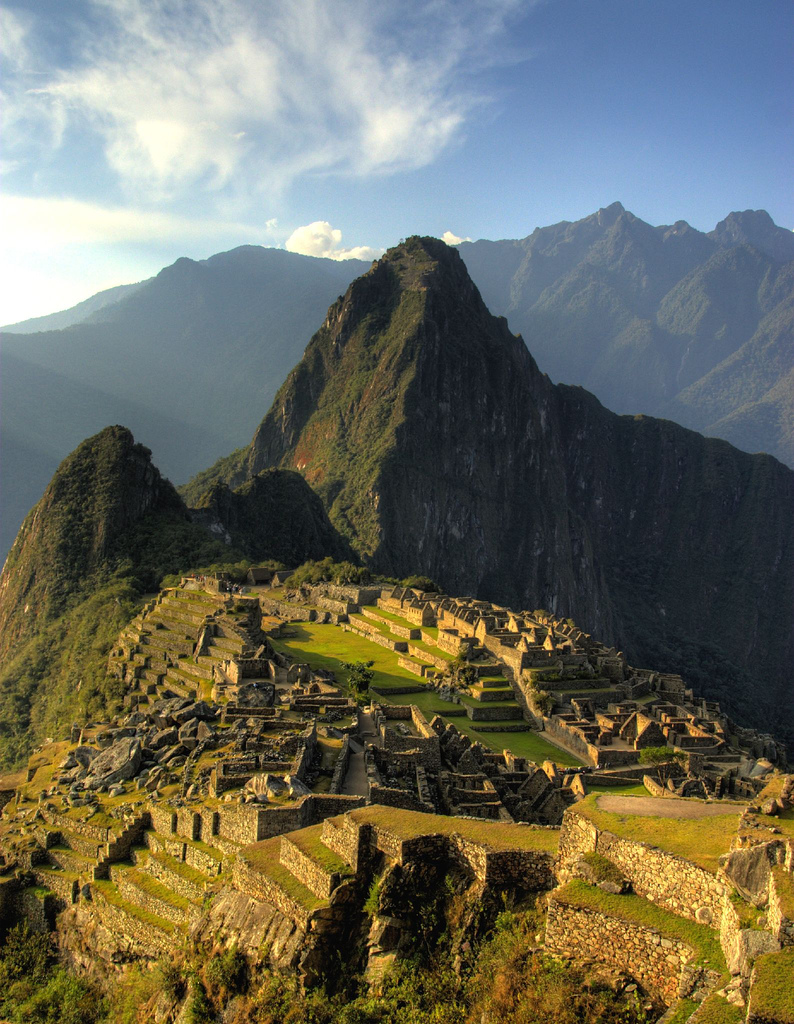
Fortunately, a series of examples of Incan architecture have staye intact, which was developed until the beginning of the Spanish conquest in 1532.
By the middle of the 20th century, a period of modernization and construction appeared in Lima's historical center in 1988 UNESCO declared Lima's historical center a world heritage site, which inspired many laws designed to protect and care for the city's buildings.
In Peru, the thousand-year-old architectural legacy of some of its many archaeological sites (19,903 to be exact). Here are some of the archaeological sites.
Hub AI
Architecture of Peru AI simulator
(@Architecture of Peru_simulator)
Architecture of Peru
Peruvian architecture is the architecture carried out during any time in what is now Peru, and by Peruvian architects worldwide. Its diversity and long history spans from ancient Peru, the Inca Empire, Colonial Peru to the present day.
Peruvian colonial architecture is the conjunction of European styles exposed to the influence of indigenous imagery. Early academia has tended to view the Spanish architectural and religious takeover as complete and swift, but revisionist history emphasizes the lasting role of the indigenous in religious architecture. Two of the most well-known examples of the Renaissance period are the Cathedral of Santo Domingo and the Santa Clara church in Cusco.
After this period, cultural mixture reached richer expression in the Baroque. Some examples of Baroque architecture in Peru are the convent of San Francisco de Lima, the church of the Compañía and the facade of the University of Cuzco and, overall, the churches of San Agustín and Santa Rosa of Arequipa, its more beautiful exponents.
The wars of independence left a creative emptiness that Neoclassicism of French inspiration could just fill. The 20th century is characterized by eclecticism, to which the constructive functionalism has been against. The most considerable example is Plaza San Martín in Lima.
Peruvian architecture is surrounded by a wide range of elements from many architectures: its origins date back to the structures of the Incas, and later to colonial-era buildings, and Peruvian architects' transformation based on Baroque and Neoclassic European styles.
Fortunately, a series of examples of Incan architecture have staye intact, which was developed until the beginning of the Spanish conquest in 1532.
By the middle of the 20th century, a period of modernization and construction appeared in Lima's historical center in 1988 UNESCO declared Lima's historical center a world heritage site, which inspired many laws designed to protect and care for the city's buildings.
In Peru, the thousand-year-old architectural legacy of some of its many archaeological sites (19,903 to be exact). Here are some of the archaeological sites.