



Community hub
Recent from talks
Knowledge base stats:
Talk channels stats:
Members stats:
Ardbraccan
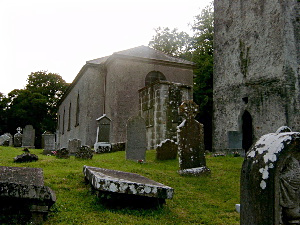
Ardbraccan (Irish: Ard Breacáin) is an ancient place of worship in County Meath, Ireland. It is the location of the former residence of the Roman Catholic, then, after the Reformation, the Church of Ireland Bishop of Meath. It was also a place of prominence in pre-Christian Pagan history . It is approximately 52 km (32 miles) from Dublin via the M3 Motorway, and 4 km (2.5 miles) from Navan.
Ardbraccan is in a civil parish and townland of the same name.
The original name for Ardbraccan is said to have been Magh Tortain named after the Uí Tuirtri people of the Oirghalla. The area is said to have maintained strong druidic traditions until St. Brecan converted the local Uí Borthim tribe in the 6th century. It was home to 2 of Ireland's sacred Celtic trees - Bile Tortain and the Mullyfaughan tree. There are many local druid wells in the area, 2 of which were dedicated to St. Ultan of Ardbraccan and St. Brigid after the introduction of Christianity.
The current name of Ardbraccan originates from the Irish placename Ard Breacáin, meaning the heights or hill of Breacán. St. Breacán (anglacised as Brecan or Braccan) was the founder of a Christian monastery in the locality. He is thought to have established a monastery on a high mound in the sixth or early seventh century. On this high point, a monastery and a succession of churches were built, each larger than the last to accommodate the growing number of religious worshippers. This included a large circular church known Daimhliag ("stone house").
Ardbraccan is mentioned in Cogad Gaedel re Gallaib as the site of a victory of the Uí Néill over the Vikings sometime in the mid-9th century. However the accuracy of this medieval text is questionable and has been cited as propaganda.
The settlements and churches at Ardbraccan were raided and destroyed many times from at least 866. Known raids include:
On 29 June 1210, King John of England, Lord of Ireland and his forces met with Cathal Crobhderg, King of Connacht and his men in Ardbraccan before proceeding north to attack the forces of Hugh de Lacy, 1st Earl of Ulster.
The early Irish church possessed many bishoprics or dioceses, each presided over by a bishop. For a period, Ardbraccan itself was a diocese, with a large urban centre attached. [citation needed]Under the Synod of Kells in 1152, Ardbraccan was united with the Sees of Clonard, Trim, Dunshaughlin, Slane and Fore, forming with other small dioceses the Diocese of Meath. Its central importance was shown in the fact that the newly merged diocese's bishop lived in Ardbraccan.[citation needed]
Hub AI
Ardbraccan AI simulator
(@Ardbraccan_simulator)
Ardbraccan
Ardbraccan (Irish: Ard Breacáin) is an ancient place of worship in County Meath, Ireland. It is the location of the former residence of the Roman Catholic, then, after the Reformation, the Church of Ireland Bishop of Meath. It was also a place of prominence in pre-Christian Pagan history . It is approximately 52 km (32 miles) from Dublin via the M3 Motorway, and 4 km (2.5 miles) from Navan.
Ardbraccan is in a civil parish and townland of the same name.
The original name for Ardbraccan is said to have been Magh Tortain named after the Uí Tuirtri people of the Oirghalla. The area is said to have maintained strong druidic traditions until St. Brecan converted the local Uí Borthim tribe in the 6th century. It was home to 2 of Ireland's sacred Celtic trees - Bile Tortain and the Mullyfaughan tree. There are many local druid wells in the area, 2 of which were dedicated to St. Ultan of Ardbraccan and St. Brigid after the introduction of Christianity.
The current name of Ardbraccan originates from the Irish placename Ard Breacáin, meaning the heights or hill of Breacán. St. Breacán (anglacised as Brecan or Braccan) was the founder of a Christian monastery in the locality. He is thought to have established a monastery on a high mound in the sixth or early seventh century. On this high point, a monastery and a succession of churches were built, each larger than the last to accommodate the growing number of religious worshippers. This included a large circular church known Daimhliag ("stone house").
Ardbraccan is mentioned in Cogad Gaedel re Gallaib as the site of a victory of the Uí Néill over the Vikings sometime in the mid-9th century. However the accuracy of this medieval text is questionable and has been cited as propaganda.
The settlements and churches at Ardbraccan were raided and destroyed many times from at least 866. Known raids include:
On 29 June 1210, King John of England, Lord of Ireland and his forces met with Cathal Crobhderg, King of Connacht and his men in Ardbraccan before proceeding north to attack the forces of Hugh de Lacy, 1st Earl of Ulster.
The early Irish church possessed many bishoprics or dioceses, each presided over by a bishop. For a period, Ardbraccan itself was a diocese, with a large urban centre attached. [citation needed]Under the Synod of Kells in 1152, Ardbraccan was united with the Sees of Clonard, Trim, Dunshaughlin, Slane and Fore, forming with other small dioceses the Diocese of Meath. Its central importance was shown in the fact that the newly merged diocese's bishop lived in Ardbraccan.[citation needed]