
Recent from talks
Army–McCarthy hearings
Knowledge base stats:
Talk channels stats:
Members stats:
Army–McCarthy hearings
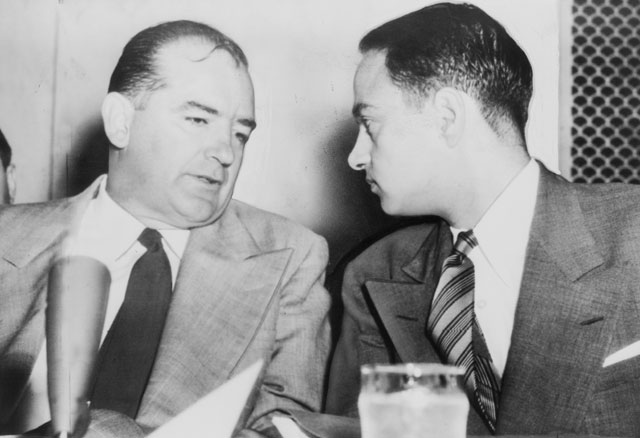
The Army–McCarthy hearings were a series of televised hearings held by the United States Senate's Subcommittee on Investigations (April–June 1954) to investigate conflicting accusations between the United States Army and U.S. senator Joseph McCarthy. The Army accused McCarthy and his chief counsel Roy Cohn of pressuring the Army to give preferential treatment to G. David Schine, a former McCarthy aide and friend of Cohn's. McCarthy counter-charged that this accusation was made in bad faith and in retaliation for his recent aggressive investigations of suspected communists and security risks in the Army.
Chaired by Senator Karl Mundt, the hearings convened on March 16, 1954, and received considerable press attention, including gavel-to-gavel live television coverage on ABC and DuMont (April 22 – June 17). The media coverage, particularly television, greatly contributed to McCarthy's decline in popularity and his eventual censure by the Senate the following December.
McCarthy came to national prominence in February 1950 after giving a speech in Wheeling, West Virginia, in which he claimed to have a list of 205 State Department employees who were members of the Communist Party. McCarthy claimed the list was provided to but dismissed by Secretary of State Dean Acheson, saying that the "State Department harbors a nest of Communists and Communist sympathizers who are helping to shape our foreign policy". In January 1953, McCarthy began his second term and the Republican Party regained control of the Senate; with the Republicans in the majority, McCarthy was made chairman of the Senate Committee on Government Operations. This committee included the Permanent Subcommittee on Investigations, and the mandate of this subcommittee allowed McCarthy to use it to carry out his investigations of communists in the government. McCarthy appointed 26-year-old Roy Cohn as chief counsel to the subcommittee and future attorney general Robert F. Kennedy as assistant counsel, while reassigning Francis Flanagan to the ad hoc position of general counsel.
In 1953, McCarthy's committee began inquiries into the United States Army, starting by investigating supposed communist infiltration of the Army Signal Corps laboratory at Fort Monmouth. McCarthy's investigations were largely fruitless, but after the Army accused McCarthy and his staff of seeking a direct commission for Private G. David Schine, a chief consultant to the Senate Permanent Subcommittee on Investigations and a close friend of Cohn's who had been drafted into the Army as a private the previous year, McCarthy claimed that the accusation was made in bad faith.
The Senate decided that these conflicting charges should be investigated and the appropriate committee to do this was the Senate Permanent Subcommittee on Investigations, usually chaired by McCarthy. Since McCarthy was one of the targets of the hearings, Senator Karl Mundt was appointed (to his reported reluctance) to assume his responsibilities as chairman of the subcommittee. John G. Adams served as the Army's counsel for the hearing. Acting as special counsel was Joseph Welch of the Boston law firm of Hale & Dorr (now called WilmerHale). The hearings were broadcast nationally on the new ABC and DuMont networks, and in part by NBC. Francis Newton Littlejohn, the news director at ABC, made the decision to cover the hearings live, gavel-to-gavel. The televised hearings lasted for 36 days and an estimated 80 million people saw at least part of the hearings.
While the hearings went on, a photograph of Schine was introduced, and Welch accused Cohn of doctoring the image to show Schine alone with Army Secretary Robert T. Stevens. On the witness stand, Cohn and Schine both insisted that the picture entered into evidence (Schine and Stevens alone) was requested by Stevens and that no one was edited out of the photograph. Welch then produced a wider shot of Stevens and Schine with McGuire AFB wing commander Colonel Jack Bradley standing to Schine's right. A fourth person also edited out of the picture (his sleeve was visible to Bradley's right in the Welch photograph) was identified as McCarthy aide Frank Carr.
After the photograph was discredited, McCarthy produced a copy of a confidential letter he claimed was a January 26, 1951, memo written and sent by FBI Director J. Edgar Hoover, to Major General Alexander R. Bolling, warning Army intelligence of subversives in the Army Signal Corps. McCarthy claimed the letter was in the Army files when Stevens became secretary in 1953, and that Stevens willfully ignored it. Welch was the first to question the letter's validity, claiming that McCarthy's "purported copy" did not come from Army files; McCarthy stated he never received any document from the FBI, but when questioned on the stand by special Senate counsel Ray Jenkins and cross-examined by Welch, McCarthy, while admitting the document was given to him by an intelligence officer, refused to identify his source.
Robert Collier, assistant to Ray Jenkins, read a letter from Attorney General Herbert Brownell Jr., in which he stated that Hoover examined the document and that he neither wrote nor ordered the letter, and that no such copy existed in official FBI records, rendering McCarthy's claims meritless, and the letter spurious.
Hub AI
Army–McCarthy hearings AI simulator
(@Army–McCarthy hearings_simulator)
Army–McCarthy hearings
The Army–McCarthy hearings were a series of televised hearings held by the United States Senate's Subcommittee on Investigations (April–June 1954) to investigate conflicting accusations between the United States Army and U.S. senator Joseph McCarthy. The Army accused McCarthy and his chief counsel Roy Cohn of pressuring the Army to give preferential treatment to G. David Schine, a former McCarthy aide and friend of Cohn's. McCarthy counter-charged that this accusation was made in bad faith and in retaliation for his recent aggressive investigations of suspected communists and security risks in the Army.
Chaired by Senator Karl Mundt, the hearings convened on March 16, 1954, and received considerable press attention, including gavel-to-gavel live television coverage on ABC and DuMont (April 22 – June 17). The media coverage, particularly television, greatly contributed to McCarthy's decline in popularity and his eventual censure by the Senate the following December.
McCarthy came to national prominence in February 1950 after giving a speech in Wheeling, West Virginia, in which he claimed to have a list of 205 State Department employees who were members of the Communist Party. McCarthy claimed the list was provided to but dismissed by Secretary of State Dean Acheson, saying that the "State Department harbors a nest of Communists and Communist sympathizers who are helping to shape our foreign policy". In January 1953, McCarthy began his second term and the Republican Party regained control of the Senate; with the Republicans in the majority, McCarthy was made chairman of the Senate Committee on Government Operations. This committee included the Permanent Subcommittee on Investigations, and the mandate of this subcommittee allowed McCarthy to use it to carry out his investigations of communists in the government. McCarthy appointed 26-year-old Roy Cohn as chief counsel to the subcommittee and future attorney general Robert F. Kennedy as assistant counsel, while reassigning Francis Flanagan to the ad hoc position of general counsel.
In 1953, McCarthy's committee began inquiries into the United States Army, starting by investigating supposed communist infiltration of the Army Signal Corps laboratory at Fort Monmouth. McCarthy's investigations were largely fruitless, but after the Army accused McCarthy and his staff of seeking a direct commission for Private G. David Schine, a chief consultant to the Senate Permanent Subcommittee on Investigations and a close friend of Cohn's who had been drafted into the Army as a private the previous year, McCarthy claimed that the accusation was made in bad faith.
The Senate decided that these conflicting charges should be investigated and the appropriate committee to do this was the Senate Permanent Subcommittee on Investigations, usually chaired by McCarthy. Since McCarthy was one of the targets of the hearings, Senator Karl Mundt was appointed (to his reported reluctance) to assume his responsibilities as chairman of the subcommittee. John G. Adams served as the Army's counsel for the hearing. Acting as special counsel was Joseph Welch of the Boston law firm of Hale & Dorr (now called WilmerHale). The hearings were broadcast nationally on the new ABC and DuMont networks, and in part by NBC. Francis Newton Littlejohn, the news director at ABC, made the decision to cover the hearings live, gavel-to-gavel. The televised hearings lasted for 36 days and an estimated 80 million people saw at least part of the hearings.
While the hearings went on, a photograph of Schine was introduced, and Welch accused Cohn of doctoring the image to show Schine alone with Army Secretary Robert T. Stevens. On the witness stand, Cohn and Schine both insisted that the picture entered into evidence (Schine and Stevens alone) was requested by Stevens and that no one was edited out of the photograph. Welch then produced a wider shot of Stevens and Schine with McGuire AFB wing commander Colonel Jack Bradley standing to Schine's right. A fourth person also edited out of the picture (his sleeve was visible to Bradley's right in the Welch photograph) was identified as McCarthy aide Frank Carr.
After the photograph was discredited, McCarthy produced a copy of a confidential letter he claimed was a January 26, 1951, memo written and sent by FBI Director J. Edgar Hoover, to Major General Alexander R. Bolling, warning Army intelligence of subversives in the Army Signal Corps. McCarthy claimed the letter was in the Army files when Stevens became secretary in 1953, and that Stevens willfully ignored it. Welch was the first to question the letter's validity, claiming that McCarthy's "purported copy" did not come from Army files; McCarthy stated he never received any document from the FBI, but when questioned on the stand by special Senate counsel Ray Jenkins and cross-examined by Welch, McCarthy, while admitting the document was given to him by an intelligence officer, refused to identify his source.
Robert Collier, assistant to Ray Jenkins, read a letter from Attorney General Herbert Brownell Jr., in which he stated that Hoover examined the document and that he neither wrote nor ordered the letter, and that no such copy existed in official FBI records, rendering McCarthy's claims meritless, and the letter spurious.
Recent media