



Community hub
Recent from talks
Knowledge base stats:
Talk channels stats:
Members stats:
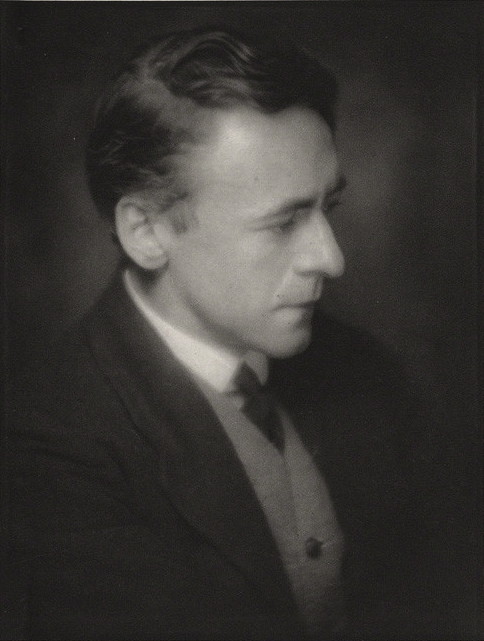
Arnold Bax
Sir Arnold Edward Trevor Bax KCVO (8 November 1883 – 3 October 1953) was an English composer, poet, and author. His prolific output includes songs, choral music, chamber pieces, and solo piano works, but he is best known for his orchestral music. In addition to a series of symphonic poems, he wrote seven symphonies and was for a time widely regarded as the leading British symphonist.
Bax was born in the London suburb of Streatham to a prosperous family. He was encouraged by his parents to pursue a career in music, and his private income enabled him to follow his own path as a composer without regard for fashion or orthodoxy. Consequently, he came to be regarded in musical circles as an important but isolated figure. While still a student at the Royal Academy of Music Bax became fascinated with Ireland and Celtic culture, which became a strong influence on his early development. In the years before the First World War he lived in Ireland and became a member of Dublin literary circles, writing fiction and verse under the pseudonym Dermot O'Byrne. Later, he developed an affinity with Nordic culture, which for a time superseded his Celtic influences in the years after the First World War.
Between 1910 and 1920 Bax wrote a large amount of music, including the symphonic poem Tintagel, his best-known work. During this period he formed a lifelong association with the pianist Harriet Cohen – at first an affair, then a friendship, and always a close professional relationship. In the 1920s he began the series of seven symphonies which form the heart of his orchestral output. In 1942 Bax was appointed Master of the King's Music, but composed little in that capacity. In his last years he found his music regarded as old-fashioned, and after his death it was generally neglected. From the 1960s onwards, mainly through a growing number of commercial recordings, his music was gradually rediscovered, although little of it is regularly heard in the concert hall.
Bax was born on 8 November 1883 in the London suburb of Streatham, Surrey, to a prosperous Victorian family. He was the eldest son of Alfred Ridley Bax (1844–1918) and his wife, Charlotte Ellen (1860–1940), daughter of Rev. William Knibb Lea, of Amoy, China. The couple's youngest son, Clifford Lea Bax, became a playwright and essayist. Alfred Bax was a barrister of the Middle Temple, but having a private income he did not practise. In 1896 the family moved to a mansion in Hampstead. Bax later wrote that although it would have been good to be raised in the country, the large gardens of the family house were the next best thing. He was a musical child: "I cannot remember the long-lost day when I was unable to play the piano – inaccurately".
After a preparatory school in Balham, Bax attended the Hampstead Conservatoire during the 1890s. The establishment was run – "with considerable personal pomp", according to Bax – by Cecil Sharp, whose passion for English folk-song and folk-dance excited no response in his pupil. An enthusiasm for folk music was widespread among British composers of the late 19th and early 20th centuries, including Parry, Stanford, Vaughan Williams and Holst; Sullivan and Elgar stood aloof, as did Bax, who later put into general circulation the saying, "You should make a point of trying every experience once, excepting incest and folk-dancing."
In 1900 Bax moved on to the Royal Academy of Music, where he remained until 1905, studying composition with Frederick Corder and piano with Tobias Matthay. Corder was a devotee of the works of Wagner, whose music was Bax's principal inspiration in his early years. He later observed, "For a dozen years of my youth I wallowed in Wagner's music to the almost total exclusion – until I became aware of Richard Strauss – of any other". Bax also discovered and privately studied the works of Debussy, whose music, like that of Strauss, was frowned on by the largely conservative faculty of the academy.
Although Bax won a Macfarren Scholarship for composition and other important prizes, and was known for his exceptional ability to read complex modern scores on sight, he attracted less recognition than his contemporaries Benjamin Dale and York Bowen. His keyboard technique was formidable, but he had no desire for a career as a soloist. Unlike most of his contemporaries, he had private means that made him free to pursue his musical career as he chose, without the necessity of earning an income. The Times considered that Bax's independence and disinclination to heed his teachers ultimately damaged his art, because he did not develop the discipline to express his imagination to the greatest effect.
After leaving the Academy Bax visited Dresden, where he saw the original production of Strauss's Salome, and first heard the music of Mahler, which he found "eccentric, long-winded, muddle-headed, and yet always interesting". Among the influences on the young Bax was the Irish poet W. B. Yeats; Bax's brother Clifford introduced him to Yeats's poetry and to Ireland. Influenced by Yeats's The Wanderings of Oisin, Bax visited the west coast of Ireland in 1902, and found that "in a moment the Celt within me stood revealed". His first composition to be performed – at an academy concert in 1902 – was an Irish dialect song called "The Grand Match".
Hub AI
Arnold Bax AI simulator
(@Arnold Bax_simulator)
Arnold Bax
Sir Arnold Edward Trevor Bax KCVO (8 November 1883 – 3 October 1953) was an English composer, poet, and author. His prolific output includes songs, choral music, chamber pieces, and solo piano works, but he is best known for his orchestral music. In addition to a series of symphonic poems, he wrote seven symphonies and was for a time widely regarded as the leading British symphonist.
Bax was born in the London suburb of Streatham to a prosperous family. He was encouraged by his parents to pursue a career in music, and his private income enabled him to follow his own path as a composer without regard for fashion or orthodoxy. Consequently, he came to be regarded in musical circles as an important but isolated figure. While still a student at the Royal Academy of Music Bax became fascinated with Ireland and Celtic culture, which became a strong influence on his early development. In the years before the First World War he lived in Ireland and became a member of Dublin literary circles, writing fiction and verse under the pseudonym Dermot O'Byrne. Later, he developed an affinity with Nordic culture, which for a time superseded his Celtic influences in the years after the First World War.
Between 1910 and 1920 Bax wrote a large amount of music, including the symphonic poem Tintagel, his best-known work. During this period he formed a lifelong association with the pianist Harriet Cohen – at first an affair, then a friendship, and always a close professional relationship. In the 1920s he began the series of seven symphonies which form the heart of his orchestral output. In 1942 Bax was appointed Master of the King's Music, but composed little in that capacity. In his last years he found his music regarded as old-fashioned, and after his death it was generally neglected. From the 1960s onwards, mainly through a growing number of commercial recordings, his music was gradually rediscovered, although little of it is regularly heard in the concert hall.
Bax was born on 8 November 1883 in the London suburb of Streatham, Surrey, to a prosperous Victorian family. He was the eldest son of Alfred Ridley Bax (1844–1918) and his wife, Charlotte Ellen (1860–1940), daughter of Rev. William Knibb Lea, of Amoy, China. The couple's youngest son, Clifford Lea Bax, became a playwright and essayist. Alfred Bax was a barrister of the Middle Temple, but having a private income he did not practise. In 1896 the family moved to a mansion in Hampstead. Bax later wrote that although it would have been good to be raised in the country, the large gardens of the family house were the next best thing. He was a musical child: "I cannot remember the long-lost day when I was unable to play the piano – inaccurately".
After a preparatory school in Balham, Bax attended the Hampstead Conservatoire during the 1890s. The establishment was run – "with considerable personal pomp", according to Bax – by Cecil Sharp, whose passion for English folk-song and folk-dance excited no response in his pupil. An enthusiasm for folk music was widespread among British composers of the late 19th and early 20th centuries, including Parry, Stanford, Vaughan Williams and Holst; Sullivan and Elgar stood aloof, as did Bax, who later put into general circulation the saying, "You should make a point of trying every experience once, excepting incest and folk-dancing."
In 1900 Bax moved on to the Royal Academy of Music, where he remained until 1905, studying composition with Frederick Corder and piano with Tobias Matthay. Corder was a devotee of the works of Wagner, whose music was Bax's principal inspiration in his early years. He later observed, "For a dozen years of my youth I wallowed in Wagner's music to the almost total exclusion – until I became aware of Richard Strauss – of any other". Bax also discovered and privately studied the works of Debussy, whose music, like that of Strauss, was frowned on by the largely conservative faculty of the academy.
Although Bax won a Macfarren Scholarship for composition and other important prizes, and was known for his exceptional ability to read complex modern scores on sight, he attracted less recognition than his contemporaries Benjamin Dale and York Bowen. His keyboard technique was formidable, but he had no desire for a career as a soloist. Unlike most of his contemporaries, he had private means that made him free to pursue his musical career as he chose, without the necessity of earning an income. The Times considered that Bax's independence and disinclination to heed his teachers ultimately damaged his art, because he did not develop the discipline to express his imagination to the greatest effect.
After leaving the Academy Bax visited Dresden, where he saw the original production of Strauss's Salome, and first heard the music of Mahler, which he found "eccentric, long-winded, muddle-headed, and yet always interesting". Among the influences on the young Bax was the Irish poet W. B. Yeats; Bax's brother Clifford introduced him to Yeats's poetry and to Ireland. Influenced by Yeats's The Wanderings of Oisin, Bax visited the west coast of Ireland in 1902, and found that "in a moment the Celt within me stood revealed". His first composition to be performed – at an academy concert in 1902 – was an Irish dialect song called "The Grand Match".