
Recent from talks
Art school
Knowledge base stats:
Talk channels stats:
Members stats:
Art school
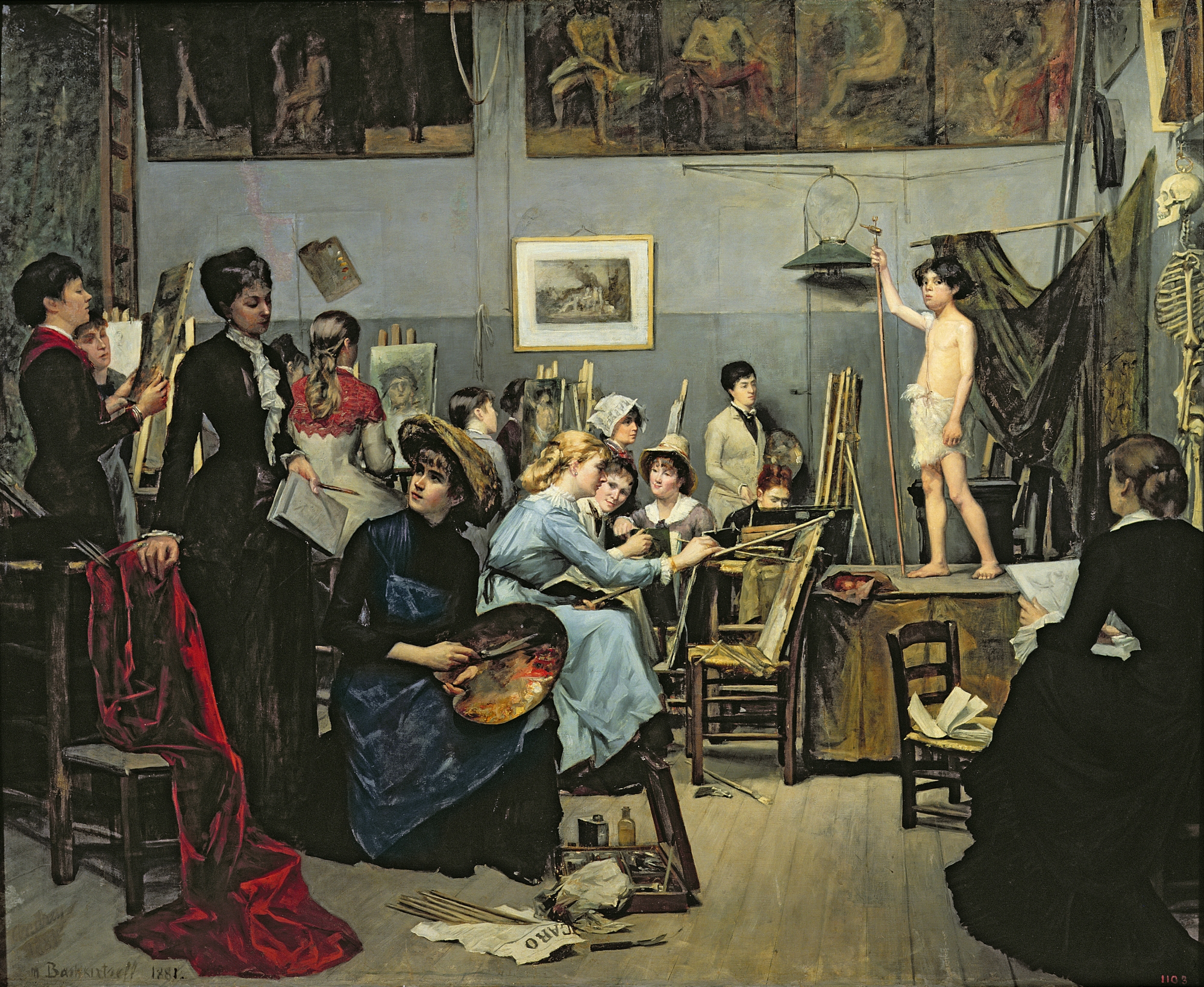
An art school is an educational institution with a primary focus on practice and related theory in the visual arts and design. This includes fine art – especially illustration, painting, contemporary art, sculpture, and graphic design. They may be independent or operate within a larger institution, such as a university. Some may be associated with an art museum.
Art schools can offer elementary, secondary, post-secondary, undergraduate or graduate programs, and can also offer a broad-based range of programs (such as the liberal arts and sciences). In the West there have been six major periods of art school curricula, and each one has had its own hand in developing modern institutions worldwide throughout all levels of education. Art schools also teach a variety of non-academic skills to many students.
Nicholas Houghton identifies six definitive historical art-school curricula in the Western tradition of art and art education: "apprentice, academic, formalist, expressive, conceptual, and professional". Each of these curricula has aided not only the way that modern art-schools teach, but also how students learn about art.
Art schools have been perceived as legitimate universities since the 1980s.[need quotation to verify] Before this, any art programs were used purely as extracurricular activities,[citation needed] and there were no methods of grading works. After the 1980s, art programs began to be integrated into schools and universities as legitimate courses that could be evaluated. While some argue that this weakened creativity among modern art-students, others see this as a way to treat fine arts as equal to other subjects.
Apprentice paths teach art as a mixture of aesthetic and function. In the past, students worked in the studio of an artist in exchange for room and board. Many of the Old Masters received training in this manner, copying or painting in the style of their teacher in order to learn the trade. Once the apprenticeship ended, the student would have to prove what they learned by creating a "masterpiece". Today this is sometimes done in photography or printmaking studios.
Academic curricula began during the sixteenth-century Italian Renaissance, in which some of the earliest art academies were established. Up through the nineteenth century, these academies multiplied through both Europe and North America, and art began to become about both talent and intellect.
The formalist curriculum began in the mid-twentieth century, and focused on the basic components of artwork, such as "color, shape, texture, line - and a concern with the particular properties of a material or medium". This curriculum is most noted for including the height in popularity of Bauhaus. It was based on logic, mathematics, and 'Neoplatonism', which was widespread at the time.
Although the expressive curriculum originated at the same time as the formalist one,[citation needed] it focuses on completely different aspects of art. Rather than being concerned with the literal components of a piece of art, expressive curricula encouraged students to express their emotions and practice spontaneity. This is due to the heightened popularity of romanticism throughout the Renaissance.
Hub AI
Art school AI simulator
(@Art school_simulator)
Art school
An art school is an educational institution with a primary focus on practice and related theory in the visual arts and design. This includes fine art – especially illustration, painting, contemporary art, sculpture, and graphic design. They may be independent or operate within a larger institution, such as a university. Some may be associated with an art museum.
Art schools can offer elementary, secondary, post-secondary, undergraduate or graduate programs, and can also offer a broad-based range of programs (such as the liberal arts and sciences). In the West there have been six major periods of art school curricula, and each one has had its own hand in developing modern institutions worldwide throughout all levels of education. Art schools also teach a variety of non-academic skills to many students.
Nicholas Houghton identifies six definitive historical art-school curricula in the Western tradition of art and art education: "apprentice, academic, formalist, expressive, conceptual, and professional". Each of these curricula has aided not only the way that modern art-schools teach, but also how students learn about art.
Art schools have been perceived as legitimate universities since the 1980s.[need quotation to verify] Before this, any art programs were used purely as extracurricular activities,[citation needed] and there were no methods of grading works. After the 1980s, art programs began to be integrated into schools and universities as legitimate courses that could be evaluated. While some argue that this weakened creativity among modern art-students, others see this as a way to treat fine arts as equal to other subjects.
Apprentice paths teach art as a mixture of aesthetic and function. In the past, students worked in the studio of an artist in exchange for room and board. Many of the Old Masters received training in this manner, copying or painting in the style of their teacher in order to learn the trade. Once the apprenticeship ended, the student would have to prove what they learned by creating a "masterpiece". Today this is sometimes done in photography or printmaking studios.
Academic curricula began during the sixteenth-century Italian Renaissance, in which some of the earliest art academies were established. Up through the nineteenth century, these academies multiplied through both Europe and North America, and art began to become about both talent and intellect.
The formalist curriculum began in the mid-twentieth century, and focused on the basic components of artwork, such as "color, shape, texture, line - and a concern with the particular properties of a material or medium". This curriculum is most noted for including the height in popularity of Bauhaus. It was based on logic, mathematics, and 'Neoplatonism', which was widespread at the time.
Although the expressive curriculum originated at the same time as the formalist one,[citation needed] it focuses on completely different aspects of art. Rather than being concerned with the literal components of a piece of art, expressive curricula encouraged students to express their emotions and practice spontaneity. This is due to the heightened popularity of romanticism throughout the Renaissance.
Recent media