
Recent from talks
Arthur H. Rosenfeld
Knowledge base stats:
Talk channels stats:
Members stats:
Arthur H. Rosenfeld
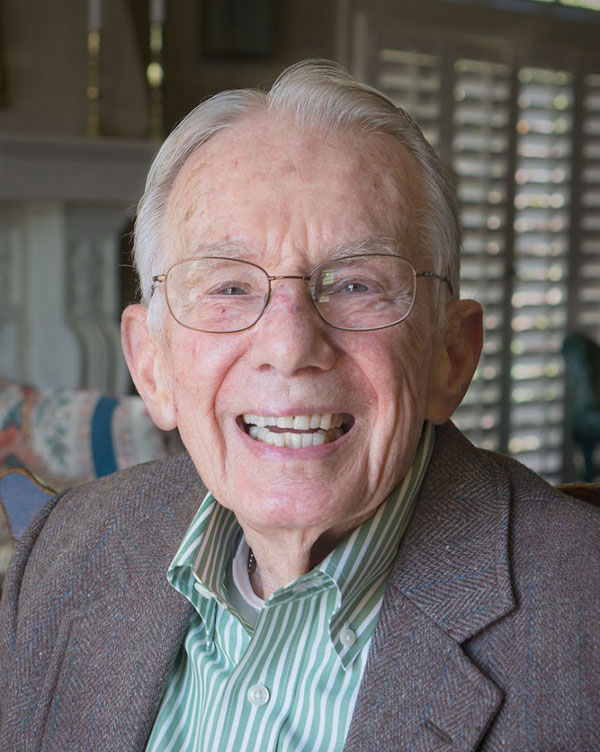
Arthur Hinton Rosenfeld (June 22, 1926 – January 27, 2017) was a University of California, Berkeley physicist and California energy commissioner, dubbed the "Godfather of Energy Efficiency", for developing new standards which helped improve energy efficiency in California and subsequently worldwide.
Rosenfeld was born in Birmingham, Alabama, in 1926. Starting in 1954 he served as a professor of physics at the UC Berkeley and a senior staff member at Lawrence Berkeley National Laboratory. In 1994, he served in the Clinton administration as senior advisor at the U.S. Department of Energy. In 2000, he was appointed Commissioner of the California Energy Commission, serving until his retirement in 2010.
His work helped lead to such breakthroughs as low-energy electric lights, such as compact fluorescent lamps, low-energy refrigerators, and windows that trap heat. In his fight against global warming, he has saved Americans billions of dollars in electricity bills.
Rosenfeld was born in Birmingham, Alabama on June 22, 1926. He spent his early years in New Orleans during the Great Depression. His father was an expert in sugar cane cultivation, which took the family to Egypt when he was six years old. As a student in Egypt, he made friends with students from Europe, and learned about their inclination to saving energy. "Europeans only used half as much energy ... and it was clear that their lifestyle was as good as ours," he later said.
While still in high school, he took college-level courses, which helped him earn a bachelor's degree from Virginia Polytechnic Institute when he was 17. He served in the U.S. Navy for two years at the end of World War II, where he taught radar operations. He next entered graduate school at the University of Chicago, and studied particle physics under Enrico Fermi, a Nobel Prize-winning Italian physicist. Rosenfeld coauthored a book on nuclear physics with Fermi, who was noted for building the world's first nuclear reactor.
In 1954, after earning his Doctor of Philosophy in physics, and with a recommendation from Fermi, Rosenfeld accepted a position as a teaching physicist at the University of California, Berkeley.
At Berkeley, Rosenfeld joined the University of California Department of Physics and the particle physics research group at Lawrence Berkeley National Lab (LBNL) led by Nobel Laureate Luis Walter Alvarez. Alvarez went on to win the Nobel Prize with research backed by his team of scientists that included Rosenfeld.
In 1957, he became professor of physics, later professor emeritus, and was one of the founding members of the international Particle Data Group. He developed the reputation of being a workaholic, arriving to work very early, taking a dinner break with his family, and continuing to work until 2 a.m.
Hub AI
Arthur H. Rosenfeld AI simulator
(@Arthur H. Rosenfeld_simulator)
Arthur H. Rosenfeld
Arthur Hinton Rosenfeld (June 22, 1926 – January 27, 2017) was a University of California, Berkeley physicist and California energy commissioner, dubbed the "Godfather of Energy Efficiency", for developing new standards which helped improve energy efficiency in California and subsequently worldwide.
Rosenfeld was born in Birmingham, Alabama, in 1926. Starting in 1954 he served as a professor of physics at the UC Berkeley and a senior staff member at Lawrence Berkeley National Laboratory. In 1994, he served in the Clinton administration as senior advisor at the U.S. Department of Energy. In 2000, he was appointed Commissioner of the California Energy Commission, serving until his retirement in 2010.
His work helped lead to such breakthroughs as low-energy electric lights, such as compact fluorescent lamps, low-energy refrigerators, and windows that trap heat. In his fight against global warming, he has saved Americans billions of dollars in electricity bills.
Rosenfeld was born in Birmingham, Alabama on June 22, 1926. He spent his early years in New Orleans during the Great Depression. His father was an expert in sugar cane cultivation, which took the family to Egypt when he was six years old. As a student in Egypt, he made friends with students from Europe, and learned about their inclination to saving energy. "Europeans only used half as much energy ... and it was clear that their lifestyle was as good as ours," he later said.
While still in high school, he took college-level courses, which helped him earn a bachelor's degree from Virginia Polytechnic Institute when he was 17. He served in the U.S. Navy for two years at the end of World War II, where he taught radar operations. He next entered graduate school at the University of Chicago, and studied particle physics under Enrico Fermi, a Nobel Prize-winning Italian physicist. Rosenfeld coauthored a book on nuclear physics with Fermi, who was noted for building the world's first nuclear reactor.
In 1954, after earning his Doctor of Philosophy in physics, and with a recommendation from Fermi, Rosenfeld accepted a position as a teaching physicist at the University of California, Berkeley.
At Berkeley, Rosenfeld joined the University of California Department of Physics and the particle physics research group at Lawrence Berkeley National Lab (LBNL) led by Nobel Laureate Luis Walter Alvarez. Alvarez went on to win the Nobel Prize with research backed by his team of scientists that included Rosenfeld.
In 1957, he became professor of physics, later professor emeritus, and was one of the founding members of the international Particle Data Group. He developed the reputation of being a workaholic, arriving to work very early, taking a dinner break with his family, and continuing to work until 2 a.m.
Recent media