
Recent from talks
Arthur Symons
Knowledge base stats:
Talk channels stats:
Members stats:
Arthur Symons
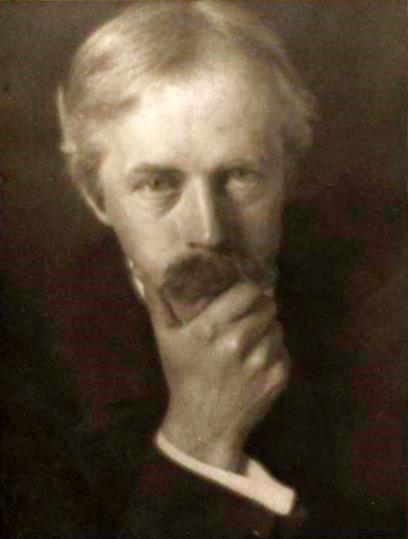
Arthur William Symons (28 February 1865 – 22 January 1945) was a British poet, critic, translator and magazine editor.
Born in Milford Haven, Wales, to Cornish parents, Symons was educated privately, spending much of his time in France and Italy. In 1884–1886, he edited four of Bernard Quaritch's Shakespeare Quarto Facsimiles, and in 1888–1889 seven plays of the "Henry Irving" Shakespeare. He became a member of the staff of the Athenaeum in 1891, and of the Saturday Review in 1894, but his major editorial feat was his work with the short-lived Savoy.[citation needed]
In 1892, The Minister's Call, Symons's first play, was produced by the Independent Theatre Society – a private club – to avoid censorship by the Lord Chamberlain's Office.
Symons conducted a series of affairs throughout his life, but around 1893, he began a long-lasting relationship with a secret lover who has never been identified but whom he calls "Lydia", commemorated in his book Amoris Victima (1897). On June 19, 1901 he married Rhoda Bowser (1874–1936), an aspiring actress and oldest daughter of a Newcastle-upon-Tyne shipping magnate.
Lydia Symons, Symons’ mother, died in March, 1896. They are described to have had an affectionate relationship, about which Symons wrote a sonnet. The same year, Symons met and began an extensive correspondence with Sarojini Naidu. Their letters contain advice he gave in her work as a poet and exhibit their ambiguous relationship. A scholar speculates that Symons viewed Naidu as a daughter, mother, and lover.
Symons's 1897 book Studies in Two Literatures was one of his earliest works as a “serious critic” and established lyricism, mysticism, profundity, modernity, and sincerity as the various traits he would consider in his critiques. His work in his 1899 book The Symbolist Movement in Literature emphasized the importance of both lyricism and mysticism, with the latter being particularly important to Symons's beliefs regarding both poets and symbolists.
Throughout this time, Symons’ mental health declined. His growing depression and acedia is credited to have derived from the losses he suffered and his pursuit of the Decadent ideal.
In 1902, Symons made a selection from his earlier verse, published as Poems. He translated from the Italian of Gabriele D'Annunzio The Dead City (1900) and The Child of Pleasure (1898), and from the French of Émile Verhaeren The Dawn (1898). To The Poems of Ernest Dowson (1905) he prefixed an essay on the deceased poet, who was a kind of English Verlaine and had many attractions for Symons.
Hub AI
Arthur Symons AI simulator
(@Arthur Symons_simulator)
Arthur Symons
Arthur William Symons (28 February 1865 – 22 January 1945) was a British poet, critic, translator and magazine editor.
Born in Milford Haven, Wales, to Cornish parents, Symons was educated privately, spending much of his time in France and Italy. In 1884–1886, he edited four of Bernard Quaritch's Shakespeare Quarto Facsimiles, and in 1888–1889 seven plays of the "Henry Irving" Shakespeare. He became a member of the staff of the Athenaeum in 1891, and of the Saturday Review in 1894, but his major editorial feat was his work with the short-lived Savoy.[citation needed]
In 1892, The Minister's Call, Symons's first play, was produced by the Independent Theatre Society – a private club – to avoid censorship by the Lord Chamberlain's Office.
Symons conducted a series of affairs throughout his life, but around 1893, he began a long-lasting relationship with a secret lover who has never been identified but whom he calls "Lydia", commemorated in his book Amoris Victima (1897). On June 19, 1901 he married Rhoda Bowser (1874–1936), an aspiring actress and oldest daughter of a Newcastle-upon-Tyne shipping magnate.
Lydia Symons, Symons’ mother, died in March, 1896. They are described to have had an affectionate relationship, about which Symons wrote a sonnet. The same year, Symons met and began an extensive correspondence with Sarojini Naidu. Their letters contain advice he gave in her work as a poet and exhibit their ambiguous relationship. A scholar speculates that Symons viewed Naidu as a daughter, mother, and lover.
Symons's 1897 book Studies in Two Literatures was one of his earliest works as a “serious critic” and established lyricism, mysticism, profundity, modernity, and sincerity as the various traits he would consider in his critiques. His work in his 1899 book The Symbolist Movement in Literature emphasized the importance of both lyricism and mysticism, with the latter being particularly important to Symons's beliefs regarding both poets and symbolists.
Throughout this time, Symons’ mental health declined. His growing depression and acedia is credited to have derived from the losses he suffered and his pursuit of the Decadent ideal.
In 1902, Symons made a selection from his earlier verse, published as Poems. He translated from the Italian of Gabriele D'Annunzio The Dead City (1900) and The Child of Pleasure (1898), and from the French of Émile Verhaeren The Dawn (1898). To The Poems of Ernest Dowson (1905) he prefixed an essay on the deceased poet, who was a kind of English Verlaine and had many attractions for Symons.
Recent media