Hubbry Logo
Arthur TauchertArthur TauchertMain
Open search
Arthur Tauchert
Community hub
Arthur Tauchert
logo
8 pages, 0 posts
0 subscribers
Be the first to start a discussion here.
Arthur Tauchert
Arthur Tauchert
from Wikipedia

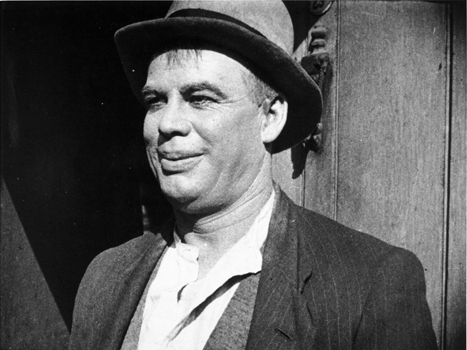
Arthur Michael Tauchert (pronounced "Torcher") (21 August 1877 – 27 November 1933) was an Australian acrobatic comedian, dancer, singer, film actor, and star of the Australian silent film, The Sentimental Bloke (1919).

Key Information

Biography

[edit]

Born in the inner Sydney suburb of Waterloo on 21 August 1877, Tauchert's career as an entertainer began in the early 1900s as a vaudeville comedian and over the next two decades he was associated with most of the leading management firms of that era, including John Fuller, James Brennan, Ted Holland, Harry Clay, Bert Howard, J. C. Bain and Lennon, Hyman and Lennon.[1] Although he mostly worked as a specialist solo act, Tauchert teamed up at various times with other comics, including Albert McKisson (ex-McKisson and Kearns), Bert Corrie, Ted Tutty, and Ern Delavale.

After the success of The Sentimental Bloke, Tauchert appeared in at least ten more films including Ginger Mick (1920), again based on the poems of C. J. Dennis. He continued to perform on the vaudeville stage during the remainder of the 1920s, often presenting an act based on his famous "Bill the Bloke" character. In the late 1920s and early 1930s, he also appeared on radio.

Tauchert has received very little historical attention even though he played a significant part in Australia's early film industry and his contemporaries clearly considered him to be among the country's top entertainers.[2] One prominent American singer, Lou London, even said of him: "I consider Arthur Tauchert one of the most original individuals I have met; he is also one of the best-dispositioned men I have ever had the pleasure of working alongside." London backed his opinion shortly before returning home by giving Tauchert the exclusive Australasian rights to all the songs he had worked on in Australia, as well as several he had not performed (Everyone's 12 Oct. 1921, p. 20).

Death

[edit]

Tauchert died of cancer on 27 November 1933, and was survived by Elizabeth, his wife of 24 years, and his three children. He was buried in Waverley Cemetery.[3]

Filmography

[edit]

Notes

[edit]

Sources

[edit]
  • Arthur Tauchert. Biography at the Australian Variety Theatre Archive.
  • Brodsky, Isadore. Streets of Sydney Sydney: Old Sydney Free Press, 1962, pp. 106–7.
  • Mr Arthur Tauchert. Courier Mail 28 November (1933), p. 15.
  • Obituary. Argus 28 November (1933), p. 6.
  • Obituary: Mr Arthur Tauchert. Sydney Morning Herald 28 November (1933), p. 13.
  • Tauchert, Arthur. Biography at AustLit
[edit]
Revisions and contributorsEdit on WikipediaRead on Wikipedia
from Grokipedia
''Arthur Tauchert'' is an Australian vaudevillian and film actor known for his starring role as the larrikin 'Bill' in the 1919 silent film The Sentimental Bloke. His portrayal of the rough yet romantic character from C. J. Dennis's popular poems made him one of early Australian cinema's most recognizable figures. Born on 21 August 1877 in Waterloo, Sydney, Tauchert began his career performing in local "smokos" and vaudeville circuits, appearing as a parody singer and comedian under managers such as Harry Rickards, Bert Howard, and Harry Clay. He toured Australasia with troupes like the Brennan-Fuller circuit and formed partnerships, establishing himself as a popular "funny man" in minstrel and variety shows. Tauchert's film career launched with his selection by director Raymond Longford and Lottie Lyell for the lead in The Sentimental Bloke, which became a critical and commercial success in Australia and Britain. He reprised similar roles in subsequent Longford films such as Ginger Mick and The Dinkum Bloke, and appeared in productions by other directors including Beaumont Smith and Arthur Higgins. As sound films emerged and local production declined amid the Depression, Tauchert shifted to radio, where he recited from The Sentimental Bloke and performed comic material. He died of cancer on 27 November 1933 in Darlinghurst, Sydney, at the age of 56. Tauchert's legacy endures through his defining performance in The Sentimental Bloke, praised for its blend of sentiment, satire, and authentic depiction of Australian working-class life.

Early life

Family background, education, and early employment

Arthur Tauchert was born on 21 August 1877 in Waterloo, Sydney, as the seventh child of German-born cab driver Frederick William Tauchert and his Irish-born wife Nora (née McNamara). He received his education at Crown Street Public School and Sacred Heart School, Darlinghurst. After completing his schooling, Tauchert held several nondescript jobs before undertaking an apprenticeship with the carriage builders Woods & Spinks. He demonstrated a natural flair for entertaining that saw him progress from amateur performances at South Sydney "smokos" (smoke concerts) to initial one-night parody singing engagements. These early amateur experiences marked the beginnings of his path toward a professional career in vaudeville.

Vaudeville career

Vaudeville performances and partnerships

Arthur Tauchert began his professional vaudeville career in the early 1900s, starting with one-night engagements as a parody singer on Bert Howard's and Harry Rickards' circuits. He then joined Harry Clay’s troupe, where he performed as a funny man in minstrel items. Billed as a "live wire" comedian, he appeared in Sydney and Melbourne with James Brennan’s National Vaudeville Entertainers. Tauchert toured Australasia with the Brennan-Fuller circuit, bringing his humorous patter to wider audiences. By 1913, he was performing with J. C. Bain’s Vaudeville Entertainers. He later formed a partnership with his brother-in-law Jack Kearns. Known for his energetic style, Tauchert worked as an acrobatic comedian, dancer, singer, and comic/endman, often excelling in knock-about comedy and minstrel roles. This vaudeville background, particularly his experience portraying working-class Australian characters, contributed to his selection for leading film roles in the late 1910s.

Film career

Transition to film and breakthrough role

Tauchert's move from vaudeville to film began modestly with a minor role in the short comedy Charlie at the Sydney Show (1916), directed by Jack Gavin and featuring Ern Vockler as a Charlie Chaplin impersonator. His prior screen experience remained limited to one or two such shorts, as his career had been centered on stage performances. In 1918, director Raymond Longford, in collaboration with Lottie Lyell, selected Tauchert to star as the lead in Southern Cross Feature Film Co. Ltd's adaptation of C. J. Dennis's verse novel The Songs of a Sentimental Bloke. The filmmakers decided to recast the character 'Bill' as a larrikin from the Sydney suburb of Woolloomooloo, tailoring the role to align with Tauchert's established persona and background as a Sydney-based vaudeville performer. His familiarity with portraying working-class Australian types on stage made him a natural choice for the part.

The Sentimental Bloke (1919)

The Sentimental Bloke (1919) starred Arthur Tauchert in the lead role of Bill the Bloke, a rough-hewn yet romantic Australian larrikin whose courtship of Doreen forms the heart of the film’s adaptation of C. J. Dennis’s verse novel. Released in 1919 under director Raymond Longford, the film drew directly on Tauchert’s vaudeville experience to bring the character’s working-class vernacular and emotional depth to the screen in a naturalistic manner. Upon release, the film achieved immediate popular and critical success across Australia and New Zealand, with strong reception also in Britain, where it resonated with audiences familiar with the original verses. It is widely regarded as a masterpiece of Australian silent cinema for its faithful rendering of Dennis’s world and its authentic portrayal of urban Australian life. Tauchert’s acting stood out for its plain, unpretentious style that skillfully blended genuine sentiment with gentle satire, avoiding over-theatricality and allowing the character’s rough charm to emerge naturally. C. J. Dennis himself expressed strong approval of Tauchert’s performance in a letter dated 13 September 1919, writing that he was “more than pleased” with how the actor embodied Bill. To promote the film, Tauchert made personal appearances at screenings, where he recited verses from Dennis’s work to connect directly with audiences and reinforce the film’s literary roots. The role represented the zenith of Tauchert’s career and firmly established his reputation on screen as the definitive interpreter of this iconic Australian character.

Subsequent film roles

Following his breakthrough success in The Sentimental Bloke (1919), Arthur Tauchert continued to appear in Australian silent films throughout the 1920s, often in leading or prominent roles that capitalized on his established screen persona. He reprised his character as The Bloke in Ginger Mick (1920), with his son Jack Tauchert playing the young Bill. That same year, he appeared in The Jackeroo of Coolabong (1920). In 1923, he starred as Bill Garvin in The Dinkum Bloke (1923). The following year brought two title or lead roles: Joe (1924), in which he played the title character Joe Wilson, and The Digger Earl (1924). Tauchert's later silent work included supporting or character parts in several productions. He appeared in The Moth of Moonbi (1926), as Warden Troke in For the Term of His Natural Life (1927), as Mack in Black Cargoes of the South Seas (1928), and as Grafter Jones in Odds On (1928). He also took smaller roles in films directed by Wilfred Lucas, Charles Chauvel, and Norman Dawn. With the transition to sound film, he featured as Roughie in Fellers (1930) and as Hap in Showgirl’s Luck (1931). The collapse of Australian film production during the Great Depression, combined with the widespread adoption of American block-booking practices that favored imported Hollywood films, severely limited local opportunities and contributed to the decline of Tauchert's screen career in the early 1930s. He subsequently shifted focus to radio, where he performed popular recitations from The Sentimental Bloke and comic crooning routines.

Personal life and death

Marriage and family

Arthur Tauchert married Elizabeth (Lizzie) Le Bean on 14 September 1909 at St Andrew’s Cathedral, Sydney. Le Bean was aged 22 and the daughter of a signwriter, while Tauchert declared his age as 28, although he was actually 32. The couple had three children: two sons and one daughter. One of their sons, Jack, made a minor film appearance alongside his father as young 'Bill' in Ginger Mick (1920). Tauchert was survived by his wife and their three children at the time of his death in 1933.

Illness, death, and legacy

In his later years, Arthur Tauchert suffered from cancer, which ultimately ended his performing career and led to his admission to the Sacred Heart Hospice in Darlinghurst. He died there from the disease on 27 November 1933 at the age of 56. Tauchert was survived by his wife Elizabeth and their three children, and he was buried with Anglican rites in the Catholic section of Waverley Cemetery. Tauchert's reputation rests almost entirely on his portrayal of the title character in The Sentimental Bloke (1919), despite the fact that age and podginess did little to enhance his resemblance to the larrikin figure. While the role cemented his identity as "the Bloke" in the public mind, his legacy endures primarily as one of Australia's pioneering film stars through this iconic performance, which blended rough-hewn sentiment and satire to win lasting affection from audiences and approval from C. J. Dennis himself.
Add your contribution
Related Hubs
User Avatar
No comments yet.