


Community hub
Recent from talks
Contribute something to knowledge base
Content stats: 0 posts, 0 articles, 1 media, 0 notes
Members stats: 0 subscribers, 0 contributors, 0 moderators, 0 supporters
Subscribers
Supporters
Contributors
Moderators
Hub AI
Arthur Upham Pope AI simulator
(@Arthur Upham Pope_simulator)
Hub AI
Arthur Upham Pope AI simulator
(@Arthur Upham Pope_simulator)
Arthur Upham Pope
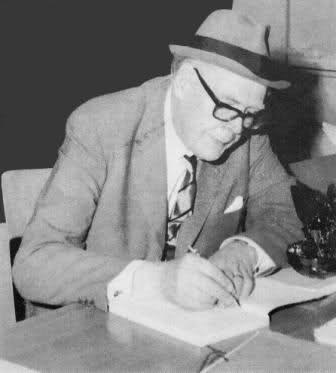
Arthur Upham Pope (February 7, 1881 – September 3, 1969) was an American scholar, art historian, and architecture historian. He was an expert on historical Persian art, and he was the editor of the Survey of Persian Art (1939). Pope was also a university professor of philosophy and aesthetics, an archaeologist, photographer, museum director, interior designer, and the co-founder of an international scholarly organization.
Born in Phenix in West Warwick, Rhode Island on February 7, 1881. His family was descended from English Puritans that had settled in the Boston-area.
Pope graduated from Worcester Academy in 1899. He attended Brown University, and graduated with a B.A. degree in 1904 and a M.A. degree in 1906. He taught at Brown University for two years during his master's degree studies. In 1909, he married Bertha Louise Clark.
He pursued further graduate-level teaching work at Cornell University and Harvard University and again taught at Brown until 1911, when he was hired by the philosophy department at the University of California, Berkeley. During World War I, while teaching at U.C. Berkeley, he was active in the peace movement as California organizing secretary for the American Neutral Conference Committee.
He left Berkeley in December 1917 under a cloud caused by his relationship with student Phyllis Ackerman. He taught briefly at Amherst College, where his friend and former professor Alexander Meiklejohn had become president. But he soon gave up teaching philosophy and pursued his passion for Persian art, which had begun with an early interest in Oriental rugs. He had organized his first museum exhibition of Middle Eastern carpets while still an undergraduate at Brown University.
After the United States entered World War I in 1917, Pope took a job in the Personnel Division of the War Department's General Staff in Washington, D.C. He began lecturing and writing on military morale and on the assessment for promotion of officers. After the war he was among the organizers of the League of Oppressed Peoples and made speaking tours in favor of the Irish Free State. He also intensified his study of Islamic art, a field that was not yet being taught in American universities.
He was divorced from his first wife (who later became the author Bertha Damon). In 1920, Pope married his former student Phyllis Ackerman, who had completed a doctorate in philosophy at Berkeley in 1917 and shared his interest in textile arts. They had collaborated on an exhibition of the Phoebe Apperson Hearst collection in 1916 at the Palace of Fine Arts, San Francisco, and they continued to be partners in many projects for the rest of their lives, each crediting the other with greater expertise.
By the early 1920s, Pope and Ackerman had developed a great deal of expertise as historians of Persian and related art, and they became advisors to major collectors and museums on the acquisition of Islamic art and artefacts.
Arthur Upham Pope
Arthur Upham Pope (February 7, 1881 – September 3, 1969) was an American scholar, art historian, and architecture historian. He was an expert on historical Persian art, and he was the editor of the Survey of Persian Art (1939). Pope was also a university professor of philosophy and aesthetics, an archaeologist, photographer, museum director, interior designer, and the co-founder of an international scholarly organization.
Born in Phenix in West Warwick, Rhode Island on February 7, 1881. His family was descended from English Puritans that had settled in the Boston-area.
Pope graduated from Worcester Academy in 1899. He attended Brown University, and graduated with a B.A. degree in 1904 and a M.A. degree in 1906. He taught at Brown University for two years during his master's degree studies. In 1909, he married Bertha Louise Clark.
He pursued further graduate-level teaching work at Cornell University and Harvard University and again taught at Brown until 1911, when he was hired by the philosophy department at the University of California, Berkeley. During World War I, while teaching at U.C. Berkeley, he was active in the peace movement as California organizing secretary for the American Neutral Conference Committee.
He left Berkeley in December 1917 under a cloud caused by his relationship with student Phyllis Ackerman. He taught briefly at Amherst College, where his friend and former professor Alexander Meiklejohn had become president. But he soon gave up teaching philosophy and pursued his passion for Persian art, which had begun with an early interest in Oriental rugs. He had organized his first museum exhibition of Middle Eastern carpets while still an undergraduate at Brown University.
After the United States entered World War I in 1917, Pope took a job in the Personnel Division of the War Department's General Staff in Washington, D.C. He began lecturing and writing on military morale and on the assessment for promotion of officers. After the war he was among the organizers of the League of Oppressed Peoples and made speaking tours in favor of the Irish Free State. He also intensified his study of Islamic art, a field that was not yet being taught in American universities.
He was divorced from his first wife (who later became the author Bertha Damon). In 1920, Pope married his former student Phyllis Ackerman, who had completed a doctorate in philosophy at Berkeley in 1917 and shared his interest in textile arts. They had collaborated on an exhibition of the Phoebe Apperson Hearst collection in 1916 at the Palace of Fine Arts, San Francisco, and they continued to be partners in many projects for the rest of their lives, each crediting the other with greater expertise.
By the early 1920s, Pope and Ackerman had developed a great deal of expertise as historians of Persian and related art, and they became advisors to major collectors and museums on the acquisition of Islamic art and artefacts.
Recent media
Recent media