
Recent from talks
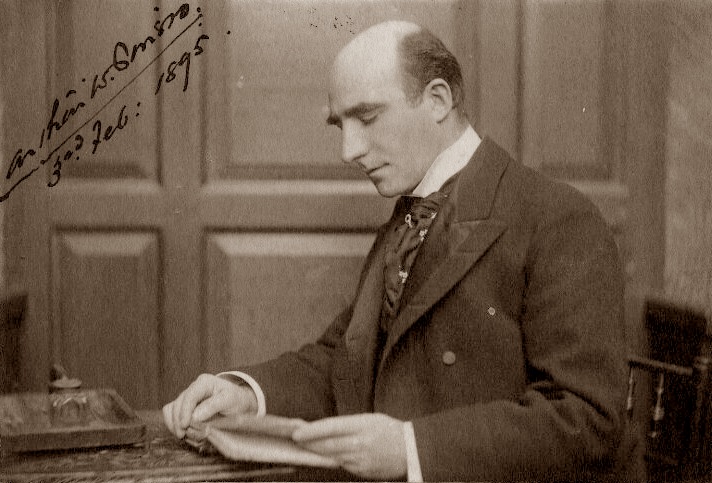
Arthur Wing Pinero
Knowledge base stats:
Talk channels stats:
Members stats:
Arthur Wing Pinero
Sir Arthur Wing Pinero (24 May 1855 – 23 November 1934) was an English playwright and, early in his career, actor.
Pinero was drawn to the theatre from an early age, and became a professional actor at the age of 19. He gained experience as a supporting actor in British provincial theatres, and from 1876 to 1881 was a member of Henry Irving's company, based at the Lyceum Theatre, London.
Pinero wrote his first play in 1877. Seven years later, having written 15 more, three of them highly successful, he abandoned acting and became a full-time playwright. He first became known for a series of farces, of which The Magistrate (1885) was the longest-running. During the 1890s he turned to serious subjects. The Second Mrs Tanqueray (1893), dealing with a woman with a scandalous past, was regarded as shocking, but ran well and made a large profit. His other successes included Trelawny of the "Wells" (1898), a romantic comedy celebrating the theatre, old and new, and The Gay Lord Quex (1899), about a reformed roué and a spirited young woman. A venture into opera, with a libretto for The Beauty Stone (1898), was not a success, and Pinero thereafter generally stuck to his familiar genre of society dramas and comedies.
Although he continued to write throughout the first three decades of the 20th century and into the fourth, it is Pinero's work from the 1880s and 1890s that has endured. There have been numerous revivals of many of his plays; and some have been adapted for the cinema or as musicals. By his later years, Pinero was seen as old-fashioned, and his last plays were not successful. He died in London at the age of 79.
Pinero was born in London, the only son, and second of three children, of John Daniel Pinero (1798–1871), and his wife Lucy, née Daines (1836–1905). Pinero's father and grandfather were London solicitors. They were descended from the Pinheiro family, described by Pinero's biographer John Dawick as "a distinguished family of Sephardic Jews who rose to prominence in medieval Portugal before suffering the persecutions of the Inquisition". Pinero's branch of the family fled to England. His grandfather abandoned the Jewish faith, became a member of the Church of England, married a Christian Englishwoman, Margaret Wing, and became a highly successful lawyer. His younger son, Pinero's father, also took up the legal profession, but was much less successful; Pinero was brought up in circumstances that were not poor but were not affluent. He attended Spa Fields Chapel charity school in Exmouth Street, Clerkenwell, London, until the age of ten, when he went to work in his father's office.
John Daniel Pinero died in May 1871, leaving very little money. To contribute to the family income, Pinero continued to work as a solicitor's clerk, earning £1 a week. In the evenings he studied elocution at the Birkbeck Literary and Scientific Institution. He and his fellow students staged several productions of plays, and Pinero became irresistibly drawn to the theatre. In May 1874 he abandoned the legal profession and joined R. H. Wyndham at the Theatre Royal, Edinburgh, as a "general utility" actor. He made his professional debut in the small role of a groom in an adaptation of Wilkie Collins's The Woman in White.
As a junior member of Wyndham's company Pinero quickly gained experience in a range of roles, supporting E. A. Sothern in Our American Cousin, and Charles Mathews in the Balzac adaptation A Game of Speculation, and graduating to larger parts such as Crosstree in Black-Eyed Susan. His engagement in Edinburgh came to a sudden end in February 1875 when the theatre was destroyed by fire. He was fortunate in being offered another provincial engagement, at the Royal Alexandra Theatre, Liverpool, where he began to be noticed by the press, gaining approving reviews for his acting in supporting roles. A production of Miss Gwilt, an adaptation of Wilkie Collins's Armadale, starring Ada Cavendish, was reported by the theatrical paper The Era as "a genuine triumph"; the play transferred from Liverpool to the West End, and Pinero retained his role as an elderly solicitor. The production was not the hoped-for success in London, but Pinero received good notices for his performance, and when the run finished after ten weeks he was immediately engaged by Henry Irving's manager, Mrs Bateman, as a member of the supporting cast for Irving's forthcoming provincial tour.
Although the tour was uncongenial, and Pinero gathered some highly critical notices, he continued to work as a supporting actor to Irving for five years. He first appeared at the Lyceum, Irving's London base, in December 1876 and played a total of 21 parts there between then and 1881. His Shakespearean roles were Lord Stanley in Richard III (1877), Rosencrantz in Hamlet (1878), Guildenstern in Hamlet (1879), Salarino in The Merchant of Venice (1879), and Roderigo in Othello (1881). In a revival of the melodrama The Bells, with which Irving's name was already synonymous, he played Dr Zimmer (1878).
Hub AI
Arthur Wing Pinero AI simulator
(@Arthur Wing Pinero_simulator)
Arthur Wing Pinero
Sir Arthur Wing Pinero (24 May 1855 – 23 November 1934) was an English playwright and, early in his career, actor.
Pinero was drawn to the theatre from an early age, and became a professional actor at the age of 19. He gained experience as a supporting actor in British provincial theatres, and from 1876 to 1881 was a member of Henry Irving's company, based at the Lyceum Theatre, London.
Pinero wrote his first play in 1877. Seven years later, having written 15 more, three of them highly successful, he abandoned acting and became a full-time playwright. He first became known for a series of farces, of which The Magistrate (1885) was the longest-running. During the 1890s he turned to serious subjects. The Second Mrs Tanqueray (1893), dealing with a woman with a scandalous past, was regarded as shocking, but ran well and made a large profit. His other successes included Trelawny of the "Wells" (1898), a romantic comedy celebrating the theatre, old and new, and The Gay Lord Quex (1899), about a reformed roué and a spirited young woman. A venture into opera, with a libretto for The Beauty Stone (1898), was not a success, and Pinero thereafter generally stuck to his familiar genre of society dramas and comedies.
Although he continued to write throughout the first three decades of the 20th century and into the fourth, it is Pinero's work from the 1880s and 1890s that has endured. There have been numerous revivals of many of his plays; and some have been adapted for the cinema or as musicals. By his later years, Pinero was seen as old-fashioned, and his last plays were not successful. He died in London at the age of 79.
Pinero was born in London, the only son, and second of three children, of John Daniel Pinero (1798–1871), and his wife Lucy, née Daines (1836–1905). Pinero's father and grandfather were London solicitors. They were descended from the Pinheiro family, described by Pinero's biographer John Dawick as "a distinguished family of Sephardic Jews who rose to prominence in medieval Portugal before suffering the persecutions of the Inquisition". Pinero's branch of the family fled to England. His grandfather abandoned the Jewish faith, became a member of the Church of England, married a Christian Englishwoman, Margaret Wing, and became a highly successful lawyer. His younger son, Pinero's father, also took up the legal profession, but was much less successful; Pinero was brought up in circumstances that were not poor but were not affluent. He attended Spa Fields Chapel charity school in Exmouth Street, Clerkenwell, London, until the age of ten, when he went to work in his father's office.
John Daniel Pinero died in May 1871, leaving very little money. To contribute to the family income, Pinero continued to work as a solicitor's clerk, earning £1 a week. In the evenings he studied elocution at the Birkbeck Literary and Scientific Institution. He and his fellow students staged several productions of plays, and Pinero became irresistibly drawn to the theatre. In May 1874 he abandoned the legal profession and joined R. H. Wyndham at the Theatre Royal, Edinburgh, as a "general utility" actor. He made his professional debut in the small role of a groom in an adaptation of Wilkie Collins's The Woman in White.
As a junior member of Wyndham's company Pinero quickly gained experience in a range of roles, supporting E. A. Sothern in Our American Cousin, and Charles Mathews in the Balzac adaptation A Game of Speculation, and graduating to larger parts such as Crosstree in Black-Eyed Susan. His engagement in Edinburgh came to a sudden end in February 1875 when the theatre was destroyed by fire. He was fortunate in being offered another provincial engagement, at the Royal Alexandra Theatre, Liverpool, where he began to be noticed by the press, gaining approving reviews for his acting in supporting roles. A production of Miss Gwilt, an adaptation of Wilkie Collins's Armadale, starring Ada Cavendish, was reported by the theatrical paper The Era as "a genuine triumph"; the play transferred from Liverpool to the West End, and Pinero retained his role as an elderly solicitor. The production was not the hoped-for success in London, but Pinero received good notices for his performance, and when the run finished after ten weeks he was immediately engaged by Henry Irving's manager, Mrs Bateman, as a member of the supporting cast for Irving's forthcoming provincial tour.
Although the tour was uncongenial, and Pinero gathered some highly critical notices, he continued to work as a supporting actor to Irving for five years. He first appeared at the Lyceum, Irving's London base, in December 1876 and played a total of 21 parts there between then and 1881. His Shakespearean roles were Lord Stanley in Richard III (1877), Rosencrantz in Hamlet (1878), Guildenstern in Hamlet (1879), Salarino in The Merchant of Venice (1879), and Roderigo in Othello (1881). In a revival of the melodrama The Bells, with which Irving's name was already synonymous, he played Dr Zimmer (1878).
Recent media