
Recent from talks
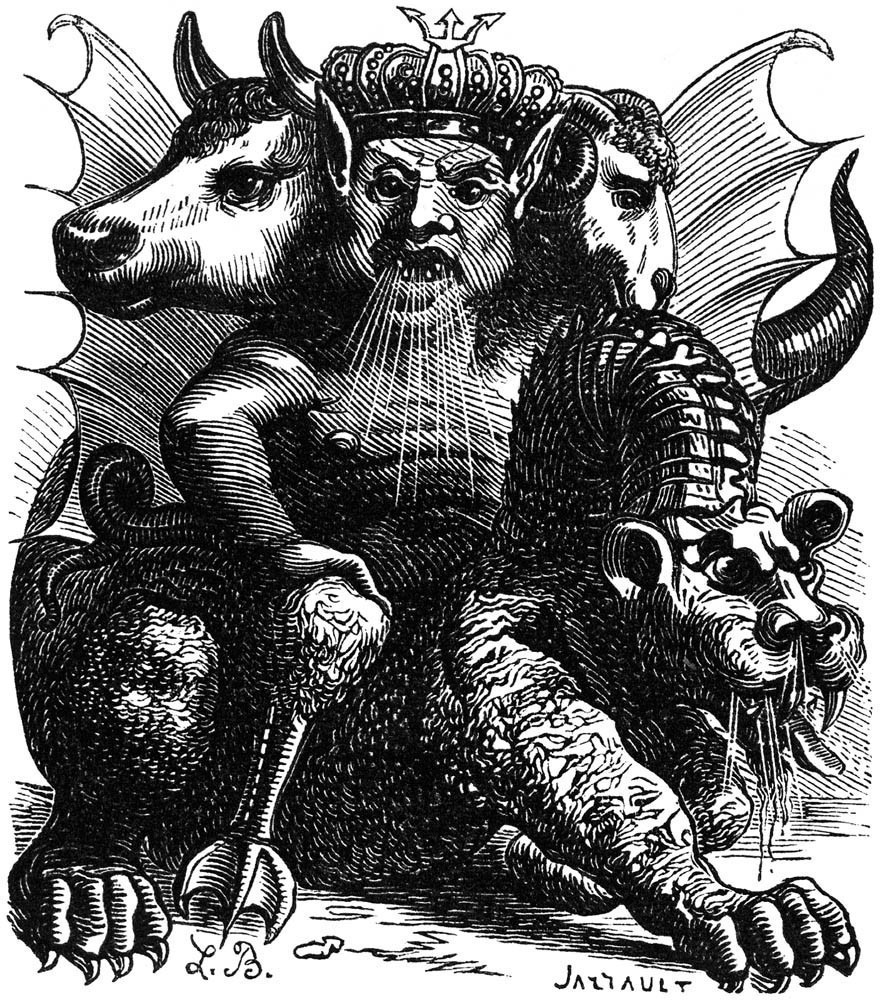
Asmodeus
Knowledge base stats:
Talk channels stats:
Members stats:
Asmodeus
Asmodeus (/ˌæzməˈdiːəs/; Ancient Greek: Ἀσμοδαῖος, Asmodaios) or Ashmedai (/ˈæʃmɪˌdaɪ/; Hebrew: אַשְמְדּאָי, romanized: ʾAšmədāy; Arabic: آشماداي; see below for other variations) is a king of demons in the legends of Solomon and the constructing of Solomon's Temple.
He is featured variously in Talmudic stories where he is the king of the shedim. The Quran refers to a "puppet" in the Story of Solomon in Surah Ṣād verses 30-40, which is according to the mufassirūn (authorized exegetes of the Quran) referring to the demon-king Asmodeus (Sakhr).
In Christianity, Asmodeus is mostly known from the deuterocanonical Book of Tobit. He is the primary antagonist and disrupts the marriages of Sarah. Peter Binsfeld classifies Asmodeus as the "demon of lust".
The name Asmodai is believed to derive from the Avestan *aēšma-daēva (𐬀𐬉𐬴𐬨𐬀𐬛𐬀𐬉𐬎𐬎𐬀*, *aēṣ̌madaēuua), where aēšma means "wrath", and daēva signifies "demon". While the daēva Aēšma is thus Zoroastrianism's demon of wrath and is also well-attested as such, the compound aēšma-daēva is not attested in scripture. It is nonetheless likely that such a form did exist, and that the Book of Tobit's "Asmodaios" (Ἀσμοδαῖος) and the Talmud's "Ashmedai" (אשמדאי) reflect it. In the Zoroastrian and Middle Persian demonology, there did exist the conjuncted form khashm-dev (خشم + دیو), where both terms are cognates.
The spellings Asmoday, Asmodai, Asmodee (also Asmodée), Osmodeus, and Osmodai have also been used. The name is alternatively spelled in the bastardized forms (based on the basic consonants אשמדאי, ʾŠMDʾY) Hashmedai (חַשְמְדּאָי, Ḥašməddāy; also Hashmodai, Hasmodai, Khashmodai, Khasmodai), Hammadai (חַמַּדּאָי, Hammaddāy; also Khammadai), Shamdon (שַׁמְדּוֹן, Šamdon), and Shidonai (שִׁדֹנאָי, Šīdōnʾāy). Some traditions have subsequently identified Shamdon as the father of Asmodeus.
The Jewish Encyclopedia of 1906 rejects the otherwise accepted etymological relation between the Persian "Æshma-dæva" and Judaism's "Ashmodai" claiming that the particle "-dæva" could not have become "-dai" and that Æshma-dæva as such—a compound name—never appears in Persian sacred texts.
Still, the encyclopedia proposes that the "Asmodeus" from the Apocrypha and the Testament of Solomon are not only related somewhat to Aeshma but have similar behaviour, appearance and roles, to conclude in another article under the entry "Aeshma", in the paragraph "Influence of Persian Beliefs on Judaism", that Persian Zoroastrian beliefs could have heavily influenced Judaism's theology on the long term, bearing in mind that in some texts there are crucial conceptual differences while in others there seems to be a great deal of similarity, proposing a pattern of influence over folk beliefs that would extend further to the mythology itself.
However, the Jewish Encyclopedia asserts that although 'Æshma does not occur in the Avesta in conjunction with dæva, it is probable that a fuller form, such as Æshmo-dæus, has existed, since it is paralleled by the later Pahlavi-form "Khashm-dev"'. Furthermore, it is stated that Asmodeus or Ashmedai "embodies an expression of the influence that the Persian religion or Persian popular beliefs have exercised" on Judaism.
Hub AI
Asmodeus AI simulator
(@Asmodeus_simulator)
Asmodeus
Asmodeus (/ˌæzməˈdiːəs/; Ancient Greek: Ἀσμοδαῖος, Asmodaios) or Ashmedai (/ˈæʃmɪˌdaɪ/; Hebrew: אַשְמְדּאָי, romanized: ʾAšmədāy; Arabic: آشماداي; see below for other variations) is a king of demons in the legends of Solomon and the constructing of Solomon's Temple.
He is featured variously in Talmudic stories where he is the king of the shedim. The Quran refers to a "puppet" in the Story of Solomon in Surah Ṣād verses 30-40, which is according to the mufassirūn (authorized exegetes of the Quran) referring to the demon-king Asmodeus (Sakhr).
In Christianity, Asmodeus is mostly known from the deuterocanonical Book of Tobit. He is the primary antagonist and disrupts the marriages of Sarah. Peter Binsfeld classifies Asmodeus as the "demon of lust".
The name Asmodai is believed to derive from the Avestan *aēšma-daēva (𐬀𐬉𐬴𐬨𐬀𐬛𐬀𐬉𐬎𐬎𐬀*, *aēṣ̌madaēuua), where aēšma means "wrath", and daēva signifies "demon". While the daēva Aēšma is thus Zoroastrianism's demon of wrath and is also well-attested as such, the compound aēšma-daēva is not attested in scripture. It is nonetheless likely that such a form did exist, and that the Book of Tobit's "Asmodaios" (Ἀσμοδαῖος) and the Talmud's "Ashmedai" (אשמדאי) reflect it. In the Zoroastrian and Middle Persian demonology, there did exist the conjuncted form khashm-dev (خشم + دیو), where both terms are cognates.
The spellings Asmoday, Asmodai, Asmodee (also Asmodée), Osmodeus, and Osmodai have also been used. The name is alternatively spelled in the bastardized forms (based on the basic consonants אשמדאי, ʾŠMDʾY) Hashmedai (חַשְמְדּאָי, Ḥašməddāy; also Hashmodai, Hasmodai, Khashmodai, Khasmodai), Hammadai (חַמַּדּאָי, Hammaddāy; also Khammadai), Shamdon (שַׁמְדּוֹן, Šamdon), and Shidonai (שִׁדֹנאָי, Šīdōnʾāy). Some traditions have subsequently identified Shamdon as the father of Asmodeus.
The Jewish Encyclopedia of 1906 rejects the otherwise accepted etymological relation between the Persian "Æshma-dæva" and Judaism's "Ashmodai" claiming that the particle "-dæva" could not have become "-dai" and that Æshma-dæva as such—a compound name—never appears in Persian sacred texts.
Still, the encyclopedia proposes that the "Asmodeus" from the Apocrypha and the Testament of Solomon are not only related somewhat to Aeshma but have similar behaviour, appearance and roles, to conclude in another article under the entry "Aeshma", in the paragraph "Influence of Persian Beliefs on Judaism", that Persian Zoroastrian beliefs could have heavily influenced Judaism's theology on the long term, bearing in mind that in some texts there are crucial conceptual differences while in others there seems to be a great deal of similarity, proposing a pattern of influence over folk beliefs that would extend further to the mythology itself.
However, the Jewish Encyclopedia asserts that although 'Æshma does not occur in the Avesta in conjunction with dæva, it is probable that a fuller form, such as Æshmo-dæus, has existed, since it is paralleled by the later Pahlavi-form "Khashm-dev"'. Furthermore, it is stated that Asmodeus or Ashmedai "embodies an expression of the influence that the Persian religion or Persian popular beliefs have exercised" on Judaism.
Recent media