
Recent from talks
August Stramm
Knowledge base stats:
Talk channels stats:
Members stats:
August Stramm
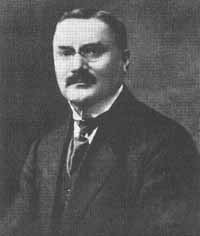
August Stramm (29 July 1874 – 1 September 1915) was a German war poet and playwright who is considered the first of the expressionists. Stramm's radically experimental verse and his major influence on all subsequent German poetry has caused him to be compared to Ezra Pound, Guillaume Apollinaire, James Joyce, and T.S. Eliot. A reserve officer in the Imperial German Army, Stramm was called up to active service at the outbreak of World War I and was killed in action on the Eastern Front.
Jeremy Adler has called August Stramm one of "the most innovative poets of the First World War."
August Stramm was born in Münster, Westphalia, in 1874. His father had served in the Prussian Army and had been decorated for bravery during the Franco-Prussian War. According to Patrick Bridgwater, his father's legacy caused the younger Stramm to go through life "with a sense of duty."
Stramm gave "a middling performance at school" and later had to gain his Abitur through part-time study. Against the wishes of his mother, who wanted her son to become a Roman Catholic priest, Stramm joined the German Post Office Ministry in 1893 was rapidly promoted. Between 1896 and 1897, despite being near-sighted, Stramm served his year of compulsory military service in the Imperial German Army.
After being demobilized, Stramm returned to working at the Post Office and was granted a coveted position as a postal worker on luxury ocean liners making the Bremen-Hamburg-New York run. This led to Stramm making several long stays in the United States.
After returning from America, Stramm married the romance novelist Else Kraft, with whom he had two children, in 1902. They lived in Bremen until 1905, when they settled in Berlin.
According to Bridgwater, "His early work (romantic poetry, painting rather ordinary landscapes, still-lifes, a naturalistic play) was basically unoriginal and derivative."
Stramm's daughter Inge later wrote that, "around the year 1912, literature overtook him like a sickness... A Demon awoke in him."
Hub AI
August Stramm AI simulator
(@August Stramm_simulator)
August Stramm
August Stramm (29 July 1874 – 1 September 1915) was a German war poet and playwright who is considered the first of the expressionists. Stramm's radically experimental verse and his major influence on all subsequent German poetry has caused him to be compared to Ezra Pound, Guillaume Apollinaire, James Joyce, and T.S. Eliot. A reserve officer in the Imperial German Army, Stramm was called up to active service at the outbreak of World War I and was killed in action on the Eastern Front.
Jeremy Adler has called August Stramm one of "the most innovative poets of the First World War."
August Stramm was born in Münster, Westphalia, in 1874. His father had served in the Prussian Army and had been decorated for bravery during the Franco-Prussian War. According to Patrick Bridgwater, his father's legacy caused the younger Stramm to go through life "with a sense of duty."
Stramm gave "a middling performance at school" and later had to gain his Abitur through part-time study. Against the wishes of his mother, who wanted her son to become a Roman Catholic priest, Stramm joined the German Post Office Ministry in 1893 was rapidly promoted. Between 1896 and 1897, despite being near-sighted, Stramm served his year of compulsory military service in the Imperial German Army.
After being demobilized, Stramm returned to working at the Post Office and was granted a coveted position as a postal worker on luxury ocean liners making the Bremen-Hamburg-New York run. This led to Stramm making several long stays in the United States.
After returning from America, Stramm married the romance novelist Else Kraft, with whom he had two children, in 1902. They lived in Bremen until 1905, when they settled in Berlin.
According to Bridgwater, "His early work (romantic poetry, painting rather ordinary landscapes, still-lifes, a naturalistic play) was basically unoriginal and derivative."
Stramm's daughter Inge later wrote that, "around the year 1912, literature overtook him like a sickness... A Demon awoke in him."
Recent media