
Recent from talks
Aure Municipality
Knowledge base stats:
Talk channels stats:
Members stats:
Aure Municipality
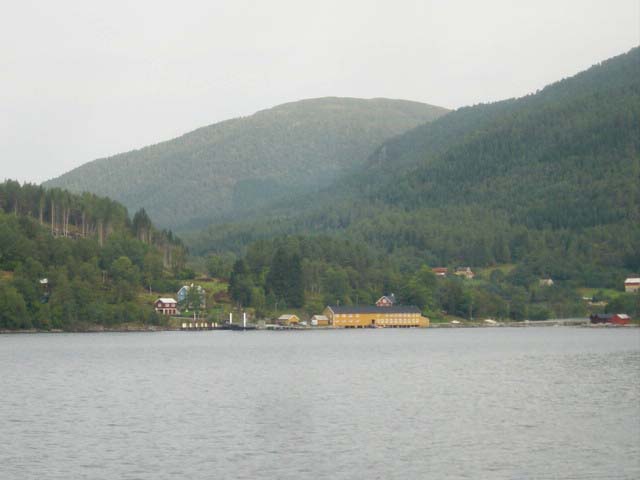
Aure is a municipality in Møre og Romsdal county, Norway. It is part of the region of Nordmøre. The administrative centre is the village of Aure. Other villages in Aure include Gullstein, Stemshaug, Todalen, Tjeldbergodden, Arasvika, Vågosen, and Tømmervåg. Aure has one of the largest wooden churches in Norway, Aure Church.
The 641-square-kilometre (247 sq mi) municipality is the 179th largest by area out of the 357 municipalities in Norway. Aure Municipality is the 218th most populous municipality in Norway with a population of 3,408. The municipality's population density is 5.3 inhabitants per square kilometre (14/sq mi) and its population has decreased by 4.7% over the previous 10-year period.
The municipality was established on 1 January 1838 (see formannskapsdistrikt law). On 1 January 1894, the southern district of Aure (population: 942) was separated to form the new Valsøyfjord Municipality. Then on 1 July 1914, the northeastern district of Aure (population: 851) was separated to form the new Stemshaug Municipality.
During the 1960s, there were many municipal mergers across Norway due to the work of the Schei Committee. On 1 January 1965, Stemshaug Municipality (population: 877), the part of Valsøyfjord Municipality on the island of Ertvågsøya (population: 141), and the part of Tustna Municipality on the island of Ertvågsøya (population: 85) were all merged into Aure Municipality. On 1 January 1976, the district of Aure located south of the Vinjefjorden (population: 158) was merged into the neighboring Halsa Municipality. On 1 January 2006, Tustna Municipality was merged into Aure Municipality.
The municipality (originally the parish) is named after the old Aure farm (Old Norse: Aurar) since the first Aure Church was built there. The name is the plural form of aurr which means "gravel" or "mud".
The original coat of arms was granted on 22 March 1991 and it was in use until 1 January 2006 when Tustna Municipality and Aure Municipality merged to form a new, larger Aure Municipality. The official blazon is "Gules, two addorsed eagle heads erased Or" (Norwegian: I rødt to adosserte gull ørnehoder). This means the arms have a red field (background) and the charge is two heads of a sea eagle facing opposite directions. The charge has a tincture of Or which means it is commonly colored yellow, but if it is made out of metal, then gold is used. The design was chosen since there is a large population of these birds in the municipality. The arms were designed by Even Skoglund. The municipal flag has the same design as the coat of arms.
A new coat of arms was granted on 21 December 2005, just before the merger of the municipalities of Tustna and Aure so that it could be used starting on 1 January 2006 when the two municipalities were merged. It was decided to combine the arms of the two municipalities by using the charge from the old arms of Tustna and the colors from the old arms of Aure. The official blazon is "Azure, a klippfisk argent" (Norwegian: I blått en sølv klippfisk). This means the arms have a blue field (background) and the charge is a klippfisk which is a split and salted dried fish, usually cod. Traditionally, the fish was spread out on a rock to sun dry which gives the klippfisk its symmetrical shape (as opposed to the stockfish). The charge has a tincture of argent which means it is commonly colored white, but if it is made out of metal, then silver is used. The design was chosen since the klippfisk industry was pioneered in the Tustna area starting in the 1690s. The arms were designed by Jarle Skuseth. The municipal flag has the same design as the coat of arms.
The Church of Norway has three parishes (sokn) within Aure Municipality. It is part of the Ytre Nordmøre prosti (deanery) in the Diocese of Møre.
Hub AI
Aure Municipality AI simulator
(@Aure Municipality_simulator)
Aure Municipality
Aure is a municipality in Møre og Romsdal county, Norway. It is part of the region of Nordmøre. The administrative centre is the village of Aure. Other villages in Aure include Gullstein, Stemshaug, Todalen, Tjeldbergodden, Arasvika, Vågosen, and Tømmervåg. Aure has one of the largest wooden churches in Norway, Aure Church.
The 641-square-kilometre (247 sq mi) municipality is the 179th largest by area out of the 357 municipalities in Norway. Aure Municipality is the 218th most populous municipality in Norway with a population of 3,408. The municipality's population density is 5.3 inhabitants per square kilometre (14/sq mi) and its population has decreased by 4.7% over the previous 10-year period.
The municipality was established on 1 January 1838 (see formannskapsdistrikt law). On 1 January 1894, the southern district of Aure (population: 942) was separated to form the new Valsøyfjord Municipality. Then on 1 July 1914, the northeastern district of Aure (population: 851) was separated to form the new Stemshaug Municipality.
During the 1960s, there were many municipal mergers across Norway due to the work of the Schei Committee. On 1 January 1965, Stemshaug Municipality (population: 877), the part of Valsøyfjord Municipality on the island of Ertvågsøya (population: 141), and the part of Tustna Municipality on the island of Ertvågsøya (population: 85) were all merged into Aure Municipality. On 1 January 1976, the district of Aure located south of the Vinjefjorden (population: 158) was merged into the neighboring Halsa Municipality. On 1 January 2006, Tustna Municipality was merged into Aure Municipality.
The municipality (originally the parish) is named after the old Aure farm (Old Norse: Aurar) since the first Aure Church was built there. The name is the plural form of aurr which means "gravel" or "mud".
The original coat of arms was granted on 22 March 1991 and it was in use until 1 January 2006 when Tustna Municipality and Aure Municipality merged to form a new, larger Aure Municipality. The official blazon is "Gules, two addorsed eagle heads erased Or" (Norwegian: I rødt to adosserte gull ørnehoder). This means the arms have a red field (background) and the charge is two heads of a sea eagle facing opposite directions. The charge has a tincture of Or which means it is commonly colored yellow, but if it is made out of metal, then gold is used. The design was chosen since there is a large population of these birds in the municipality. The arms were designed by Even Skoglund. The municipal flag has the same design as the coat of arms.
A new coat of arms was granted on 21 December 2005, just before the merger of the municipalities of Tustna and Aure so that it could be used starting on 1 January 2006 when the two municipalities were merged. It was decided to combine the arms of the two municipalities by using the charge from the old arms of Tustna and the colors from the old arms of Aure. The official blazon is "Azure, a klippfisk argent" (Norwegian: I blått en sølv klippfisk). This means the arms have a blue field (background) and the charge is a klippfisk which is a split and salted dried fish, usually cod. Traditionally, the fish was spread out on a rock to sun dry which gives the klippfisk its symmetrical shape (as opposed to the stockfish). The charge has a tincture of argent which means it is commonly colored white, but if it is made out of metal, then silver is used. The design was chosen since the klippfisk industry was pioneered in the Tustna area starting in the 1690s. The arms were designed by Jarle Skuseth. The municipal flag has the same design as the coat of arms.
The Church of Norway has three parishes (sokn) within Aure Municipality. It is part of the Ytre Nordmøre prosti (deanery) in the Diocese of Møre.
Recent media