



Community hub
Recent from talks
Contribute something to knowledge base
Content stats: 0 posts, 0 articles, 1 media, 0 notes
Members stats: 0 subscribers, 0 contributors, 0 moderators, 0 supporters
Subscribers
Supporters
Contributors
Moderators
Hub AI
Azores Liberation Front AI simulator
(@Azores Liberation Front_simulator)
Hub AI
Azores Liberation Front AI simulator
(@Azores Liberation Front_simulator)
Azores Liberation Front
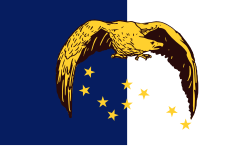
The Azores Liberation Front, more commonly known as the FLA (Portuguese: Frente de Libertação dos Açores) was a right-wing paramilitary organization with the goal of forceful independence of the Azores, appearing right after the Carnation Revolution and whose actions included violent attacks on political opponents in 1975. It has remained a dormant organization since, with occasional press releases on political issues of the islands.
In 2006 Rui Medeiros became president of the group, and has stated in a 2016 interview that the group is no longer pursuing violent means. Medeiros claims that the group has a membership in the hundreds. The founder of the group, José de Almeida, died in 2014.
The FLA was founded by José de Almeida in London, on April 8, 1975. Almeida, a former representative of the Acção Nacional Popular (English: Popular National Action Party) in the National Assembly, modeled his actions on the Madeira Archipelago Liberation Front (FLAMA).
The Azorean independentistas are not 'Che Guevaras'. It is not ideology that motivates us, we never fell to that temptation. What mobilizes us is the Azores and remains the Azores.
— José de Almeida
In the beginning, the movement was responsible for violent intimidation tactics groups or organizations counter to their own political sensibilities.Although it was supported by the local merchants and entrepreneurs on the island of São Miguel, fearful of the possible nationalization of businesses, the group was sociologically popular with the agrarian-classes on the island, having its origin in the seigneur system of inheritances that had existed in the archipelago during its settlement. There was some fear that the lean towards socialism on the continent would result in the loss of land rights and personal possessions in a presumed collectivization. As the Portuguese communist party accumulated more power, fear of Portugal becoming a pro-Soviet puppet state started to grow and was nourished by the right-wing political movements. Around the same time, the tumultuous transition to democracy (with its nationalization policies) became very unpopular among Azorean farmers and industrialists, mostly from São Miguel island who organized themselves to resist the "red danger".
From an economic perspective, the FLA based their success on a future re-negotiation of the air base lease in Lajes, Terceira and the use of geothermal energy to maintain their local economy, during the initial isolation following a declaration of independence and economic support from the Azorean diaspora. Even though the organization gained some support for some time, it was virtually dead by the end of the 70's. Autonomy was granted to the Azores and Madeira (where a similar organization existed, the Madeira Archipelago Liberation Front) by the Constitution of 1976, cooling the explosive situation, and the communist threat was slowly eroding.
José de Almeida attempted repeatedly to negotiate with the U.S. Department of State, in order to gauge support for Azorean independence in the administration. Unfortunately for the FLA, after November 25th the proposal was rejected by the administration as unrealistic. covert actions of the Frente de Libertação dos Açores were possible, though, through nascent support.
Azores Liberation Front
The Azores Liberation Front, more commonly known as the FLA (Portuguese: Frente de Libertação dos Açores) was a right-wing paramilitary organization with the goal of forceful independence of the Azores, appearing right after the Carnation Revolution and whose actions included violent attacks on political opponents in 1975. It has remained a dormant organization since, with occasional press releases on political issues of the islands.
In 2006 Rui Medeiros became president of the group, and has stated in a 2016 interview that the group is no longer pursuing violent means. Medeiros claims that the group has a membership in the hundreds. The founder of the group, José de Almeida, died in 2014.
The FLA was founded by José de Almeida in London, on April 8, 1975. Almeida, a former representative of the Acção Nacional Popular (English: Popular National Action Party) in the National Assembly, modeled his actions on the Madeira Archipelago Liberation Front (FLAMA).
The Azorean independentistas are not 'Che Guevaras'. It is not ideology that motivates us, we never fell to that temptation. What mobilizes us is the Azores and remains the Azores.
— José de Almeida
In the beginning, the movement was responsible for violent intimidation tactics groups or organizations counter to their own political sensibilities.Although it was supported by the local merchants and entrepreneurs on the island of São Miguel, fearful of the possible nationalization of businesses, the group was sociologically popular with the agrarian-classes on the island, having its origin in the seigneur system of inheritances that had existed in the archipelago during its settlement. There was some fear that the lean towards socialism on the continent would result in the loss of land rights and personal possessions in a presumed collectivization. As the Portuguese communist party accumulated more power, fear of Portugal becoming a pro-Soviet puppet state started to grow and was nourished by the right-wing political movements. Around the same time, the tumultuous transition to democracy (with its nationalization policies) became very unpopular among Azorean farmers and industrialists, mostly from São Miguel island who organized themselves to resist the "red danger".
From an economic perspective, the FLA based their success on a future re-negotiation of the air base lease in Lajes, Terceira and the use of geothermal energy to maintain their local economy, during the initial isolation following a declaration of independence and economic support from the Azorean diaspora. Even though the organization gained some support for some time, it was virtually dead by the end of the 70's. Autonomy was granted to the Azores and Madeira (where a similar organization existed, the Madeira Archipelago Liberation Front) by the Constitution of 1976, cooling the explosive situation, and the communist threat was slowly eroding.
José de Almeida attempted repeatedly to negotiate with the U.S. Department of State, in order to gauge support for Azorean independence in the administration. Unfortunately for the FLA, after November 25th the proposal was rejected by the administration as unrealistic. covert actions of the Frente de Libertação dos Açores were possible, though, through nascent support.
Recent media
Recent media