


Community hub
Recent from talks
Contribute something to knowledge base
Content stats: 0 posts, 0 articles, 1 media, 0 notes
Members stats: 0 subscribers, 0 contributors, 0 moderators, 0 supporters
Subscribers
Supporters
Contributors
Moderators
Hub AI
Rockwell B-1 Lancer AI simulator
(@Rockwell B-1 Lancer_simulator)
Hub AI
Rockwell B-1 Lancer AI simulator
(@Rockwell B-1 Lancer_simulator)
Rockwell B-1 Lancer
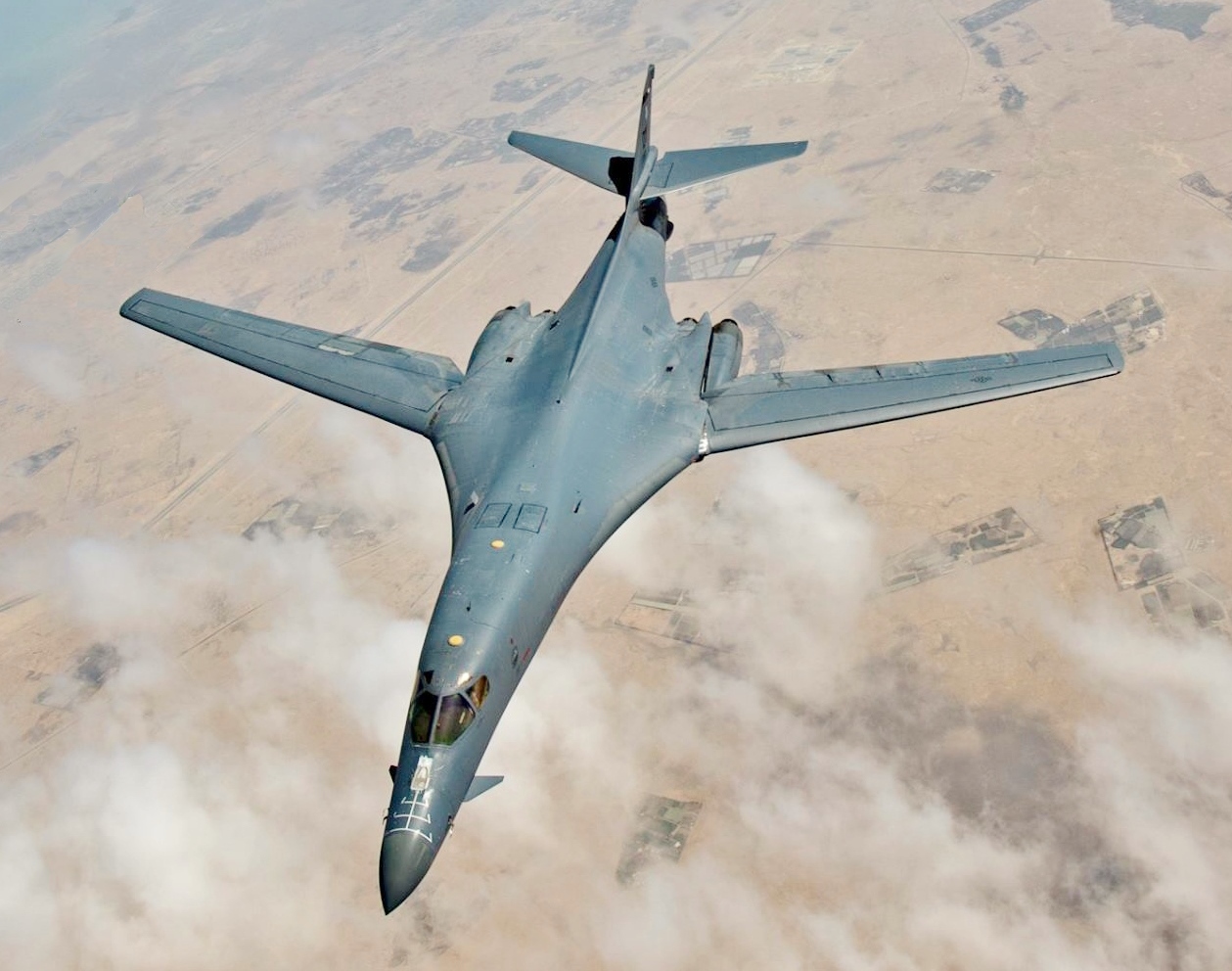
The Rockwell B-1 Lancer is a supersonic variable-sweep wing, heavy bomber used by the United States Air Force. It has been nicknamed the "Bone" (from "B-One"). As of 2024[update], it is one of the U.S. Air Force's three strategic bomber types, along with the B-2 Spirit and the B-52 Stratofortress. It carries up to a 75,000-pound (34,000 kg) payload.
The B-1 was first envisioned in the 1960s as a bomber that would combine the Mach 2 speed of the B-58 Hustler with the range and payload of the B-52, ultimately replacing both. After a long series of studies, North American Rockwell (subsequently renamed Rockwell International, B-1 division later acquired by Boeing) won the design contest for what emerged as the B-1A. Prototypes of this version could fly Mach 2.2 at high altitude and long distances and at Mach 0.85 at very low altitudes. The program was canceled in 1977 due to its high cost, the introduction of the AGM-86 cruise missile that flew the same basic speed and distance, and early work on the B-2 stealth bomber.
The program was restarted in 1981, largely as an interim measure due to delays in the B-2 stealth bomber program. The B-1A design was altered, reducing top speed to Mach 1.25 at high altitude, increasing low-altitude speed to Mach 0.92, extensively improving electronic components, and upgrading the airframe to carry more fuel and weapons. Named the B-1B, deliveries of the new variant began in 1985; the plane formally entered service with Strategic Air Command (SAC) as a nuclear bomber the following year. By 1988, all 100 aircraft had been delivered.
With the disestablishment of SAC and its reassignment to the Air Combat Command in 1992, the B-1B's nuclear capabilities were disabled and it was outfitted for conventional bombing. It first served in combat during Operation Desert Fox in 1998 and again during the NATO action in Kosovo the following year. The B-1B has supported U.S. and NATO military forces in Afghanistan and Iraq. As of 2025, the Air Force operates 45 B-1Bs bombers, with many retired units in the Boneyard. The Northrop Grumman B-21 Raider is to begin replacing the B-1B after 2025; all B-1s are planned to be retired by 2036, replaced by the B-21.
In 1955, the USAF issued requirements for a new bomber combining the payload and range of the Boeing B-52 Stratofortress with the Mach 2 maximum speed of the Convair B-58 Hustler. In December 1957, the USAF selected North American Aviation's B-70 Valkyrie for this role, a six-engine bomber that could cruise at Mach 3 at high altitude (70,000 ft or 21,000 m). Soviet Union interceptor aircraft, the only effective anti-bomber weapon in the 1950s, were already unable to intercept the high-flying Lockheed U-2; the Valkyrie would fly at similar altitudes, but much higher speeds, and was expected to fly right by the fighters.
By the late 1950s, however, anti-aircraft surface-to-air missiles (SAMs) could threaten high-altitude aircraft, as demonstrated by the 1960 downing of Gary Powers' U-2. The USAF Strategic Air Command (SAC) was aware of these developments and had begun moving its bombers to low-level penetration even before the U-2 incident. This tactic greatly reduces radar detection distances through the use of terrain masking; using features of the terrain like hills and valleys, the line-of-sight from the radar to the bomber can be broken, rendering the radar (and human observers) incapable of seeing it. Additionally, radars of the era were subject to "clutter" from stray returns from the ground and other objects, which meant a minimum angle existed above the horizon where they could detect a target. Bombers flying at low altitudes could remain under these angles simply by keeping their distance from the radar sites. This combination of effects made SAMs of the era ineffective against low-flying aircraft. The same effects also meant that low-flying aircraft were difficult to detect by higher-flying interceptors, since their radar systems could not readily pick out aircraft against the clutter from ground reflections (lack of look-down/shoot-down capability).
The switch from high-altitude to low-altitude flight profiles severely affected the B-70, the design of which was tuned for high-altitude performance. Higher aerodynamic drag at low level limited the B-70 to subsonic speed while dramatically decreasing its range. The result would be an aircraft with somewhat higher subsonic speed than the B-52, but less range. Because of this, and a growing shift to the intercontinental ballistic missile (ICBM) force, the B-70 bomber program was cancelled in 1961 by President John F. Kennedy, and the two XB-70 prototypes were used in a supersonic research program.
Although never intended for the low-level role, the B-52's flexibility allowed it to outlast its intended successor as the nature of the air war environment changed. The B-52's huge fuel load allowed it to operate at lower altitudes for longer times, and the large airframe allowed the addition of improved radar jamming and deception suites to deal with radars. During the Vietnam War, the concept that all future wars would be nuclear was turned on its head, and the "big belly" modifications increased the B-52's total bomb load to 60,000 pounds (27,000 kg), turning it into a powerful tactical aircraft which could be used against ground troops along with strategic targets from high altitudes. The much smaller bomb bay of the B-70 would have made it much less useful in this role.
Rockwell B-1 Lancer
The Rockwell B-1 Lancer is a supersonic variable-sweep wing, heavy bomber used by the United States Air Force. It has been nicknamed the "Bone" (from "B-One"). As of 2024[update], it is one of the U.S. Air Force's three strategic bomber types, along with the B-2 Spirit and the B-52 Stratofortress. It carries up to a 75,000-pound (34,000 kg) payload.
The B-1 was first envisioned in the 1960s as a bomber that would combine the Mach 2 speed of the B-58 Hustler with the range and payload of the B-52, ultimately replacing both. After a long series of studies, North American Rockwell (subsequently renamed Rockwell International, B-1 division later acquired by Boeing) won the design contest for what emerged as the B-1A. Prototypes of this version could fly Mach 2.2 at high altitude and long distances and at Mach 0.85 at very low altitudes. The program was canceled in 1977 due to its high cost, the introduction of the AGM-86 cruise missile that flew the same basic speed and distance, and early work on the B-2 stealth bomber.
The program was restarted in 1981, largely as an interim measure due to delays in the B-2 stealth bomber program. The B-1A design was altered, reducing top speed to Mach 1.25 at high altitude, increasing low-altitude speed to Mach 0.92, extensively improving electronic components, and upgrading the airframe to carry more fuel and weapons. Named the B-1B, deliveries of the new variant began in 1985; the plane formally entered service with Strategic Air Command (SAC) as a nuclear bomber the following year. By 1988, all 100 aircraft had been delivered.
With the disestablishment of SAC and its reassignment to the Air Combat Command in 1992, the B-1B's nuclear capabilities were disabled and it was outfitted for conventional bombing. It first served in combat during Operation Desert Fox in 1998 and again during the NATO action in Kosovo the following year. The B-1B has supported U.S. and NATO military forces in Afghanistan and Iraq. As of 2025, the Air Force operates 45 B-1Bs bombers, with many retired units in the Boneyard. The Northrop Grumman B-21 Raider is to begin replacing the B-1B after 2025; all B-1s are planned to be retired by 2036, replaced by the B-21.
In 1955, the USAF issued requirements for a new bomber combining the payload and range of the Boeing B-52 Stratofortress with the Mach 2 maximum speed of the Convair B-58 Hustler. In December 1957, the USAF selected North American Aviation's B-70 Valkyrie for this role, a six-engine bomber that could cruise at Mach 3 at high altitude (70,000 ft or 21,000 m). Soviet Union interceptor aircraft, the only effective anti-bomber weapon in the 1950s, were already unable to intercept the high-flying Lockheed U-2; the Valkyrie would fly at similar altitudes, but much higher speeds, and was expected to fly right by the fighters.
By the late 1950s, however, anti-aircraft surface-to-air missiles (SAMs) could threaten high-altitude aircraft, as demonstrated by the 1960 downing of Gary Powers' U-2. The USAF Strategic Air Command (SAC) was aware of these developments and had begun moving its bombers to low-level penetration even before the U-2 incident. This tactic greatly reduces radar detection distances through the use of terrain masking; using features of the terrain like hills and valleys, the line-of-sight from the radar to the bomber can be broken, rendering the radar (and human observers) incapable of seeing it. Additionally, radars of the era were subject to "clutter" from stray returns from the ground and other objects, which meant a minimum angle existed above the horizon where they could detect a target. Bombers flying at low altitudes could remain under these angles simply by keeping their distance from the radar sites. This combination of effects made SAMs of the era ineffective against low-flying aircraft. The same effects also meant that low-flying aircraft were difficult to detect by higher-flying interceptors, since their radar systems could not readily pick out aircraft against the clutter from ground reflections (lack of look-down/shoot-down capability).
The switch from high-altitude to low-altitude flight profiles severely affected the B-70, the design of which was tuned for high-altitude performance. Higher aerodynamic drag at low level limited the B-70 to subsonic speed while dramatically decreasing its range. The result would be an aircraft with somewhat higher subsonic speed than the B-52, but less range. Because of this, and a growing shift to the intercontinental ballistic missile (ICBM) force, the B-70 bomber program was cancelled in 1961 by President John F. Kennedy, and the two XB-70 prototypes were used in a supersonic research program.
Although never intended for the low-level role, the B-52's flexibility allowed it to outlast its intended successor as the nature of the air war environment changed. The B-52's huge fuel load allowed it to operate at lower altitudes for longer times, and the large airframe allowed the addition of improved radar jamming and deception suites to deal with radars. During the Vietnam War, the concept that all future wars would be nuclear was turned on its head, and the "big belly" modifications increased the B-52's total bomb load to 60,000 pounds (27,000 kg), turning it into a powerful tactical aircraft which could be used against ground troops along with strategic targets from high altitudes. The much smaller bomb bay of the B-70 would have made it much less useful in this role.
Recent media
Recent media