


Community hub
Recent from talks
Contribute something to knowledge base
Content stats: 0 posts, 0 articles, 1 media, 0 notes
Members stats: 0 subscribers, 0 contributors, 0 moderators, 0 supporters
Subscribers
Supporters
Contributors
Moderators
Hub AI
Baby Face Nelson AI simulator
(@Baby Face Nelson_simulator)
Hub AI
Baby Face Nelson AI simulator
(@Baby Face Nelson_simulator)
Baby Face Nelson
Lester Joseph Gillis (December 6, 1908 – November 27, 1934), also known as George Nelson and Baby Face Nelson, was an American bank robber who became a criminal partner of John Dillinger when he helped Dillinger escape from prison in Crown Point, Indiana. Later, the Federal Bureau of Investigation (FBI) announced that Nelson and the remaining gang of bank robbers were collectively "Public Enemy Number One".
The "Baby Face Nelson" nickname derived from Gillis being a short man with a youthful appearance; however, in the professional realm, Gillis's fellow criminals addressed him as "Jimmy". A violent bank robber, Lester Joseph Gillis has killed more agents of the FBI than any other criminal. FBI agents fatally wounded Baby Face Nelson in The Battle of Barrington (27 November 1934), fought in a suburb of Chicago.
Nelson was born Lester Joseph Gillis, a son of Flemish Belgian immigrants on December 6, 1908, in Chicago, Illinois. He was arrested on July 4, 1921, at the age of twelve, after he accidentally shot a playmate in the jaw with a pistol that he had found. He served over a year in the state reformatory.
By the time he met his future wife Helen Wawrzyniak, Nelson was working at a Standard Oil station in his neighborhood which doubled as the headquarters for a group of young tire thieves, known colloquially as "strippers". Nelson fell into association with the "strippers", and acquainted himself with a number of local criminals, including one who employed him to drive bootleg alcohol throughout the Chicago suburbs. Nelson became associated with members of the suburb-based Touhy Gang.
Within two years, Nelson and the gang were involved in organized crime, especially armed robbery. On January 6, 1930, the associates forced entry into the home of magazine executive Charles M. Richter. After trussing him up with adhesive tape and cutting the phone lines, they ransacked the house and made off with approximately $205,000 worth of jewelry (equivalent to approximately $4 million in 2025 dollars). Two months later, they carried out a similar robbery at the bungalow of Lottie Brenner Von Buelow (on Sheridan Road). This job netted approximately $50,000 worth of jewelry. After the crime, Chicago newspapers nicknamed the group "The Tape Bandits".
On April 21, 1930, Nelson robbed a bank for the first time, making off with approximately $4,000. A month later, he and his gang netted $25,000 worth of jewelry from home invasions. On October 3, Nelson robbed the Itasca State Bank of $4,600; a teller later identified him as one of the robbers. Three nights later, he stole the jewelry of the wife of Chicago mayor Big Bill Thompson, valued at $18,000. She described her attacker, saying "He had a baby face. He was good looking, hardly more than a boy, had dark hair and was wearing a gray topcoat and a brown felt hat, turned down brim." Nelson and his crew were later linked to a botched roadhouse robbery in Summit, Illinois, on November 23, 1930. In the ensuing gunfight, three people were killed and three wounded. Three nights later, Nelson's gang robbed a tavern on Waukegan Road, and Nelson committed his first murder of note when he fatally shot stockbroker Edwin R. Thompson.
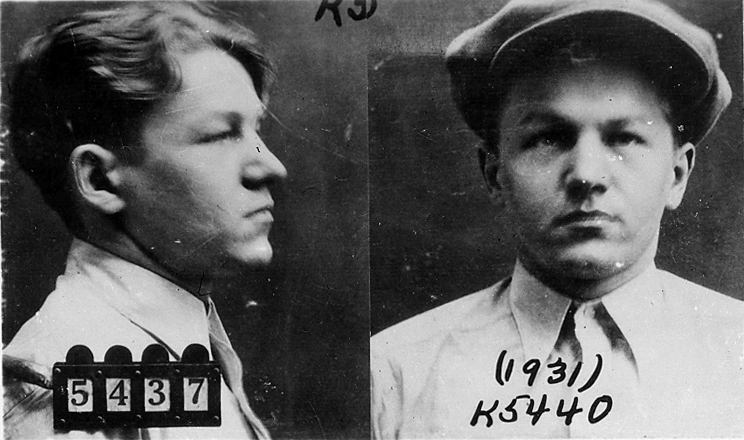
Throughout the winter of 1931, most of the Tape Bandits were rounded up, including Nelson. The Chicago Tribune referred to their leader as "George 'Baby Face' Nelson" who received a sentence of one year to life in the state penitentiary at Joliet. Nelson escaped during a prison transfer in February 1932. Aided by his contacts within the Touhy Gang, Nelson fled west to Reno, where he was harbored by William Graham, a known crime boss and gambler. Using the alias "Jimmy Johnson", Nelson went to Sausalito, California, where he worked for bootlegger Joe Parente. During his San Francisco Bay area criminal ventures, Nelson met John Paul Chase and Fatso Negri, who later became close associates. In Reno the next winter, Nelson first met the vacationing Alvin Karpis, who in turn introduced him to Midwestern bank robber Eddie Bentz. Teaming up with Bentz, Nelson returned to the Midwest the next summer. He committed a major bank robbery in Grand Haven, Michigan, on August 18, 1933; his first in the area. The robbery was not lucrative, though most of those involved made a full escape.
The Grand Haven bank robbery convinced Nelson he was ready to lead his own gang. Through connections at the Green Lantern Tavern in St. Paul, Nelson recruited Homer Van Meter, Tommy Carroll, and Eddie Green. With these men and two other local thieves, Nelson robbed the First National Bank of Brainerd, Minnesota, of $32,000 on October 23, 1933 (equivalent to approximately $796,000 in 2025 dollars). Witnesses reported that Nelson wildly sprayed sub-machine gun bullets at bystanders as he made his getaway. After collecting his wife Helen and four-year-old son Ronald, Nelson left with his crew for San Antonio, Texas. While there, Nelson and his gang bought several weapons from underworld gunsmith Hyman Lehman. One of those weapons was a .38 Super Colt pistol that had been modified so it was fully automatic. Nelson used this gun to kill Special Agent W. Carter Baum at Little Bohemia Lodge several months later.
Baby Face Nelson
Lester Joseph Gillis (December 6, 1908 – November 27, 1934), also known as George Nelson and Baby Face Nelson, was an American bank robber who became a criminal partner of John Dillinger when he helped Dillinger escape from prison in Crown Point, Indiana. Later, the Federal Bureau of Investigation (FBI) announced that Nelson and the remaining gang of bank robbers were collectively "Public Enemy Number One".
The "Baby Face Nelson" nickname derived from Gillis being a short man with a youthful appearance; however, in the professional realm, Gillis's fellow criminals addressed him as "Jimmy". A violent bank robber, Lester Joseph Gillis has killed more agents of the FBI than any other criminal. FBI agents fatally wounded Baby Face Nelson in The Battle of Barrington (27 November 1934), fought in a suburb of Chicago.
Nelson was born Lester Joseph Gillis, a son of Flemish Belgian immigrants on December 6, 1908, in Chicago, Illinois. He was arrested on July 4, 1921, at the age of twelve, after he accidentally shot a playmate in the jaw with a pistol that he had found. He served over a year in the state reformatory.
By the time he met his future wife Helen Wawrzyniak, Nelson was working at a Standard Oil station in his neighborhood which doubled as the headquarters for a group of young tire thieves, known colloquially as "strippers". Nelson fell into association with the "strippers", and acquainted himself with a number of local criminals, including one who employed him to drive bootleg alcohol throughout the Chicago suburbs. Nelson became associated with members of the suburb-based Touhy Gang.
Within two years, Nelson and the gang were involved in organized crime, especially armed robbery. On January 6, 1930, the associates forced entry into the home of magazine executive Charles M. Richter. After trussing him up with adhesive tape and cutting the phone lines, they ransacked the house and made off with approximately $205,000 worth of jewelry (equivalent to approximately $4 million in 2025 dollars). Two months later, they carried out a similar robbery at the bungalow of Lottie Brenner Von Buelow (on Sheridan Road). This job netted approximately $50,000 worth of jewelry. After the crime, Chicago newspapers nicknamed the group "The Tape Bandits".
On April 21, 1930, Nelson robbed a bank for the first time, making off with approximately $4,000. A month later, he and his gang netted $25,000 worth of jewelry from home invasions. On October 3, Nelson robbed the Itasca State Bank of $4,600; a teller later identified him as one of the robbers. Three nights later, he stole the jewelry of the wife of Chicago mayor Big Bill Thompson, valued at $18,000. She described her attacker, saying "He had a baby face. He was good looking, hardly more than a boy, had dark hair and was wearing a gray topcoat and a brown felt hat, turned down brim." Nelson and his crew were later linked to a botched roadhouse robbery in Summit, Illinois, on November 23, 1930. In the ensuing gunfight, three people were killed and three wounded. Three nights later, Nelson's gang robbed a tavern on Waukegan Road, and Nelson committed his first murder of note when he fatally shot stockbroker Edwin R. Thompson.
Throughout the winter of 1931, most of the Tape Bandits were rounded up, including Nelson. The Chicago Tribune referred to their leader as "George 'Baby Face' Nelson" who received a sentence of one year to life in the state penitentiary at Joliet. Nelson escaped during a prison transfer in February 1932. Aided by his contacts within the Touhy Gang, Nelson fled west to Reno, where he was harbored by William Graham, a known crime boss and gambler. Using the alias "Jimmy Johnson", Nelson went to Sausalito, California, where he worked for bootlegger Joe Parente. During his San Francisco Bay area criminal ventures, Nelson met John Paul Chase and Fatso Negri, who later became close associates. In Reno the next winter, Nelson first met the vacationing Alvin Karpis, who in turn introduced him to Midwestern bank robber Eddie Bentz. Teaming up with Bentz, Nelson returned to the Midwest the next summer. He committed a major bank robbery in Grand Haven, Michigan, on August 18, 1933; his first in the area. The robbery was not lucrative, though most of those involved made a full escape.
The Grand Haven bank robbery convinced Nelson he was ready to lead his own gang. Through connections at the Green Lantern Tavern in St. Paul, Nelson recruited Homer Van Meter, Tommy Carroll, and Eddie Green. With these men and two other local thieves, Nelson robbed the First National Bank of Brainerd, Minnesota, of $32,000 on October 23, 1933 (equivalent to approximately $796,000 in 2025 dollars). Witnesses reported that Nelson wildly sprayed sub-machine gun bullets at bystanders as he made his getaway. After collecting his wife Helen and four-year-old son Ronald, Nelson left with his crew for San Antonio, Texas. While there, Nelson and his gang bought several weapons from underworld gunsmith Hyman Lehman. One of those weapons was a .38 Super Colt pistol that had been modified so it was fully automatic. Nelson used this gun to kill Special Agent W. Carter Baum at Little Bohemia Lodge several months later.
Recent media
Recent media