Hubbry Logo
Baby PozziBaby PozziMain
Open search
Baby Pozzi
Community hub
Baby Pozzi
logo
8 pages, 0 posts
0 subscribers
Be the first to start a discussion here.
Baby Pozzi
Baby Pozzi
from Wikipedia

Maria Tamiko Pozzi (born 1 June 1963), best known by the stage name Baby Pozzi, is an Italian former pornographic film actress.

Key Information

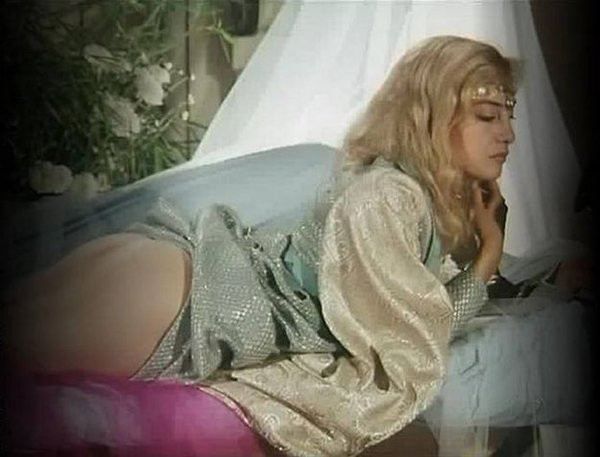
Born in Genoa, Liguria, she is the younger sister of the pornographic actress and television personality Moana Pozzi.[1] She started her career with some shows in clubs, while attending school to become a chemical analyst.[2] After entering Riccardo Schicchi's agency, "Diva Futura", as a secretary, she debuted in the adult industry in 1987 and retired in 1991.[3] She then moved to France, where she volunteered in an orphanage.[4][5] In 1995, after her sister's death through assisted suicide at the age of 33,[6] she briefly rejoined the industry but only for some live shows.[7][8][9] Outside of her adult career, she had a leading role in the erotic film Abat-Jour, which was directed by Lorenzo Onorati.[10][11]

In 2009, a character based on her was played by Elena Bouryka in the miniseries Moana.[12]

References

[edit]
[edit]
Revisions and contributorsEdit on WikipediaRead on Wikipedia
from Grokipedia
Maria Tamiko Pozzi (born 1 June 1963), known professionally as Baby Pozzi, is an Italian actress recognized primarily for her roles in pornographic films during the and . Born in , she entered the adult entertainment industry following initial performances. Pozzi appeared in dozens of explicit productions, including titles such as Femmine (1988), contributing to Italy's commercial output amid a period of relaxed regulations on such content. As the younger sister of the more renowned , another prominent figure in Italian adult films, her career often drew comparisons, though she maintained a distinct presence in the genre. While the adult film sector has faced criticism for potential exploitation and risks, Pozzi's work exemplifies the era's blend of cinema and hardcore elements, with limited public documentation of personal controversies beyond professional activities.

Early Life and Background

Birth and Family Origins

Maria Tamiko Pozzi, professionally known as Baby Pozzi, was born on June 1, 1963, in , , . She was the younger daughter of Alfredo Pozzi, a nuclear , and Rosanna Pozzi, a , in a family of Italian origin rooted in the area. Her older sister, Anna Moana Rosa Pozzi (born April 27, 1961), shared the same parents and birthplace, reflecting a close dynamic within the household. The family's early life centered in , with no documented relocations during Pozzi's infancy, establishing a foundation in the region's industrial and port-city environment.

Upbringing in Genoa

Maria Tamiko Pozzi, professionally known as Baby Pozzi, was born on 1 June 1963 in , , the second daughter of Alfredo Pozzi, a nuclear researcher based in the city, and Rosanna Alloisio, a housewife originally from Lerma in the region. The family maintained a middle-class lifestyle in Genoa's urban environment, shaped by the city's role as a key Mediterranean port with industries including and trade, amid 's postwar economic expansion in the and early . Raised alongside her older sister, (born 1961), in a household influenced by Catholic traditions common to many Ligurian families of the era, Pozzi experienced a conventional upbringing without evident access to elite social networks or privileges. Her early education reflected practical orientations, as she briefly studied chemical analysis for one year before shifting to accounting coursework for two years, indicating an emphasis on vocational skills suited to self-sufficient employment prospects rather than academic or aristocratic pursuits. Genoa's socioeconomic context during Pozzi's formative years involved regional growth in and services, but also challenges like and labor migrations, fostering resilience in working- and professional-class households like hers. Familial bonds, particularly with her sister Moana, provided key personal support, though specific childhood activities or interests remain sparsely documented in .

Entry into the Adult Industry

Initial Involvement and Motivations

Maria Tamiko Pozzi, known professionally as Baby Pozzi, began her professional trajectory outside the adult industry by performing in shows while studying to become a chemical analyst in during the mid-1980s. This early involvement in entertainment venues provided initial exposure to performance and publicity, setting a foundation for her later career shift at approximately age 25. Pozzi's entry into occurred in after she secured a position as a secretary at Schicchi's agency, a key player in Italy's burgeoning scene. From this administrative role, she transitioned to on-screen work under pseudonyms such as "Beby Pozzi," marking her debut amid an industry expansion fueled by post-1970s deregulation of obscenity laws, which had legalized explicit content production and distribution. Biographical accounts indicate this move was voluntary, leveraging the agency's established infrastructure for aspiring performers. A primary driver was the precedent set by her older sister, , whose stardom in Italian adult films from the early 1980s onward demonstrated viable paths to and media prominence in a market increasingly open to such careers. Unlike narratives implying , available evidence points to Pozzi's deliberate choice within a free-market context of expanding opportunities, where familial modeling and personal ambition—rather than duress—aligned with the era's economic incentives for women entering entertainment. No contemporaneous reports or legal records suggest external pressure, underscoring agency in her professional pivot.

Influence of Sister Moana Pozzi

Baby Pozzi, born Maria Teresa Pozzi on June 1, 1963, in , pursued a career in the Italian partly due to the precedent set by her older sister, , who had established herself as a prominent figure in by the mid-1980s. Moana's trajectory, beginning with modeling and in the early 1980s and accelerating through association with Riccardo Schicchi's agency from 1986 onward, offered a visible model of professional viability in the sector. This familial example provided Baby Pozzi with both inspiration and access, as she followed her sister's footsteps into entertainment without replicating her level of fame or cultural impact. The shared professional environment of facilitated Baby Pozzi's entry, where sibling proximity likely eased her initial involvement; she debuted in adult films around 1987, shortly after Moana's rise within the same agency. A concrete instance of this influence manifested in their joint appearance in the 1989 production Diva Futura – L'avventura dell'amore, an erotic film directed by featuring both sisters alongside other performers from the agency's roster. This collaboration underscored the causal role of family ties in navigating the competitive dynamics of the industry, enabling Baby Pozzi to leverage established networks rather than starting independently. While Moana's broader media and political engagements diverged from Baby Pozzi's more narrowly focused modeling and film work, the latter's career decisions remained tethered to the practical precedents of her sister's professional modeling path, emphasizing opportunity through kinship over ideological alignment.

Professional Career

Association with Diva Futura

Baby Pozzi joined the agency, founded in 1983 by and as Italy's pioneering firm for the adult sector, initially working as a before transitioning to performing. Like her sister , Cicciolina (), Ramba, and Barbarella, she was signed to the agency during the expansion of Italy's commercial adult film production, which shifted from underground operations to structured enterprises producing content for domestic video markets and European exports. 's model emphasized talent scouting, contract management, and in-house film production, as evidenced by credits in titles like Diva Futura: L'Avventura dell'Amore (1989), which featured agency performers including Pozzi. Under , Pozzi established herself as an active but secondary performer relative to headliners like and Cicciolina, contributing to the agency's output of explicit videos and features that capitalized on Italy's post-1970s liberalization of distribution. Her involvement aligned with the agency's entrepreneurial approach, which professionalized by integrating modeling, live shows, and filmed scenes to meet rising in the era, with Schicchi credited as the key talent developer. Pozzi's documented appearances in at least five agency-associated productions from 1988 onward underscore her role in this ecosystem, though her career volume remained modest compared to the agency's top earners. This structure facilitated Diva Futura's dominance in the Italian market, where it produced dozens of titles blending erotic narrative with hardcore elements for both local thresholds and international sales.

Key Films and Performances (1988–1992)

Pozzi debuted in the adult entertainment sector in with a leading role in the erotic drama Abat-jour (also known as Sleepless Moon), directed by Lorenzo Onorati, portraying , the childhood friend of the central character Camilla. The film featured a structure blending sensuality with dramatic elements, distinguishing it from contemporaneous hardcore productions. In 1989, Pozzi shifted toward explicit hardcore genres prevalent in Italian adult cinema, appearing in titles such as Il vizio di Baby e l'ingordigia di Ramba, which included group scenes with co-stars Florence Farkas, Maku Naim, and ; La figlia libidinosa (also released as Baby nata per godere in some markets), featuring heterosexual and group performances alongside Christine Schwarz, Manya, Sandrine, and Jean-Pierre Armand; and L'uccello del piacere, involving similar multi-performer dynamics with Louise Chatrier and others. These works exemplified the era's emphasis on unscripted, high-intensity scenes typical of the Italian market's output. By 1990, her performances incorporated specialized acts, as seen in Baby nata per godere, a production centered on anal intercourse and group sequences with notable male performers including Jean-Pierre Armand, , and . Pozzi maintained consistent output through 1992, culminating in films like La lunga gola di Baby, which focused on oral techniques in ensemble settings with Gabriella Mirelba, Natalie Streb, Alain Moreau, and Walter Carrera, alongside Analità profonda – Orgasmi del secondo canale, aligning with the industry's late-1980s to early-1990s trends in explicit specialization before her withdrawal from the field. Over this period, she contributed to roughly a dozen verifiable titles, reflecting the compact yet prolific nature of her career trajectory.

Retirement from Adult Entertainment

Baby Pozzi ceased performing in adult films in 1992, following releases including Baby e i suoi vizi anali directed by Mario Bianchi and Ore 9 scuola a tutto sesso - Goduria sfrenata co-starring . Comprehensive adult film databases list no credited appearances for her after these works, confirming the conclusion of her on-screen career at age 29. This exit from the industry occurred amid a period of market expansion in Italian cinema, yet Pozzi opted not to extend her involvement, diverging from peers such as Cicciolina who sustained output into the mid-1990s. Archival records and production logs show no evidence of contractual disputes, legal interventions, or personal controversies prompting her departure, consistent with a voluntary withdrawal. Post-1992, Pozzi maintained a low public profile in entertainment, with no diversification into related media or live performances until a brief, uncredited return for non-film shows in 1995 following family events. Her retirement thus represented a clean break from the sector's demands, prioritizing privacy over continued visibility.

Personal Life

Relationships and Private Matters

Baby Pozzi, born Maria Tamiko Pozzi, maintained a close sibling relationship with her older sister, , sharing family roots in and a period of professional collaboration in the adult film industry from 1988 to 1991. The sisters' bond was marked by mutual influence, though Baby has emphasized personal discretion regarding deeper family dynamics beyond publicly documented ties. Following Moana's death in , Baby Pozzi entered into a relationship with Antonio Di Ciesco, Moana's former husband, whom she had known through familial and industry connections./) No indicate a for Baby Pozzi herself, and details of other romantic partners remain unverified and absent from reliable accounts. In 1993, Pozzi gave birth to a son named , marking a significant personal milestone during the later stages of her career transition. Since retiring from adult around 1992, she has prioritized privacy, with limited disclosures about her family life or ongoing relationships, avoiding media speculation and focusing on low-profile pursuits such as healthcare work.

Post-Career Activities and Current Status

Following her retirement from the adult film industry in 1992 at age 29, Maria Tamiko Pozzi, known professionally as Baby Pozzi, withdrew from public life and has not resumed any documented involvement in or media. No verified reports indicate professional pursuits, relocations, or public engagements in the subsequent decades, reflecting a deliberate shift to amid the intense media scrutiny associated with her family's notoriety. As of 2023, Pozzi remains alive and out of the spotlight, with biographical sources confirming her birth on June 1, 1963, and no announcements of death or legal issues. At age 62 in 2025, she sustains a low-profile existence, consistent with the absence of contemporary interviews, presence, or news coverage beyond retrospective career mentions. This reticence aligns with patterns observed in former industry figures seeking to distance themselves from past associations, though specific details on or residence remain unpublicized in reputable outlets.

Reception and Legacy

Public and Industry Perception

Baby Pozzi achieved niche prominence within Italian adult film circles through her affiliation with the agency, where she participated in live shows and starred in multiple productions emphasizing her curvaceous figure and playful on-screen enthusiasm from 1987 to 1991. Industry databases catalog her involvement in approximately 14 titles during this period, reflecting steady output in a market liberalized following Italy's deregulation of erotic content. Contemporary audiences and peers perceived her as accessible and relatable, embodying a "girl next door" archetype elevated to erotic roles, which contrasted with her sister Moana Pozzi's more intellectual and glamorous public persona. While Moana amassed over 100 films and mainstream visibility as a television figure, Baby maintained lower visibility but earned recognition as a reliable performer for her spontaneous energy rather than dramatic finesse, contributing to Diva Futura's commercial success in producing engaging, audience-oriented material. Her career exemplified entrepreneurial adaptation in the era's expanding sector, with fan interest sustained via archival listings on platforms like , where credits such as Abat-Jour (1989) underscore her versatility beyond hardcore genres. This reception highlighted voluntary participation and market-driven viability, diverging from narratives framing performers solely as passive figures.

Criticisms and Broader Societal Debates

Baby Pozzi's brief tenure in the Italian adult film industry from 1988 to 1992 attracted minimal targeted criticisms, with no verifiable records of personal scandals, allegations, or legal actions against her, distinguishing her from peers entangled in public disputes. Her association with , the pioneering agency founded by in the early , placed her within a sector that professionalized amid Italy's post-1975 of media, yet this context fueled polarized debates on individual agency versus structural exploitation. Proponents of performer emphasized market-driven choices in a liberalizing economy, where women like Pozzi entered voluntarily for financial gain and fame, often leveraging familial ties—such as her sister Moana Pozzi's established presence—without evidence of agency coercion. This view aligns with causal analyses positing economic incentives as primary motivators, rather than pervasive oppression, as Italy's boomed and adult content proliferated via magazines and videos in the late and . Conversely, conservative moral critiques, rooted in Italy's Catholic heritage, decried as eroding family structures and personal dignity, with Vatican officials and politicians advocating to curb what they termed societal degradation, exemplified by failed pushes for stricter laws amid rising video distribution. Empirical health risks underscored vulnerabilities beyond choice, as the epidemic escalated in during Pozzi's active years; unprotected intercourse, standard in 1980s-1990s European porn productions, amplified STI transmission, with seroprevalence among female sex workers reaching 10-20% in urban areas by the early per regional data, compared to under 1% in the general . Post-career outcome studies reveal mixed performer trajectories, including elevated rates of issues and economic instability—attributed by some to industry stigmatization rather than inherent degradation—but data specific to Italian cohorts indicate many, like Pozzi, transitioned without publicized long-term harm, challenging blanket "" narratives that overlook market realism and personal . Anti-porn arguments from degradation theorists, including select feminists, highlight objectification's causal links to distorted relational norms, supported by surveys showing higher correlations in high-porn-consumption societies, though causal direction remains debated against individual responsibility emphases.

References

Add your contribution
Related Hubs
User Avatar
No comments yet.