



Community hub
Recent from talks
Knowledge base stats:
Talk channels stats:
Members stats:
Back to Methuselah
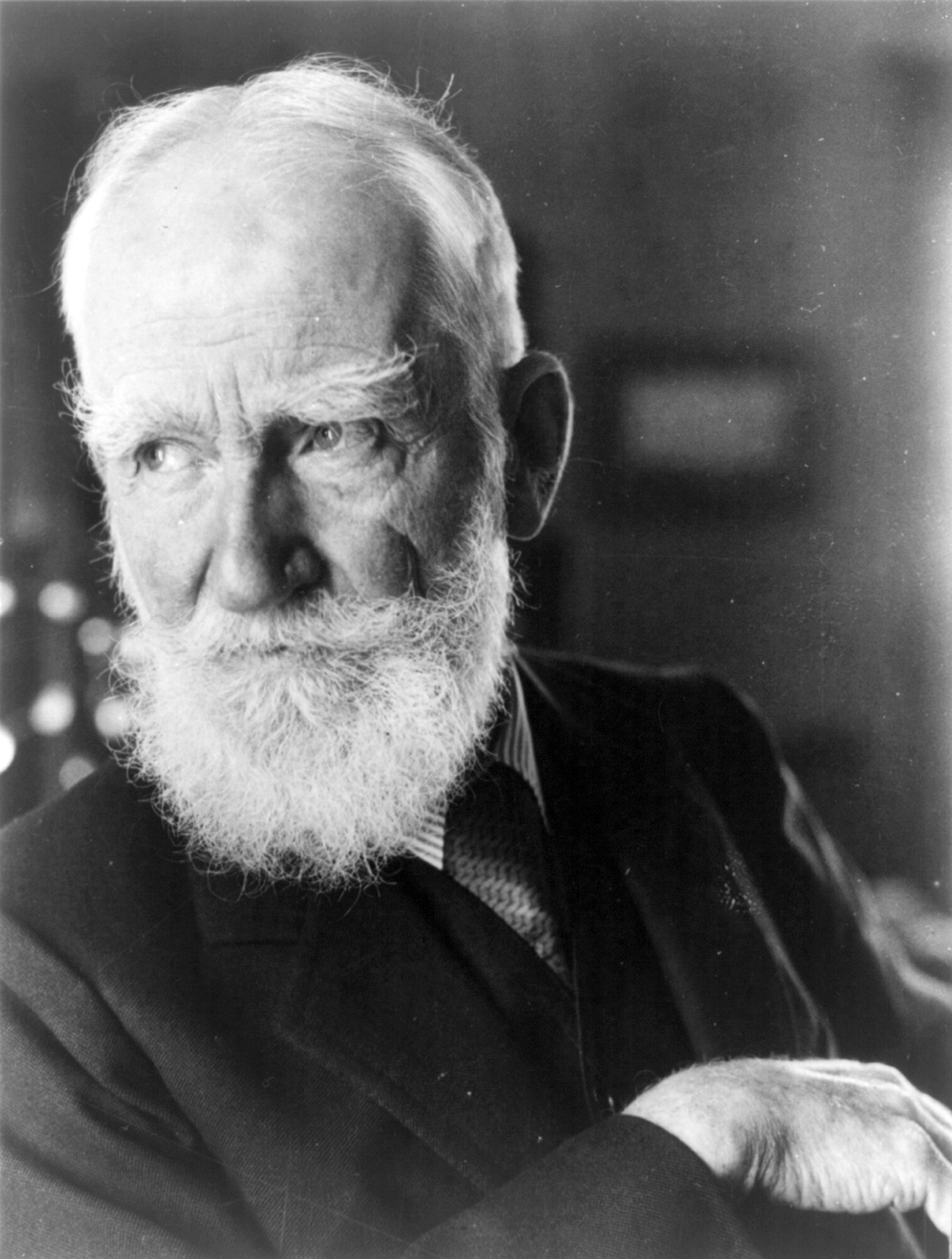
Back to Methuselah (A Metabiological Pentateuch) by George Bernard Shaw consists of a preface (The Infidel Half Century) and a series of five plays: In the Beginning: B.C. 4004 (In the Garden of Eden), The Gospel of the Brothers Barnabas: Present Day, The Thing Happens: A.D. 2170, Tragedy of an Elderly Gentleman: A.D. 3000, and As Far as Thought Can Reach: A.D. 31,920.
All were written during 1918 to 1920 and published simultaneously by Constable (London) and Brentano's (New York) in 1921. They were first performed in 1922 by the New York Theatre Guild at the old Garrick Theatre in New York City and, in Britain, at the Birmingham Repertory Theatre in 1923.
In the preface, Shaw speaks of the pervasive discouragement and poverty in Europe after World War I, and relates these issues to inept government. Simple primitive societies, he says, were easily governable while the civilized societies of the twentieth century are so complex that learning to govern them properly can't be accomplished within the human lifespan: People with experience enough to serve the purpose fall into senility and die. Shaw's solution is enhanced longevity: we must learn to live much longer; a centenarian should be less than middle aged. (Shaw was in his mid-60s when the plays were written). This change, Shaw predicts, will happen through Creative Evolution (evolutionary change that occurs because it is needed or wanted—the Lamarckian view— and not as a result of natural selection—Darwinism) as influenced by the Life Force (l'élan vital). Neither Creative Evolution nor the Life Force were Shavian inventions. Shaw says they are his names for what the churches have called Providence and scientists call Functional Adaptation and Natural Selection (among other names) and gives due credit to Henri Bergson's élan vital. Nevertheless, he uses both terms in Man and Superman which was written nine years before Bergson's work was published. These concepts had some currency among Shaw's contemporaries, and the Methuselah plays are based on Shaw's extrapolations from the two principles. Although both ideas are out of scientific favour as the twenty-first century begins, Shaw accepted them completely (See Commentary, below.) Shaw also advocates what he calls homeopathy as a pedagogical method, arguing that society "can only be lamed and enslaved by" education. Shaw's "homeopathic" educational method consisted of lying to students, until the students were able to see through the lies and argue with the teachers.
In the Beginning: B.C. 4004 is allegorical. Adam and Eve, as avatars for aboriginal humanity, discover a fawn dead from a broken neck and realize they, too, will die eventually from some mishap, even though they are immune to aging. Their dread of death is overwhelmed by the yet more dreadful prospect of life unending, with its tedium and burdens, but they feel bound to live forever because Eden must be taken care of and they are the only ones available to do it. The Serpent—spoken of in Genesis.—offers a solution: Lilith, who came before them, and was, in fact, their mother, made them male and female, so they have the ability to reproduce. If they learn to propagate they can make other humans to tend the garden and thus be free to escape from living when they wish. Discovering the possibility of death suggests possibilities for other changes and a discussion follows that deals progressively with loneliness and love, uncertainty and fear, fidelity and marriage and the courage found in laughter. At the end the Serpent whispers—for Eve's ears alone—the secret of reproduction, which Eve hears with greatly mixed emotions.
A few centuries slip by; Eve and Adam have aged a bit, but otherwise have changed but little: She spends her time by spinning flax for weaving, he digs in the garden. Their son Cain arrives, boastful and aggressive, proud to have invented murder by killing his brother Abel. He is now a warrior who also kills beasts for food. He is utterly disdainful of the simple farming life and soon rudely goes away. Eve thoughtfully remarks that there is more to living than killing or digging in the garden and says her future sons will find things more wonderful to do.
The Gospel of the Brothers Barnabas is intended to teach an audience what readers of the Preface are assumed to have learned. Two brothers, one a retired, but influential cleric (Franklyn) and the other a biologist of note (Conrad), independently conclude that humans must increase their lifespans to three centuries in order to acquire the wisdom and experience needed to make complex civilizations functional. Conrad has published their conclusions in a book.
A housemaid announces the opportune arrival of Lubin and Burge, two prominent politicians with antagonistic viewpoints; they will serve as sounding-boards while the brothers present their case for the need of longer lifetimes. Members of the younger generation, in the persons of Franklyn's daughter Savvy and her sweetheart, a young cleric named Haslam, are at the presentation, too.
Both politicians seize upon the promise of enhanced longevity as a way of attracting votes. One of them is cynical, not believing longevity will happen, but the other deems the theory valid, yet rejects the prospect out of hand because longer lives will be available to everyone instead of only the elite. Savvy and Haslam are nearly unaffected because the entire idea is well above their heads. The brothers are disappointed but remain completely confident that the change is sure to happen. Except for the brothers, only the housemaid is greatly influenced by the prospect of longevity, for she turns out to be the only one who has really read Conrad's book.
Hub AI
Back to Methuselah AI simulator
(@Back to Methuselah_simulator)
Back to Methuselah
Back to Methuselah (A Metabiological Pentateuch) by George Bernard Shaw consists of a preface (The Infidel Half Century) and a series of five plays: In the Beginning: B.C. 4004 (In the Garden of Eden), The Gospel of the Brothers Barnabas: Present Day, The Thing Happens: A.D. 2170, Tragedy of an Elderly Gentleman: A.D. 3000, and As Far as Thought Can Reach: A.D. 31,920.
All were written during 1918 to 1920 and published simultaneously by Constable (London) and Brentano's (New York) in 1921. They were first performed in 1922 by the New York Theatre Guild at the old Garrick Theatre in New York City and, in Britain, at the Birmingham Repertory Theatre in 1923.
In the preface, Shaw speaks of the pervasive discouragement and poverty in Europe after World War I, and relates these issues to inept government. Simple primitive societies, he says, were easily governable while the civilized societies of the twentieth century are so complex that learning to govern them properly can't be accomplished within the human lifespan: People with experience enough to serve the purpose fall into senility and die. Shaw's solution is enhanced longevity: we must learn to live much longer; a centenarian should be less than middle aged. (Shaw was in his mid-60s when the plays were written). This change, Shaw predicts, will happen through Creative Evolution (evolutionary change that occurs because it is needed or wanted—the Lamarckian view— and not as a result of natural selection—Darwinism) as influenced by the Life Force (l'élan vital). Neither Creative Evolution nor the Life Force were Shavian inventions. Shaw says they are his names for what the churches have called Providence and scientists call Functional Adaptation and Natural Selection (among other names) and gives due credit to Henri Bergson's élan vital. Nevertheless, he uses both terms in Man and Superman which was written nine years before Bergson's work was published. These concepts had some currency among Shaw's contemporaries, and the Methuselah plays are based on Shaw's extrapolations from the two principles. Although both ideas are out of scientific favour as the twenty-first century begins, Shaw accepted them completely (See Commentary, below.) Shaw also advocates what he calls homeopathy as a pedagogical method, arguing that society "can only be lamed and enslaved by" education. Shaw's "homeopathic" educational method consisted of lying to students, until the students were able to see through the lies and argue with the teachers.
In the Beginning: B.C. 4004 is allegorical. Adam and Eve, as avatars for aboriginal humanity, discover a fawn dead from a broken neck and realize they, too, will die eventually from some mishap, even though they are immune to aging. Their dread of death is overwhelmed by the yet more dreadful prospect of life unending, with its tedium and burdens, but they feel bound to live forever because Eden must be taken care of and they are the only ones available to do it. The Serpent—spoken of in Genesis.—offers a solution: Lilith, who came before them, and was, in fact, their mother, made them male and female, so they have the ability to reproduce. If they learn to propagate they can make other humans to tend the garden and thus be free to escape from living when they wish. Discovering the possibility of death suggests possibilities for other changes and a discussion follows that deals progressively with loneliness and love, uncertainty and fear, fidelity and marriage and the courage found in laughter. At the end the Serpent whispers—for Eve's ears alone—the secret of reproduction, which Eve hears with greatly mixed emotions.
A few centuries slip by; Eve and Adam have aged a bit, but otherwise have changed but little: She spends her time by spinning flax for weaving, he digs in the garden. Their son Cain arrives, boastful and aggressive, proud to have invented murder by killing his brother Abel. He is now a warrior who also kills beasts for food. He is utterly disdainful of the simple farming life and soon rudely goes away. Eve thoughtfully remarks that there is more to living than killing or digging in the garden and says her future sons will find things more wonderful to do.
The Gospel of the Brothers Barnabas is intended to teach an audience what readers of the Preface are assumed to have learned. Two brothers, one a retired, but influential cleric (Franklyn) and the other a biologist of note (Conrad), independently conclude that humans must increase their lifespans to three centuries in order to acquire the wisdom and experience needed to make complex civilizations functional. Conrad has published their conclusions in a book.
A housemaid announces the opportune arrival of Lubin and Burge, two prominent politicians with antagonistic viewpoints; they will serve as sounding-boards while the brothers present their case for the need of longer lifetimes. Members of the younger generation, in the persons of Franklyn's daughter Savvy and her sweetheart, a young cleric named Haslam, are at the presentation, too.
Both politicians seize upon the promise of enhanced longevity as a way of attracting votes. One of them is cynical, not believing longevity will happen, but the other deems the theory valid, yet rejects the prospect out of hand because longer lives will be available to everyone instead of only the elite. Savvy and Haslam are nearly unaffected because the entire idea is well above their heads. The brothers are disappointed but remain completely confident that the change is sure to happen. Except for the brothers, only the housemaid is greatly influenced by the prospect of longevity, for she turns out to be the only one who has really read Conrad's book.