
Recent from talks
Baijiu
Knowledge base stats:
Talk channels stats:
Members stats:
Baijiu
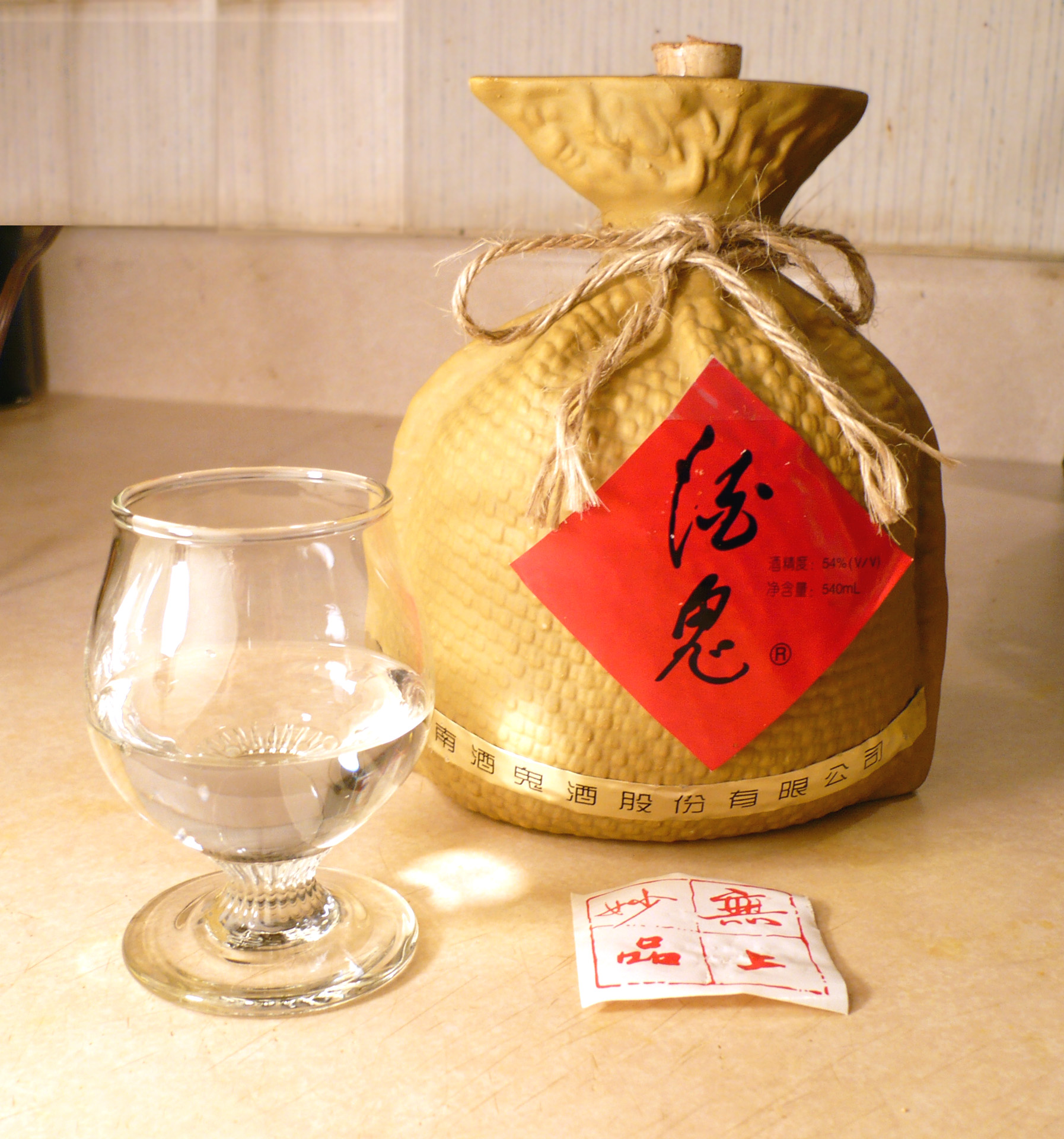
Baijiu (Chinese: 白酒; pinyin: báijiǔ; lit. 'white (clear) liquor'), or shaojiu (simplified Chinese: 烧酒; traditional Chinese: 燒酒; pinyin: shāojiǔ; lit. 'burning liquor'), is a colorless Chinese liquor typically coming in between 35% and 60% alcohol by volume (ABV). Each type of baijiu uses its own type of qū for fermentation to create a distinct and characteristic flavor profile.
Baijiu is a clear liquid usually distilled from fermented sorghum, although other grains may be used; some southeastern Chinese styles may employ rice and glutinous rice while other Chinese varieties may use wheat, barley, millet, or Job's tears (Chinese: 薏苡; pinyin: yìyǐ) in their mash bills. The qū starter culture used in the production of baijiu is usually made from pulverized wheat grain or steamed rice.
Because of its clarity, baijiu can appear similar to several other East Asian liquors, e.g. Japanese shōchū (25%) or Korean soju (20–45%), but it often has a significantly higher alcohol content (35–60%).
No exact dates are known for the invention of the modern form of baijiu as it emerged gradually with the historical development of distillery technology.
Baijiu is characterized by solid-state fermentation and distillation using a grain culture called qū, which allows for simultaneous saccharification and fermentation. This is a typical feature of liquors produced in East Asia. Chinese baijiu is always distilled from grain, produced in batches and blended.
Outside of East Asia, baijiu is widely regarded as an acquired taste. In response to one 2015 article in The New York Times, third-party commenters compared baijiu's aroma and taste profile to "jet fuel, kerosene, poison, nail polish remover, drain cleaner, Burgundy cheeses, and salty garbage water", and the tenor of these remarks was "representative of most English-language writing about baijiu at the time". Such harsh critiques have been disputed by Western experts on baijiu, who believe Westerners are shocked and repulsed by baijiu's unexpectedly intense flavor because they expect a clear liquor to have a mild flavor similar to vodka. These experts prefer to compare baijiu to Western liquors with strong flavors and aromas, such as peaty whisky, Scotch whisky, grappa, or tequila. Additionally, some believe these negative judgments are reflective of broader Western attitudes toward Chinese cuisine. They argue the opinions of the hundreds of millions of people who enjoy baijiu should be given as much weight as the opinions of foreign critics.
The Chinese traditionally serve baijiu neat at room temperature, in small cups or glasses, though drinkware varies by region. It is traditional to drink baijiu with food rather than on its own, though it is often infused with fruit or medicinal herbs and spices.
The ceremonial includes the following steps:
Hub AI
Baijiu AI simulator
(@Baijiu_simulator)
Baijiu
Baijiu (Chinese: 白酒; pinyin: báijiǔ; lit. 'white (clear) liquor'), or shaojiu (simplified Chinese: 烧酒; traditional Chinese: 燒酒; pinyin: shāojiǔ; lit. 'burning liquor'), is a colorless Chinese liquor typically coming in between 35% and 60% alcohol by volume (ABV). Each type of baijiu uses its own type of qū for fermentation to create a distinct and characteristic flavor profile.
Baijiu is a clear liquid usually distilled from fermented sorghum, although other grains may be used; some southeastern Chinese styles may employ rice and glutinous rice while other Chinese varieties may use wheat, barley, millet, or Job's tears (Chinese: 薏苡; pinyin: yìyǐ) in their mash bills. The qū starter culture used in the production of baijiu is usually made from pulverized wheat grain or steamed rice.
Because of its clarity, baijiu can appear similar to several other East Asian liquors, e.g. Japanese shōchū (25%) or Korean soju (20–45%), but it often has a significantly higher alcohol content (35–60%).
No exact dates are known for the invention of the modern form of baijiu as it emerged gradually with the historical development of distillery technology.
Baijiu is characterized by solid-state fermentation and distillation using a grain culture called qū, which allows for simultaneous saccharification and fermentation. This is a typical feature of liquors produced in East Asia. Chinese baijiu is always distilled from grain, produced in batches and blended.
Outside of East Asia, baijiu is widely regarded as an acquired taste. In response to one 2015 article in The New York Times, third-party commenters compared baijiu's aroma and taste profile to "jet fuel, kerosene, poison, nail polish remover, drain cleaner, Burgundy cheeses, and salty garbage water", and the tenor of these remarks was "representative of most English-language writing about baijiu at the time". Such harsh critiques have been disputed by Western experts on baijiu, who believe Westerners are shocked and repulsed by baijiu's unexpectedly intense flavor because they expect a clear liquor to have a mild flavor similar to vodka. These experts prefer to compare baijiu to Western liquors with strong flavors and aromas, such as peaty whisky, Scotch whisky, grappa, or tequila. Additionally, some believe these negative judgments are reflective of broader Western attitudes toward Chinese cuisine. They argue the opinions of the hundreds of millions of people who enjoy baijiu should be given as much weight as the opinions of foreign critics.
The Chinese traditionally serve baijiu neat at room temperature, in small cups or glasses, though drinkware varies by region. It is traditional to drink baijiu with food rather than on its own, though it is often infused with fruit or medicinal herbs and spices.
The ceremonial includes the following steps:
Recent media