Hubbry Logo
LiquorLiquorMain
Open search
Liquor
Community hub
Liquor
logo
8 pages, 0 posts
0 subscribers
Be the first to start a discussion here.
Contribute something
Liquor
Liquor
from Wikipedia

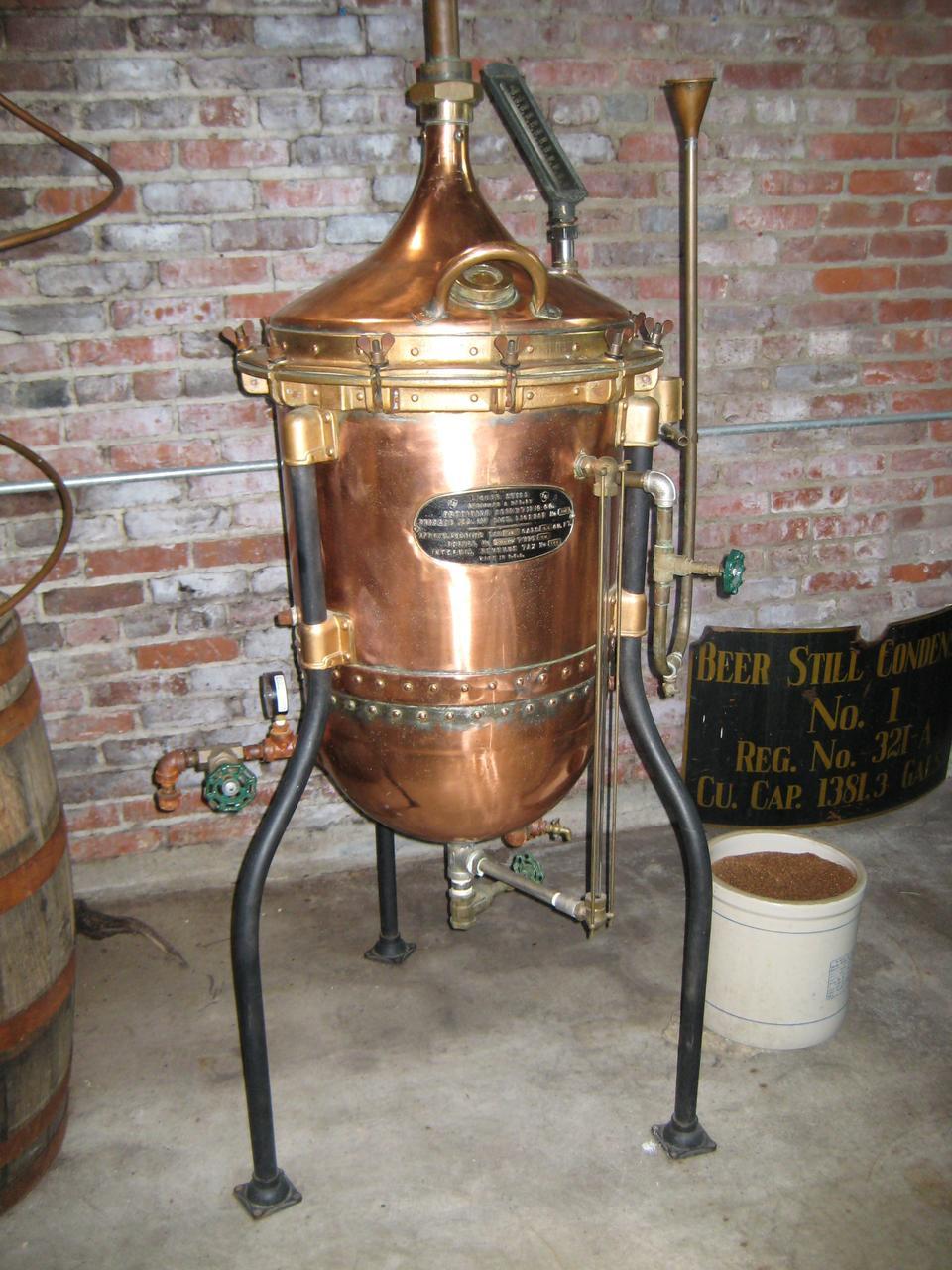
An old whiskey still
A display of various liquors in a supermarket
Some single-drink liquor bottles available in Germany

Liquor (/ˈlɪkər/ LIK-ər, sometimes hard liquor), spirits, distilled spirits, or spiritous liquor are alcoholic drinks produced by the distillation of grains, fruits, vegetables, or sugar that have already gone through alcoholic fermentation. While the word liquor ordinarily refers to distilled alcoholic spirits rather than drinks produced by fermentation alone,[1] it can sometimes be used more broadly to refer to any alcoholic beverage (or even non-alcoholic ones produced by distillation or some other practices, such as the brewed liquor of a tea).[2]

The distillation process concentrates the alcohol, so the resulting condensate has an increased alcohol by volume.[3] As liquors contain significantly more alcohol (ethanol) than other alcoholic drinks, they are considered "harder". In North America, the term hard liquor is sometimes used to distinguish distilled alcoholic drinks from non-distilled ones, whereas the term spirits is more commonly used in the United Kingdom. Some examples of liquors include vodka, rum, gin and tequila. Liquors are often aged in barrels, such as for the production of brandy and whiskey, or are infused with flavorings to form flavored liquors, such as absinthe.

Like other alcoholic drinks, liquor is typically consumed for the psychoactive effects of alcohol. Liquor may be consumed on its own (i.e. "neat"), typically in amounts of around 50 millilitres (1.7 US fluid ounces) per served drink; or frequently mixed with other ingredients to form a cocktail. In an undiluted form, distilled beverages are often slightly sweet and bitter and typically impart a burning mouthfeel with an odor derived from the alcohol and the production and aging processes; the exact flavor varies between different varieties of liquor and the different impurities they impart.

Rapid consumption of a large amount of liquor can cause severe alcohol intoxication or alcohol poisoning, which can be fatal either due to acute biochemical damage to vital organs (e.g. alcoholic hepatitis and pancreatitis), or due to trauma (e.g. falls or motor vehicle accidents) caused by alcohol-induced delirium. Consistent consumption of liquor over time correlates with higher mortality and other harmful health effects, even when compared to other alcoholic beverages.[4][5]

Nomenclature

[edit]

The term "spirit" (singular and used without the additional term "drink") refers to liquor that should not contain added sugar[6] and is usually 35–40% alcohol by volume (ABV).[7] Fruit brandy, for example, is also known as 'fruit spirit'.

Liquor bottled with added sugar and flavorings, such as Grand Marnier, amaretto, and American schnapps, are known instead as liqueurs.[8]

Liquor generally has an alcohol concentration higher than 30% when bottled, and before being diluted for bottling, it typically has a concentration over 50%. Beer and wine, which are not distilled, typically have a maximum alcohol content of about 15% ABV, as most yeasts cannot metabolize when the concentration of alcohol is above this level; as a consequence, fermentation ceases at that point.

Etymology

[edit]

The origin of liquor and its close relative liquid is the Latin verb liquere, meaning 'to be fluid'. According to the Oxford English Dictionary (OED), an early use of the word in the English language, meaning simply "a liquid", can be dated to 1225. The first use documented in the OED defined as "a liquid for drinking" occurred in the 14th century. Its use as a term for "an intoxicating alcoholic drink" appeared in the 16th century.

[edit]

European Union

[edit]

In accordance with the regulation (EU) 2019/787 of the European Parliament and of the Council of April 17, 2019,[9] a spirit drink is an alcoholic beverage that has been produced:

  • either directly by using, individually or in combination, any of the following methods:
    1. distillation, with or without added flavourings or flavouring foodstuffs, of fermented products;
    2. maceration or similar processing of plant materials in ethyl alcohol of agricultural origin, distillates of agricultural origin or spirit drinks or a combination thereof;
    3. addition, individually or in combination, to ethyl alcohol of agricultural origin, distillates of agricultural origin, or spirit drinks of flavourings, colours, other authorised ingredients, sweetening products, other agricultural products, and foodstuffs.
  • or by adding, individually or in combination, to it any of the following:
    1. other spirit drinks;
    2. ethyl alcohol of agricultural origin;
    3. distillates of agricultural origin;
    4. other foodstuffs.

Spirit drinks must contain at least 15% ABV (except in the case of egg liqueur such as Advocaat, which must contain a minimum of 14% ABV).[9][10]

Distillate of agricultural origin

[edit]

Regulation makes a difference between "ethyl alcohol of agricultural origin" and a "distillate of agricultural origin". Distillate of agricultural origin is defined as an alcoholic liquid that is the result of the distillation, after alcoholic fermentation, of agricultural products which does not have the properties of ethyl alcohol and which retain the aroma and taste of the raw materials used.[11]

Categories

[edit]
Viru Valge, an Estonian vodka

Annex 1 to the regulation lists 44 categories of spirit drinks and their legal requirements.[12]

Some spirit drinks can fall into more than one category. Specific production requirements distinguish one category from another (London gin falls into the Gin category but any gin cannot be considered as London gin).

Spirit drinks that are not produced within the EU, such as tequila or baijiu, are not listed in the 44 categories.

  1. Mahua Wine or desi thhara
  2. Rum
  3. Whisky or whiskey
  4. Grain spirit
  5. Wine spirit
  6. Brandy
  7. Grape marc spirit or grape marc
  8. Fruit marc spirit
  9. Raisin spirit or raisin brandy
  10. Fruit spirit
  11. Cider spirit, perry spirit and cider and perry spirit
  12. Honey spirit
  13. Hefebrand or lees spirit
  14. Bierbrand, or beer spirit
  15. Topinambur or Jerusalem artichoke spirit
  16. Vodka
  17. Spirit (supplemented by the name of the fruit, berries or nuts) obtained by maceration and distillation
  18. Geist (supplemented by the name of the fruit or the raw materials used)
  19. Gentian
  20. Juniper-flavored spirit drink
  21. Gin
  22. Distilled gin
  23. London gin
  24. Caraway-flavored spirit drink or Kümmel
  25. Akvavit or aquavit
  26. Aniseed-flavored spirit drink (e.g. rakı, ouzo)
  27. Pastis
  28. Pastis de Marseille
  29. Anis or janeževec
  30. Distilled anis
  31. Bitter-tasting spirit drink or bitters
  32. Flavored vodka
  33. Sloe-aromatized spirit drink or pacharán
  34. Liqueur
  35. Crème de (supplemented by the name of a fruit or other raw material used)
  36. Sloe gin
  37. Sambuca
  38. Maraschino, marrasquino or maraskino
  39. Nocino ou orehovec
  40. Egg liqueur or advocaat, avocat or advokat
  41. Liqueur with egg
  42. Mistrà
  43. Väkevä glögi or spritglögg
  44. Berenburg or Beerenburg
  45. Honey nectar or mead nectar

History of distillation

[edit]

Early history

[edit]
Distillation equipment used by the 3rd century alchemist Zosimos of Panopolis,[13][14] from the Byzantine Greek manuscript Parisinus graecus 2327.[15]

Early evidence of distillation comes from Akkadian tablets dated c. 1200 BC describing perfumery operations, providing textual evidence that an early, primitive form of distillation was known to the Babylonians of ancient Mesopotamia.[16] Early evidence of distillation also comes from alchemists working in Alexandria, Roman Egypt, in the 1st century.[17] Distilled water was described in the 2nd century AD by Alexander of Aphrodisias.[18] Alchemists in Roman Egypt were using a distillation alembic or still device in the 3rd century.

Distillation was known in the ancient Indian subcontinent, evident from baked clay retorts and receivers found at Taxila and Charsadda in Pakistan and Rang Mahal in India dating to the early centuries of the Common Era.[19][20][21] Frank Raymond Allchin says these terracotta distill tubes were "made to imitate bamboo".[20] These "Gandhara stills" were capable of producing only very weak liquor, as there was no efficient means of collecting the vapors at low heat.[22]

Distillation in China could have begun during the Eastern Han dynasty (1st–2nd centuries), but the distillation of beverages began in the Jin (12th–13th centuries) and Southern Song (10th–13th centuries) dynasties according to archaeological evidence.[23]

Freeze distillation involves freezing the alcoholic beverage and then removing the ice. The freezing technique had limitations in geography and implementation limiting how widely this method was put to use.

Distillation of wine

[edit]
An illustration of brewing and distilling industry methods in England, 1858

The flammable nature of the exhalations of wine was already known to ancient natural philosophers such as Aristotle (384–322 BCE), Theophrastus (c. 371 – c. 287 BCE), and Pliny the Elder (23/24–79 CE).[24] This did not immediately lead to the isolation of alcohol, however, despite the development of more advanced distillation techniques in second- and third-century Roman Egypt.[25] An important recognition, first found in one of the writings attributed to Jābir ibn Ḥayyān (ninth century CE), was that by adding salt to boiling wine, which increases the wine's relative volatility, the flammability of the resulting vapors may be enhanced.[26] The distillation of wine is attested in Arabic works attributed to al-Kindī (c. 801–873 CE) and to al-Fārābī (c. 872–950), and in the 28th book of al-Zahrāwī's (Latin: Abulcasis, 936–1013) Kitāb al-Taṣrīf (later translated into Latin as Liber servatoris).[27] In the twelfth century, recipes for the production of aqua ardens ("burning water", i.e., alcohol) by distilling wine with salt started to appear in a number of Latin works, and by the end of the thirteenth century, it had become a widely known substance among Western European chemists.[28] Its medicinal properties were studied by Arnald of Villanova (1240–1311 CE) and John of Rupescissa (c. 1310–1366), the latter of whom regarded it as a life-preserving substance able to prevent all diseases (the aqua vitae or "water of life", also called by John the quintessence of wine).[29]

In China, archaeological evidence indicates that the true distillation of alcohol began during the 12th century Jin or Southern Song dynasties.[23] A still has been found at an archaeological site in Qinglong, Hebei, dating to the 12th century.[23]

In India, the true distillation of alcohol was introduced from the Middle East and was in wide use in the Delhi Sultanate by the 14th century.[22][30]

The works of Taddeo Alderotti (1223–1296) describe a method for concentrating alcohol involving repeated fractional distillation through a water-cooled still, by which an alcohol purity of 90% could be obtained.[31]

In 1437, "burned water" (brandy) was mentioned in the records of the County of Katzenelnbogen in Germany.[32]

Microdistilling

[edit]

Microdistilling (also known as craft distilling) began to re-emerge as a trend in the United States following the microbrewing and craft beer movement in the last decades of the 20th century.

Flammability

[edit]
These flaming cocktails illustrate that some liquors will readily catch fire and burn.

Liquor that contains 40% ABV (80 US proof) will catch fire if heated to about 26 °C (79 °F) and if an ignition source is applied to it. This temperature is called its flash point.[33] The flash point of pure alcohol is 16.6 °C (61.9 °F), less than average room temperature.[34]

The flammability of liquor is applied in the cooking technique flambé.

The flash points of alcohol concentrations from 10% to 96% by weight are:[35]

Serving

[edit]
A row of alcoholic beverages – in this case, spirits – in a bar

Liquor can be served:

  • Neat – at room temperature without any additional ingredient(s)[37]
  • Up – shaken or stirred with ice, strained, and served in a stemmed glass
  • Down – shaken or stirred with ice, strained, and served in a rocks glass
  • On the rocks – over ice cubes
  • Blended or frozen – blended with ice
  • With a simple mixer, such as club soda, tonic water, juice, or cola
  • As an ingredient of a cocktail
  • As an ingredient of a shooter
  • With water
  • With water poured over sugar (as with absinthe)

Alcohol consumption by country

[edit]
European countries grouped by preferred type of alcoholic drink, based on recorded alcohol consumption per capita (age 15+) (in liters of pure alcohol) in 2016
Map of Europe with individual countries grouped by preferred type of alcoholic drink, based on recorded alcohol consumption per capita (age 15+) (in liters of pure alcohol) in 2016.[38]
  Wine
  Beer
  Spirits

The World Health Organization (WHO) measures and publishes alcohol consumption patterns in different countries. The WHO measures alcohol consumed by persons 15 years of age or older and reports it on the basis of liters of pure alcohol consumed per capita in a given year in a country.[39]

In Europe, spirits (especially vodka) are more popular in the north and east of the continent.

Abandoned 19th-century vodka distillery in Estonia

Government regulation

[edit]

Production

[edit]

It is legal to distill beverage alcohol as a hobby for personal use in some countries, including New Zealand[40] and the Netherlands.[note 1]

In many others including the United States, it is illegal to distill beverage alcohol without a license, and the licensing process is too arduous for hobbyist-scale production. In some parts of the U.S., it is also illegal to sell a still without a license. Nonetheless, all states allow unlicensed individuals to make their own beer, and some also allow unlicensed individuals to make their own wine (although making beer and wine is also prohibited in some local jurisdictions).[citation needed]

Sale

[edit]

Some countries and sub-national jurisdictions limit or prohibit the sale of certain high-percentage alcohol, commonly known as neutral spirit. Due to its flammability (see below) alcoholic beverages with an alcohol content above 70% by volume are not permitted to be transported in aircraft.[41]

Health effects of alcohol

[edit]

Distilled spirits contain ethyl alcohol, the same chemical that is present in beer and wine, and as such, spirit consumption has short-term psychological and physiological effects on the user. Different concentrations of alcohol in the human body have different effects on a person. The effects of alcohol depend on the amount an individual has drunk, the percentage of alcohol in the spirits and the timespan over which the consumption took place.[42]

The short-term effects of alcohol consumption range from a decrease in anxiety and motor skills and euphoria at lower doses to intoxication (drunkenness), to stupor, unconsciousness, anterograde amnesia (memory "blackouts"), and central nervous system depression at higher doses. Cell membranes are highly permeable to alcohol, so once it is in the bloodstream, it can diffuse into nearly every cell in the body. Alcohol can greatly exacerbate sleep problems. During abstinence, residual disruptions in sleep regularity and sleep patterns are the greatest predictors of relapse.[42]

Drinking more than 1–2 drinks a day increases the risk of heart disease, high blood pressure, atrial fibrillation, and stroke.[43] The risk is greater in younger people due to binge drinking, which may result in violence or accidents.[43] About 3.3 million deaths (5.9% of all deaths) are due to alcohol each year.[44] Unlike wine and perhaps beer, there is no evidence for a J-shaped health effect for the consumption of distilled alcohol.[4] Long-term use can lead to an alcohol use disorder, an increased risk of developing physical dependence. cardiovascular disease and several types of cancer.[42]

Alcoholism, also known as "alcohol use disorder", is a broad term for any drinking of alcohol that results in problems.[45] Alcoholism reduces a person's life expectancy by around ten years[46] and alcohol use is the third-leading cause of early death in the United States.[43]

Consumption of alcohol in any quantity can cause cancer. Alcohol causes breast cancer, colorectal cancer, esophageal cancer, liver cancer, and head-and-neck cancers. The more alcohol is consumed, the higher the cancer risk.[47]

Home-made liquor

[edit]

A survey of high school students in Alstahaug, Nordland county, revealed that adolescents consume alcohol at rates above the national average, with home-made liquor being prevalent and easily accessible, highlighting an urgent need for preventive measures.[48]

See also

[edit]
  • Aguardiente – Generic term for alcoholic beverages containing 29% to 60% alcohol by volume
  • Akvavit – Flavored Scandinavian spirit
  • Alcohol measurements § Liquor bottles
  • Amaro (liqueur) – Italian herbal liqueur
  • Arak – Middle Eastern distilled spirit
  • Arrack – South and Southeast Asian alcoholic drink
  • Awamori – Distilled alcoholic beverage from Okinawa
  • Baijiu – Distilled alcoholic beverage from China / Shōchū / Soju
  • Borovička – Slovak alcoholic beverage flavoured with juniper berries
  • Cachaça – Distilled beverage popular in Brazil
  • Eau de vie – French clear, colorless fruit brandy
  • Er guo tou – Style of baijiu
  • Fenny – Alcoholic spirit produced in Goa, India
  • Freeze distillation – Separating components of a mixture by their melting points
  • Geist – Distilled beverage
  • Horilka – Ukrainian alcoholic beverage
  • Jenever – French, Dutch and Belgian juniper-flavoured liquor
  • Kaoliang liquor – Strong distilled liquor of Chinese origin
  • Liquor store – Retail shop that sells alcohol
  • List of national drinks – Distinct beverages associated with a particular country
  • Mahua
  • Mamajuana – Drink from the Dominican Republic
  • Mezcal – Distilled alcoholic beverage from Mexico
  • Moonshine – High-proof liquor, generally made illicitly
  • Moonshine by country – none
  • Orujo – Spanish pomace brandy
  • Padlamanggan
  • Pálinka – Central European alcohol
  • Pisco – Grape spirit made in Peru and Chile
  • Poitín – Traditional Irish distilled beverage
  • Rakia – Fruit brandy popular in the Balkans
  • Rakı – Sweetened, anise-flavored Turkish alcoholic drink
  • Rectified spirit – Highly concentrated ethanol
  • Rượu đế – Distilled liquor from Vietnam
  • Schnapps – Several types of flavored distilled alcoholic beverages
  • Slivovitz – Slavic fruit brandy
  • Tsikoudia – Distilled spirit from Crete
  • Tsipouro – Alcoholic beverage from Greece
  • Viche – Colombian traditional alcoholic beverage
  • Whiskey – Distilled alcoholic beverage

Notes

[edit]

References

[edit]

Bibliography

[edit]
[edit]
Revisions and contributorsEdit on WikipediaRead on Wikipedia
from Grokipedia
Liquor, also termed distilled spirits, constitutes an obtained through the of fermented mixtures derived from grains, fruits, , or products, concentrating to levels substantially higher than those in the initial fermented wash. This process exploits the lower of relative to , enabling separation and purification via heating and in specialized apparatus such as pot or column stills. Empirical data indicate that liquors generally possess an (ABV) of around 40% or more, with mean values for spirits approximating 41% across global varieties. The production commences with , wherein converts sugars in the mash into alcohol, yielding a low-ABV wash typically below 15%, which is then —often multiple times—to elevate purity and potency while removing impurities like congeners in neutral spirits. Historical records trace origins to ancient civilizations, potentially or circa 2000 BC for rudimentary applications, though beverage-grade liquor emerged prominently in medieval via alchemical refinements that spread techniques for spirits like . Post-distillation, many liquors undergo aging in wooden casks to develop flavor profiles through extraction of compounds from , as seen in whiskeys and brandies, though unaged variants like prioritize neutrality. Principal types encompass whiskey (grain-based, aged), (sugarcane-derived), (distilled to neutrality), (vodka infused with botanicals, notably ), brandy (fruit-distilled and aged), and or (agave-fermented). These spirits underpin diverse culinary, medicinal, and social applications, from cocktails to traditional elixirs, while regulatory standards—such as U.S. requirements for bottling at no less than 40% ABV—ensure consistency amid varying production scales from artisanal to industrial. Global consumption reflects cultural preferences, with distilled spirits contributing significantly to the estimated 41% average ABV in category-specific intake data.

Terminology and Definitions

Etymology

The term "liquor" derives from the Latin noun liquor (accusative form of liquor), meaning "" or " substance," stemming from the liquēre, "to be fluid" or "to melt." This root emphasized a general property of rather than any specific composition. Entering around 1200 as licour or liquer, borrowed via licor (meaning "" or "beverage"), the word initially denoted any , including beverages like wine or even broader fluids such as the . By the early , its usage expanded to include "to moisten" or "supply with drink," reflecting practical applications in alimentation. The application to alcoholic beverages emerged in the late , initially encompassing fermented drinks, before narrowing in the to strong, often distilled varieties—particularly in , where "liquor" came to synonymize hard alcohol by the 1670s. This semantic shift paralleled distillation's rise, associating the term with concentrated, potent liquids, though distinct from "spirits," which evokes alchemical vapors (spiritus, "breath").

Nomenclature

Liquor, also known as distilled spirits or simply spirits, encompasses a range of high-alcohol beverages produced by of fermented liquids, with standardized primarily through regulatory classifications that define legal names based on production methods, raw materials, and geographic origins. In the United States, the Alcohol and Tax and Trade Bureau (TTB) under 27 CFR Part 5 divides distilled spirits into broad classes—such as brandy, , , , and —each further subdivided into types that specify additional criteria like aging or processes; for instance, "straight whisky" requires aging in charred new oak containers for at least two years without additives, while "" denotes a type produced in from malted . These designations ensure that labels reflect accurate class and type, prohibiting misleading terms unless qualified, such as "imitation " for products not meeting rum standards. In the , Regulation (EU) 2019/787 establishes a framework for 47 categories of spirit drinks, including legal names like "whisky or whiskey," "," and "fruit spirits," with strict rules on raw materials, strength, and maturation; for example, "whisky" must be distilled to under 94.8% from a mash of cereals saccharified by malted grains and aged at least three years in casks. This regulation also protects geographical indications (GIs), such as "" for brandy from specific French regions, limiting their use to compliant products and distinguishing them from broader categories like "grape brandy." Compound terms and allusions to protected names are regulated to prevent consumer confusion, requiring smaller font sizes and separation from primary legal names. Internationally, nomenclature varies by jurisdiction, leading to harmonization efforts under bodies like the , but discrepancies persist; for instance, "bourbon" is a protected type of whisky made primarily from corn and aged in new charred oak, unrecognized as a distinct category but producible if not mislabeled. Terms like "neutral spirits" denote highly rectified, flavorless distillates at 95% alcohol or higher, used as bases for or , while "" or "cordial" applies to sweetened, flavored spirits exceeding 2.5% sugar by weight. These conventions prioritize empirical production parameters over colloquial synonyms like "hard liquor," which informally denotes any spirit above 40% but lacks formal definition. In the United States, defines distilled spirits—often legally termed "liquor" in state statutes—as ethyl alcohol, , or spirits of wine in any form, including all dilutions and mixtures thereof from whatever source or process, intended for beverage purposes and subject to taxation under the . This encompasses products produced by of fermented mashes from grains, fruits, or other materials, typically bottled at or above 40% (80 proof), though lower-proof liqueurs and cordials are included if derived from such spirits. The Alcohol and Tobacco Tax and Trade Bureau (TTB) enforces standards of identity for specific types, such as neutral spirits distilled to at least 95% (190 proof) before dilution. In the , Regulation (EU) 2019/787 defines a "spirit drink" as an produced exclusively by , maceration, or similar processes from ethyl alcohol of agricultural origin or distillates thereof, with a minimum alcoholic strength of 15% by volume and specific organoleptic properties attributable to those origins. The regulation categorizes 47 types, including whisky, , and , each with precise production and compositional rules; for instance, ethyl alcohol used must derive from agricultural products and meet purity criteria limiting impurities like to 10 grams per hectolitre of pure alcohol. Post-Brexit, the retains substantially aligned definitions under retained EU law, requiring spirit drinks to originate from agricultural ethyl alcohol and prohibiting certain additives or misleading descriptions. Other major jurisdictions adopt similar distillation-based criteria but vary thresholds and specifics. In Canada, the Canada Revenue Agency and provincial liquor boards classify "spirits" as distilled alcoholic beverages exceeding 20% , excluding fermented products like or wine. Australia's Food Standards Code defines spirits as ethyl alcohol derived from of fermented saccharine matter, typically at 37-40% ABV or higher, with taxes applied accordingly. These definitions primarily serve regulatory purposes such as taxation, labeling, and licensing, distinguishing liquor from lower-alcohol beverages to control production, distribution, and impacts.

Historical Development

Ancient and Pre-Modern Distillation

Archaeological finds from Tepe Gawra in ancient , dating to approximately 3500 BC, provide the earliest physical evidence of distillation equipment, consisting of clay vessels used to separate liquids through heating and , primarily for producing aromatic essences or medicines rather than alcoholic spirits. Similar primitive apparatuses appear in Egyptian records for perfumery, with Akkadian tablets from around 1200 BC describing processes akin to distillation for extracting oils. These early methods relied on simple pot-like stills without advanced , yielding low-purity distillates unsuitable for high-alcohol beverages. In the Hellenistic world, distillation advanced through alchemical experimentation in Alexandria, Egypt, where philosopher-chemists employed multiple still types by the , including devices for vapor capture. The earliest recorded recipe for distilling wine is attributed to Anaxilaus of , expelled from in 28 BC for magical practices, indicating nascent attempts to concentrate alcohol from fermented sources, though outputs remained weak compared to later techniques. Maria the Jewess, an early alchemist possibly from the 1st-3rd centuries AD, is credited with inventing the tribikos—a three-armed apparatus—and the for gentle heating, innovations documented in later texts that facilitated essence extraction. Zosimos of Panopolis, active circa 300 AD in Byzantine , systematized these developments in his alchemical writings, describing apparatus like the kerotakis for sublimation and the for rectification, aimed at purifying substances and revealing their "spirit" or quintessence. While Zosimos's work focused on and elixirs rather than potable alcohol, his detailed engineering of and laid foundational principles for concentrating from wine or , with yields potentially reaching 20-40% ABV in batch operations. Pre-modern distillation prior to widespread European adoption remained artisanal and medicinal, using or alembics transported via trade routes, but lacked standardization or scale for commercial liquor production. Claims of earlier alcoholic in , such as from rice in around 800 BC, rest on fragmentary evidence and require further verification through chemical residue analysis.

Medieval Advancements and Wine Distillation

In the 12th century, distillation techniques for producing spirits from wine emerged in Europe, primarily through the influence of Arabic alchemical knowledge transmitted via translations in medical schools such as Salerno in southern Italy. Scholars at Salerno, building on earlier Islamic advancements in alembic design and fractional distillation, began experimenting with concentrating alcohol from fermented grape must or wine for pharmaceutical applications, yielding a potent clear liquid known as aqua vitae or "water of life." This process involved heating wine in a pot still or retort, collecting the vaporized ethanol, and condensing it, which separated it from water and impurities more effectively than prior rudimentary methods. By the late , Catalan physician Arnaldus de Villanova (c. 1240–1311) advanced these practices by systematically distilling wine according to recipes, producing high-proof alcohol he advocated as a capable of preserving health and extending life. In his treatise De vinis (c. 1300), Villanova detailed recipes for , emphasizing multiple distillations to achieve purer ethanol concentrations, often flavored with herbs for therapeutic use, which laid groundwork for fruit-based spirits like early brandy precursors. These innovations spread northward, with evidence of wine distillation in regions like by the 12th–13th centuries, where Venetian markets traded grape marc spirits alongside wine. Medieval advancements prioritized medicinal over recreational use, with aqua vitae prescribed for ailments like plague and digestive issues, reflecting alchemical pursuits of elixirs rather than commodified beverages. Pot stills, improved with better seals and cooling systems derived from Islamic al-ambiq designs, enabled yields of 40–60% from wine, a significant leap from ancient perfumery distillations that rarely isolated . Monastic and scholarly production remained artisanal, limited by wood-fired apparatus and lack of thermometry, yet these techniques causally enabled the transition from wine as a dilute intoxicant to concentrated liquor, influencing later regional variants like French eau-de-vie.

Industrial Revolution and Mass Production

The Industrial Revolution, commencing in Britain during the late 18th century, marked a pivotal shift in liquor production by introducing mechanization, steam power, and efficient distillation apparatus, enabling transition from small-scale artisanal methods to large-scale industrial operations. Steam engines replaced reliance on water wheels, permitting distilleries to relocate from riversides and scale up output; by 1864 in Kentucky, 95 of 166 operating distilleries utilized steam power, facilitating greater grain processing and barrel transportation via steamboats and railroads. This mechanization lowered production costs and increased yields, transforming spirits like whiskey from local farm products to commodities suitable for national and international markets. A key innovation was the development of continuous distillation stills, which allowed uninterrupted operation and higher alcohol purity compared to traditional pot stills. In 1830, Irish inventor Aeneas Coffey patented a two-column continuous still, building on earlier designs and revolutionizing grain spirit production by enabling efficient rectification through perforated plates and vapor flow. Adopted widely in and , Coffey's apparatus spurred the creation of lighter grain whiskies, which formed the base for blended , boosting industry output from illicit moonshining to licensed factories following the 1823 Excise Act that legalized and regulated . Mass production during this era standardized liquor quality and volume, with distilleries adopting assembly-line principles for , , and barreling. In , the combination of legal reforms and technological advances led to over 200 distilleries by mid-century, while blending techniques emerged to meet rising for consistent, affordable spirits. In the United States, early steam-powered distilleries like Louisville's Hope Distillery in exemplified the shift, processing surplus corn into whiskey that supported post-Revolutionary War. These developments democratized access to distilled spirits but also fueled temperance movements concerned with increased consumption.

Modern Innovations and Craft Revival

The craft spirits movement emerged as a to industrialized production, emphasizing small-batch , local ingredients, and traditional methods adapted with contemporary precision. In the United States, modern distilling traces its revival to 1982 with the establishment of early operations like Germain-Robin, focusing on brandy after Prohibition's long shadow. This gained momentum in the early 2000s, driven by entrepreneurial interest in whiskey and , with the number of active craft distilleries surging from around 50 in 2000 to 2,265 by August 2020, reflecting annual growth rates exceeding 10% in recent years. By 2023, U.S. craft distilleries numbered 3,069, producing over 13.5 million 9-liter cases valued at approximately $7.8 billion, though volume dipped 3.6% amid market maturation. Globally, the craft spirits market expanded from $21.40 billion in 2023, projected to reach $115.45 billion by 2030 at a 28.4% CAGR, fueled by for authenticity and variety. Innovations in distillation technology have enabled craft producers to enhance flavor retention and efficiency without sacrificing artisanal scale. Vacuum distillation, operating at reduced pressures and lower temperatures (around 30-50°C versus traditional 78-100°C), preserves volatile aromas and congeners in spirits like whiskey, minimizing thermal degradation—a technique increasingly adopted since the 2010s for premium expressions. Hybrid still designs, combining pot and column elements, allow continuous operation with batch-like nuance, while advancements in sensor-controlled fermentation optimize yeast strains, including genetically modified variants for higher yields and novel esters. Precise temperature regulation via automated heating systems further refines output, reducing variability in alcohol by volume (ABV) to within 0.1% tolerances. Sustainability-focused practices mark another modern shift, with craft distilleries integrating , water recycling, and upcycled byproducts—such as spent grains for or —reducing environmental impact amid regulatory pressures. Experimental flavor infusions, like those using botanicals in or barrel alternatives (e.g., with wood essences for faster aging), have proliferated, supported by R&D in premixed ready-to-drink formats that grew alongside core spirits. Despite these advances, challenges persist, including market saturation and a 2023 value share drop to 7.5% of U.S. spirits, underscoring the need for differentiation through verifiable quality over hype.

Production Methods

Raw Materials and Fermentation

Liquor production begins with raw materials that supply fermentable carbohydrates, categorized into those naturally rich in sugars—such as fruits, molasses, or —and starchy sources like grains or tubers that require conversion to sugars via enzymatic processes. Grains including , corn, , and predominate for grain-based spirits like whiskey and , with often malted to activate enzymes that hydrolyze starches during . or forms the base for , grapes or other for brandy, and blue for , while potatoes or alternative grains suit neutral spirits like in regions with limited grain access. Preparation of these materials involves creating a fermentable substrate, or "," through processes tailored to the source. Starchy grains undergo milling, with hot water, and —often via added enzymes or —to yield containing and other simple sugars; for instance, bourbon mashes typically feature 51-80% corn alongside and for enzymatic and structural roles. Sugary feedstocks like must or are diluted and clarified to optimize activity, avoiding excessive acidity or impurities that inhibit . Fermentation follows, where yeast—primarily Saccharomyces cerevisiae strains selected for ethanol tolerance and flavor profile—converts sugars to ethyl alcohol and carbon dioxide via glycolysis and anaerobic respiration, typically at controlled temperatures of 20-35°C to prevent off-flavors from bacterial contamination. The process spans 48-144 hours, producing a wash with 6-14% alcohol by volume (ABV), limited by yeast's ethanol inhibition threshold; higher yields demand robust strains or staged feeding. Concurrently, yeast metabolism generates congeners—higher alcohols, esters, and aldehydes—that contribute to the spirit's eventual character post-distillation, with fruit ferments yielding more fusel oils than grain mashes. Water quality and pH adjustment (often 4.0-5.5) are critical, as minerals influence yeast performance and final taste neutrality. Open or closed fermenters, sometimes with agitation, manage heat and foam, ensuring efficient sugar depletion measured via specific gravity drops from ~1.050-1.100 to ~0.995-1.000.

Distillation Processes


Distillation in liquor production exploits the difference in boiling points between ethanol (approximately 78.4°C) and water (100°C) to separate alcohol from the fermented wash, a low-alcohol liquid akin to beer or wine produced from grains, fruits, or other fermentable materials. The wash is heated in a still, causing ethanol and volatile congeners to vaporize first; these vapors are then condensed back into liquid form, yielding a distillate with higher alcohol content, typically 40-95% ABV depending on the method and repetitions.
The primary distillation methods employ pot stills or column stills, each influencing the spirit's flavor profile and production efficiency. Pot stills operate in batches: the wash is charged into a kettle-shaped vessel, often made of to react with sulfur compounds and enhance purity, heated to , and vapors directed through a lyne arm to a condenser. This single-pass process captures a broader spectrum of compounds, resulting in flavorful but lower-proof distillate (around 60-80% ABV), necessitating multiple runs for refinement in spirits like brandy and . Column stills, invented by Aeneas Coffey in 1830 and refined since, facilitate continuous for high-volume output. Wash is fed into the base of a multi-plate column while rises countercurrently, enabling repeated and cycles within the apparatus to achieve rectification up to 95% ABV in a single operation. This method strips away most flavor congeners, suiting neutral spirits like and light whiskies, though hybrid systems combine elements of both for balanced results in products such as bourbon. Regardless of still type, distillers monitor and separate the distillate into fractions: "heads" containing hazardous low-boiling volatiles like , "hearts" with the pure core, and "tails" rich in higher-boiling fusel oils that impart undesirable flavors if over-retained. Precise and cuts, often guided by sensory evaluation or , ensure product safety and quality, with heads and tails recycled or discarded to comply with regulations limiting impurities such as to below 10 grams per hectoliter of pure alcohol in many jurisdictions.

Aging, Blending, and Finishing

Aging in distilled spirits production primarily involves maturation in wooden barrels, most commonly , to develop flavor complexity, color, and smoothness through chemical interactions between the spirit and the wood. During this process, the alcohol extracts compounds such as (contributing notes), (adding astringency and structure), and lactones (imparting coconut-like aromas) from the barrel's staves, while oxidation via oxygen through the wood pores mellows harsh congeners and promotes esterification for fruity esters. Barrel type influences outcomes: new charred American white barrels, required for bourbon by U.S. law since 1938, yield robust and from breakdown, whereas ex-sherry or ex-bourbon European casks used in introduce dried fruit or spice nuances. Maturation duration varies by spirit and regulation— mandates at least three years in , while or brandy may age 2–25 years—accelerated in warmer climates like Kentucky's rickhouses, where diurnal temperature swings enhance extraction, potentially halving effective aging time compared to Scotland's cooler conditions. Not all liquors age; neutral spirits like or typically bypass barrel maturation to preserve purity, relying instead on . Blending follows or accompanies aging to achieve batch consistency and balanced profiles by marrying disparate components, such as single malts with grain whiskies in Scotch blends or straight bourbons with lighter neutral spirits under U.S. TTB rules allowing as little as 51% for "blended" labeling. Master blenders employ sensory evaluation and precise ratios—often starting with a backbone spirit (e.g., 80% for structure) augmented by 20% for spice—sampling via nosing glasses and adjusting incrementally to mitigate variations from barrel-to-barrel differences in toast levels or prior cask contents. This technique, refined since the 19th-century Scotch boom, ensures commercial reliability; for instance, Black Label consistently profiles peaty malts against Speyside fruitiness through proprietary vatting in marrying casks post-blend. In craft distilleries, blending emphasizes small-batch innovation, profiling flavors via component isolation before recombination, though over-blending risks diluting terroir-specific notes. Finishing, or secondary maturation, entails transferring aged spirit to specialized casks—such as , , or wine barrels—for weeks to months to layer supplementary flavors without overpowering the base profile, a practice popularized in Scotch since the but rooted in earlier re-racking experiments. For example, Glenmorangie Signet finishes in chocolate-impregnated casks for nutty depth, while bourbon like Angel's Envy uses barrels to impart notes, with duration calibrated (e.g., 6–12 months) to avoid dominance via periodic sampling. This step enhances market differentiation but invites regulatory scrutiny; EU Scotch rules cap finishing at under 50% of total age to maintain "matured" status, emphasizing causal flavor addition over mere extension. Post-finishing, spirits often undergo chill-filtration to remove fatty acids for clarity or dilution to bottling strength (typically 40–46% ABV), preserving volatile aromas.

Classification and Types

By Source Material

Liquors, or distilled spirits, are primarily classified by the source material fermented to produce the initial alcohol before , which imparts distinct flavor profiles and regulatory definitions. Common sources include starchy grains, sugary fruits, byproducts, and carbohydrate-rich plants, with legal standards often specifying minimum percentages of particular ingredients for authenticity. Neutral spirits like can derive from multiple sources but are typically grain-based, while flavored variants like build on a neutral base. Grain-based liquors form the largest category, utilizing fermented mashes of cereals such as , corn, , or . Whiskey, for instance, must be produced from a grain mash distilled at less than 95% and aged in oak, with subtypes defined by grain composition: bourbon requires at least 51% corn, at least 51% , and primarily malted . is distilled from grains (, , or ) or occasionally potatoes to achieve neutrality, with only about 3% of global production using potatoes due to their higher processing demands. starts with a neutral spirit redistilled or compounded with berries and other botanicals, where provides the defining pine-like character required by regulation. Fruit-based liquors derive from fermented fruit juices or mashes, most notably brandy distilled from grape wine or , yielding fruity, oxidative notes after oak aging. and exemplify grape brandies from specific French regions, while fruit brandies (e.g., from apples as or cherries as ) use or juice from those fruits, often unaged for purity. These differ from spirits in their natural sugar content, requiring less enzymatic conversion during mashing. Sugarcane-based liquors, chiefly , originate from fermented , syrup, or —a byproduct of sugar refining containing 13-15% . Light rums favor for cleaner profiles, while agricole styles use fresh juice for vegetal intensity; over 97% of rum employs . Regional variants like mandate sugarcane juice fermentation. Agave-based liquors rely on the (heart) of plants, slow-growing succulents roasted or cooked to convert carbohydrates to fermentable sugars. requires at least 51% blue Weber from designated Mexican regions, with 100% versions prized for purity. uses over 30 species, often wild, from broader areas, with traditional pit-roasting imparting smoke; is technically a mezcal subset but restricted to blue . Other niche sources include vegetables or starches for neutral spirits, but these rarely define standalone categories due to flavor neutrality goals. Production from any material must yield at least 40% for bottling as liquor.
Source MaterialPrimary ExamplesKey Characteristics
Grains (, corn, , wheat)Whiskey, , Starchy mash fermented with ; aged for whiskey, neutral for vodka/gin base.
Fruits (grapes, apples, etc.)Brandy, Fruit brandiesFermented juice or pomace; grape-dominant, often oak-aged.
Sugarcane (juice/)High-sucrose fermentation; styles vary by feedstock purity.
, Cooked plant hearts; regional and species-specific rules.

By Alcohol Strength and Flavor

Liquors, or distilled spirits, are frequently differentiated by (ABV), with standard bottlings at 40% ABV to comply with U.S. federal standards requiring rectification and bottling at no less than 40% ABV for most classes, though neutral spirits may reach 95% ABV (190 proof) during production before dilution. High-proof variants, termed overproof, exceed 50% ABV and include products like certain rums bottled at 75.5% ABV (151 proof) or grain alcohols such as at 95% ABV (190 proof), which pose elevated flammability risks and are restricted in some jurisdictions due to potency. Lower-strength categories encompass liqueurs and cordials, defined under TTB standards as spirit-based beverages sweetened with at least 2.5% by weight and flavored, typically ranging from 15% to 30% ABV to balance palatability with infusion intensity. Flavor profiles in liquors arise primarily from source materials, techniques, barrel aging, and optional additives, yielding categories from neutral to intensely aromatic. Neutral spirits like , distilled to minimize congeners, present a clean, subtle grain or potato undertone at 40% ABV, enabling versatility in mixing. Botanical-forward types, such as , incorporate and herbs post-, imparting piney, , or spicy notes while maintaining 37-50% ABV. Aged whiskies develop oak-derived flavors—vanilla, , and from —contrasting unaged white rums' grassy or sweetness at similar strengths.
Liquor CategoryTypical ABV RangeKey Flavor Characteristics
Neutral Spirits (e.g., )40-95%Minimal; subtle grain or vegetal notes from high rectification
Standard Whiskies (e.g., bourbon, scotch)40-50%, , smoke, or ; varies by barrel type and
Liqueurs/Cordials (e.g., , )15-30%Sweet fruit, nut, or herbal infusions dominating base spirit
Overproof Rums50-75%+Intense , , or ; undiluted potency amplifies heat
These distinctions influence regulatory labeling, with TTB mandating class and type designations (e.g., "flavored ") to reflect strength and flavor-defining processes, ensuring transparency without implying superiority. Empirical sensory analyses confirm that higher ABV correlates with perceived burn and intensity, while flavor complexity increases with maturation duration, as volatile compounds like esters evolve in .

Regional and Specialty Variants

Regional variants of distilled spirits arise from distinct raw materials, production techniques, and geographic indications that tie production to specific locales. In Scotland, Scotch whisky must be distilled and matured in Scotland from water and malted barley (or other grains for blended varieties), aged for a minimum of three years in oak casks, and bottled at no less than 40% alcohol by volume. Irish whiskey, produced primarily in Ireland, undergoes triple distillation from malted or unmalted barley, often resulting in a smoother profile compared to double-distilled Scotch. In , is a protected brandy made exclusively from white grapes grown in the Cognac delimited region, double-distilled in copper pot stills, and aged in French oak barrels for at least two years. , from the neighboring region, uses similar grape varieties but single-column , yielding earthier flavors. , an Italian , is distilled from the fermented skins, seeds, and stems leftover from winemaking, typically unaged for a clear, potent spirit. American variants include , which requires a mash bill of at least 51% corn, to no more than 160 proof, entry into barrels at no more than 125 proof, and aging in new charred oak barrels, with production concentrated in . , such as , follows Bourbon standards but adds the of charcoal mellowing. In , is produced from the plant in five designated states, with at least 51% agave content for the namesake spirit, while from broader regions allows for a wider variety of agaves and includes roasting in earthen pits for smoky notes. Caribbean rum derives from sugarcane molasses or juice, with styles varying by island: Jamaican rum often features funky esters from longer fermentation, while and Puerto Rican variants emphasize lighter, column-distilled profiles. , a brandy originating in the , is claimed by both and , where Peruvian versions use aromatic quebranta s and are distilled to proof without aging, contrasting Chilean styles that may be aged in wood. In , Chinese , the world's most-produced spirit category, is fermented from and other grains in solid-state pits using qu (microbial starter), then distilled, with regional styles like fiery from province or light sauce-aroma types from northern . Korean , diluted to around 20% alcohol post-distillation from , , or sweet potatoes, emphasizes clean neutrality. Japanese shochu, distilled from , sweet potatoes, or , uses single or multiple distillations and is rarely aged, distinguishing it from smoother barley-based variants. Specialty variants include Scandinavian aquavit, caraway- and herb-infused potato or grain distillates aged in oak, protected by geographic indications in Norway and Denmark. Batavia arrack from Indonesia and Sri Lanka uses sugarcane or coconut sap fermented and double-distilled, often with a funky, rice wine-like character. Absinthe, a wormwood-flavored spirit from Switzerland and France, was reformulated post-2007 bans to comply with thujone limits, retaining its high-proof, anise-driven profile for louche effects when diluted.

Physical Properties

Alcohol Content and Measurement

Alcohol by volume (ABV) is the standard metric for expressing the alcohol content in distilled spirits, defined as the volume of present in 100 volumes of the beverage at a reference of 20°C (68°F). This measure accounts for the contraction of ethanol-water mixtures and provides a consistent basis for comparison across beverages. For liquors, ABV typically ranges from 37.5% to 50%, with 40% ABV serving as the conventional standard for many commercial products like , whiskey, and , reflecting a balance between potency, flavor extraction during production, and . Higher strengths, such as overproof rums exceeding 50% ABV or rectified spirits approaching 95% ABV, are used in specific applications like industrial extraction or specialty bartending. In the United States, is an alternative expression equivalent to twice the ABV percentage, originating from historical naval tests where spirits at 57.15% ABV (100 proof) ignited when mixed with . Thus, standard 80-proof liquor corresponds to 40% ABV, and U.S. regulations under the Alcohol and Tobacco Tax and Trade Bureau (TTB) mandate labeling of alcohol content either as ABV or proof, with a tolerance of ±0.3% ABV for statements around 40%. Globally, ABV has largely supplanted proof systems; the requires ABV declaration on labels for beverages exceeding 1.2% alcohol, without mandatory proof equivalents. Alcohol content in liquors is measured primarily through density-based methods, where the specific of the sample is determined using hydrometers, pycnometers, or oscillating U-tube meters, followed by reference to standardized tables like those from the International Alcoholometric Table. For colored or complex spirits like liqueurs, preliminary separates from non-volatile components before assessment to ensure accuracy. Alternative techniques include for refractive correlation, ebulliometry via boiling point elevation, or for precise quantification in regulatory and contexts. These methods comply with pharmacopeial standards, such as those from the Organisation of Legal , ensuring measurements within 0.1% ABV for commercial bottling.

Flammability and Safety Characteristics

Distilled spirits with an (ABV) of 40% or higher, equivalent to 80 proof, are generally flammable and can be ignited by an open or spark under ambient conditions, producing a sustained . Lower ABV beverages, such as those below 20%, typically do not sustain due to insufficient . The —the minimum temperature at which vapors above the liquid ignite—varies inversely with concentration in water- mixtures common to liquors. Experimental data indicate s of approximately 62°C for 5% ABV, 49°C for 10%, 36°C for 20%, 29°C for 30%, and 26°C for 40% ABV solutions. Pure has a of 13°C (55°F), while autoignition occurs around 363°C (685°F). Flammable vapor-air mixtures form between 3.3% and 19% by volume, enabling rapid flame propagation if ignited. Safety hazards arise primarily from vapor ignition risks, particularly in confined spaces or during production and storage, where spills or leaks can create explosive atmospheres. High-proof alcohols (>70% ABV) are classified as Class IB flammables under NFPA standards, requiring stringent ventilation, grounding, and ignition source controls in distilleries. Consumer practices like flaming cocktails introduce secondary risks of burns or spills, though the low minimum ignition energy (approximately 0.24 mJ for ethanol vapors) underscores the need for caution even without direct flames.
Ethanol Concentration (% v/v)Approximate Flash Point (°C)
562
1049
2036
3029
4026
Handling guidelines from safety sheets emphasize storing liquors away from , sparks, and oxidizing agents, as vapors are denser than air and can travel to ignition sources. Incidents in distilleries highlight these dangers, with explosions linked to unvented vapors during or still operation.

Consumption Practices

Serving and Drinking Traditions

Distilled spirits are traditionally served neat, on the rocks, or with minimal dilution to preserve their inherent flavors, though practices vary by type and region. Whiskey, particularly Scotch and bourbon, is often enjoyed neat at in a tulip-shaped Glencairn glass to concentrate aromas, or with a few drops of to reduce and release esters, a method rooted in Scottish distilling customs dating to the . , originating from Eastern European grain mashes, is typically chilled to near-freezing in small glasses for shots, emphasizing its neutrality and facilitating rapid consumption during communal toasts. , especially aged varieties from the , follows similar room-temperature sipping protocols akin to whiskey, while lighter white rums are chilled for mixing. Specific rituals enhance the sensory experience and cultural significance of certain liquors. Absinthe, a wormwood-infused spirit from 19th-century France and Switzerland, is prepared via the "louche" ritual: 1-3 ounces are poured into a reservoir-bottomed glass, a sugar cube placed on a perforated spoon atop the rim, and ice-cold water slowly dripped over it at a 3:1 to 5:1 ratio, causing the anethole-rich emulsion to cloud and mellow the 45-74% ABV bitterness—never ignited or consumed straight, contrary to popularized myths. Tequila and mezcal from Mexico's agave regions are sipped neat from copitas for premium reposado or añejo expressions to appreciate terroir notes, though younger blancos are commonly taken as shots with salt licked from the hand and lime squeezed, a practice amplified by 20th-century tourism but traceable to pre-Hispanic fermented pulque customs. Brandy, distilled from wine or fruit in Cognac and Armagnac traditions since the 16th century, is served in wide-bottomed snifters warmed by the palm to volatilize congeners, sipped slowly post-meal as a digestif. Toasting accompanies drinking across cultures, symbolizing camaraderie and warding off misfortune. In Russian vodka traditions, glasses are filled to the brim, a toast proclaimed—often "Na zdorovye" (to )—and shots downed in without clinking or pausing midway, followed by a chaser like pickle juice to cleanse the palate. Scottish whisky gatherings, or "dram" sessions, involve measured pours shared in rounds, with dictating the host fills glasses last and no one toasts alone. , historically Dutch from the 17th century, is drunk chilled as genever in the , straight from frozen glasses to counter botanicals. These practices underscore liquor's role in social bonding, with empirical observations from ethnographic studies noting reduced inhibition thresholds at 0.05-0.08% BAC during such rituals, facilitating group cohesion.

Mixology and Cocktail Culture

denotes the skilled preparation of cocktails through precise techniques, high-quality ingredients, and an understanding of flavor chemistry to achieve balance and complexity. The practice distinguishes itself from basic bartending by emphasizing experimentation, historical recipes, and sensory evaluation, often treating as culinary compositions. The origins of cocktails trace to early 19th-century America, with the term first defined on , 1806, in The Balance and Columbian Repository as a stimulating liquor composed of spirits, sugar, water, and . This foundational formula evolved during the of American mixology from the 1850s to 1919, fueled by immigration, industrial advancements, and figures like Jerry Thomas, who published the first cocktail guide, How to Mix Drinks (1862), introducing recipes such as the , a precursor to the Martini. Prohibition (1920–1933) suppressed legal production but spurred innovation in speakeasies, where bartenders masked subpar spirits with creative mixes, laying groundwork for the modern craft revival. The emerged in the late 1980s, pioneered by at New York's , who championed fresh juices, house-made syrups, and classic techniques amid a backlash against vodka-heavy drinks of the mid-20th century. Essential mixology techniques include shaking to aerate and chill drinks with cloudy or elements, stirring for silkier textures in spirit-forward cocktails, muddling to release oils from herbs and fruits, and straining to remove solids. Advanced methods, such as fat-washing spirits with or clarified punches, enhance and infuse nuanced flavors, reflecting a shift toward influences since the 2000s. Cocktail culture has grown into a global phenomenon, with experiential bars, revivals, and sustainability-focused trends emphasizing local botanicals and zero-waste practices by 2024. Iconic drinks like the (1838, New Orleans) and Old Fashioned (early 1800s, popularized 1890s) exemplify enduring appeal, while competitions foster innovation among professionals.

Cultural and Social Roles

Distilled spirits have facilitated social bonding in numerous cultures by reducing inhibitions and promoting communal interactions, as evidenced in ethnographic studies of villages where shared drinking reinforces community ties and identity. In ritual contexts, liquor integrates into ceremonies to symbolize solidarity and transition rites, such as in Andean communities where controlled consumption during festivals mitigates misuse risks. Aztec societies enforced strict ritual protocols for alcohol, including distilled variants, with severe penalties for deviations to maintain . Cross-culturally, specific liquors embody national identities and social practices; for instance, in accompanies toasts at gatherings and rituals, fostering hospitality and group cohesion. Similarly, whiskey in and in traditions mark celebrations and historical trade influences, evolving from status symbols among elites to everyday social lubricants. The "drunk " posits that alcohol, primarily fermented but extendable to spirits in bonding contexts, enhanced cooperation and , correlating modestly with political complexity in analyses of 186 non-industrial societies, though distilled spirits' higher potency often links to elevated intoxication risks rather than societal advancement. Religiously, liquor features less prominently in sacraments compared to wine but faces outright prohibitions in Islam, where all intoxicants are deemed haram, shaping abstinent social norms among adherents. In contrast, some indigenous practices incorporate distilled spirits derived from local flora, like viche in Colombia's Pacific region, passed through generations in communal production tied to ancestral knowledge. Early modern European integration of spirits into daily life influenced self-perception and class distinctions, with consumption patterns reflecting emerging social hierarchies. Modern venues like bars perpetuate these roles, serving as hubs for networking and leisure, though studies note spirits' association with heavier drinking episodes across demographics.

Global Patterns and Economics

Consumption Statistics by Region

In 2023, global volumes of spirits consumption remained flat year-over-year, amid a 1% decline in total beverage alcohol volumes excluding national spirits such as and . accounted for the largest regional share of spirits consumption in 2022, reflecting high , cultural preferences for distilled beverages like in and in , and growth in markets such as where Scotch and volumes rose 7% each. In many Asian countries, spirits comprise the majority of total alcohol intake, often exceeding 70% in select nations within the WHO South-East and Western Pacific regions. The WHO European Region exhibits the highest recorded alcohol consumption at 9.2 liters of pure alcohol annually (latest comprehensive data from 2019), with spirits forming a significant but secondary share to (around 40% regional preference) and wine, particularly dominant in Eastern and where prevails. Spirits account for approximately 31% of consumption in parts of this region, contributing to elevated figures in countries like (12.87 liters total pure alcohol) and (12.10 liters), much of it from distilled spirits. In contrast, the Americas prioritize (over 40% share), with spirits like and prominent in but comprising a smaller overall portion; the U.S. saw spirits surpass in consumption for the first time since 1969 in 2022, at 2.50 gallons total . Across and the , spirits shares remain low (under 15% in some subregions), constrained by religious and cultural factors limiting overall alcohol intake to below global averages. Globally, spirits represent over 45% of recorded alcohol consumption in pure alcohol terms, predominantly in South-East and the Western Pacific, though unrecorded —common in rural areas—likely understates true volumes in developing regions.

Industry Scale and Economic Contributions

The global spirits industry encompasses the production, distribution, and sale of distilled alcoholic beverages, with a retail market value estimated at $811 billion in 2023 and a production volume of 38.1 billion liters. This scale reflects diverse categories including whiskey, vodka, rum, gin, tequila, and liqueurs, driven by demand in premium and super-premium segments amid evolving consumer preferences for craft and flavored variants. A 2024 economic impact study by Oxford Economics, commissioned by the World Spirits Alliance, quantified the sector's contributions to global gross value added (GVA) at $730 billion in 2022, representing approximately 1% of worldwide GDP or $1 in every $140 of global economic output. This GVA encompasses direct production activities, supply chain effects, and induced spending from industry wages. The study further estimated support for 36 million full-time equivalent jobs across farming (for raw materials like grains and agave), manufacturing, logistics, retail, and hospitality, with employment concentrated in agriculture-dependent regions of Europe, North America, and Asia.
Economic MetricGlobal Value (2022)Source Notes
GDP/GVA Contribution$730 billionEquivalent to 1 in 140 dollars of global GDP; includes direct, indirect, and induced impacts
Employment36 million jobsFull-time equivalents across value chain; comparable to workforce of Spain and Portugal combined
Tax Revenue Generated$390 billionPaid to governments via excises, VAT, and corporate taxes; funds public services without net fiscal drain when accounting for broader multipliers
Fiscal contributions are substantial, with the sector yielding $390 billion in global tax revenues in 2022, primarily from excise duties and value-added taxes that support infrastructure, health, and education expenditures. In major producing nations, such as the United States—home to significant whiskey and bourbon output—the distilled spirits industry alone generated $28.9 billion in tax revenue in 2023, underscoring localized multipliers where rural distillation clusters boost ancillary sectors like barrel-making and tourism. These impacts persist despite regulatory pressures, as evidenced by resilient growth in emerging markets like India and China, where spirits consumption drives agricultural demand and export earnings.

Trade and Market Dynamics

The global spirits market, encompassing distilled liquors such as whiskey, , , , and , generated an estimated $145.9 billion in revenue in 2024, projected to reach $152.94 billion in 2025, reflecting a (CAGR) of 4.8% driven primarily by premium segment expansion despite softening volumes. in spirits constitutes a critical component of international commerce, with exports supporting economic value-added contributions of $730 billion to global GDP in 2022 through production, distribution, and chains. However, overall spirits volumes in key markets declined by approximately 1-3% in 2024, attributed to shifting behaviors toward and non-alcoholic alternatives, though value growth persisted via higher-priced products. Major exporting nations include the , (for ), ( and brandy), and ( and ), with the U.S. achieving record spirits exports of $2.4 billion in 2024, a 10% increase from 2023, largely propelled by whiskey comprising 63% of shipments. Leading U.S. export destinations were ($130.52 million), ($124.12 million), and ($101.75 million), with imports surging 39% amid pre-tariff stockpiling. Domestically, states like ($934 million) and ($751 million) dominated U.S. exports, underscoring regional specialization in aged whiskeys. Importers such as the U.S. rely on key players like Southern Glazer's and North America for distribution, while global trade faces pressures from non-tariff barriers including labeling standards and excise taxes.
Top U.S. Spirits Export Destinations (2024, in USD millions)Value
130.52
124.12
101.75
62.32
Varies (noted as key market)
Market dynamics are increasingly shaped by tariffs and retaliatory measures; for instance, U.S. exports benefited from zero-tariff policies on spirits in , but escalating tensions led to Canadian 25% tariffs on U.S. and spirits starting March 2025, potentially disrupting North American flows. Regulations such as high import duties in markets like and , combined with non-tariff hurdles like local content requirements, constrain expansion, while premiumization—shifting demand to high-end and craft variants—bolsters margins amid volume stagnation projected through 2025. Emerging trends include growth in ready-to-drink (RTD) spirits hybrids and export diversification into , though craft segments contracted 21% in U.S. exports in due to economic pressures favoring domestic focus. Overall, resilience hinges on navigating protectionist policies and adapting to premium-driven preferences for authenticity and quality.

Health and Physiological Effects

Acute Effects on the Body

Upon ingestion, from liquor is rapidly absorbed into the bloodstream, primarily via passive in the , with slower absorption in the ; factors such as an empty , , or higher alcohol concentration accelerate this process, leading to peak blood alcohol concentrations (BAC) within 30-90 minutes. The molecule's small size and enable quick distribution to all body tissues, crossing the blood-brain barrier efficiently to exert (CNS) effects. Ethanol metabolism occurs predominantly in the liver through alcohol dehydrogenase (ADH) conversion to acetaldehyde, followed by aldehyde dehydrogenase (ALDH) to acetate, at a near-constant rate of about 7-10 grams of pure alcohol per hour via zero-order kinetics, independent of concentration above low levels. This limited elimination capacity means BAC rises with dose and speed of consumption, prolonging intoxication; excess unmetabolized ethanol contributes to acute toxicity. As a CNS depressant, initially disinhibits neural pathways at low BAC (0.02-0.05 g/dL), producing , reduced anxiety, and mild sensory enhancement, but progresses to impaired , judgment, and by 0.05-0.10 g/dL, with slurred speech, , and doubled risk. At 0.15-0.25 g/dL, severe , , and emerge, while levels exceeding 0.30 g/dL risk , , or from medullary depression, with fatalities common above 0.40 g/dL due to or aspiration. Cardiovascularly, acute intake induces peripheral , elevating skin temperature and while transiently lowering ; higher doses can provoke arrhythmias like or impair contractility. Gastrointestinal irritation manifests as , , or , exacerbated by accumulation, while diuretic effects suppress , promoting and shifts.

Chronic Risks and Dependencies

Chronic heavy consumption of liquor, defined as distilled spirits containing at least 40% , is causally linked to progressive liver damage, culminating in alcoholic in susceptible individuals. Approximately 10-20% of heavy drinkers develop after 10 or more years of excessive intake, with risk escalating dose-dependently; for instance, exceeding 92 grams of pure alcohol per week (roughly 7-8 s) significantly elevates incidence. Liquor-specific patterns, often involving higher concentrations and episodes, correlate more strongly with than equivalent volumes of or wine in observational data, though by total consumption and drinking frequency limits causal attribution. Women exhibit heightened vulnerability, with even moderate daily intake (one ) raising risk relative to abstinence, due to differences in ethanol metabolism and . Beyond hepatic effects, prolonged liquor intake contributes to multisystem pathology, including elevated cancer risks across sites such as the , , liver, and , mediated by ethanol's genotoxic metabolites like and its promotion of and . Cardiovascular complications encompass , arrhythmias, and , with chronic exposure impairing myocardial contractility and precipitating in heavy users. Neurological sequelae include Wernicke-Korsakoff syndrome from , , and cognitive decline, while neuropsychiatric disorders such as depression and anxiety disorders are exacerbated by alcohol's disruption of neurotransmitter systems. Alcohol use disorder (AUD), characterized by tolerance, withdrawal, and compulsive consumption despite harm, develops through neuroadaptations in reward circuitry, involving dysregulation in the and escalation via binge-withdrawal cycles. In the United States, AUD affected 27.9 million individuals aged 12 and older (9.7% prevalence) in 2024, with higher rates among young adults reflecting initiation patterns that peak in the early 20s. Globally, AUD prevalence is elevated in high-income nations, driven by availability and cultural norms favoring spirits in certain regions, though genetic factors modulate progression to dependence in only 10-15% of heavy drinkers. Withdrawal manifests as autonomic hyperactivity and seizures, underscoring the physiological dependence induced by chronic exposure on GABA and glutamate systems.

Evidence for Moderate Consumption Benefits

Observational studies have consistently identified a J-shaped relationship between alcohol consumption and all-cause mortality, wherein moderate intake—typically defined as 5–15 grams of pure alcohol per day for women and 5–30 grams for men—is associated with lower mortality risk compared to or heavy drinking. This pattern holds across large cohort analyses, with meta-analyses of prospective studies showing a 10–20% reduction in total mortality for light-to-moderate drinkers relative to lifetime abstainers, after adjusting for confounders such as age, , and . The protective effect is attributed to ethanol's influence on profiles, including elevated cholesterol and reduced hemostatic factors, which contribute to lower incidence of coronary events. For specifically, meta-analyses of over 80 prospective studies involving millions of participants demonstrate that moderate alcohol consumption correlates with a 25–30% lower risk of coronary heart disease and ischemic stroke. Distilled spirits, as a of without the polyphenols found in wine or , contribute similarly when consumed in moderation, with randomized trials and approaches supporting causal links through improved endothelial function and reduced . A 2023 analysis of individual-participant data from 83 cohorts further confirmed that low-volume drinkers exhibit diminished cardiovascular mortality, with risk thresholds below 100 grams per week showing net benefits over zero consumption. Additional evidence points to benefits beyond cardiovascular outcomes, including reduced risk of and disease, where moderate intake enhances insulin sensitivity and secretion. Cohort studies tracking distilled spirit consumers have observed lower incidence, potentially via neuroprotective effects on cerebral blood flow, though these associations weaken when excluding former drinkers from the abstainer category to mitigate "sick quitter" . These findings persist in genetically informed designs that approximate lifetime exposure, underscoring ethanol's role over beverage-specific confounders.

Critiques of Anti-Alcohol Narratives

Critiques of anti-alcohol narratives emphasize methodological shortcomings in epidemiological research that underpin claims of universal harm from any alcohol consumption. Longitudinal studies often classify lifetime abstainers and former drinkers together, introducing "sick quitter" bias, where individuals cease drinking due to pre-existing health issues, thereby elevating mortality rates in the non-drinking reference group and artifactually generating a J-shaped curve favoring moderate intake. Adjusting for this bias, as in analyses excluding recent quitters, reveals that moderate consumption (e.g., 1-2 drinks daily) correlates with 10-20% lower all-cause mortality compared to sustained abstinence in multiple cohorts. Meta-analyses of dose-response relationships consistently demonstrate this J-shaped pattern for overall mortality, with light-to-moderate drinkers exhibiting reduced risks of and total mortality relative to heavy drinkers or biased abstainer groups, a finding replicated across diverse populations since the . Critics argue that narratives dismissing these benefits as illusory—often citing studies focused on causal harms from heavy use—overlook observational evidence's value for low-volume effects and fail to disprove cardioprotective mechanisms like HDL elevation or anti-inflammatory polyphenols in beverages such as wine. bodies promoting "no safe level" guidelines, such as recent WHO updates, are faulted for selective emphasis on absolute risks (e.g., cancer increments) while minimizing relative gains in from moderate use, potentially driven by neo-temperance ideologies rather than comprehensive risk-benefit accounting. Anti-alcohol campaigns also undervalue confounders like , diet, and exercise, which cluster with moderate drinking habits and explain much of the apparent ; yet, even after stratification, residual benefits persist in rigorous models. Narratives exaggerating societal costs ignore counter-evidence from regions with regulated moderate consumption, such as Mediterranean cohorts, where lifetime patterns show neutral or positive associations absent in zero-tolerance regimes prone to illicit production risks. This absolutist framing, critiqued for echoing failed Prohibition-era , prioritizes harm maximization over causal realism, sidelining empirical patterns where controlled intake aligns with lower chronic burdens.

Production and Quality Controls

Liquor production involves the of fermented mashes derived from agricultural products such as grains, fruits, or , followed by potential maturation and bottling, all subject to stringent regulatory oversight to ensure , identity, and . In the United States, the Alcohol and Tobacco Tax and Trade Bureau (TTB) mandates operations under 27 CFR Part 19, requiring distilled spirits plants to obtain permits, maintain records of production processes including , , and , and adhere to standards preventing or unauthorized additives. typically occurs in pot or column stills, with cuts made to separate heads, hearts, and tails based on alcohol content and impurities, ensuring the final spirit meets minimum bottling proof of 40% (ABV) for most categories. Quality controls emphasize standards of identity that define liquor types by raw materials, methods, and aging requirements; for instance, must be produced from a mash of at least 51% corn, distilled to no more than 160 proof, and aged in new charred oak barrels. TTB regulations limit processing aids and flavorings, prohibiting substances like coloring beyond specified amounts in straight whiskeys, while requiring laboratory testing for alcohol content, congeners, and fusel oils to verify purity and consistency. Labeling under 27 CFR Part 5 mandates accurate declaration of class, type, ABV, and standards of fill, with recent updates in January 2025 adding sizes like 187 mL and 710 mL to accommodate market needs while preventing deception. In the , Regulation (EU) 2019/787 establishes definitions for over 40 spirit drink categories, mandating specific production techniques—such as pot for certain brandies—and prohibiting dilution beyond defined limits or unauthorized sweeteners, with geographical indications protecting products like or through verified traditional methods. includes analytical methods for alcoholic strength, dry matter, and volatile substances, aligned with International Organisation of Vine and Wine (OIV) compendiums that standardize tests like for detecting or higher alcohols. Internationally, while no unified body enforces standards, guidelines influence trade by recommending limits on contaminants like lead (0.2 mg/L) and ensuring from raw materials to export, with importers often verifying compliance through independent assays. These controls mitigate risks from improper , such as excessive congeners causing off-flavors or health hazards from impurities, while allowing within bounds; for example, distilleries must demonstrate batch consistency via sensory and instrumental evaluations to gain approvals. Non-compliance can result in product seizures or recalls, as seen in cases of adulterated imports exceeding thresholds, underscoring the causal link between rigorous process monitoring and consumer .

Sales, Taxation, and Age Restrictions

The minimum legal age for purchasing liquor, defined as distilled spirits exceeding 15-40% depending on jurisdiction, is predominantly 18 years in most countries worldwide, including the , , , and . In the United States, mandates a uniform age of 21 for all alcoholic beverages, including liquor, enforced since the of 1984, with states facing loss of highway funding for noncompliance. Variations exist, such as Germany's restriction of 18 for spirits purchases despite allowing 16 for lower-alcohol fermented drinks, and higher thresholds like 25 in certain Indian states or 21 in and . Some nations, including and several African countries, impose total prohibitions or no formal age due to religious or cultural bans on alcohol sales. relies on identification checks at points of sale, with penalties for vendors including fines up to $10,000 in the US for violations. Liquor sales occur through licensed retailers, state monopolies, or private channels, subject to local prohibitions on hours, locations, and quantities to mitigate risks. In the United States, 17 states and districts—such as , , and —function as "control states," where governments monopolize the wholesale distribution or retail sale of distilled spirits to regulate and capture markup revenues exceeding $5 billion annually across these jurisdictions. The remaining 33 states permit private licensing for liquor sales in specialized stores, supermarkets, or bars, though dry counties in 10% of US territory ban sales outright. In , private sales predominate under harmonized rules, but like and maintain state monopolies ( and , respectively) restricting sales to dedicated outlets with limited hours and quantities, justified by data showing reduced consumption compared to liberal markets. Online and cross-border sales face suspension rules and quotas, with thresholds limiting personal imports to 1 liter of spirits without duty. Taxation on liquor primarily consists of excise duties levied per unit of alcohol content or volume, generating revenue while aiming to internalize externalities like healthcare costs from excessive consumption. In the , the federal stands at $13.50 per proof for distilled spirits over 100,000 gallons annually, supplemented by state rates averaging $5-10 per but reaching $36.55 in Washington as of 2025; combined, these yielded $10.2 billion in federal alcohol revenue in 2022, comprising 12% of total collections. State and local governments add sales es (up to 7%) and markups in control states, with overall alcohol-related fiscal intake estimated at $28 billion yearly including licenses. Globally, the mandates minimum duties for spirits at €550 per hectolitre of pure alcohol (equivalent to about €5.50 per litre of pure alcohol) or 10% ad valorem, though rates vary widely—'s third-highest spirits at €51.25 per litre of pure alcohol in 2024 reflects aggressive deterrence, while lower rates in like (€1,200 per hl pa) prioritize competitiveness. Worldwide, 148 countries apply such s, with spirits facing the highest average share at 26.5% of retail price per WHO data, though empirical studies question their efficacy in reducing harm without complementary enforcement due to cross-border substitution effects.

International Trade Regulations

International trade in distilled spirits is governed primarily by the World Trade Organization (WTO) framework, which applies the General Agreement on Tariffs and Trade (GATT) principles of most-favored-nation (MFN) treatment and national treatment to prevent discriminatory taxation or regulations that favor domestic products over imports. Under GATT Article III, internal taxes on imported spirits must not exceed those on like domestic products, ensuring fair competition; violations have led to numerous disputes where higher excise taxes on imported whiskey, vodka, or rum relative to local equivalents were ruled inconsistent with WTO rules. Tariff bindings negotiated in WTO rounds cap ad valorem duties, with average applied tariffs on spirits ranging from 0% to over 100% in some developing markets, though bound rates are often lower to facilitate liberalization. Prominent WTO disputes illustrate enforcement of these rules. In the 1996 Japan — Taxes on Alcoholic Beverages case (DS8), the found 's higher taxes on imported shochu alternatives like whiskey discriminatory, prompting tax equalization across distilled spirits by 1997. Similarly, the 2011-2012 — Taxes on Distilled Spirits disputes (DS396 and DS403) ruled that excise tax schemes favoring locally produced and brandy over imported whiskey and violated national treatment, leading to Philippine reforms in 2014 to apply uniform specific taxes based on alcohol content rather than origin. Other cases, such as Korea — Taxes on Alcoholic Beverages (DS75), addressed discriminatory rates on imported spirits, resulting in compliance measures by 2000. These rulings underscore that based on raw materials or production methods does not justify unequal treatment if spirits are deemed "like products" under competitive conditions. Market access is further shaped by tariff reductions in bilateral and regional trade agreements, such as the U.S.- Trade Agreement, which phased down duties on U.S. spirits exports to zero by 2028, and EU free trade deals that eliminate tariffs on spirits among members. Non-tariff barriers persist, including state monopolies in countries like , where provincial liquor boards impose listing requirements and markups that disadvantage imports, and high import licensing fees in markets like , where duties on U.S. spirits exceeded 150% until challenged at the WTO in 2007. The WTO Agreement on Technical Barriers to Trade (TBT) regulates standards like labeling, requiring spirits imports to comply with destination-country rules on alcohol content declaration and health warnings without unnecessary restrictions. Geographical indications (GIs) for spirits, such as or , receive enhanced protection under the WTO Agreement on Trade-Related Aspects of Intellectual Property Rights (TRIPS), which mandates prevention of misleading use of origin-specific names. The Geneva Act of the Lisbon Agreement, effective since 2020 and ratified by over 20 countries including EU members, extends international registration and safeguards for appellations of origin to GIs for spirits, blocking imitation or translation that evokes protected regions; for instance, it protects in non-signatory markets via reciprocal enforcement. Trade agreements like the EU-Canada (CETA) incorporate GI lists, barring use of terms like "" for non-Mexican products, with violations subject to customs seizures. This system balances producer interests with trade liberalization, though debates persist over whether GI monopolies hinder generic spirit exports from non-traditional regions. Additional regulations address sanitary and phytosanitary standards, with the WTO SPS Agreement allowing measures against contaminants like in illicit spirits but prohibiting arbitrary import bans; for example, Colombia's 2016 decree imposing higher taxes on high-proof imported spirits was challenged by the under DS502 for lacking scientific justification. Export subsidies are restricted under the WTO , though few apply directly to spirits, and bilateral deals often include spirits-specific chapters on mutual recognition of quality certifications to streamline . Overall, these rules promote predictable access while accommodating legitimate goals like revenue generation, with global spirits valued at over $100 billion annually as of 2023, driven by compliance with these frameworks.

Home and Illicit Production

Home of liquor for personal consumption remains restricted in most countries, primarily to ensure collection, prevent unsafe production, and regulate alcohol potency. Regulations distinguish between fermenting or wine, which is widely permitted, and , which concentrates alcohol and poses higher risks of methanol if mishandled. Where legal, practices often require registration, limits on output, or payment of duties equivalent to commercial taxes. In the United States, federal law prohibits distilling spirits for beverage purposes without a permit from the Alcohol and Tobacco Tax and Trade Bureau, as stipulated in 26 U.S.C. § 5601(a)(6) and (8), with penalties including fines up to $10,000 and up to five years for unlicensed production or possession of distilled spirits. Owning distillation equipment is permissible for non-beverage uses, such as production or essential oils, but applying it to alcohol fermentation violates federal code regardless of state laws. Although eight states—, , , , , , , and [Rhode Island](/page/Rhode Island)—lack explicit state prohibitions, renders home distilling illegal nationwide. A July 10, 2024, ruling by the U.S. District Court for the Northern District of Texas in Hobby Distillers Association v. Alcohol and Tobacco Tax and Trade Bureau declared the ban unconstitutional under the Fifth Amendment's , citing post-Civil War historical allowances, but the decision faces appeal and does not alter current enforcement. New Zealand stands out as the only Western country permitting unrestricted home for personal use, with no license, registration, or tax required, provided the product is not sold. This policy, rooted in liberal alcohol traditions, allows hobbyists to produce spirits from fermented washes using pot stills or columns without legal repercussions, though safety guidelines from authorities emphasize proper ventilation and removal. In the , legality varies by member state without harmonized rules, reflecting national sovereignty over excise matters. authorizes citizens to distill up to 86 liters of fruit-based spirits like annually for personal consumption, exempt from excise tax since a 2010 protected the tradition. permits home distilling with mandatory still registration and excise payments of approximately €13-27 depending on capacity (40-100 liters or larger). Czechia allows small-scale production up to 20 liters tax-free for personal use, while prohibits private home distillation but permits outsourcing to licensed "settlement distilleries" for up to 50 liters of mash-converted spirits yearly. In contrast, and most Scandinavian countries ban it outright, enforcing strict monopolies or high penalties to prioritize and revenue.
Country/RegionLegality for Personal UseKey Conditions and Limits
Illegal (federal)Prohibited without TTB permit; ongoing constitutional challenge; state variations preempted.
LegalNo permit or tax; personal consumption only.
LegalUp to 86 L fruit spirits/year, tax-exempt.
SloveniaLegalStill registration; excise ~€13-27 based on size.
RestrictedNo home distilling; up to 50 L via licensed facilities.
IllegalRequires license; home production banned.
Elsewhere, prohibits home distillation under the Excise Act, allowing only fermentation of beer and wine, while and the enforce similar bans with fines for unlicensed operation. These restrictions stem from historical revenue protection post-Prohibition eras, though proponents argue modern safety knowledge and low risks warrant , as evidenced by thriving legal home cultures in permitted nations without widespread abuse.

Dangers of Unregulated Moonshine

Unregulated , produced without oversight or quality controls, poses significant health risks primarily due to contaminants introduced during improper processes. These include toxic alcohols like , which forms during and incomplete , as well as leached from makeshift equipment such as automobile radiators or lead-soldered condensers. Poor separation of "heads" and "tails" fractions in allows higher concentrations of fusel oils and other congeners, exacerbating beyond ethanol's effects. Methanol poisoning represents the most acute danger, metabolizing into that causes , damage, and . Ingestion of as little as 10-30 ml can lead to permanent blindness, , or , with blood concentrations exceeding 500 mg/L associated with severe outcomes and over 1,500-2,000 mg/L often fatal without prompt treatment like or . Historical and ongoing cases link these incidents to adulteration or errors, with multiple fatalities reported in outbreaks where -laced illicit alcohol was consumed. Lead contamination arises from using non-food-grade materials in , resulting in elevated lead levels among consumers. A CDC investigation documented cases where regular moonshine drinkers exhibited lead toxicity symptoms like , neuropathy, and , with production scales of 75-95 liters per week from a single still amplifying exposure risks for distributors and users. Empirical analyses of home-distilled samples reveal variable but often hazardous levels of such metals, underscoring the absence of regulatory testing that ensures potable spirits remain below safe thresholds. Additional risks include bacterial or fungal from unhygienic fermentation vessels, potentially leading to gastrointestinal illnesses or secondary infections, and excessively high ethanol proofs (often 100-190 proof) that promote rapid intoxication, respiratory depression, and accidental injuries without dilution standards. These factors collectively contribute to higher morbidity and mortality compared to regulated commercial liquors, where and remove impurities to levels deemed safe by health authorities.

Controversies and Societal Debates

Prohibition Eras and Their Failures

The ' National , enforced from January 17, 1920, to December 5, 1933, via the 18th Amendment and the , aimed to curb alcohol-related social ills but ultimately failed due to widespread evasion, escalating crime, and disproportionate enforcement costs. alcohol consumption dropped sharply to about 30% of pre- levels in the early , reflecting initial compliance driven by cultural shifts and enforcement efforts, but rebounded to 60-70% by the mid-decade and approached pre-1920 figures by repeal, indicating limited long-term suppression of demand. This resurgence fueled a vast illegal market, with speakeasies numbering over 30,000 in alone by 1925, underscoring the policy's inability to eliminate consumer preference for liquor despite criminalization. Prohibition inadvertently empowered syndicates, transforming bootlegging into a multi-billion-dollar enterprise that professionalized gangster operations and intensified violence. rates surged 78% to 10 per 100,000 population in the compared to pre- baselines, with turf wars among figures like , who reportedly earned up to $100 million annually from illicit liquor, exemplifying how supply restrictions created monopolistic opportunities for violent entrepreneurs. Federal arrests for alcohol violations overwhelmed courts, comprising a significant share of caseloads, while permeated , as bribes and political influence undermined enforcement integrity. risks compounded these failures, with an estimated 1,000 annual deaths from adulterated industrial alcohol denatured with toxins like , as bootleggers repurposed non-beverage supplies to meet demand. Economically, Prohibition forfeited substantial tax revenue—approximately $11 billion in lost federal income over its duration—while enforcement expenditures exceeded $300 million, diverting resources from other public needs without achieving abstinence. Industries tied to legal alcohol, including and distilling, collapsed, causing job losses estimated in the hundreds of thousands and contributing to the Great Depression's severity through reduced . Repeal via the 21st Amendment in 1933 restored regulated markets, rapidly recouping revenues and diminishing black-market incentives, affirming that outright bans exacerbate underground economies rather than resolve underlying consumption drivers. Similar patterns marked shorter prohibition experiments elsewhere, such as Norway's 1916-1927 attempt, which saw rampant , forged prescriptions, and home fail to suppress intake, leading to policy reversal amid enforcement breakdowns. In , provincial bans in the early , like Ontario's from 1918 to 1927, encountered analogous issues with cross-border bootlegging and public non-compliance, culminating in moderated controls rather than sustained . These cases illustrate a recurring dynamic: legal prohibitions on liquor generate inelastic demand met by hazardous, unregulated alternatives, prioritizing moral fiat over empirical incentives and yielding net societal harms.

Balancing Public Health and Individual Rights

The debate over alcohol policy centers on reconciling documented risks from excessive consumption with principles of individual and . Proponents of stricter regulations argue that alcohol contributes substantially to mortality and economic burdens, necessitating interventions to curb misuse. Globally, alcohol was attributable to 2.6 million deaths in 2019, representing 4.7% of all deaths, including 1.6 million from noncommunicable diseases like liver and cancers, and over 720,000 from injuries such as accidents and . In the United States, excessive alcohol use led to an average of 178,307 deaths annually from 2020–2021, a 29.3% increase from 2016–2017, with societal costs estimated at $249 billion in 2010, predominantly tied to . Empirical studies indicate that targeted regulations, such as limiting hours of alcohol sales by two or more hours, correlate with reduced like assaults and fatalities, without requiring outright bans. Advocates for prioritizing individual rights contend that personal choices regarding moderate consumption fall under fundamental liberties, and coercive prohibitions historically exacerbate problems rather than resolve them. The U.S. era (1920–1933) failed to eliminate demand, instead fostering black markets that supplied more potent, adulterated spirits, increased crime rates, and poisoned consumers via industrial , resulting in thousands of deaths. Libertarian analyses emphasize that such policies infringe on without proportionally advancing public welfare, as evidenced by persistent underground production and consumption during bans, which shifted risks from regulated products to unregulated ones. Critics of paternalistic approaches note that while alcohol's causal links to harm are clear—heavy use elevates risks of dependency and organ damage—most consumers engage in low-risk patterns, and blanket restrictions overlook personal responsibility in favor of presumed collective vulnerability. A causally realistic balance favors policies addressing externalities over intrinsic personal use: enforcing liability for harms to others, such as through penalties or laws, while avoiding consumption bans that demonstrably amplify dangers via illicit alternatives. controls and taxation have shown in moderating population-level without eroding core freedoms, as quasi-experimental from varied jurisdictions link them to lower consumption and injury rates. However, overreliance on regulatory expansion risks , including evasion and reduced trust in governance, underscoring the need for evidence-based measures that respect agency where harms are self-inflicted. This framework aligns empirical outcomes with principled restraint, recognizing alcohol's dual role as a voluntary and societal challenge.

Economic vs. Moral Arguments on Regulation

Economic proponents of liquor regulation argue that targeted taxes and restrictions mitigate negative externalities, such as healthcare costs and lost productivity, which empirical studies estimate impose a societal burden equivalent to 0.45% to 5.44% of across various countries. , federal excise taxes on distilled spirits generated approximately $6.8 billion in 2023, comprising 61% of total alcohol tax collections, providing revenue that can offset some public costs while evidence indicates higher taxes correlate with reduced consumption and fewer . These measures, including sales hour limits, aim to curb excessive use without outright bans, as supported by analyses showing modest reductions in sales volumes under such policies. Opponents counter that heavy regulation distorts markets and fosters inefficiencies, as seen in historical U.S. (1920–1933), which eliminated pre-ban tax revenues—once a major state funding source—and triggered widespread job losses in legal production and distribution sectors. proliferation during prohibition inflated prices, encouraged adulterated products leading to thousands of deaths from tainted alcohol, and shifted economic activity underground, reducing overall taxable output without proportionally decreasing consumption. Modern restrictions, such as state-level "post-and-hold" rules requiring wholesalers to disclose prices in advance, elevate retail costs and limit competition, disproportionately burdening smaller producers while yielding minimal gains relative to the economic drag. Morally, advocates for stringent controls invoke paternalistic duties to safeguard vulnerable populations from liquor's addictive potential, echoing 19th-century temperance campaigns that linked distilled spirits to familial breakdown, , and , framing as a communal imperative to foster and social order. This perspective posits that unchecked access erodes personal and societal virtue, with prohibitions historically justified as moral bulwarks against perceived cultural decay, including immigrant-influenced drinking patterns. Critics of moralistic regulation assert that such interventions infringe on individual autonomy and fail to align with causal evidence of human behavior, as prohibition demonstrably amplified organized crime and corruption without curbing underlying demand, ultimately undermining public trust in law. Libertarian-leaning analyses emphasize personal responsibility over state-imposed virtue, noting that empirical data from prohibition's repeal—such as a 14.7% drop in U.S. city-level homicide rates—reveal how legalization better preserves order by channeling activity into regulated channels rather than futile moral crusades. This view holds that true moral progress arises from voluntary restraint and market incentives, not coercive bans prone to evasion and unintended harms.

References

Add your contribution
Related Hubs
Contribute something
User Avatar
No comments yet.