



Community hub
Recent from talks
Knowledge base stats:
Talk channels stats:
Members stats:
Balestier
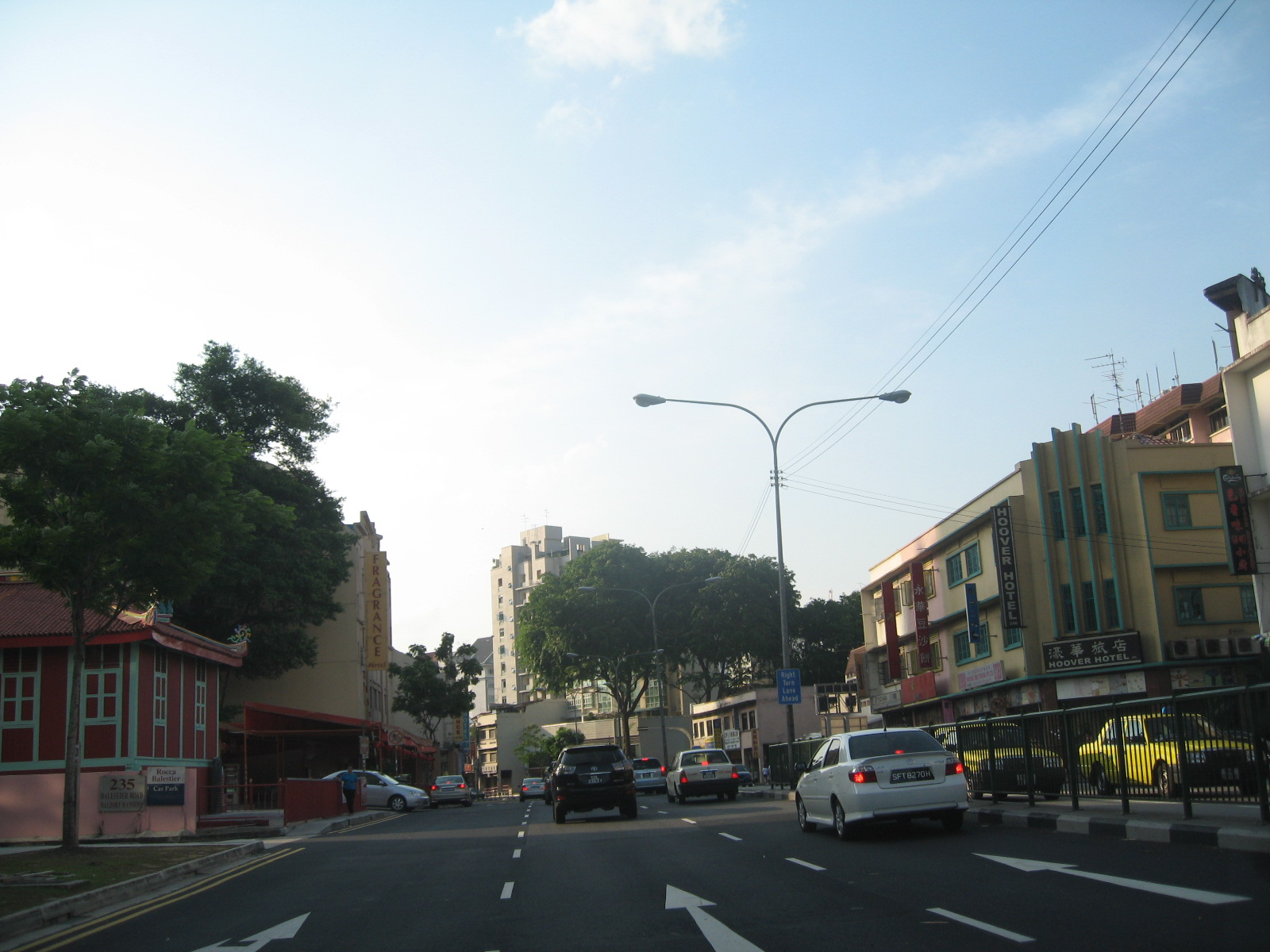
Balestier (traditional Chinese: 馬里士他; simplified Chinese: 马里士他) is a sub zone located in the planning area of Novena in the Central Region of Singapore. The main road, Balestier Road, links Thomson Road to Serangoon Road and the road continues on as Lavender Street. The area is home to rows of shophouses, such as the Sim Kwong Ho shophouses, the Balestier Art Deco shophouses, 412-418 Balestier Road, and 601-639 Balestier Road, low-rise apartments and commercial buildings as well as a shopping mall known as Shaw Plaza. Balestier also has another mall, Zhongshan Mall. There are several lighting and electrical shops along Balestier Road, which is also home to the Ceylon Sports Club and the Indian Association. The area is known for its food such as bak kut teh and chicken rice. In the area, there are several apartments, condominiums, and budget hotels.
The precinct was named after Joseph Balestier. As new settlers populated Balestier Road from the late 19th century, they established villages and grew crops such as taro.
Balestier hired a number of immigrants on his estates. Chinese and Indian workers laboured these crops. When Balestier left Singapore due to a health breakdown after the deaths of his son and wife in 1844 and 1847, he sold his plantation to Singapore authorities and the land was leased out to Chinese farmers. Another portion was turned into a burial site for paupers and lepers. During the 19th century, many prisoners from India were sent to Singapore, where they were employed as labourers and builders. After serving their term, many of these convicts remained in Singapore as traders, artisans or skilled craftsmen. With a large diversity of people, different skills, culture, techniques and practices were shared and exchange within Balestier.
For instance, the nickname “Recreation Road” is made popular with the growth of many sporting and recreational buildings within the vicinity in 1920s. Other examples of names given in view of activities included the Cantonese names such as Wu-hap Thong was given to the Taro pond, which is to depict the semi aquatic crops grown within the neighbourhood. The area that surrounds Balestier and Serangoon road also adopts the Malay language name of “Pauper House”, to acknowledge the presence of Tan Tock Seng pauper's Hospital to provide treatment for the under-privileged. Many more streets took on Malay names in acknowledgement to the existence of Malay kampong villages within the area.
Both the Singapore Improvement Trust and the Housing and Development Board built flats in the area known as St. Michael's Estate. Modern shophouses were erected in the 1960s as well including walk-up apartments. In the late 20th century, several buildings made way for newer buildings such as high-rise condominiums, shopping malls and new commercial buildings.
The Sultan of Sulu used to own a house along Balestier Road purchased in 1903.
The Chinese labourers, who settled in the area, built a temple in 1847 which still exists known as Goh Chor Tua Pek Kong Temple (梧槽大伯公廟), with the area having one of the last free-standing wayang stage in Singapore that was built in 1906 by Tan Boo Liat, a wealthy Hokkien Peranakan philanthropist and community leader.
Apart from the century-old Goh Chor Tua Pek Kong Temple (梧槽大伯公廟), Balestier area also consisted of various prominent temples including Balestier Kwan Im Tng Temple (坤德觀音堂), Leng Ern Jee (靈隱寺), Feeha Cheng Seah (飛霞精舍), Chan Chor Min Tong (陳佐勉堂), Tai Pei Yuen Temple (大悲院) along Jalan Kemaman and Burmese Buddhist Temple at Tai Gin Road. Thong Teck Sian Tong Lian Sin Sia Temple (同德善堂念心社), a Teochew charitable temple whose mission is the practice of compassion through the provision of free medical consultation, funeral services, and assistance to the poor and needy. The temple is also known for its tradition of setting up water and tea kiosks for thirsty passers-by at the junction of Boon Teck Road and Balestier Road since 1950s.
Hub AI
Balestier AI simulator
(@Balestier_simulator)
Balestier
Balestier (traditional Chinese: 馬里士他; simplified Chinese: 马里士他) is a sub zone located in the planning area of Novena in the Central Region of Singapore. The main road, Balestier Road, links Thomson Road to Serangoon Road and the road continues on as Lavender Street. The area is home to rows of shophouses, such as the Sim Kwong Ho shophouses, the Balestier Art Deco shophouses, 412-418 Balestier Road, and 601-639 Balestier Road, low-rise apartments and commercial buildings as well as a shopping mall known as Shaw Plaza. Balestier also has another mall, Zhongshan Mall. There are several lighting and electrical shops along Balestier Road, which is also home to the Ceylon Sports Club and the Indian Association. The area is known for its food such as bak kut teh and chicken rice. In the area, there are several apartments, condominiums, and budget hotels.
The precinct was named after Joseph Balestier. As new settlers populated Balestier Road from the late 19th century, they established villages and grew crops such as taro.
Balestier hired a number of immigrants on his estates. Chinese and Indian workers laboured these crops. When Balestier left Singapore due to a health breakdown after the deaths of his son and wife in 1844 and 1847, he sold his plantation to Singapore authorities and the land was leased out to Chinese farmers. Another portion was turned into a burial site for paupers and lepers. During the 19th century, many prisoners from India were sent to Singapore, where they were employed as labourers and builders. After serving their term, many of these convicts remained in Singapore as traders, artisans or skilled craftsmen. With a large diversity of people, different skills, culture, techniques and practices were shared and exchange within Balestier.
For instance, the nickname “Recreation Road” is made popular with the growth of many sporting and recreational buildings within the vicinity in 1920s. Other examples of names given in view of activities included the Cantonese names such as Wu-hap Thong was given to the Taro pond, which is to depict the semi aquatic crops grown within the neighbourhood. The area that surrounds Balestier and Serangoon road also adopts the Malay language name of “Pauper House”, to acknowledge the presence of Tan Tock Seng pauper's Hospital to provide treatment for the under-privileged. Many more streets took on Malay names in acknowledgement to the existence of Malay kampong villages within the area.
Both the Singapore Improvement Trust and the Housing and Development Board built flats in the area known as St. Michael's Estate. Modern shophouses were erected in the 1960s as well including walk-up apartments. In the late 20th century, several buildings made way for newer buildings such as high-rise condominiums, shopping malls and new commercial buildings.
The Sultan of Sulu used to own a house along Balestier Road purchased in 1903.
The Chinese labourers, who settled in the area, built a temple in 1847 which still exists known as Goh Chor Tua Pek Kong Temple (梧槽大伯公廟), with the area having one of the last free-standing wayang stage in Singapore that was built in 1906 by Tan Boo Liat, a wealthy Hokkien Peranakan philanthropist and community leader.
Apart from the century-old Goh Chor Tua Pek Kong Temple (梧槽大伯公廟), Balestier area also consisted of various prominent temples including Balestier Kwan Im Tng Temple (坤德觀音堂), Leng Ern Jee (靈隱寺), Feeha Cheng Seah (飛霞精舍), Chan Chor Min Tong (陳佐勉堂), Tai Pei Yuen Temple (大悲院) along Jalan Kemaman and Burmese Buddhist Temple at Tai Gin Road. Thong Teck Sian Tong Lian Sin Sia Temple (同德善堂念心社), a Teochew charitable temple whose mission is the practice of compassion through the provision of free medical consultation, funeral services, and assistance to the poor and needy. The temple is also known for its tradition of setting up water and tea kiosks for thirsty passers-by at the junction of Boon Teck Road and Balestier Road since 1950s.