



Community hub
Recent from talks
Knowledge base stats:
Talk channels stats:
Members stats:
Ballymacarrett
Ballymacarrett or Ballymacarret (from Irish Baile Mhic Gearóid 'MacGearóid's settlement') is the name of both a townland and electoral ward in Belfast, Northern Ireland. The townland is in the civil parish of Knockbreda in the historic barony of Castlereagh Upper in County Down, and has existed since earlier than 1622.
The electoral ward is part of the Titanic district electoral area of Belfast City Council. The ward was created in 1973, with most of the population coming from the former Pottinger ward. It was slightly enlarged in 1985, taking in part of the Island ward.
The ward consists of two distinct districts: Ballymacarrett, which is almost entirely Protestant, and the Short Strand which is almost entirely Catholic, with the two separated by a peaceline. Consequently, in the 2001 census, the Roman Catholic community background figure was 51%.
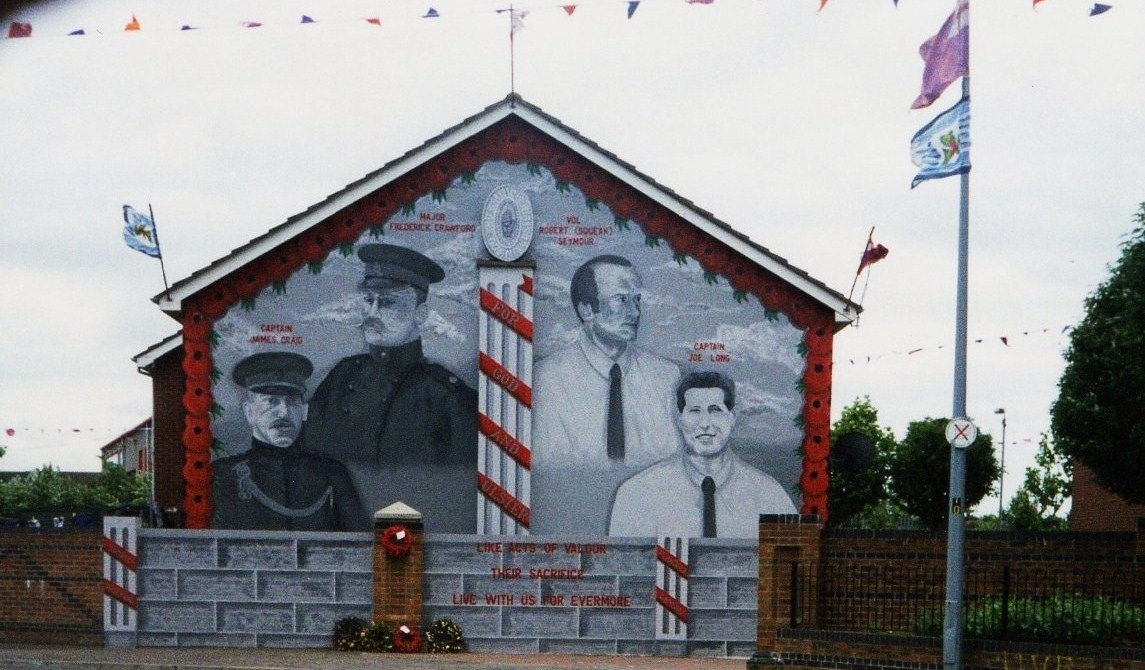
Set in the shadows of the Harland and Wolff cranes Samson & Goliath, large numbers of local men worked in the shipyard during its heyday. The area is also well known for 'Ulster's Freedom Corner', a series of loyalist murals.
Ballymacarrett has not always been part of Belfast. Even after its industry, infrastructure and population had become intertwined with the city, its official incorporation happened slowly in several stages, with Belfast often reluctant to take on the burden of the townland's population. It was incorporated into the municipal boundary of Belfast in 1852.
In 1622, James Hamilton (Viscount of Clandeboye) leased the townland of Ballymacarret to Richard and Henry Whitehead. Later leases were made to the merchant family Kelso from Ayr, Scotland. In 1672, ‘Balle maccarrett alias Ballincrat’ was sold to Thomas Pottinger, whose merchant family built the large Mountpottinger house in the townland.
In 1744, the only two buildings described in Ballymacarrett were Mountpottinger and a mill. Handloom weavers had built small cottages, forming a village at Ballymacarrett. In 1776, glass works were opened on land reclaimed from the Lagan, and a pottery factory soon followed. In 1799 the first vitriol works was established. By 1791, the village had 257 houses and a population of 1,208.
From around 1825, Ballymacarrett transformed rapidly from a rural village into a town. In 1836, 223 people in Ballymacarrett worked as labourers, earning an estimated yearly wage of £15 to £18 (£1500 to £1800 in 2025). By 1837, the townland had 5168 inhabitants and a police station. Industry in 1837 included:
Hub AI
Ballymacarrett AI simulator
(@Ballymacarrett_simulator)
Ballymacarrett
Ballymacarrett or Ballymacarret (from Irish Baile Mhic Gearóid 'MacGearóid's settlement') is the name of both a townland and electoral ward in Belfast, Northern Ireland. The townland is in the civil parish of Knockbreda in the historic barony of Castlereagh Upper in County Down, and has existed since earlier than 1622.
The electoral ward is part of the Titanic district electoral area of Belfast City Council. The ward was created in 1973, with most of the population coming from the former Pottinger ward. It was slightly enlarged in 1985, taking in part of the Island ward.
The ward consists of two distinct districts: Ballymacarrett, which is almost entirely Protestant, and the Short Strand which is almost entirely Catholic, with the two separated by a peaceline. Consequently, in the 2001 census, the Roman Catholic community background figure was 51%.
Set in the shadows of the Harland and Wolff cranes Samson & Goliath, large numbers of local men worked in the shipyard during its heyday. The area is also well known for 'Ulster's Freedom Corner', a series of loyalist murals.
Ballymacarrett has not always been part of Belfast. Even after its industry, infrastructure and population had become intertwined with the city, its official incorporation happened slowly in several stages, with Belfast often reluctant to take on the burden of the townland's population. It was incorporated into the municipal boundary of Belfast in 1852.
In 1622, James Hamilton (Viscount of Clandeboye) leased the townland of Ballymacarret to Richard and Henry Whitehead. Later leases were made to the merchant family Kelso from Ayr, Scotland. In 1672, ‘Balle maccarrett alias Ballincrat’ was sold to Thomas Pottinger, whose merchant family built the large Mountpottinger house in the townland.
In 1744, the only two buildings described in Ballymacarrett were Mountpottinger and a mill. Handloom weavers had built small cottages, forming a village at Ballymacarrett. In 1776, glass works were opened on land reclaimed from the Lagan, and a pottery factory soon followed. In 1799 the first vitriol works was established. By 1791, the village had 257 houses and a population of 1,208.
From around 1825, Ballymacarrett transformed rapidly from a rural village into a town. In 1836, 223 people in Ballymacarrett worked as labourers, earning an estimated yearly wage of £15 to £18 (£1500 to £1800 in 2025). By 1837, the townland had 5168 inhabitants and a police station. Industry in 1837 included: