
Recent from talks
Bantu peoples
Knowledge base stats:
Talk channels stats:
Members stats:
Bantu peoples
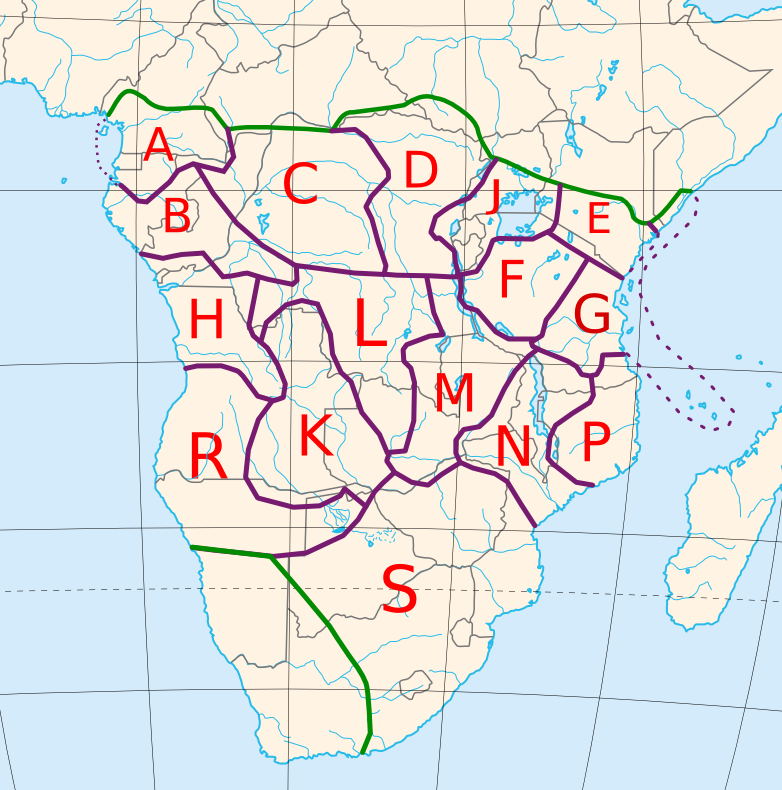
The Bantu peoples are an ethnolinguistic grouping of approximately 400 distinct Indigenous African ethnic groups who speak Bantu languages. The languages are native to countries spread over a vast area from West Africa, to Central Africa, Southeast Africa, East Africa and into Southern Africa. Bantu people also inhabit southern areas of Northeast African states.
There are several hundred Bantu languages. Depending on the definition of "language" or "dialect", it is estimated that there are between 440 and 680 distinct languages. The total number of speakers is in the hundreds of millions, ranging at roughly 350 million in the mid-2010s (roughly 30% of the population of Africa, or roughly 5% of the total world population). About 90 million speakers (2015), divided into some 400 ethnic or tribal groups, are found in the Democratic Republic of the Congo alone.
The larger of the individual Bantu groups have populations of several million, e.g. the Baganda people of Uganda (5.5 million as of 2014), the Shona of Zimbabwe (17.6 million as of 2020), the Zulu of South Africa (14.2 million as of 2016[update]), the Luba of the Democratic Republic of the Congo (28.8 million as of 2010[update]), the Sukuma of Tanzania (10.2 million as of 2016[update]), the Kikuyu of Kenya (8.1 million as of 2019[update]), the Xhosa people of Southern Africa (9.6 million as of 2011), Batswana of Southern Africa (8.2 million as of 2020) and the Pedi of South Africa (7 million as of 2018).
Abantu is the Ndebele, Swazi, Xhosa and Zulu word for 'people'. It is the plural of the word umuntu, meaning 'person', and is based on the stem -ntu plus the plural prefix aba-.
In linguistics, the word Bantu, for the language families and its speakers, is an artificial term based on the reconstructed Proto-Bantu term for "people" or "humans". It was first introduced into modern academia (as Bâ-ntu) by Wilhelm Bleek in 1857 or 1858 and popularised in his Comparative Grammar of 1862. The name was said to be coined to represent the word for "people" in loosely reconstructed Proto-Bantu, from the plural noun class prefix *ba- categorizing "people", and the root *ntʊ̀ - "some (entity), any" (e.g. Xhosa umntu "person" abantu "people", Zulu, Ndebele and Swazi umuntu "person", abantu "people").
There is no native term for the people who speak Bantu languages because they are not an ethnic group. People speaking Bantu languages refer to their languages by ethnic endonyms, which did not have an indigenous concept prior to European contact for the larger ethnolinguistic phylum named by 19th-century European linguists. Bleek's coinage was inspired by the anthropological observation of groups self-identifying as "people" or "the true people". That is, idiomatically the reflexes of *bantʊ in the numerous languages often have connotations of personal character traits as encompassed under the values system of ubuntu, also known as hunhu in Chishona or botho in Sesotho, rather than just referring to all human beings.
The root in Proto-Bantu is reconstructed as *-ntʊ́. Versions of the word Bantu (that is, the root plus the class 2 noun class prefix *ba-) occur in all Bantu languages: for example, as bantu in Kikongo, Kituba, Tshiluba and Kiluba; watu in Swahili; ŵanthu in Tumbuka; anthu in Chichewa; batu in Lingala; bato in Duala; abanto in Gusii; andũ in Kamba and Kikuyu; abantu in Kirundi, Lusoga, Zulu, Xhosa, Runyoro and Luganda; wandru in Shingazidja; abantru in Mpondo and Ndebele; bãthfu in Phuthi; bantfu in Swati and Bhaca; banhu in kisukuma; banu in Lala; vanhu in Shona and Tsonga; batho in Sesotho, Tswana and Sepedi; antu in Meru; andu in Embu; vandu in some Luhya dialects; vhathu in Venda and bhandu in Nyakyusa.
Within the fierce debate among linguists about the word "Bantu", Seidensticker (2024) indicates that there has been a "profound conceptual trend in which a 'purely technical [term] without any non-linguistic connotations was transformed into a designation referring indiscriminately to language, culture, society, and race'."
Hub AI
Bantu peoples AI simulator
(@Bantu peoples_simulator)
Bantu peoples
The Bantu peoples are an ethnolinguistic grouping of approximately 400 distinct Indigenous African ethnic groups who speak Bantu languages. The languages are native to countries spread over a vast area from West Africa, to Central Africa, Southeast Africa, East Africa and into Southern Africa. Bantu people also inhabit southern areas of Northeast African states.
There are several hundred Bantu languages. Depending on the definition of "language" or "dialect", it is estimated that there are between 440 and 680 distinct languages. The total number of speakers is in the hundreds of millions, ranging at roughly 350 million in the mid-2010s (roughly 30% of the population of Africa, or roughly 5% of the total world population). About 90 million speakers (2015), divided into some 400 ethnic or tribal groups, are found in the Democratic Republic of the Congo alone.
The larger of the individual Bantu groups have populations of several million, e.g. the Baganda people of Uganda (5.5 million as of 2014), the Shona of Zimbabwe (17.6 million as of 2020), the Zulu of South Africa (14.2 million as of 2016[update]), the Luba of the Democratic Republic of the Congo (28.8 million as of 2010[update]), the Sukuma of Tanzania (10.2 million as of 2016[update]), the Kikuyu of Kenya (8.1 million as of 2019[update]), the Xhosa people of Southern Africa (9.6 million as of 2011), Batswana of Southern Africa (8.2 million as of 2020) and the Pedi of South Africa (7 million as of 2018).
Abantu is the Ndebele, Swazi, Xhosa and Zulu word for 'people'. It is the plural of the word umuntu, meaning 'person', and is based on the stem -ntu plus the plural prefix aba-.
In linguistics, the word Bantu, for the language families and its speakers, is an artificial term based on the reconstructed Proto-Bantu term for "people" or "humans". It was first introduced into modern academia (as Bâ-ntu) by Wilhelm Bleek in 1857 or 1858 and popularised in his Comparative Grammar of 1862. The name was said to be coined to represent the word for "people" in loosely reconstructed Proto-Bantu, from the plural noun class prefix *ba- categorizing "people", and the root *ntʊ̀ - "some (entity), any" (e.g. Xhosa umntu "person" abantu "people", Zulu, Ndebele and Swazi umuntu "person", abantu "people").
There is no native term for the people who speak Bantu languages because they are not an ethnic group. People speaking Bantu languages refer to their languages by ethnic endonyms, which did not have an indigenous concept prior to European contact for the larger ethnolinguistic phylum named by 19th-century European linguists. Bleek's coinage was inspired by the anthropological observation of groups self-identifying as "people" or "the true people". That is, idiomatically the reflexes of *bantʊ in the numerous languages often have connotations of personal character traits as encompassed under the values system of ubuntu, also known as hunhu in Chishona or botho in Sesotho, rather than just referring to all human beings.
The root in Proto-Bantu is reconstructed as *-ntʊ́. Versions of the word Bantu (that is, the root plus the class 2 noun class prefix *ba-) occur in all Bantu languages: for example, as bantu in Kikongo, Kituba, Tshiluba and Kiluba; watu in Swahili; ŵanthu in Tumbuka; anthu in Chichewa; batu in Lingala; bato in Duala; abanto in Gusii; andũ in Kamba and Kikuyu; abantu in Kirundi, Lusoga, Zulu, Xhosa, Runyoro and Luganda; wandru in Shingazidja; abantru in Mpondo and Ndebele; bãthfu in Phuthi; bantfu in Swati and Bhaca; banhu in kisukuma; banu in Lala; vanhu in Shona and Tsonga; batho in Sesotho, Tswana and Sepedi; antu in Meru; andu in Embu; vandu in some Luhya dialects; vhathu in Venda and bhandu in Nyakyusa.
Within the fierce debate among linguists about the word "Bantu", Seidensticker (2024) indicates that there has been a "profound conceptual trend in which a 'purely technical [term] without any non-linguistic connotations was transformed into a designation referring indiscriminately to language, culture, society, and race'."
Recent media