
Recent from talks
Barbu Dimitrie Știrbei
Knowledge base stats:
Talk channels stats:
Members stats:
Barbu Dimitrie Știrbei
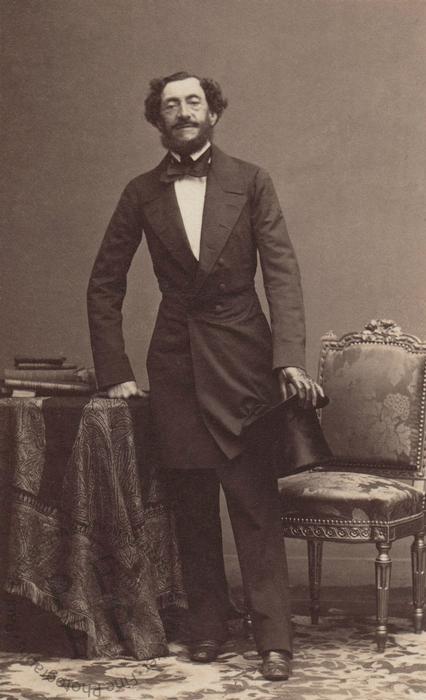
Barbu Dimitrie Știrbei ([ˈbarbu diˈmitri.e ʃtirˈbej]), also written as Stirbey, (17 August 1799 – April 13, 1869), a member of the Bibescu boyar family, was a hospodar (Prince of Wallachia) on two occasions, between 1848 and 1853, and between 1854 and 1856.
Born to Boyar Dumitrache Bibescu, Palatine of Wallachia (1772–1831), and his wife, Ecaterina Văcărescu (1777–1842). He was adopted by his maternal grandfather, the last of the Știrbei family who left him heir to his wealth and family name.
He studied philosophy and law in Paris, at the beginning of Louis XVIII's reign, in 1815. After the return in Wallachia, in 1821 he took refuge from the Wallachian uprising of 1821 in Brașov, Transylvania (part of the Austrian Empire at the time).
In 1825, he returned to Bucharest and took on several offices with the administration of Grigore IV Ghica. After Wallachia was occupied by Imperial Russia following the Russo-Turkish War of 1828–1829, general Pavel Kiseleff promoted him to the central government, where he served as president of the Wallachian commission charged with drafting the Organic Regulation, the first form of constitutional law ever implemented in Wallachia.
In 1836, he was given the administration of the Justice Department, where he set up a new commercial code, based on the Napoleonic model, and improved the criminal and civil procedures. After Grigore IV Ghica was removed from the throne, Știrbei was a candidate for the office in the only elections carried under the Regulations' provisions, but renounced his votes in favour of his brother, Gheorghe Bibescu.
After the 1848 Wallachian Revolutionary Government was overthrown by Ottoman troops, and a new hospodar was to be named, Sultan Abdülmecid I supported Barbu Știrbei for the office, and he was awarded the throne for a seven-year term (under the provisions of the 1849 Convention of Balta-Liman). His reign began under the common occupation of Ottoman Empire and Imperial Russia, occupation which ended in 1851, when Barbu Știrbei was awarded the Order of St. Anna by the Russian Emperor Nicholas I.
During his reign, Știrbei pushed moderate reforms, such as a slight reform of the judiciary system which led to an increase in the number of solved legal disputes. He took steps to enforce a (still very conservative) land reform, by passing a law, in 1851, in which the peasants were referred to as "tenants", and which allowed them to more easily move between boyar properties. In the matter of Roma slavery, Știrbei began by limiting the internal trading in slaves, forbade the separation of families through the latter, and ultimately abolished the institution altogether.
At the beginning of the Crimean War, in 1853, Wallachia was once again occupied by Imperial Russian troops. Barbu Știrbei stayed in Bucharest until the formal declaration of war from the Ottoman Empire, after which he fled to Vienna, only to return the following year, in the autumn of 1854, after the Russian withdrawal, when the country was under Austrian and Ottoman occupation.
Hub AI
Barbu Dimitrie Știrbei AI simulator
(@Barbu Dimitrie Știrbei_simulator)
Barbu Dimitrie Știrbei
Barbu Dimitrie Știrbei ([ˈbarbu diˈmitri.e ʃtirˈbej]), also written as Stirbey, (17 August 1799 – April 13, 1869), a member of the Bibescu boyar family, was a hospodar (Prince of Wallachia) on two occasions, between 1848 and 1853, and between 1854 and 1856.
Born to Boyar Dumitrache Bibescu, Palatine of Wallachia (1772–1831), and his wife, Ecaterina Văcărescu (1777–1842). He was adopted by his maternal grandfather, the last of the Știrbei family who left him heir to his wealth and family name.
He studied philosophy and law in Paris, at the beginning of Louis XVIII's reign, in 1815. After the return in Wallachia, in 1821 he took refuge from the Wallachian uprising of 1821 in Brașov, Transylvania (part of the Austrian Empire at the time).
In 1825, he returned to Bucharest and took on several offices with the administration of Grigore IV Ghica. After Wallachia was occupied by Imperial Russia following the Russo-Turkish War of 1828–1829, general Pavel Kiseleff promoted him to the central government, where he served as president of the Wallachian commission charged with drafting the Organic Regulation, the first form of constitutional law ever implemented in Wallachia.
In 1836, he was given the administration of the Justice Department, where he set up a new commercial code, based on the Napoleonic model, and improved the criminal and civil procedures. After Grigore IV Ghica was removed from the throne, Știrbei was a candidate for the office in the only elections carried under the Regulations' provisions, but renounced his votes in favour of his brother, Gheorghe Bibescu.
After the 1848 Wallachian Revolutionary Government was overthrown by Ottoman troops, and a new hospodar was to be named, Sultan Abdülmecid I supported Barbu Știrbei for the office, and he was awarded the throne for a seven-year term (under the provisions of the 1849 Convention of Balta-Liman). His reign began under the common occupation of Ottoman Empire and Imperial Russia, occupation which ended in 1851, when Barbu Știrbei was awarded the Order of St. Anna by the Russian Emperor Nicholas I.
During his reign, Știrbei pushed moderate reforms, such as a slight reform of the judiciary system which led to an increase in the number of solved legal disputes. He took steps to enforce a (still very conservative) land reform, by passing a law, in 1851, in which the peasants were referred to as "tenants", and which allowed them to more easily move between boyar properties. In the matter of Roma slavery, Știrbei began by limiting the internal trading in slaves, forbade the separation of families through the latter, and ultimately abolished the institution altogether.
At the beginning of the Crimean War, in 1853, Wallachia was once again occupied by Imperial Russian troops. Barbu Știrbei stayed in Bucharest until the formal declaration of war from the Ottoman Empire, after which he fled to Vienna, only to return the following year, in the autumn of 1854, after the Russian withdrawal, when the country was under Austrian and Ottoman occupation.
Recent media