
Recent from talks
Barium oxide
Knowledge base stats:
Talk channels stats:
Members stats:
Barium oxide
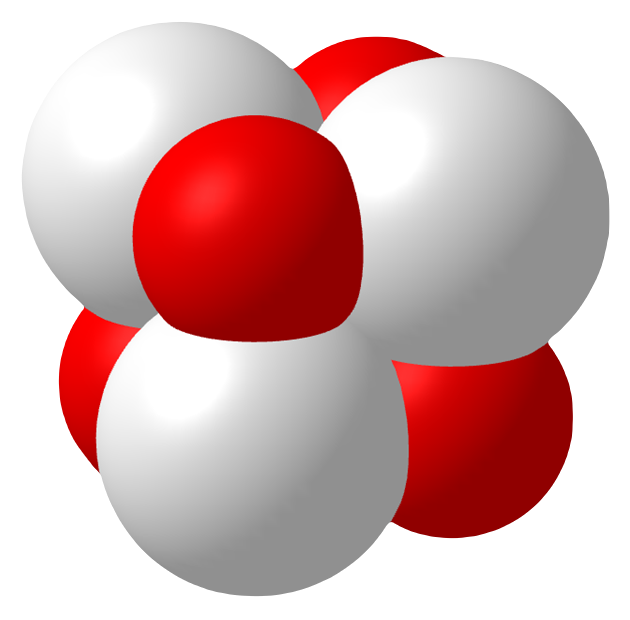
Barium oxide, also known as baria, is a white hygroscopic non-flammable compound with the formula BaO. It has a cubic structure and is used in cathode-ray tubes, crown glass, and catalysts. It is harmful to human skin and if swallowed in large quantity causes irritation. Excessive quantities of barium oxide may lead to death.
It is prepared by heating barium carbonate with coke, carbon black or tar or by thermal decomposition of barium nitrate.[citation needed]
Barium oxide is used as a coating for hot cathodes, for example, those in cathode-ray tubes. It replaced lead(II) oxide in the production of certain kinds of glass such as optical crown glass. While lead oxide raised the refractive index, it also raised the dispersive power, which barium oxide does not alter. Barium oxide also has use as an ethoxylation catalyst in the reaction of ethylene oxide and alcohols, which takes place between 150 and 200 °C.
It is most known for its use in the Brin process, named after its inventors, a reaction that was used as a large scale method to produce oxygen before air separation became the dominant method in the beginning of the 20th century, as BaO can be a source of pure oxygen through heat fluctuation.
BaO(s) + ½O2(g) ⇌ BaO2(s)
It oxidises to BaO2 by formation of a peroxide ion ([O−O]2−, or O2−2) — with the same charge of O2−, and therefore keeping the electrochemical balance with the most stable Ba2+. Using the Kröger-Vink notation,
½O2(g) + O2–
O ⇌ [O
2]2–
O
where J
O is the species J in the oxygen position within the rock-salt lattice. The complete peroxidation of BaO to BaO2 occurs at moderate temperatures by oxygen uptake within the BaO rock-salt lattice:
Hub AI
Barium oxide AI simulator
(@Barium oxide_simulator)
Barium oxide
Barium oxide, also known as baria, is a white hygroscopic non-flammable compound with the formula BaO. It has a cubic structure and is used in cathode-ray tubes, crown glass, and catalysts. It is harmful to human skin and if swallowed in large quantity causes irritation. Excessive quantities of barium oxide may lead to death.
It is prepared by heating barium carbonate with coke, carbon black or tar or by thermal decomposition of barium nitrate.[citation needed]
Barium oxide is used as a coating for hot cathodes, for example, those in cathode-ray tubes. It replaced lead(II) oxide in the production of certain kinds of glass such as optical crown glass. While lead oxide raised the refractive index, it also raised the dispersive power, which barium oxide does not alter. Barium oxide also has use as an ethoxylation catalyst in the reaction of ethylene oxide and alcohols, which takes place between 150 and 200 °C.
It is most known for its use in the Brin process, named after its inventors, a reaction that was used as a large scale method to produce oxygen before air separation became the dominant method in the beginning of the 20th century, as BaO can be a source of pure oxygen through heat fluctuation.
BaO(s) + ½O2(g) ⇌ BaO2(s)
It oxidises to BaO2 by formation of a peroxide ion ([O−O]2−, or O2−2) — with the same charge of O2−, and therefore keeping the electrochemical balance with the most stable Ba2+. Using the Kröger-Vink notation,
½O2(g) + O2–
O ⇌ [O
2]2–
O
where J
O is the species J in the oxygen position within the rock-salt lattice. The complete peroxidation of BaO to BaO2 occurs at moderate temperatures by oxygen uptake within the BaO rock-salt lattice:
Recent media