
Recent from talks
Barney Ross
Knowledge base stats:
Talk channels stats:
Members stats:
Barney Ross
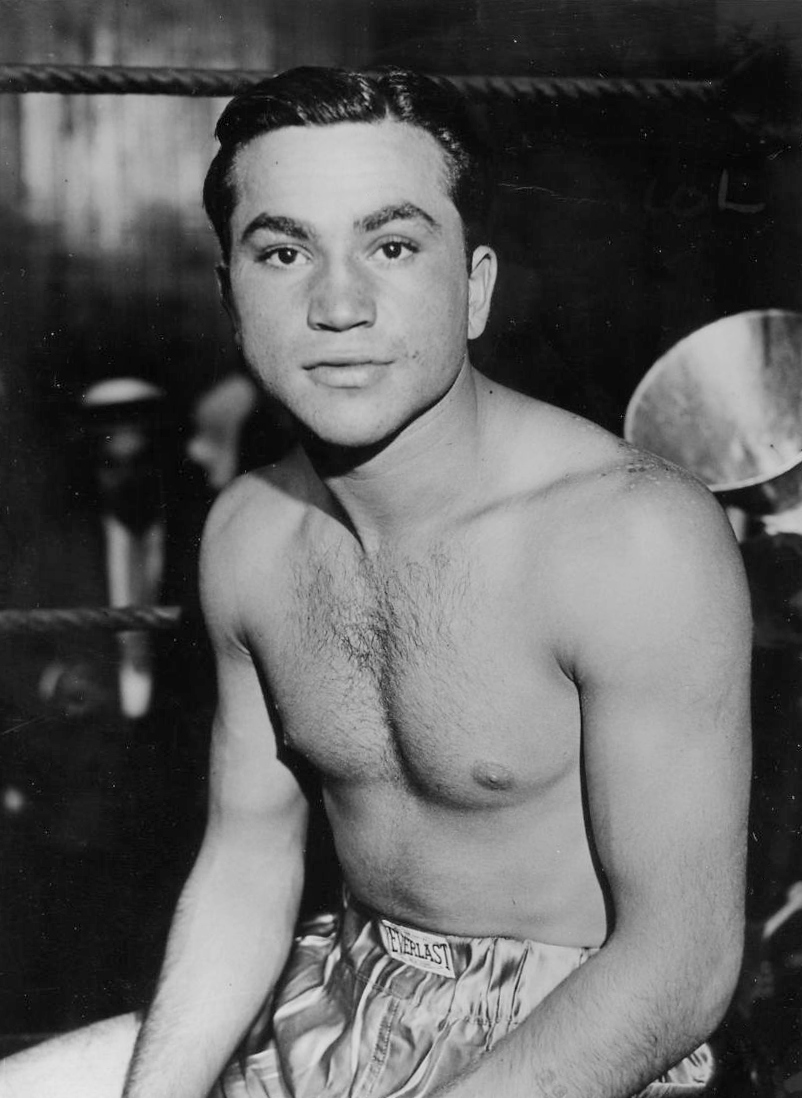
Barney Ross (born Dov-Ber "Beryl" David Rosofsky; December 23, 1909 – January 17, 1967) was an American professional boxer. Ross held world championships in three weight divisions from lightweight to welterweight, and was a decorated veteran of World War II. In his time, he was known as the Pride of the Ghetto.
Initially known locally as a brawler, Ross joined a local gang as a teenager, running errands with Jack Ruby (who would later become world-famous for murdering Lee Harvey Oswald) for mobster Al Capone.
Ross later rose to prominence after turning professional in boxing, becoming only the third fighter in history to capture world titles in three weight divisions, the first in the "Queensberry Rules era" to win championships in two weight classes simultaneously, and is believed by some to be the first simultaneous three-division world champion. He was named The Ring magazine Fighter of the Year in 1934 and 1935, and received the Edward J. Neil Trophy by the BWAA in 1942. In his 81-fight professional career, Ross was never knocked out.
Following his boxing career, Ross joined the United States Marine Corps during World War II. While wounded during a night patrol, Ross single-handedly held off a Japanese attack, killing 22 soldiers and saving a fellow Marine. For his bravery, Ross was awarded a Silver Star, Purple Heart, and a Presidential Unit Citation, among others.
Dov-Ber (or Beryl) Rosofsky was born in New York City to Isidore "Itchik" Rosofsky and Sarah Epstein Rosofsky. His father was a Talmudic scholar who had emigrated to America from his native Brest-Litovsk after barely surviving a pogrom. The family then moved from New York to Chicago. Isidore became a rabbi and owner of a small vegetable shop in Chicago's Maxwell Street neighborhood, a vibrant Jewish ghetto akin to the New York's Lower East Side of the 1920s and '30s. Dov-Ber was being raised to follow in his footsteps.
The young Rasofsky grew up on Chicago's mean streets, ultimately ignoring his father's desire for him to become a rabbi and his admonition that Jews do not resort to violence. "'Let the goyim be the fighters,'" Ross later recalled being told by his father. "'The trombeniks, the murderers—we are the scholars.'" Ross's ambition in life was to become a Jewish teacher and a Talmudic scholar, but his life was changed forever when his father was shot dead resisting a robbery at his small grocery. Prostrate from grief, his mother Sarah suffered a nervous breakdown and his younger siblings—Ida, Sam and George—were placed in an orphanage or farmed out to other members of the extended family. Dov was left to his own devices at the age of 14.
As recounted in Barney Ross: The Life of a Jewish Fighter, by Ross biographer Douglas Century, in the wake of the tragedy, Dov became vindictive towards everything and turned his back on the orthodox religion of his father. He began running around with local toughs (including another wayward Jewish ghetto kid, the future Jack Ruby), developing into a street brawler, thief and money runner; he was even employed by Al Capone. Dov's goal was to earn enough money to buy a home so that he could reunite his family. He saw boxing as that vehicle and began training with his friend Ruby.
After winning amateur bouts, Dov would pawn the awards—like watches—and set the money aside for his family. There is speculation that Capone bought up tickets to his early fights, knowing some of that money would be funneled to Dov. Plagued by his father's death and feeling an obligation not to sully his name, Dov Rosofsky took the new name "Barney Ross." The name change was also part of a larger trend by Jews to assimilate in the U.S. by taking American-sounding names. Strong, fast and possessed of a powerful will, Ross was soon an Intercity Golden Gloves and Chicago Golden Gloves champion in 1929 at the age of 19. He was the first Golden Gloves champion to ever win a world championship.
Hub AI
Barney Ross AI simulator
(@Barney Ross_simulator)
Barney Ross
Barney Ross (born Dov-Ber "Beryl" David Rosofsky; December 23, 1909 – January 17, 1967) was an American professional boxer. Ross held world championships in three weight divisions from lightweight to welterweight, and was a decorated veteran of World War II. In his time, he was known as the Pride of the Ghetto.
Initially known locally as a brawler, Ross joined a local gang as a teenager, running errands with Jack Ruby (who would later become world-famous for murdering Lee Harvey Oswald) for mobster Al Capone.
Ross later rose to prominence after turning professional in boxing, becoming only the third fighter in history to capture world titles in three weight divisions, the first in the "Queensberry Rules era" to win championships in two weight classes simultaneously, and is believed by some to be the first simultaneous three-division world champion. He was named The Ring magazine Fighter of the Year in 1934 and 1935, and received the Edward J. Neil Trophy by the BWAA in 1942. In his 81-fight professional career, Ross was never knocked out.
Following his boxing career, Ross joined the United States Marine Corps during World War II. While wounded during a night patrol, Ross single-handedly held off a Japanese attack, killing 22 soldiers and saving a fellow Marine. For his bravery, Ross was awarded a Silver Star, Purple Heart, and a Presidential Unit Citation, among others.
Dov-Ber (or Beryl) Rosofsky was born in New York City to Isidore "Itchik" Rosofsky and Sarah Epstein Rosofsky. His father was a Talmudic scholar who had emigrated to America from his native Brest-Litovsk after barely surviving a pogrom. The family then moved from New York to Chicago. Isidore became a rabbi and owner of a small vegetable shop in Chicago's Maxwell Street neighborhood, a vibrant Jewish ghetto akin to the New York's Lower East Side of the 1920s and '30s. Dov-Ber was being raised to follow in his footsteps.
The young Rasofsky grew up on Chicago's mean streets, ultimately ignoring his father's desire for him to become a rabbi and his admonition that Jews do not resort to violence. "'Let the goyim be the fighters,'" Ross later recalled being told by his father. "'The trombeniks, the murderers—we are the scholars.'" Ross's ambition in life was to become a Jewish teacher and a Talmudic scholar, but his life was changed forever when his father was shot dead resisting a robbery at his small grocery. Prostrate from grief, his mother Sarah suffered a nervous breakdown and his younger siblings—Ida, Sam and George—were placed in an orphanage or farmed out to other members of the extended family. Dov was left to his own devices at the age of 14.
As recounted in Barney Ross: The Life of a Jewish Fighter, by Ross biographer Douglas Century, in the wake of the tragedy, Dov became vindictive towards everything and turned his back on the orthodox religion of his father. He began running around with local toughs (including another wayward Jewish ghetto kid, the future Jack Ruby), developing into a street brawler, thief and money runner; he was even employed by Al Capone. Dov's goal was to earn enough money to buy a home so that he could reunite his family. He saw boxing as that vehicle and began training with his friend Ruby.
After winning amateur bouts, Dov would pawn the awards—like watches—and set the money aside for his family. There is speculation that Capone bought up tickets to his early fights, knowing some of that money would be funneled to Dov. Plagued by his father's death and feeling an obligation not to sully his name, Dov Rosofsky took the new name "Barney Ross." The name change was also part of a larger trend by Jews to assimilate in the U.S. by taking American-sounding names. Strong, fast and possessed of a powerful will, Ross was soon an Intercity Golden Gloves and Chicago Golden Gloves champion in 1929 at the age of 19. He was the first Golden Gloves champion to ever win a world championship.
Recent media