


Community hub
Recent from talks
Contribute something to knowledge base
Content stats: 0 posts, 0 articles, 1 media, 0 notes
Members stats: 0 subscribers, 0 contributors, 0 moderators, 0 supporters
Subscribers
Supporters
Contributors
Moderators
Hub AI
Barnum Brown AI simulator
(@Barnum Brown_simulator)
Hub AI
Barnum Brown AI simulator
(@Barnum Brown_simulator)
Barnum Brown
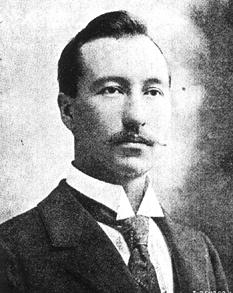
Barnum Brown (February 12, 1873 – February 5, 1963), commonly referred to as Mr. Bones, was an American paleontologist. He discovered the first documented remains of Tyrannosaurus during a career that made him one of the most famous fossil hunters working from the late Victorian era into the early 20th century.
Barnum Brown was born in Carbondale, Kansas on February 12, 1873 to William and Clara Silver Brown. Brown's parents moved to Kansas in 1859, traveling by covered wagon with their daughter, Melissa. Their second daughter, Alice Elizabeth, was born in 1860 in Osage County, Kansas, where the family would build a one-room cabin on top of a coal seam.
William made a living in Kansas first by raising corn, hogs, and cattle, but the political turmoil of Bleeding Kansas in the late 1850s and 1860s led to arson and theft of crops and livestock; he supported the family by digging and selling coal, as well as hauling supplies for the government with a freight line of ox-drawn wagons. In 1867, the Browns gave birth to their first son, Frank, who, in a few years, would be the one to suggest P.T. Barnum as a namesake for his little brother.[citation needed]
As a young boy, Brown helped with household chores around the farm and began his first fossil collection while following the stripping plow, which unearthed fossil corals and Native American arrowheads. Recognizing Brown's interest in science, his parents elected to send him to the only formal education available in Carbondale. He finished the highest level of schooling there in 1889, at the age of 16, and embarked on a four-month wagon journey to Montana with his father. Sources claim multiple purposes for the trip, including William's desire to give Brown traveling experience, evaluating possibilities for a new homestead, or to avoid a legal complaint of incest filed against William by Brown's oldest sister, Melissa. Upon returning from the trip in the fall, Brown began attending high school in Lawrence, then matriculated at the University of Kansas in 1893.
After graduating from high school, Brown attended the University of Kansas and took an early interest in archaeology and paleontology. As a freshman, he took a course with Samuel Wendell Williston, who then invited Brown, along with Ermine Cowles Case and Elmer S. Riggs, on a fossil collecting trip to Nebraska and South Dakota in the summer of 1894. Williston would become Brown's advisor and primary professor at KU, and invited him on another summer expedition to Wyoming in 1895.
While working in South Dakota with Williston in 1894, Brown met a crew from the American Museum of Natural History (AMNH), led by paleontologist Jacob Wortman. In 1896, Wortman needed a replacement for an assistant, and Williston suggested Brown; he left his classes at the University of Kansas before the semester ended to accompany Wortman on an expedition to the Morrison Formation in Wyoming. Brown impressed Wortman and the head curator of the AMNH's Vertebrate Paleontology Department, Henry Fairfield Osborn, with the discovery of a nearly complete Coryphodon skeleton near the Greybull River. In early 1897, Osborn offered Brown a job as an assistant curator at the AMNH as well as a scholarship for graduate work at Columbia University.
Sponsored by the AMNH, Brown traversed the country bargaining and trading for fossils. His field was not limited to dinosaurs. He was known to collect or obtain anything of possible scientific value. Often, he simply sent money to have fossils shipped to the AMNH, and any new specimen of interest often resulted in a flurry of letters between the discoverer and Brown. With respect to nomenclature, Brown often named fossils after people or events that were relevant to his life at the time of discovery.
Brown worked a handful of years in Como Bluff, Wyoming for AMNH in the late 1890s, discovering a prominent Diplodocus specimen and introducing new jacketing and collecting procedures. He also led an expedition to the Hell Creek Formation of southeastern Montana, where, in 1902, he discovered and excavated the first documented remains of Tyrannosaurus rex. In 1910, Brown was promoted to Associate Curator in the Vertebrate Paleontology Department at the AMNH.
Barnum Brown
Barnum Brown (February 12, 1873 – February 5, 1963), commonly referred to as Mr. Bones, was an American paleontologist. He discovered the first documented remains of Tyrannosaurus during a career that made him one of the most famous fossil hunters working from the late Victorian era into the early 20th century.
Barnum Brown was born in Carbondale, Kansas on February 12, 1873 to William and Clara Silver Brown. Brown's parents moved to Kansas in 1859, traveling by covered wagon with their daughter, Melissa. Their second daughter, Alice Elizabeth, was born in 1860 in Osage County, Kansas, where the family would build a one-room cabin on top of a coal seam.
William made a living in Kansas first by raising corn, hogs, and cattle, but the political turmoil of Bleeding Kansas in the late 1850s and 1860s led to arson and theft of crops and livestock; he supported the family by digging and selling coal, as well as hauling supplies for the government with a freight line of ox-drawn wagons. In 1867, the Browns gave birth to their first son, Frank, who, in a few years, would be the one to suggest P.T. Barnum as a namesake for his little brother.[citation needed]
As a young boy, Brown helped with household chores around the farm and began his first fossil collection while following the stripping plow, which unearthed fossil corals and Native American arrowheads. Recognizing Brown's interest in science, his parents elected to send him to the only formal education available in Carbondale. He finished the highest level of schooling there in 1889, at the age of 16, and embarked on a four-month wagon journey to Montana with his father. Sources claim multiple purposes for the trip, including William's desire to give Brown traveling experience, evaluating possibilities for a new homestead, or to avoid a legal complaint of incest filed against William by Brown's oldest sister, Melissa. Upon returning from the trip in the fall, Brown began attending high school in Lawrence, then matriculated at the University of Kansas in 1893.
After graduating from high school, Brown attended the University of Kansas and took an early interest in archaeology and paleontology. As a freshman, he took a course with Samuel Wendell Williston, who then invited Brown, along with Ermine Cowles Case and Elmer S. Riggs, on a fossil collecting trip to Nebraska and South Dakota in the summer of 1894. Williston would become Brown's advisor and primary professor at KU, and invited him on another summer expedition to Wyoming in 1895.
While working in South Dakota with Williston in 1894, Brown met a crew from the American Museum of Natural History (AMNH), led by paleontologist Jacob Wortman. In 1896, Wortman needed a replacement for an assistant, and Williston suggested Brown; he left his classes at the University of Kansas before the semester ended to accompany Wortman on an expedition to the Morrison Formation in Wyoming. Brown impressed Wortman and the head curator of the AMNH's Vertebrate Paleontology Department, Henry Fairfield Osborn, with the discovery of a nearly complete Coryphodon skeleton near the Greybull River. In early 1897, Osborn offered Brown a job as an assistant curator at the AMNH as well as a scholarship for graduate work at Columbia University.
Sponsored by the AMNH, Brown traversed the country bargaining and trading for fossils. His field was not limited to dinosaurs. He was known to collect or obtain anything of possible scientific value. Often, he simply sent money to have fossils shipped to the AMNH, and any new specimen of interest often resulted in a flurry of letters between the discoverer and Brown. With respect to nomenclature, Brown often named fossils after people or events that were relevant to his life at the time of discovery.
Brown worked a handful of years in Como Bluff, Wyoming for AMNH in the late 1890s, discovering a prominent Diplodocus specimen and introducing new jacketing and collecting procedures. He also led an expedition to the Hell Creek Formation of southeastern Montana, where, in 1902, he discovered and excavated the first documented remains of Tyrannosaurus rex. In 1910, Brown was promoted to Associate Curator in the Vertebrate Paleontology Department at the AMNH.
Recent media
Recent media