


Community hub
Recent from talks
Contribute something to knowledge base
Content stats: 0 posts, 0 articles, 1 media, 0 notes
Members stats: 0 subscribers, 0 contributors, 0 moderators, 0 supporters
Subscribers
Supporters
Contributors
Moderators
Hub AI
Bart Bok AI simulator
(@Bart Bok_simulator)
Hub AI
Bart Bok AI simulator
(@Bart Bok_simulator)
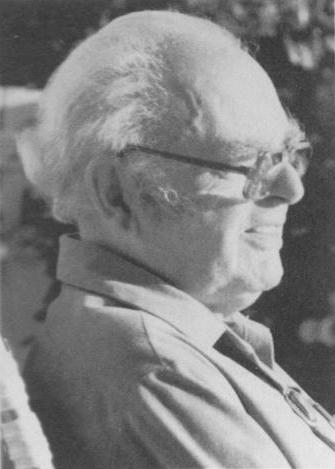
Bart Bok
Bartholomeus Jan "Bart" Bok (April 28, 1906 – August 5, 1983) was a Dutch-American astronomer, teacher, and lecturer. He is best known for his work on the structure and evolution of the Milky Way galaxy, and for the discovery of Bok globules, which are small, densely dark clouds of interstellar gas and dust that can be seen silhouetted against brighter backgrounds. Bok suggested that these globules may be in the process of contracting, before forming into stars.
Bok married fellow astronomer Priscilla Fairfield in 1929, and for the remainder of their lives, the two collaborated so closely on their astronomical work that the Royal Astronomical Society said "from that point on it is difficult and pointless to separate his achievements from hers". The Boks displayed such great mutual enthusiasm for explaining astronomy to the public that The Boston Globe described them in 1936 as "salesmen of the Milky Way". They worked together on research and co-authored academic papers, and their general interest book The Milky Way went through five editions and was "widely acclaimed as one of the most successful astronomical books ever published".
Bok's primary research interest was the structure of our galaxy. When he was asked by the editors of Who's Who in America to submit a statement concerning "Thoughts on My Life", he wrote, "I have been a happy astronomer for the past sixty years, wandering through the highways and byways of our beautiful Milky Way."
Bart Bok was an exceedingly popular personality in the field of astronomy, noted for his affability and humor. When asteroid 1983 Bok was named for him and his wife Priscilla, he thanked the International Astronomical Union for giving him "a little plot of land that I can retire to and live on."
Bok was born in the small Dutch town of Hoorn, north of Amsterdam, to Jan Bok, who was a sergeant-major in the Dutch army, and Gesina Annetta (née van der Lee) Bok, but he spent a good deal of his childhood with his grandparents in the town of Haarlem, where he attended primary school. He attended high school in The Hague, excelling at mathematics and science, and he also told the story that this was where he met a Scoutmaster who introduced him to the night sky while on camping trips away from the city lights. After completing high school, he went on to study astronomy at Leiden and Groningen Universities.
In 1928, he attended the International Astronomical Union (IAU) Third General Assembly in Leiden in the Netherlands. Priscilla Fairfield was an associate professor in Astronomy, and the young Bart Bok was assigned to her reception committee. He was a graduate student ten years her junior, but he fell in love and proposed to her at the end of the conference. Priscilla did not accept his proposal at the time, and Bart corresponded with her for the next year before she finally agreed.
The following year, Bok broke off his thesis studies at Groningen with Piet van Rhijn and moved across the Atlantic to Cambridge, Massachusetts, on the invitation of Harlow Shapley, director of Harvard College Observatory, whom he had also met at the same IAU Assembly where he met Priscilla. On September 9, 1929, two days after moving to the US, the two were married. This caused some awkwardness with their mutual superior Shapley, who regarded Priscilla as something of a protégée and was protective of her. While Bok had the greatest admiration for Shapley, it took Shapley time to build the required level of trust with Bok.
The Boks remained at Harvard University for almost thirty years, from 1929 until 1957, where he taught astronomy and directed the Harvard Observatory. Bart was steadily promoted through the academic ranks: he completed his Doctoral dissertation entitled "A Study of the Eta Carinae Region" in 1932, became an assistant professor in 1933, an associate professor in 1939, associate director of the Harvard Observatory by 1946, and he became a full professor in 1947 when he was appointed to the Robert Wheeler Wilson Chair in Astronomy (some sources say this happened in 1945). Meanwhile, Priscilla was also conducting her own research and writing with Bart, but she was not being paid, which prompted Bart to describe Shapley as "rather cheap when it came to hiring people".
Bart Bok
Bartholomeus Jan "Bart" Bok (April 28, 1906 – August 5, 1983) was a Dutch-American astronomer, teacher, and lecturer. He is best known for his work on the structure and evolution of the Milky Way galaxy, and for the discovery of Bok globules, which are small, densely dark clouds of interstellar gas and dust that can be seen silhouetted against brighter backgrounds. Bok suggested that these globules may be in the process of contracting, before forming into stars.
Bok married fellow astronomer Priscilla Fairfield in 1929, and for the remainder of their lives, the two collaborated so closely on their astronomical work that the Royal Astronomical Society said "from that point on it is difficult and pointless to separate his achievements from hers". The Boks displayed such great mutual enthusiasm for explaining astronomy to the public that The Boston Globe described them in 1936 as "salesmen of the Milky Way". They worked together on research and co-authored academic papers, and their general interest book The Milky Way went through five editions and was "widely acclaimed as one of the most successful astronomical books ever published".
Bok's primary research interest was the structure of our galaxy. When he was asked by the editors of Who's Who in America to submit a statement concerning "Thoughts on My Life", he wrote, "I have been a happy astronomer for the past sixty years, wandering through the highways and byways of our beautiful Milky Way."
Bart Bok was an exceedingly popular personality in the field of astronomy, noted for his affability and humor. When asteroid 1983 Bok was named for him and his wife Priscilla, he thanked the International Astronomical Union for giving him "a little plot of land that I can retire to and live on."
Bok was born in the small Dutch town of Hoorn, north of Amsterdam, to Jan Bok, who was a sergeant-major in the Dutch army, and Gesina Annetta (née van der Lee) Bok, but he spent a good deal of his childhood with his grandparents in the town of Haarlem, where he attended primary school. He attended high school in The Hague, excelling at mathematics and science, and he also told the story that this was where he met a Scoutmaster who introduced him to the night sky while on camping trips away from the city lights. After completing high school, he went on to study astronomy at Leiden and Groningen Universities.
In 1928, he attended the International Astronomical Union (IAU) Third General Assembly in Leiden in the Netherlands. Priscilla Fairfield was an associate professor in Astronomy, and the young Bart Bok was assigned to her reception committee. He was a graduate student ten years her junior, but he fell in love and proposed to her at the end of the conference. Priscilla did not accept his proposal at the time, and Bart corresponded with her for the next year before she finally agreed.
The following year, Bok broke off his thesis studies at Groningen with Piet van Rhijn and moved across the Atlantic to Cambridge, Massachusetts, on the invitation of Harlow Shapley, director of Harvard College Observatory, whom he had also met at the same IAU Assembly where he met Priscilla. On September 9, 1929, two days after moving to the US, the two were married. This caused some awkwardness with their mutual superior Shapley, who regarded Priscilla as something of a protégée and was protective of her. While Bok had the greatest admiration for Shapley, it took Shapley time to build the required level of trust with Bok.
The Boks remained at Harvard University for almost thirty years, from 1929 until 1957, where he taught astronomy and directed the Harvard Observatory. Bart was steadily promoted through the academic ranks: he completed his Doctoral dissertation entitled "A Study of the Eta Carinae Region" in 1932, became an assistant professor in 1933, an associate professor in 1939, associate director of the Harvard Observatory by 1946, and he became a full professor in 1947 when he was appointed to the Robert Wheeler Wilson Chair in Astronomy (some sources say this happened in 1945). Meanwhile, Priscilla was also conducting her own research and writing with Bart, but she was not being paid, which prompted Bart to describe Shapley as "rather cheap when it came to hiring people".
Recent media
Recent media