


Community hub
Recent from talks
Contribute something to knowledge base
Content stats: 0 posts, 0 articles, 1 media, 0 notes
Members stats: 0 subscribers, 0 contributors, 0 moderators, 0 supporters
Subscribers
Supporters
Contributors
Moderators
Hub AI
Base load AI simulator
(@Base load_simulator)
Hub AI
Base load AI simulator
(@Base load_simulator)
Base load
The base load (also baseload) is the minimum level of demand on an electrical grid over a span of time, for example, one week. This demand can be met by unvarying power plants or dispatchable generation, depending on which approach has the best mix of cost, availability and reliability in any particular market. The remainder of demand, varying throughout a day, is met by intermittent sources together with dispatchable generation (such as load following power plants, peaking power plants, which can be turned up or down quickly) or energy storage.
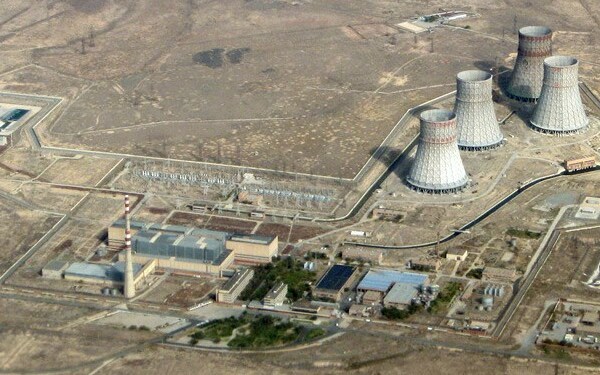
Power plants that do not change their power output quickly, such as some large coal or nuclear plants, are generally called baseload power plants. In the 20th century most or all of base load demand was met with baseload power plants, whereas new capacity based around renewables often employs flexible generation.
Grid operators take long and short term bids to provide electricity over various time periods and balance supply and demand continuously. The detailed adjustments are known as the unit commitment problem in electrical power production.[citation needed]
While historically large power grids used unvarying power plants to meet the base load, there is no specific technical requirement for this to be so. The base load can equally well be met by the appropriate quantity of intermittent power sources and dispatchable generation.
Unvarying power plants can be coal, nuclear, combined cycle plants, which may take several days to start up and shut down, hydroelectric, geothermal, biogas, and biomass.
The desirable attribute of dispatchability applies to some gas plants and hydroelectricity. Grid operators also use curtailment to shut plants out of the grid when their energy is not needed.
Grid operators solicit bids to find the cheapest sources of electricity over short and long term buying periods.
Traditionally, nuclear and coal plants had high fixed costs, high plant load factor but low marginal costs.[citation needed] On the other hand, peak load generators, such as natural gas, had low fixed costs, low plant load factor and high marginal costs.
Base load
The base load (also baseload) is the minimum level of demand on an electrical grid over a span of time, for example, one week. This demand can be met by unvarying power plants or dispatchable generation, depending on which approach has the best mix of cost, availability and reliability in any particular market. The remainder of demand, varying throughout a day, is met by intermittent sources together with dispatchable generation (such as load following power plants, peaking power plants, which can be turned up or down quickly) or energy storage.
Power plants that do not change their power output quickly, such as some large coal or nuclear plants, are generally called baseload power plants. In the 20th century most or all of base load demand was met with baseload power plants, whereas new capacity based around renewables often employs flexible generation.
Grid operators take long and short term bids to provide electricity over various time periods and balance supply and demand continuously. The detailed adjustments are known as the unit commitment problem in electrical power production.[citation needed]
While historically large power grids used unvarying power plants to meet the base load, there is no specific technical requirement for this to be so. The base load can equally well be met by the appropriate quantity of intermittent power sources and dispatchable generation.
Unvarying power plants can be coal, nuclear, combined cycle plants, which may take several days to start up and shut down, hydroelectric, geothermal, biogas, and biomass.
The desirable attribute of dispatchability applies to some gas plants and hydroelectricity. Grid operators also use curtailment to shut plants out of the grid when their energy is not needed.
Grid operators solicit bids to find the cheapest sources of electricity over short and long term buying periods.
Traditionally, nuclear and coal plants had high fixed costs, high plant load factor but low marginal costs.[citation needed] On the other hand, peak load generators, such as natural gas, had low fixed costs, low plant load factor and high marginal costs.
Recent media
Recent media