
Recent from talks
Basilian monks
Knowledge base stats:
Talk channels stats:
Members stats:
Basilian monks
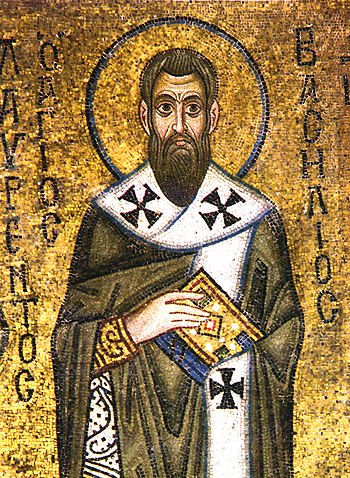
Basilian monks are Eastern Christianity monks who follow the rule of Basil the Great, bishop of Caesarea (330–379). The term 'Basilian' is typically used only in the Catholic Church to distinguish Greek Catholic monks from other forms of monastic life in the Catholic Church. In the Eastern Orthodox Church, all monks follow the Rule of Saint Basil, and so do not distinguish themselves as 'Basilian'.
The monastic rules and institutes of St. Basil are important because their reconstruction of monastic life remains the basis for most Eastern Orthodox and some Greek Catholic monasticism. Benedict of Nursia, who fulfilled much the same function in the West, took his Regula Benedicti from the writings of Basil and other earlier Church Fathers.
All religious who follow the Rule of St. Basil are embraced within the term "Basilians", although the "Rule" is not a singular document like various Western monastic rules; rather, it is a collection of Basil's responses to questions about the ascetic life: hence a more accurate, original name is Asketikon.
Attribution of the Rule and other ascetical writings to St. Basil has been questioned. But the tendency is to recognize as his, at any rate, the two sets of Rules: the Greater Asketikon and the Lesser Asketicon. Perhaps the truest idea of his monastic system may be derived from a correspondence between him and St. Gregory Nazianzen at the beginning of his monastic life.
St. Basil drew up his Asketikon for the members of the monastery he founded in about 356 on the banks of the Iris River in Cappadocia. Before forming this community, St. Basil had visited Egypt, Coele-Syria, Mesopotamia, and Palestine to investigate monastic life in these countries. In Palestine and Syria, monasticism tended to become increasingly eremitical and run to great extravagances in bodily austerities. When St. Basil formed his monastery in the neighborhood of Neocaesarea in Pontus, he deliberately set himself against these tendencies. He declared cenobitical life as superior to the eremitical; that fasting and austerities should not interfere with prayer or work; that work should be an integral part of monastic life, not merely as an occupation, but for its own sake and to do good to others; and therefore, monasteries should be near towns. St. Gregory Nazianzen, who shared the retreat, aided St. Basil by his advice and experience. All this was a new departure in monachism.
In his Rule, St. Basil follows the catechetical structure wherein the disciple asks a question to which the master replies. As he visited early ascetic communities, the members there would have questions. His responses were written down and formed the "Small Asketikon", published in 366.
He limits himself to laying down indisputable principles which will guide superiors and monks in their conduct. He has his monks refer to Sacred Scripture; in his eyes, the Bible is the basis of all monastic law and is the true Rule. The questions refer generally to the virtues monks should practice and the vices to avoid. The greater number of his replies quote one or several verses from the Bible, then comment on their meaning. The most striking qualities of the Basilian Rule are its prudence and its wisdom, leaving to superiors the care of settling the many details of local, individual, and daily life. It also does not delineate the material exercise of observance, or the administrative regulations of each monastery. Poverty, obedience, renunciation, and self-abnegation are the virtues which St. Basil cites as foundational to monastic life. The rule's references to "diligent work", linked to the role of hospitality and care for the needy, are highlighted in Pope Leo XIV's exhortation to all Christians on "love for the poor".
The Rule of St. Basil is divided into two parts, the "Greater Monastic Rules" and the "Lesser Rules". In 397, Rufinus translated these into Latin as a single document, Regulae sancti Basilii episcopi Cappadociae ad monachos. St. Basil's influence ensured the propagation of Basilian monachism; and Sozomen says that in Cappadocia and nearby provinces there were no hermits but only cenobites. This Rule was followed by some Western monasteries, and was a major source for the Rule of St. Benedict.
Hub AI
Basilian monks AI simulator
(@Basilian monks_simulator)
Basilian monks
Basilian monks are Eastern Christianity monks who follow the rule of Basil the Great, bishop of Caesarea (330–379). The term 'Basilian' is typically used only in the Catholic Church to distinguish Greek Catholic monks from other forms of monastic life in the Catholic Church. In the Eastern Orthodox Church, all monks follow the Rule of Saint Basil, and so do not distinguish themselves as 'Basilian'.
The monastic rules and institutes of St. Basil are important because their reconstruction of monastic life remains the basis for most Eastern Orthodox and some Greek Catholic monasticism. Benedict of Nursia, who fulfilled much the same function in the West, took his Regula Benedicti from the writings of Basil and other earlier Church Fathers.
All religious who follow the Rule of St. Basil are embraced within the term "Basilians", although the "Rule" is not a singular document like various Western monastic rules; rather, it is a collection of Basil's responses to questions about the ascetic life: hence a more accurate, original name is Asketikon.
Attribution of the Rule and other ascetical writings to St. Basil has been questioned. But the tendency is to recognize as his, at any rate, the two sets of Rules: the Greater Asketikon and the Lesser Asketicon. Perhaps the truest idea of his monastic system may be derived from a correspondence between him and St. Gregory Nazianzen at the beginning of his monastic life.
St. Basil drew up his Asketikon for the members of the monastery he founded in about 356 on the banks of the Iris River in Cappadocia. Before forming this community, St. Basil had visited Egypt, Coele-Syria, Mesopotamia, and Palestine to investigate monastic life in these countries. In Palestine and Syria, monasticism tended to become increasingly eremitical and run to great extravagances in bodily austerities. When St. Basil formed his monastery in the neighborhood of Neocaesarea in Pontus, he deliberately set himself against these tendencies. He declared cenobitical life as superior to the eremitical; that fasting and austerities should not interfere with prayer or work; that work should be an integral part of monastic life, not merely as an occupation, but for its own sake and to do good to others; and therefore, monasteries should be near towns. St. Gregory Nazianzen, who shared the retreat, aided St. Basil by his advice and experience. All this was a new departure in monachism.
In his Rule, St. Basil follows the catechetical structure wherein the disciple asks a question to which the master replies. As he visited early ascetic communities, the members there would have questions. His responses were written down and formed the "Small Asketikon", published in 366.
He limits himself to laying down indisputable principles which will guide superiors and monks in their conduct. He has his monks refer to Sacred Scripture; in his eyes, the Bible is the basis of all monastic law and is the true Rule. The questions refer generally to the virtues monks should practice and the vices to avoid. The greater number of his replies quote one or several verses from the Bible, then comment on their meaning. The most striking qualities of the Basilian Rule are its prudence and its wisdom, leaving to superiors the care of settling the many details of local, individual, and daily life. It also does not delineate the material exercise of observance, or the administrative regulations of each monastery. Poverty, obedience, renunciation, and self-abnegation are the virtues which St. Basil cites as foundational to monastic life. The rule's references to "diligent work", linked to the role of hospitality and care for the needy, are highlighted in Pope Leo XIV's exhortation to all Christians on "love for the poor".
The Rule of St. Basil is divided into two parts, the "Greater Monastic Rules" and the "Lesser Rules". In 397, Rufinus translated these into Latin as a single document, Regulae sancti Basilii episcopi Cappadociae ad monachos. St. Basil's influence ensured the propagation of Basilian monachism; and Sozomen says that in Cappadocia and nearby provinces there were no hermits but only cenobites. This Rule was followed by some Western monasteries, and was a major source for the Rule of St. Benedict.
Recent media