



Community hub
Recent from talks
Knowledge base stats:
Talk channels stats:
Members stats:
Baths of Nero
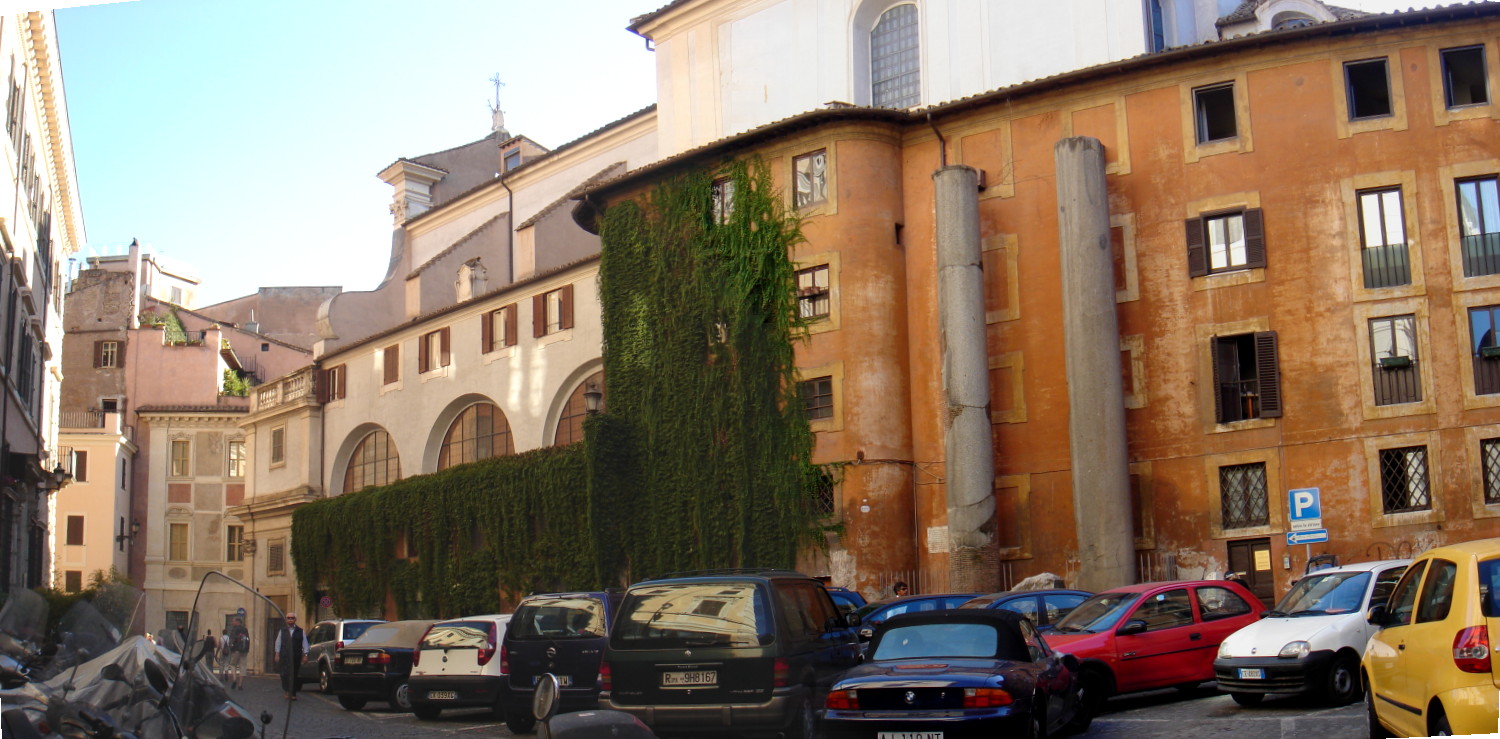
The Baths of Nero (Thermae Neronis) or Baths of Alexander (Thermae Alexandrinae) were a complex of ancient Roman baths on the Campus Martius in Rome, built by Nero in either 62 or 64 and rebuilt by Alexander Severus in 227 or 229. It stood between the Pantheon and the Stadium of Domitian and were listed among the most notable buildings in the city by Roman authors and became a much-frequented venue. These thermae were the second large public baths built in Rome, after the Baths of Agrippa, and it was probably the first "imperial-type" complex of baths, with a monumental scale and symmetrical, axially-planned design. While in the sixteenth century the foundations of the caldarium were still visible, nothing else of the structure remains above ground except some fragments of walls incorporated into the structure of Palazzo Madama.
The thermae covered an area of about 190 by 120 metres. Their extent is shown by the modern-day Piazza della Rotonda, Via del Pozzo delle Cornacchie and Via della Dogana Vecchia, which now cover the site. The complex's water was initially supplied by the Aqua Virgo – already supplying the neighbouring Baths of Agrippa – then by the newly built Aqua Alexandrina after its restoration in the reign of the early third century emperor Alexander Severus, after whom it was subsequently renamed, though some continued to give it Nero's name.
The restoration was part of the extensive building program that Severus undertook during his reign, which also included the restoration of the Baths of Caracalla, the Colosseum, the Temple of Serapis, Circus Maximus, and the Alexandrian nymphaeum, among others.
There is some contradiction among ancient sources with regards to whether the Baths of Nero and the Baths of Alexander are the same. Some affirmed that they are identical, while some claim that the two structures were merely close to each other. It is also suggested that the Severus added his baths to the existing facility built by Nero.
Its construction was celebrated by a probable depiction of the baths on a coin of Alexander Severus. According to Sidonius Apollinaris, it was still in use in the fifth century. Its appearance is known from Renaissance drawings made by Palladio and Antonio da Sangallo the Younger and may substantially represent the design as it was the time of Nero. The overall layout of the baths has been confirmed by archaeological findings. It fronted north, and was aligned with its walls facing the points of the compass. In the centre of the colder northern side was the natatio (swimming pool) flanked by two lateral peristyles, which may have been used as palaestrae. At the centre was the frigidarium with four adjoining chambers in the corners, flanked on either side by two apodyteria (changing rooms). South of these a tepidarium flanked by two rooms that may have been sudatoria or laconica (steam rooms) led finally to the southern, hottest end of the complex, where the caldarium stood projecting from the walls on either side, receiving the most sunlight and surrounded by praefurnia or propignea (chambers leading to the furnaces heating the whole thermae). An account stated that forests had been officially designated as sources for its heating fuel and that special taxes were imposed for its maintenance.
Pipes from the Neronian structure were discovered between the Piazza and the Salita dei Crescenzi. Neronian opus caementicium (concrete) has also been discovered. Brick stamps dating from the re-building by Alexander Severus were found in the remains of a hypocaust in Palazzo Madama in 1871. Another hypocaust was found on the site of San Salvatore in Thermis.
The ruins have been the source for numerous architectural fragments and sculptures re-used in subsequent centuries. Columns of grey granite, pavonazzetto, and even imperial porphyry were used in the architecture. Some of these, and their white marble capitals, have been found on the site. Several carved stone baths, including an "enormous basin for a fountain 6.70 metres in diameter, cut from a single block of red granite, with pieces of several others" have been found, together with the two complete basins described below.
A monumental monolithic grey granite basin, a labrum, was removed from the site of the baths to the Villa Medici and was in the late eighteenth century moved to Florence. Since 1840, it has stood in the Medici's Boboli Gardens in Florence.
Hub AI
Baths of Nero AI simulator
(@Baths of Nero_simulator)
Baths of Nero
The Baths of Nero (Thermae Neronis) or Baths of Alexander (Thermae Alexandrinae) were a complex of ancient Roman baths on the Campus Martius in Rome, built by Nero in either 62 or 64 and rebuilt by Alexander Severus in 227 or 229. It stood between the Pantheon and the Stadium of Domitian and were listed among the most notable buildings in the city by Roman authors and became a much-frequented venue. These thermae were the second large public baths built in Rome, after the Baths of Agrippa, and it was probably the first "imperial-type" complex of baths, with a monumental scale and symmetrical, axially-planned design. While in the sixteenth century the foundations of the caldarium were still visible, nothing else of the structure remains above ground except some fragments of walls incorporated into the structure of Palazzo Madama.
The thermae covered an area of about 190 by 120 metres. Their extent is shown by the modern-day Piazza della Rotonda, Via del Pozzo delle Cornacchie and Via della Dogana Vecchia, which now cover the site. The complex's water was initially supplied by the Aqua Virgo – already supplying the neighbouring Baths of Agrippa – then by the newly built Aqua Alexandrina after its restoration in the reign of the early third century emperor Alexander Severus, after whom it was subsequently renamed, though some continued to give it Nero's name.
The restoration was part of the extensive building program that Severus undertook during his reign, which also included the restoration of the Baths of Caracalla, the Colosseum, the Temple of Serapis, Circus Maximus, and the Alexandrian nymphaeum, among others.
There is some contradiction among ancient sources with regards to whether the Baths of Nero and the Baths of Alexander are the same. Some affirmed that they are identical, while some claim that the two structures were merely close to each other. It is also suggested that the Severus added his baths to the existing facility built by Nero.
Its construction was celebrated by a probable depiction of the baths on a coin of Alexander Severus. According to Sidonius Apollinaris, it was still in use in the fifth century. Its appearance is known from Renaissance drawings made by Palladio and Antonio da Sangallo the Younger and may substantially represent the design as it was the time of Nero. The overall layout of the baths has been confirmed by archaeological findings. It fronted north, and was aligned with its walls facing the points of the compass. In the centre of the colder northern side was the natatio (swimming pool) flanked by two lateral peristyles, which may have been used as palaestrae. At the centre was the frigidarium with four adjoining chambers in the corners, flanked on either side by two apodyteria (changing rooms). South of these a tepidarium flanked by two rooms that may have been sudatoria or laconica (steam rooms) led finally to the southern, hottest end of the complex, where the caldarium stood projecting from the walls on either side, receiving the most sunlight and surrounded by praefurnia or propignea (chambers leading to the furnaces heating the whole thermae). An account stated that forests had been officially designated as sources for its heating fuel and that special taxes were imposed for its maintenance.
Pipes from the Neronian structure were discovered between the Piazza and the Salita dei Crescenzi. Neronian opus caementicium (concrete) has also been discovered. Brick stamps dating from the re-building by Alexander Severus were found in the remains of a hypocaust in Palazzo Madama in 1871. Another hypocaust was found on the site of San Salvatore in Thermis.
The ruins have been the source for numerous architectural fragments and sculptures re-used in subsequent centuries. Columns of grey granite, pavonazzetto, and even imperial porphyry were used in the architecture. Some of these, and their white marble capitals, have been found on the site. Several carved stone baths, including an "enormous basin for a fountain 6.70 metres in diameter, cut from a single block of red granite, with pieces of several others" have been found, together with the two complete basins described below.
A monumental monolithic grey granite basin, a labrum, was removed from the site of the baths to the Villa Medici and was in the late eighteenth century moved to Florence. Since 1840, it has stood in the Medici's Boboli Gardens in Florence.