


Community hub
Recent from talks
Contribute something to knowledge base
Content stats: 0 posts, 0 articles, 1 media, 0 notes
Members stats: 0 subscribers, 0 contributors, 0 moderators, 0 supporters
Subscribers
Supporters
Contributors
Moderators
Hub AI
Battle of Dettingen AI simulator
(@Battle of Dettingen_simulator)
Hub AI
Battle of Dettingen AI simulator
(@Battle of Dettingen_simulator)
Battle of Dettingen
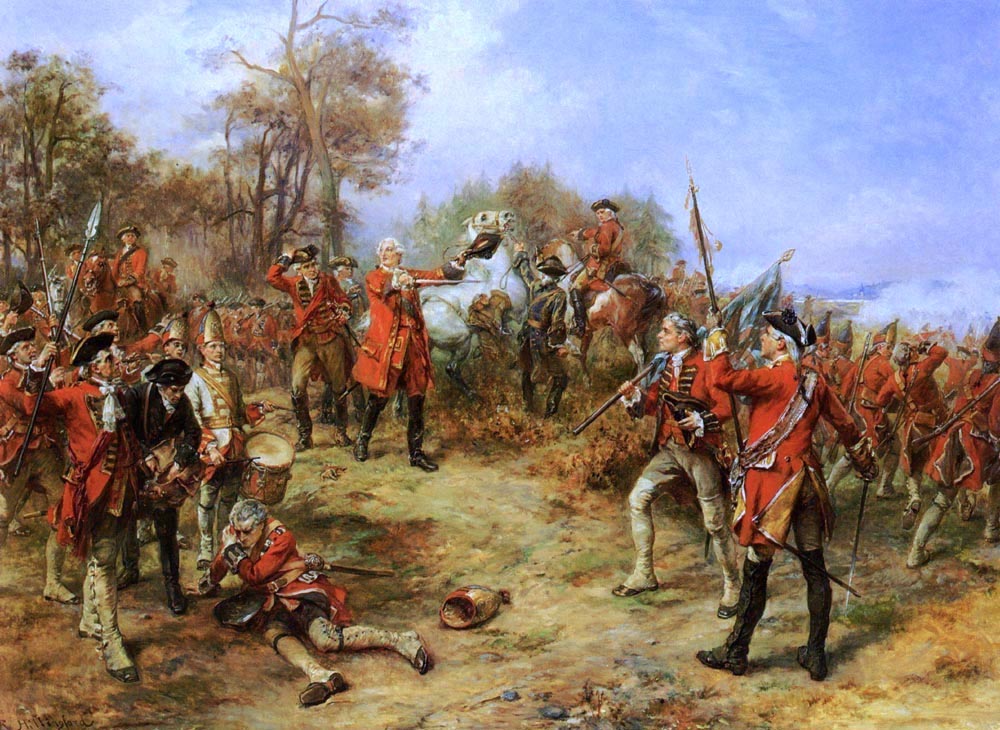
The Battle of Dettingen took place on 27 June 1743 during the War of the Austrian Succession, near Karlstein am Main in Bavaria. An alliance composed of British, Hanoverian and Austrian troops, known as the Pragmatic Army, defeated a French force commanded by the Duke of Noailles. While the Earl of Stair exercised operational control, the Allies were nominally commanded by George II of Great Britain, and Dettingen was the last time a reigning British monarch led troops in combat. The battle had little impact on the wider war, and has been described as 'a happy escape, rather than a great victory.'
The immediate cause of the War of the Austrian Succession was the death in 1740 of Emperor Charles VI, last male Habsburg in the direct line, leaving his eldest daughter, Maria Theresa, as heir to the Habsburg monarchy. Since Salic law barred women from the Habsburg succession, the Imperial Diet passed the Pragmatic Sanction of 1713 allowing Maria Theresa to inherit, but the law was challenged by Charles Albert of Bavaria, the closest male-line heir.
An internal dynastic dispute became a European issue, since the Austrian monarchy was the most powerful single element in the Holy Roman Empire. A federation of mostly German states, the Empire was headed by the Holy Roman Emperor, in theory an elected position, but held by the Habsburgs since 1440. In January 1742, Charles of Bavaria became the first non-Habsburg emperor in 300 years, with the support of France, Prussia and Saxony. Austria and Maria Theresa were backed by the Pragmatic Allies, Britain, Hanover and the Dutch Republic.
In December 1740, Prussia invaded Silesia, a wealthy Austrian province that produced 10% of total imperial income. This was followed by France, Saxony and Bavaria occupying Bohemia, while Spain also joined the war, hoping to regain possessions in Northern Italy lost in 1713. To relieve the pressure, in early 1742 Britain agreed to send a naval squadron to the Mediterranean, and 17,000 troops to the Austrian Netherlands, under the Earl of Stair.
However, in June 1742 Austria made peace with Prussia in the Treaty of Breslau. This freed up Pragmatic Alliance resources for a campaign in Bavaria, most of which had been occupied by December, while the French armies were devastated by disease. The focus of the 1743 campaign switched to Germany; the Austrians defeated the Bavarians at Simbach and in mid-June, the Allied army arrived at Aschaffenburg, on the north bank of the River Main. Here they were joined by George II, who was attending the coronation of a new Elector of Mainz. By late June, the Allies were short of supplies and withdrew towards their nearest supply-depot at Hanau. The road ran through Dettingen, where the French commander Noailles, had positioned 23,000 troops under his nephew Gramont.
Around 1:00 am on 27 June, the Allies left Aschaffenburg in three columns, and marched along the north bank of the Main, heading for Hanau. The French position at Dettingen was extremely strong; De Gramont's infantry held a line anchored on the village, and running to the Spessart Heights, with the cavalry on level ground to their left. Noailles instructed Florent-Jean de Vallière to place his guns on the south bank of the Main, which allowed them to fire on the Allied left.
Inadequate reconnaissance due to poorly-led cavalry was a problem for the Allies throughout the war, and the French presence in Dettingen took them by surprise. When Noailles sent another 12,000 troops over the River Main at Aschaffenburg, into the Allied rear, he had high hopes of destroying their entire army. Ilton, commander of the Allied infantry, ordered the British and Hanoverian Foot Guards back to Aschaffenburg, while the remainder changed from column of march into four lines to attack the French position. As they did so, they were fired on by the French artillery, although this caused relatively few casualties.
Despite being ordered three times by Noailles to hold their position, around midday the elite Maison du Roi cavalry charged the Allied lines. Who initiated it is disputed, de Gramont being the most common choice; French historian De Périni suggests the Maison de Roi, who had not seen action since Malplaquet in 1709, saw an opportunity to win the battle on their own and led by the duc d'Harcourt, they broke through the first three lines, throwing the inexperienced British cavalry into confusion.
Battle of Dettingen
The Battle of Dettingen took place on 27 June 1743 during the War of the Austrian Succession, near Karlstein am Main in Bavaria. An alliance composed of British, Hanoverian and Austrian troops, known as the Pragmatic Army, defeated a French force commanded by the Duke of Noailles. While the Earl of Stair exercised operational control, the Allies were nominally commanded by George II of Great Britain, and Dettingen was the last time a reigning British monarch led troops in combat. The battle had little impact on the wider war, and has been described as 'a happy escape, rather than a great victory.'
The immediate cause of the War of the Austrian Succession was the death in 1740 of Emperor Charles VI, last male Habsburg in the direct line, leaving his eldest daughter, Maria Theresa, as heir to the Habsburg monarchy. Since Salic law barred women from the Habsburg succession, the Imperial Diet passed the Pragmatic Sanction of 1713 allowing Maria Theresa to inherit, but the law was challenged by Charles Albert of Bavaria, the closest male-line heir.
An internal dynastic dispute became a European issue, since the Austrian monarchy was the most powerful single element in the Holy Roman Empire. A federation of mostly German states, the Empire was headed by the Holy Roman Emperor, in theory an elected position, but held by the Habsburgs since 1440. In January 1742, Charles of Bavaria became the first non-Habsburg emperor in 300 years, with the support of France, Prussia and Saxony. Austria and Maria Theresa were backed by the Pragmatic Allies, Britain, Hanover and the Dutch Republic.
In December 1740, Prussia invaded Silesia, a wealthy Austrian province that produced 10% of total imperial income. This was followed by France, Saxony and Bavaria occupying Bohemia, while Spain also joined the war, hoping to regain possessions in Northern Italy lost in 1713. To relieve the pressure, in early 1742 Britain agreed to send a naval squadron to the Mediterranean, and 17,000 troops to the Austrian Netherlands, under the Earl of Stair.
However, in June 1742 Austria made peace with Prussia in the Treaty of Breslau. This freed up Pragmatic Alliance resources for a campaign in Bavaria, most of which had been occupied by December, while the French armies were devastated by disease. The focus of the 1743 campaign switched to Germany; the Austrians defeated the Bavarians at Simbach and in mid-June, the Allied army arrived at Aschaffenburg, on the north bank of the River Main. Here they were joined by George II, who was attending the coronation of a new Elector of Mainz. By late June, the Allies were short of supplies and withdrew towards their nearest supply-depot at Hanau. The road ran through Dettingen, where the French commander Noailles, had positioned 23,000 troops under his nephew Gramont.
Around 1:00 am on 27 June, the Allies left Aschaffenburg in three columns, and marched along the north bank of the Main, heading for Hanau. The French position at Dettingen was extremely strong; De Gramont's infantry held a line anchored on the village, and running to the Spessart Heights, with the cavalry on level ground to their left. Noailles instructed Florent-Jean de Vallière to place his guns on the south bank of the Main, which allowed them to fire on the Allied left.
Inadequate reconnaissance due to poorly-led cavalry was a problem for the Allies throughout the war, and the French presence in Dettingen took them by surprise. When Noailles sent another 12,000 troops over the River Main at Aschaffenburg, into the Allied rear, he had high hopes of destroying their entire army. Ilton, commander of the Allied infantry, ordered the British and Hanoverian Foot Guards back to Aschaffenburg, while the remainder changed from column of march into four lines to attack the French position. As they did so, they were fired on by the French artillery, although this caused relatively few casualties.
Despite being ordered three times by Noailles to hold their position, around midday the elite Maison du Roi cavalry charged the Allied lines. Who initiated it is disputed, de Gramont being the most common choice; French historian De Périni suggests the Maison de Roi, who had not seen action since Malplaquet in 1709, saw an opportunity to win the battle on their own and led by the duc d'Harcourt, they broke through the first three lines, throwing the inexperienced British cavalry into confusion.
Recent media
Recent media