
Recent from talks
Battle of Elsenborn Ridge
Knowledge base stats:
Talk channels stats:
Members stats:
Battle of Elsenborn Ridge
The Battle of Elsenborn Ridge refers to the northernmost German attacks during the Battle of the Bulge. The area from Elsenborn Ridge itself to Monschau was the only sector of the American front line attacked during the Battle of the Bulge in which the Germans failed to advance. The battle centred on the boomerang-shaped Elsenborn Ridge east of Elsenborn, Belgium. In this region, Elsenborn Ridge marks the westernmost ridge of the Ardennes, rising more than 2,000 feet (600 m) above sea level; unlike the uplands further north, east and south, it has been extensively logged. West of Elsenborn Ridge, where the land descends in gentle hills to the cities of Liège and Spa, was a network of Allied supply bases and a well-developed road network. The Germans planned on using two key routes through the area to seize Antwerp and force a separate peace with the United States and Britain. Capturing Monschau, the nearby village of Höfen, and the twin villages of Rocherath-Krinkelt just east of Elsenborn Ridge, were key to the success of the German plans, and Hitler committed his best armored units to the area.
The untested troops of the US 99th Infantry Division had been placed in the sector during mid-November because the Allies thought that the area was unlikely to see battle. The division was stretched thin over a 22-mile (35 km) front, and all three regiments were in the line with no reserve. In early December, the 2nd Infantry Division was assigned to capture a road junction named Wahlerscheid, at the southern tip of the Hurtgen Forest. German forces counterattacked in what the Americans initially thought was a localized spoiling action, but was actually a leading element of the Battle of the Bulge. The 2nd Division consolidated its lines, pulling back into Hünningen, then Rocherath-Krinkelt, and finally to the dug-in positions held by the 99th Division at Elsenborn Ridge.
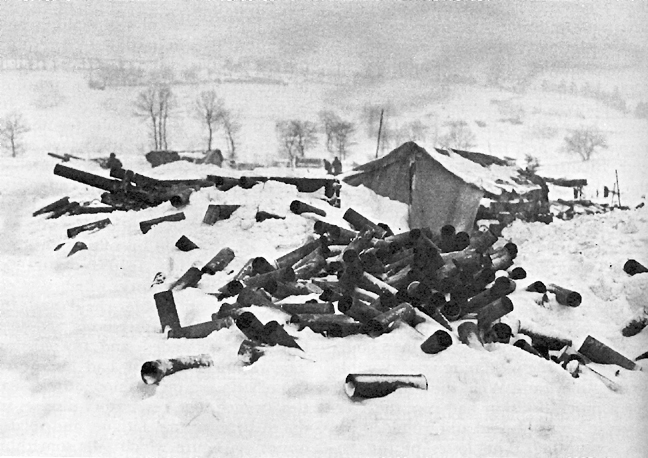
In a fierce battle lasting ten days, the American and German lines were often confused. During the first three days, the battle raged in and around Rocherath-Krinkelt. Attacking Elsenborn Ridge itself, the Germans employed effective combined arms tactics and penetrated the American lines several times, but their attacks were not well coordinated and were frustrated by the rugged terrain and the built-up area. To push the Germans back, the U.S. Army called in indirect fire on their own positions, and at one point rushed clerks and headquarters personnel to reinforce their lines. The Americans had positioned considerable artillery behind Elsenborn Ridge and these artillery batteries repeatedly pounded the German advance. The Germans, although possessing superior armor and numbers, were held in check by the Americans' well-prepared defensive positions, new proximity fuses for artillery shells, and innovative tactics, which included coordinated time on target artillery strikes.
The Sixth Panzer Army was unable to take its immediate objectives on the Meuse River. The stubborn American resistance forced Kampfgruppe Peiper to choose an alternative route well south of Monschau and Elsenborn Ridge. Peiper was able to advance about 46 kilometres (29 mi) west to Stoumont before his column was stopped by the 2nd Infantry Division, 30th Infantry Division, and the 82nd Airborne. In the end he ran out of fuel and ammunition. On 24 December, Peiper abandoned his vehicles and retreated with the remaining 800 men. German wounded and American prisoners were also left behind. According to Peiper, 717 men returned to the German lines out of about 3,000 at the beginning of the operation.
During the battle the Americans suffered approximately 5,000 casualties, and many more wounded; exact German losses are not known, but they included a significant amount of armored vehicles. While the Americans had considerable supplies and enough troops to replace their losses, German losses could not be replaced.
"We gamble everything!" were the words used by Gerd von Rundstedt, commander-in-chief of the German Western Front, to describe Unternehmen Wacht am Rhein ("Watch on the Rhine"). Adolf Hitler first officially outlined his surprise counter-offensive to his astonished generals on 16 September 1944. The assault's ambitious goal was to pierce the thinly held lines of the U.S. First Army between Monschau and Wasserbillig with Army Group B (Model) by the end of the first day, get the armor through the Ardennes by the end of the second day, reach the Meuse between Liège and Dinant by the third day, and seize Antwerp and the western bank of the Schelde estuary by the fourth day. The Germans had designated five routes, or rollbahns, through the sector near Elsenborn which would give them direct access to the road network leading to the port of Antwerp; capturing this would split the American and British armies. Hitler believed the attack would inflame rivalries between the Americans and the British, and that the two countries would negotiate a peace as a result. His generals tried to persuade him to set a less ambitious goal, but he was adamant. As they had done in 1914 and 1940, the Germans planned to attack through the Losheim Gap in Belgium.[citation needed]
Sixth Panzer Army armored strength
Forces deployed north to south:
Hitler personally selected the best troops available and officers he trusted for the counter-offensive. The lead role was given to Sepp Dietrich's 6th Panzer Army, while 5th Panzer Army was to attack to their south, covering their flank. 6th Panzer Army was given priority for supply and equipment and was assigned the shortest route to the ultimate objective of the offensive, Antwerp. 6th Panzer Army included the elite of the Waffen-SS, and totalled four armored, or panzer, divisions and seven infantry divisions in three corps. 6th Panzer Army's 1,000-plus artillery pieces and 90 Tiger tanks made it the strongest force deployed. Although Dietrich's initial sector frontage was only 23 miles (37 km), his assault concentrated on less than half that ground. Relying on at least a 6:1 troop superiority at the breakthrough points, he expected to overwhelm the Americans and reach the Meuse River by nightfall of the third day. The German assault force also included many volksgrenadier units. These were new units formed in the fall of 1944 by conscripting boys and elderly men, men previously rejected as physically unfit for service, wounded soldiers returning from hospitals, and transfers from the quickly shrinking German navy and air force. They were usually organized around cadres of veterans.
Hub AI
Battle of Elsenborn Ridge AI simulator
(@Battle of Elsenborn Ridge_simulator)
Battle of Elsenborn Ridge
The Battle of Elsenborn Ridge refers to the northernmost German attacks during the Battle of the Bulge. The area from Elsenborn Ridge itself to Monschau was the only sector of the American front line attacked during the Battle of the Bulge in which the Germans failed to advance. The battle centred on the boomerang-shaped Elsenborn Ridge east of Elsenborn, Belgium. In this region, Elsenborn Ridge marks the westernmost ridge of the Ardennes, rising more than 2,000 feet (600 m) above sea level; unlike the uplands further north, east and south, it has been extensively logged. West of Elsenborn Ridge, where the land descends in gentle hills to the cities of Liège and Spa, was a network of Allied supply bases and a well-developed road network. The Germans planned on using two key routes through the area to seize Antwerp and force a separate peace with the United States and Britain. Capturing Monschau, the nearby village of Höfen, and the twin villages of Rocherath-Krinkelt just east of Elsenborn Ridge, were key to the success of the German plans, and Hitler committed his best armored units to the area.
The untested troops of the US 99th Infantry Division had been placed in the sector during mid-November because the Allies thought that the area was unlikely to see battle. The division was stretched thin over a 22-mile (35 km) front, and all three regiments were in the line with no reserve. In early December, the 2nd Infantry Division was assigned to capture a road junction named Wahlerscheid, at the southern tip of the Hurtgen Forest. German forces counterattacked in what the Americans initially thought was a localized spoiling action, but was actually a leading element of the Battle of the Bulge. The 2nd Division consolidated its lines, pulling back into Hünningen, then Rocherath-Krinkelt, and finally to the dug-in positions held by the 99th Division at Elsenborn Ridge.
In a fierce battle lasting ten days, the American and German lines were often confused. During the first three days, the battle raged in and around Rocherath-Krinkelt. Attacking Elsenborn Ridge itself, the Germans employed effective combined arms tactics and penetrated the American lines several times, but their attacks were not well coordinated and were frustrated by the rugged terrain and the built-up area. To push the Germans back, the U.S. Army called in indirect fire on their own positions, and at one point rushed clerks and headquarters personnel to reinforce their lines. The Americans had positioned considerable artillery behind Elsenborn Ridge and these artillery batteries repeatedly pounded the German advance. The Germans, although possessing superior armor and numbers, were held in check by the Americans' well-prepared defensive positions, new proximity fuses for artillery shells, and innovative tactics, which included coordinated time on target artillery strikes.
The Sixth Panzer Army was unable to take its immediate objectives on the Meuse River. The stubborn American resistance forced Kampfgruppe Peiper to choose an alternative route well south of Monschau and Elsenborn Ridge. Peiper was able to advance about 46 kilometres (29 mi) west to Stoumont before his column was stopped by the 2nd Infantry Division, 30th Infantry Division, and the 82nd Airborne. In the end he ran out of fuel and ammunition. On 24 December, Peiper abandoned his vehicles and retreated with the remaining 800 men. German wounded and American prisoners were also left behind. According to Peiper, 717 men returned to the German lines out of about 3,000 at the beginning of the operation.
During the battle the Americans suffered approximately 5,000 casualties, and many more wounded; exact German losses are not known, but they included a significant amount of armored vehicles. While the Americans had considerable supplies and enough troops to replace their losses, German losses could not be replaced.
"We gamble everything!" were the words used by Gerd von Rundstedt, commander-in-chief of the German Western Front, to describe Unternehmen Wacht am Rhein ("Watch on the Rhine"). Adolf Hitler first officially outlined his surprise counter-offensive to his astonished generals on 16 September 1944. The assault's ambitious goal was to pierce the thinly held lines of the U.S. First Army between Monschau and Wasserbillig with Army Group B (Model) by the end of the first day, get the armor through the Ardennes by the end of the second day, reach the Meuse between Liège and Dinant by the third day, and seize Antwerp and the western bank of the Schelde estuary by the fourth day. The Germans had designated five routes, or rollbahns, through the sector near Elsenborn which would give them direct access to the road network leading to the port of Antwerp; capturing this would split the American and British armies. Hitler believed the attack would inflame rivalries between the Americans and the British, and that the two countries would negotiate a peace as a result. His generals tried to persuade him to set a less ambitious goal, but he was adamant. As they had done in 1914 and 1940, the Germans planned to attack through the Losheim Gap in Belgium.[citation needed]
Sixth Panzer Army armored strength
Forces deployed north to south:
Hitler personally selected the best troops available and officers he trusted for the counter-offensive. The lead role was given to Sepp Dietrich's 6th Panzer Army, while 5th Panzer Army was to attack to their south, covering their flank. 6th Panzer Army was given priority for supply and equipment and was assigned the shortest route to the ultimate objective of the offensive, Antwerp. 6th Panzer Army included the elite of the Waffen-SS, and totalled four armored, or panzer, divisions and seven infantry divisions in three corps. 6th Panzer Army's 1,000-plus artillery pieces and 90 Tiger tanks made it the strongest force deployed. Although Dietrich's initial sector frontage was only 23 miles (37 km), his assault concentrated on less than half that ground. Relying on at least a 6:1 troop superiority at the breakthrough points, he expected to overwhelm the Americans and reach the Meuse River by nightfall of the third day. The German assault force also included many volksgrenadier units. These were new units formed in the fall of 1944 by conscripting boys and elderly men, men previously rejected as physically unfit for service, wounded soldiers returning from hospitals, and transfers from the quickly shrinking German navy and air force. They were usually organized around cadres of veterans.
Recent media