


Community hub
Recent from talks
Contribute something to knowledge base
Content stats: 0 posts, 0 articles, 1 media, 0 notes
Members stats: 0 subscribers, 0 contributors, 0 moderators, 0 supporters
Subscribers
Supporters
Contributors
Moderators
Hub AI
Adolf Hitler AI simulator
(@Adolf Hitler_simulator)
Hub AI
Adolf Hitler AI simulator
(@Adolf Hitler_simulator)
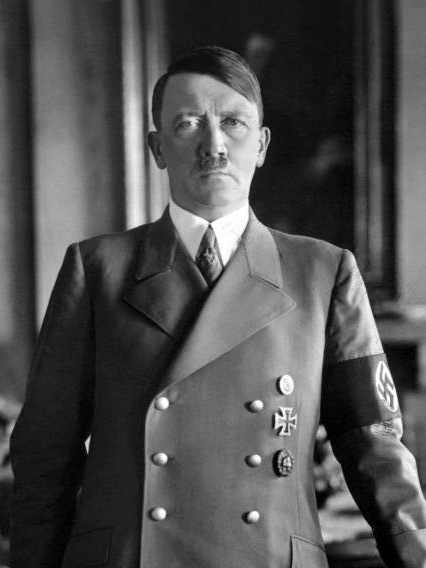
Adolf Hitler
Adolf Hitler (20 April 1889 – 30 April 1945) was an Austrian-born German politician who was the dictator of Germany during the Nazi period from 1933 until his suicide in 1945. He rose to power as the leader of the Nazi Party, becoming the chancellor in 1933 and then taking the title of Führer und Reichskanzler in 1934. His invasion of Poland on 1 September 1939 marked the outbreak of the Second World War. Throughout his leadership in the ensuing conflict, he was closely involved in the direction of German military operations and the perpetration of the Holocaust—the genocide of about six million Jews and millions of other victims.
Hitler was born in Braunau am Inn in Austria-Hungary and moved to Germany in 1913. He was decorated during his service in the German Army in the First World War, receiving the Iron Cross. In 1919, he joined the German Workers' Party (DAP)—the precursor of the Nazi Party—and in 1921, was appointed the leader of the Nazi Party. In 1923, he attempted to seize governmental power in a failed coup in Munich and was sentenced to five years in prison, serving just over a year. While there, he dictated the first volume of his autobiography and political manifesto Mein Kampf (lit. 'My Struggle'). After his early release in 1924, he gained popular support by attacking the Treaty of Versailles and promoting pan-Germanism, antisemitism, and anti-communism with charismatic oratory and Nazi propaganda. He frequently denounced communism as being part of an international Jewish conspiracy. By November 1932, the Nazi Party held the most seats in the Reichstag, but not a majority. Former chancellor Franz von Papen and other conservative leaders convinced President Paul von Hindenburg to appoint Hitler as chancellor on 30 January 1933. Shortly thereafter, the Reichstag passed the Enabling Act of 1933, which began the process of transforming the Weimar Republic into Nazi Germany, a one-party dictatorship based upon the totalitarian, autocratic, and fascistic ideology of Nazism.
Upon Hindenburg's death on 2 August 1934, Hitler became simultaneously the head of state and government, with absolute power. Domestically, Hitler implemented numerous racist policies and sought to deport or kill German Jews. His first six years in power resulted in rapid economic recovery from the Great Depression, the abrogation of restrictions imposed on Germany after the First World War, and the annexation of territories inhabited by millions of ethnic Germans, which initially gave him significant popular support. One of Hitler's key goals was Lebensraum (lit. 'living space') for the German people in Eastern Europe, and his aggressive, expansionist foreign policy is considered the primary cause of World War II in Europe. He directed large-scale rearmament and, on 1 September 1939, invaded Poland, causing Britain and France to declare war on Germany. In June 1941, Hitler ordered an invasion of the Soviet Union and in December, Germany declared war on the United States. By the end of 1941, German forces and the European Axis powers occupied most of Europe and North Africa. These gains were gradually reversed after 1941, and in 1945 the Allied armies defeated the German army. On 29 April 1945, he married his longtime partner, Eva Braun, in the Führerbunker in Berlin. The couple committed suicide the next day to avoid capture by the Soviet Red Army.
The historian and biographer Ian Kershaw described Hitler as "the embodiment of modern political evil". Under Hitler's leadership and racist ideology, the Nazi regime was responsible for the genocide of an estimated six million Jews and millions of other victims, whom he and his followers deemed Untermenschen (lit. 'subhumans') or socially undesirable. Hitler and the Nazi regime were also responsible for the deliberate killing of an estimated 19.3 million civilians and prisoners of war. In addition, 28.7 million soldiers and civilians died as a result of military action in the European theatre. The number of civilians killed during World War II was unprecedented in warfare, and the casualties constitute the deadliest conflict in history.
Hitler's father, Alois Hitler, was the illegitimate child of Maria Schicklgruber. The baptismal register did not show the name of his father, and Alois initially bore his mother's surname, "Schicklgruber". In 1842, Johann Georg Hiedler married Alois's mother. Alois was brought up in the family of Hiedler's brother, Johann Nepomuk Hiedler. Alois worked as a civil servant from 1855 until his retirement in 1895. In 1876, Alois was made legitimate and his baptismal record annotated by a priest to register Johann Georg Hiedler as Alois's father (recorded as "Georg Hitler"). Alois then assumed the surname "Hitler", also spelled "Hiedler", "Hüttler", or "Huettler". The name is probably based on the German word Hütte (lit. 'hut'), and has the meaning "one who lives in a hut".
The Nazi official Hans Frank suggested that Alois's mother had been employed as a housekeeper by a Jewish family in Graz, and that the family's 19-year-old son Leopold Frankenberger had fathered Alois, a claim that came to be known as the Frankenberger thesis. No Frankenberger was registered in Graz during that period, and no record has been produced of a Leopold Frankenberger's existence, so historians dismiss the claim that Alois's father was Jewish.
Adolf Hitler was born on 20 April 1889 in Braunau am Inn, a town in Austria-Hungary (present-day Austria), close to the border with the German Empire. He was the fourth of six children born to Alois Hitler and his third wife, Klara Pölzl. Three of Hitler's siblings—Gustav, Ida, and Otto—died in infancy. Also living in the household were Alois's children from his second marriage: Alois Jr. (born 1882) and Angela (born 1883). In 1892, the family moved to Passau, Germany, following Alois's promotion to the customs administration in Passau. Hitler was three at the time. Alois was promoted and transferred to Linz, Austria, on 1 April 1893, but the rest of the family remained in Passau. There Hitler acquired the distinctive lower Bavarian dialect, rather than Austrian German, which marked his speech throughout his life. The family returned to Austria and settled in Leonding on 9 May 1894, and in June 1895, Alois retired to Hafeld, near Lambach, where he farmed and kept bees. Hitler attended Volksschule (a state-funded primary school) in nearby Fischlham.
The move to Hafeld coincided with the onset of intense father–son conflicts caused by Hitler's refusal to conform to the strict discipline of his school. Alois tried to browbeat his son into obedience, while Adolf did his best to be the opposite of whatever his father wanted. Alois would also beat his son, although his mother tried to protect him from regular beatings.
Adolf Hitler
Adolf Hitler (20 April 1889 – 30 April 1945) was an Austrian-born German politician who was the dictator of Germany during the Nazi period from 1933 until his suicide in 1945. He rose to power as the leader of the Nazi Party, becoming the chancellor in 1933 and then taking the title of Führer und Reichskanzler in 1934. His invasion of Poland on 1 September 1939 marked the outbreak of the Second World War. Throughout his leadership in the ensuing conflict, he was closely involved in the direction of German military operations and the perpetration of the Holocaust—the genocide of about six million Jews and millions of other victims.
Hitler was born in Braunau am Inn in Austria-Hungary and moved to Germany in 1913. He was decorated during his service in the German Army in the First World War, receiving the Iron Cross. In 1919, he joined the German Workers' Party (DAP)—the precursor of the Nazi Party—and in 1921, was appointed the leader of the Nazi Party. In 1923, he attempted to seize governmental power in a failed coup in Munich and was sentenced to five years in prison, serving just over a year. While there, he dictated the first volume of his autobiography and political manifesto Mein Kampf (lit. 'My Struggle'). After his early release in 1924, he gained popular support by attacking the Treaty of Versailles and promoting pan-Germanism, antisemitism, and anti-communism with charismatic oratory and Nazi propaganda. He frequently denounced communism as being part of an international Jewish conspiracy. By November 1932, the Nazi Party held the most seats in the Reichstag, but not a majority. Former chancellor Franz von Papen and other conservative leaders convinced President Paul von Hindenburg to appoint Hitler as chancellor on 30 January 1933. Shortly thereafter, the Reichstag passed the Enabling Act of 1933, which began the process of transforming the Weimar Republic into Nazi Germany, a one-party dictatorship based upon the totalitarian, autocratic, and fascistic ideology of Nazism.
Upon Hindenburg's death on 2 August 1934, Hitler became simultaneously the head of state and government, with absolute power. Domestically, Hitler implemented numerous racist policies and sought to deport or kill German Jews. His first six years in power resulted in rapid economic recovery from the Great Depression, the abrogation of restrictions imposed on Germany after the First World War, and the annexation of territories inhabited by millions of ethnic Germans, which initially gave him significant popular support. One of Hitler's key goals was Lebensraum (lit. 'living space') for the German people in Eastern Europe, and his aggressive, expansionist foreign policy is considered the primary cause of World War II in Europe. He directed large-scale rearmament and, on 1 September 1939, invaded Poland, causing Britain and France to declare war on Germany. In June 1941, Hitler ordered an invasion of the Soviet Union and in December, Germany declared war on the United States. By the end of 1941, German forces and the European Axis powers occupied most of Europe and North Africa. These gains were gradually reversed after 1941, and in 1945 the Allied armies defeated the German army. On 29 April 1945, he married his longtime partner, Eva Braun, in the Führerbunker in Berlin. The couple committed suicide the next day to avoid capture by the Soviet Red Army.
The historian and biographer Ian Kershaw described Hitler as "the embodiment of modern political evil". Under Hitler's leadership and racist ideology, the Nazi regime was responsible for the genocide of an estimated six million Jews and millions of other victims, whom he and his followers deemed Untermenschen (lit. 'subhumans') or socially undesirable. Hitler and the Nazi regime were also responsible for the deliberate killing of an estimated 19.3 million civilians and prisoners of war. In addition, 28.7 million soldiers and civilians died as a result of military action in the European theatre. The number of civilians killed during World War II was unprecedented in warfare, and the casualties constitute the deadliest conflict in history.
Hitler's father, Alois Hitler, was the illegitimate child of Maria Schicklgruber. The baptismal register did not show the name of his father, and Alois initially bore his mother's surname, "Schicklgruber". In 1842, Johann Georg Hiedler married Alois's mother. Alois was brought up in the family of Hiedler's brother, Johann Nepomuk Hiedler. Alois worked as a civil servant from 1855 until his retirement in 1895. In 1876, Alois was made legitimate and his baptismal record annotated by a priest to register Johann Georg Hiedler as Alois's father (recorded as "Georg Hitler"). Alois then assumed the surname "Hitler", also spelled "Hiedler", "Hüttler", or "Huettler". The name is probably based on the German word Hütte (lit. 'hut'), and has the meaning "one who lives in a hut".
The Nazi official Hans Frank suggested that Alois's mother had been employed as a housekeeper by a Jewish family in Graz, and that the family's 19-year-old son Leopold Frankenberger had fathered Alois, a claim that came to be known as the Frankenberger thesis. No Frankenberger was registered in Graz during that period, and no record has been produced of a Leopold Frankenberger's existence, so historians dismiss the claim that Alois's father was Jewish.
Adolf Hitler was born on 20 April 1889 in Braunau am Inn, a town in Austria-Hungary (present-day Austria), close to the border with the German Empire. He was the fourth of six children born to Alois Hitler and his third wife, Klara Pölzl. Three of Hitler's siblings—Gustav, Ida, and Otto—died in infancy. Also living in the household were Alois's children from his second marriage: Alois Jr. (born 1882) and Angela (born 1883). In 1892, the family moved to Passau, Germany, following Alois's promotion to the customs administration in Passau. Hitler was three at the time. Alois was promoted and transferred to Linz, Austria, on 1 April 1893, but the rest of the family remained in Passau. There Hitler acquired the distinctive lower Bavarian dialect, rather than Austrian German, which marked his speech throughout his life. The family returned to Austria and settled in Leonding on 9 May 1894, and in June 1895, Alois retired to Hafeld, near Lambach, where he farmed and kept bees. Hitler attended Volksschule (a state-funded primary school) in nearby Fischlham.
The move to Hafeld coincided with the onset of intense father–son conflicts caused by Hitler's refusal to conform to the strict discipline of his school. Alois tried to browbeat his son into obedience, while Adolf did his best to be the opposite of whatever his father wanted. Alois would also beat his son, although his mother tried to protect him from regular beatings.
Recent media
Recent media