



Community hub
Recent from talks
Contribute something to knowledge base
Content stats: 0 posts, 0 articles, 1 media, 0 notes
Members stats: 0 subscribers, 0 contributors, 0 moderators, 0 supporters
Subscribers
Supporters
Contributors
Moderators
Hub AI
Battle of Guningtou AI simulator
(@Battle of Guningtou_simulator)
Hub AI
Battle of Guningtou AI simulator
(@Battle of Guningtou_simulator)
Battle of Guningtou
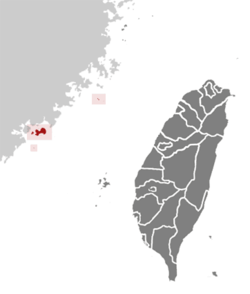
The Battle of Guningtou (古寧頭之役), also known as the Battle of Kuningtou or the Battle of Kinmen (Chinese: 金門戰役), was fought in October 1949 on the island of Kinmen (Quemoy), located in the Taiwan Strait, during the final stages of the Chinese Civil War.
The battle resulted in a decisive victory for the Republic of China (ROC) forces and marked a significant turning point in the civil war. The defeat of Chinese Communist Party (CCP) forces not only preserved Kinmen under ROC control but also effectively halted CCP plans for an immediate invasion of Taiwan. The victory ensured the survival of the Republic of China government on Taiwan and reshaped the strategic landscape of the Taiwan Strait.
Following the establishment of the People's Republic of China on 1 October 1949, the government of the Republic of China (ROC) under Chiang Kai-shek began withdrawing its forces from mainland China to Taiwan. However, ROC garrisons remained stationed on the offshore islands of Kinmen (Quemoy) and the Matsu archipelago, situated just off the coast of Fujian Province. Commanders of the People's Liberation Army (PLA) viewed Kinmen and Matsu as strategically necessary stepping stones before any potential operation against Taiwan island itself.
In early July 1949, the PLA began invading Fujian under the command of the 10th Corps of the Third Field Army, led by General Ye Fei. The 10th Corps had already conducted major operations in eastern China, including the campaigns for Fuzhou, Pingtan Island, and Zhangzhou–Xiamen. On 15 October, the PLA launched an amphibious operation against Xiamen, first conducting a diversionary attack on Gulangyu to draw away ROC attention. The main force then landed on multiple beaches across Xiamen, overcoming the defending ROC troops. On 17 October, General Tang Enbo, acting director of the Fuzhou Pacification Office (福州綏靖公署), abandoned the city of Xiamen. Following the capture of Xiamen, the PLA secured positions north of Kinmen, including Dadeng Island, Xiaodeng Island, Lienho (蓮河), Shihching (石井), and Aotou (澳頭).
General Ye Fei then reassigned vessels from the PLA 32nd Army to reinforce the 28th Army, concentrating assets for a seaborne assault on Greater Kinmen. The insufficient number of transport craft, however, caused the planned crossing to be delayed several times. It was not until the evening of 24 October that the final order was given to launch the attack.
The PLA intended to land an initial force of 9,000 troops to establish a beachhead, followed by a second wave of approximately 10,000 reinforcements, expecting to seize the entire island within three days. The PLA operational plan called for landings from the areas around Aotou, Dadeng, and Lienho. However, PLA planners significantly underestimated ROC strength, believing Kinmen to be defended by no more than two understrength divisions—roughly 12,000 troops—composed mostly of green recruits and survivors from previous defeats. In reality, ROC strength on the island had been significantly reinforced.
Expecting an imminent assault, ROC commanders had begun constructing defences across the island. By October, ROC troops had laid 7,455 land mines, erected approximately 200 earthen bunkers, and deployed anti-landing beach obstacles. The island garrison included hardened veterans of earlier campaigns, supplemented by elements from the 12th Army Corps. The defensive line at the northern beaches was further strengthened by the 1st Battalion of the 3rd Tank Regiment, consisting of 22 M5A1 Stuart light tanks organised into two companies. These units had prior combat experience in the Burma campaign during the Second World War.
In the early hours of 25 October, the PLA launched its amphibious assault using hundreds of wooden fishing boats. Their aim was to land at Lungkou (壠口), the narrowest part of Kinmen. However, strong currents, poor weather, and the rudimentary design of the craft caused many of the vessels to drift off course, with large numbers instead landing further northwest at Kuningtou, where ROC defences were better entrenched.
Battle of Guningtou
The Battle of Guningtou (古寧頭之役), also known as the Battle of Kuningtou or the Battle of Kinmen (Chinese: 金門戰役), was fought in October 1949 on the island of Kinmen (Quemoy), located in the Taiwan Strait, during the final stages of the Chinese Civil War.
The battle resulted in a decisive victory for the Republic of China (ROC) forces and marked a significant turning point in the civil war. The defeat of Chinese Communist Party (CCP) forces not only preserved Kinmen under ROC control but also effectively halted CCP plans for an immediate invasion of Taiwan. The victory ensured the survival of the Republic of China government on Taiwan and reshaped the strategic landscape of the Taiwan Strait.
Following the establishment of the People's Republic of China on 1 October 1949, the government of the Republic of China (ROC) under Chiang Kai-shek began withdrawing its forces from mainland China to Taiwan. However, ROC garrisons remained stationed on the offshore islands of Kinmen (Quemoy) and the Matsu archipelago, situated just off the coast of Fujian Province. Commanders of the People's Liberation Army (PLA) viewed Kinmen and Matsu as strategically necessary stepping stones before any potential operation against Taiwan island itself.
In early July 1949, the PLA began invading Fujian under the command of the 10th Corps of the Third Field Army, led by General Ye Fei. The 10th Corps had already conducted major operations in eastern China, including the campaigns for Fuzhou, Pingtan Island, and Zhangzhou–Xiamen. On 15 October, the PLA launched an amphibious operation against Xiamen, first conducting a diversionary attack on Gulangyu to draw away ROC attention. The main force then landed on multiple beaches across Xiamen, overcoming the defending ROC troops. On 17 October, General Tang Enbo, acting director of the Fuzhou Pacification Office (福州綏靖公署), abandoned the city of Xiamen. Following the capture of Xiamen, the PLA secured positions north of Kinmen, including Dadeng Island, Xiaodeng Island, Lienho (蓮河), Shihching (石井), and Aotou (澳頭).
General Ye Fei then reassigned vessels from the PLA 32nd Army to reinforce the 28th Army, concentrating assets for a seaborne assault on Greater Kinmen. The insufficient number of transport craft, however, caused the planned crossing to be delayed several times. It was not until the evening of 24 October that the final order was given to launch the attack.
The PLA intended to land an initial force of 9,000 troops to establish a beachhead, followed by a second wave of approximately 10,000 reinforcements, expecting to seize the entire island within three days. The PLA operational plan called for landings from the areas around Aotou, Dadeng, and Lienho. However, PLA planners significantly underestimated ROC strength, believing Kinmen to be defended by no more than two understrength divisions—roughly 12,000 troops—composed mostly of green recruits and survivors from previous defeats. In reality, ROC strength on the island had been significantly reinforced.
Expecting an imminent assault, ROC commanders had begun constructing defences across the island. By October, ROC troops had laid 7,455 land mines, erected approximately 200 earthen bunkers, and deployed anti-landing beach obstacles. The island garrison included hardened veterans of earlier campaigns, supplemented by elements from the 12th Army Corps. The defensive line at the northern beaches was further strengthened by the 1st Battalion of the 3rd Tank Regiment, consisting of 22 M5A1 Stuart light tanks organised into two companies. These units had prior combat experience in the Burma campaign during the Second World War.
In the early hours of 25 October, the PLA launched its amphibious assault using hundreds of wooden fishing boats. Their aim was to land at Lungkou (壠口), the narrowest part of Kinmen. However, strong currents, poor weather, and the rudimentary design of the craft caused many of the vessels to drift off course, with large numbers instead landing further northwest at Kuningtou, where ROC defences were better entrenched.
Recent media
Recent media