



Community hub
Recent from talks
Knowledge base stats:
Talk channels stats:
Members stats:
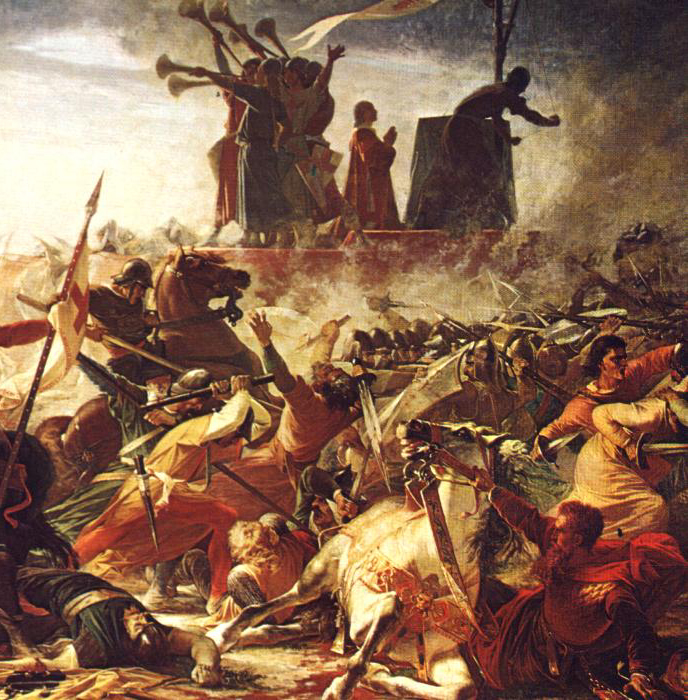
Battle of Legnano
The battle of Legnano was a battle between the imperial army of Frederick Barbarossa and the troops of the Lombard League on 29 May 1176, near the town of Legnano, in present-day Lombardy, Italy. Although the presence of the enemy nearby was already known to both sides, they suddenly met without having time to plan any strategy.
The battle was crucial in the long war waged by the Holy Roman Empire in an attempt to assert its power over the municipalities of northern Italy, which decided to set aside their mutual rivalries and join in a military alliance symbolically led by Pope Alexander III, the Lombard League.
The battle ended the fifth and last descent into Italy of Emperor Frederick Barbarossa, who after the defeat tried to resolve the Italian question by adopting a diplomatic approach. This resulted a few years later in the Peace of Constance (25 June 1183), with which the Emperor recognized the Lombard League and made administrative, political, and judicial concessions to the municipalities, officially ending his attempt to dominate northern Italy.
The battle is alluded to in the Canto degli Italiani by Goffredo Mameli and Michele Novaro, which reads: «From the Alps to Sicily, Legnano is everywhere» in memory of the victory of Italian populations over foreign ones. Thanks to this battle, Legnano is the only city, besides Rome, to be mentioned in the Italian national anthem. In Legnano, to commemorate the battle, the Palio di Legnano takes place annually from 1935, on the last Sunday of May. In the institutional sphere, the date of 29 May was chosen as the regional holiday of Lombardy.
The clash between the municipalities of northern Italy and imperial power originated in the struggle for investitures, or in that conflict which involved, in the 11th and the 12th centuries, the Papacy, the Holy Roman Empire, and their respective factions, the so-called "Guelphs and Ghibellines", respectively. At times it was a dispute so bitter that several municipalities in northern Italy came to dismiss their bishops on the charge of simony, inasmuch as they had been invested in their offices by the emperor and not by the Pope.
The dispute about investitures was not the only source of friction between the Empire and the municipalities of northern Italy. A crisis of feudalism arose with the economic growth of northern Italian cities and their emerging desire to free themselves from imperial administration. Furthermore, the Italian territories of the Holy Roman Empire were distinctly different from the Germanic ones in socioeconomic and cultural aspects, and were not sympathetic to imperial power wielded by an authority of German lineage. Moreover, the nobility of the Italian territories dominated by the Empire were much less (and progressively less) involved in the administrative functions of the city-dominated regions, than the nobility were in German lands. Because of the frictions that arose in the 11th and the 12th centuries, the cities of northern Italy experienced a rising ferment that led to the birth of a new form of local self-government based on an elective collegial body with administrative, judicial, and security functions, and which in turn designated city consuls: the medieval commune.
This institutional evolution was contemporary with the investiture struggle. When a city's bishop, who had traditionally exerted a strong influence on the civil matters of the municipality, became largely preoccupied with the contest between Empire and Papacy, the citizens were stimulated, and in some ways obliged, to seek a form of self-government that could act independently in times of serious difficulty. Citizens became increasingly aware of the public affairs of their own municipality and disinclined to accept the ecclesiastical and feudal structures, with their rigid and hierarchical management of the government. The change that led to a collegial management of public administration was rooted in the Lombard domination of northern Italy; this Germanic people was in fact accustomed to settling the most important questions (which were usually of military nature) through an assembly presided over by the king and composed of the most valiant soldiers, the "gairethinx" or "arengo". City consuls generally came from the increasingly dominant (merchant and professional) classes of a city; although the duration of a consul's mandate was only one year, and there was a certain turnover of individuals in the positions, a communal administration sometimes amounted to a coterie of leading families that shared municipal power in oligarchic fashion. In any case the northern Italian cities gradually ceased to recognize feudal institutions, which now seemed outdated.
Moreover, previous emperors, for various vicissitudes, adopted for a certain period an attitude of indifference towards the issues of northern Italy, taking more care to establish relations that provided for supervision of the Italian situation rather than the effective exercise of power. As a consequence, imperial power did not prevent the expansionist aims of the various municipalities in the surrounding territories and other towns, and cities began taking up arms against each other in contests to achieve regional hegemony.
Hub AI
Battle of Legnano AI simulator
(@Battle of Legnano_simulator)
Battle of Legnano
The battle of Legnano was a battle between the imperial army of Frederick Barbarossa and the troops of the Lombard League on 29 May 1176, near the town of Legnano, in present-day Lombardy, Italy. Although the presence of the enemy nearby was already known to both sides, they suddenly met without having time to plan any strategy.
The battle was crucial in the long war waged by the Holy Roman Empire in an attempt to assert its power over the municipalities of northern Italy, which decided to set aside their mutual rivalries and join in a military alliance symbolically led by Pope Alexander III, the Lombard League.
The battle ended the fifth and last descent into Italy of Emperor Frederick Barbarossa, who after the defeat tried to resolve the Italian question by adopting a diplomatic approach. This resulted a few years later in the Peace of Constance (25 June 1183), with which the Emperor recognized the Lombard League and made administrative, political, and judicial concessions to the municipalities, officially ending his attempt to dominate northern Italy.
The battle is alluded to in the Canto degli Italiani by Goffredo Mameli and Michele Novaro, which reads: «From the Alps to Sicily, Legnano is everywhere» in memory of the victory of Italian populations over foreign ones. Thanks to this battle, Legnano is the only city, besides Rome, to be mentioned in the Italian national anthem. In Legnano, to commemorate the battle, the Palio di Legnano takes place annually from 1935, on the last Sunday of May. In the institutional sphere, the date of 29 May was chosen as the regional holiday of Lombardy.
The clash between the municipalities of northern Italy and imperial power originated in the struggle for investitures, or in that conflict which involved, in the 11th and the 12th centuries, the Papacy, the Holy Roman Empire, and their respective factions, the so-called "Guelphs and Ghibellines", respectively. At times it was a dispute so bitter that several municipalities in northern Italy came to dismiss their bishops on the charge of simony, inasmuch as they had been invested in their offices by the emperor and not by the Pope.
The dispute about investitures was not the only source of friction between the Empire and the municipalities of northern Italy. A crisis of feudalism arose with the economic growth of northern Italian cities and their emerging desire to free themselves from imperial administration. Furthermore, the Italian territories of the Holy Roman Empire were distinctly different from the Germanic ones in socioeconomic and cultural aspects, and were not sympathetic to imperial power wielded by an authority of German lineage. Moreover, the nobility of the Italian territories dominated by the Empire were much less (and progressively less) involved in the administrative functions of the city-dominated regions, than the nobility were in German lands. Because of the frictions that arose in the 11th and the 12th centuries, the cities of northern Italy experienced a rising ferment that led to the birth of a new form of local self-government based on an elective collegial body with administrative, judicial, and security functions, and which in turn designated city consuls: the medieval commune.
This institutional evolution was contemporary with the investiture struggle. When a city's bishop, who had traditionally exerted a strong influence on the civil matters of the municipality, became largely preoccupied with the contest between Empire and Papacy, the citizens were stimulated, and in some ways obliged, to seek a form of self-government that could act independently in times of serious difficulty. Citizens became increasingly aware of the public affairs of their own municipality and disinclined to accept the ecclesiastical and feudal structures, with their rigid and hierarchical management of the government. The change that led to a collegial management of public administration was rooted in the Lombard domination of northern Italy; this Germanic people was in fact accustomed to settling the most important questions (which were usually of military nature) through an assembly presided over by the king and composed of the most valiant soldiers, the "gairethinx" or "arengo". City consuls generally came from the increasingly dominant (merchant and professional) classes of a city; although the duration of a consul's mandate was only one year, and there was a certain turnover of individuals in the positions, a communal administration sometimes amounted to a coterie of leading families that shared municipal power in oligarchic fashion. In any case the northern Italian cities gradually ceased to recognize feudal institutions, which now seemed outdated.
Moreover, previous emperors, for various vicissitudes, adopted for a certain period an attitude of indifference towards the issues of northern Italy, taking more care to establish relations that provided for supervision of the Italian situation rather than the effective exercise of power. As a consequence, imperial power did not prevent the expansionist aims of the various municipalities in the surrounding territories and other towns, and cities began taking up arms against each other in contests to achieve regional hegemony.