


Community hub
Recent from talks
Contribute something to knowledge base
Content stats: 0 posts, 0 articles, 1 media, 0 notes
Members stats: 0 subscribers, 0 contributors, 0 moderators, 0 supporters
Subscribers
Supporters
Contributors
Moderators
Hub AI
Battle of Loano AI simulator
(@Battle of Loano_simulator)
Hub AI
Battle of Loano AI simulator
(@Battle of Loano_simulator)
Battle of Loano
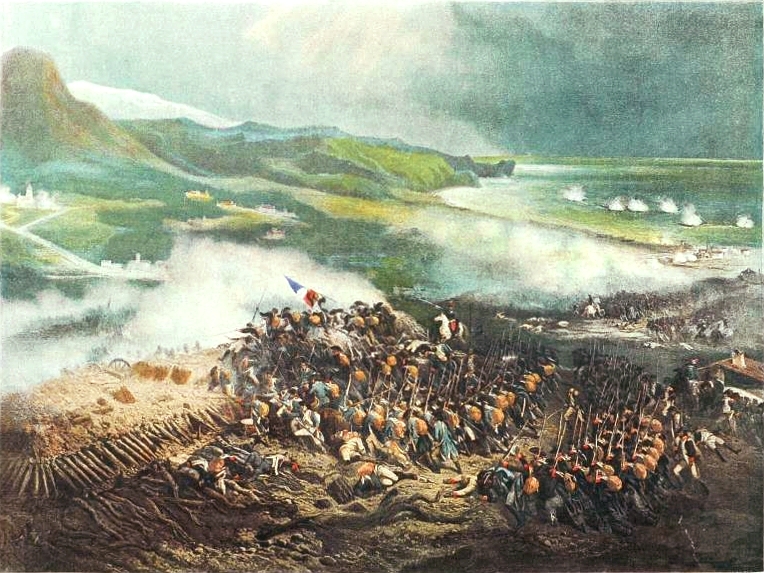
The Battle of Loano (23–24 November 1795) saw the French Army of Italy led by General of Division (GD) Barthélemy Louis Joseph Schérer attack the Allied armies of Habsburg Austria and the Kingdom of Sardinia-Piedmont led by Feldzeugmeister (FZM) Olivier, Count of Wallis during the War of the First Coalition. The assault took the Austrians by surprise since it occurred so late in the year. Additionally, the previous Austrian commander resigned the day before the attack. While the French left flank troops pinned down the Sardinian forces opposing them, the French center broke through the Allied center, forcing the Austrians to retreat. Meanwhile, the French right flank forces steadily pressed back the Austrians on the coast. The French gained a more favorable position, but Schérer did not exploit his victory. André Masséna distinguished himself during this battle and is credited with the French victory.
After detecting that his Coalition foes were planning an offensive, French commander GD Pierre Jadart Dumerbion launched an operation in mid-September 1794 that took his opponents by surprise. Using a plan prepared by General of Brigade (GB) Napoleon Bonaparte, the French defeated the Austrians under the Count of Wallis in the First Battle of Dego on 21 September. The French army then obeyed its orders from Paris not to persist in an offensive. As the French troops withdrew to a more defensible position, Bonaparte noted that the road running from the port of Savona to the interior was usable by artillery, a piece of information that would prove useful to him in the April 1796 Montenotte campaign. The French army took up a defense line running from Ormea east to Colle San Bernardo and then to the Ligurian Sea at Vado. Dumerbion praised Bonaparte, "It is to the ability of the General of Artillery that I owe the clever combinations which have secured our success."
GD Schérer replaced Dumerbion as commander of the Army of Italy on 21 November 1794. GD François Christophe de Kellermann assumed command of both the Army of Italy and the Army of the Alps on 6 May 1795. Also in May, Bonaparte was ordered away from the Army of Italy. On 24–26 June 1795, the Coalition commander FZM Joseph Nikolaus De Vins attacked the French positions in the Battle of Monte Settepani. Though repulsed near the coast, in the inland sector the Austrians captured Monte Settepani, Colle di San Giacomo, and Monte Alto. Kellermann ordered a withdrawal, taking care to evacuate his army's supplies from Vado, Finale, and Loano. On 9 July, the French army took up its new defense line from Borghetto Santo Spirito on the coast to Monte Galero, then west to Ormea.
In July 1795, Kellermann mustered 31,193 soldiers in the Army of Italy and 17,108 men in the Army of the Alps. From these numbers, one must deduct garrisons and the sick. Much of Kellermann's energy was expended trying to feed troops who were often on the brink of starvation because of the British Royal Navy blockade of the coast and the nearly bankrupt French government. However, the Peace of Basel with the Kingdom of Spain on 22 July 1795 allowed the Army of Italy to be reinforced. Several thousand more reinforcements arrived from the Army of the Rhine and Moselle. The food supply was placed on a better basis at least for a few months.
The Austrians and Sardinian armies did not cooperate very well, so De Vins was placed in overall command of both armies. On 18 September 1795, De Vins attacked the French lines with 40,000 troops. On the French side, GD André Massena held the right flank with 24,000 men, GD François Macquard defended the center with 6,000 troops, and GD Jean-Mathieu-Philibert Sérurier held the left flank with 5,000 soldiers. The Sardinians faced Sérurier, Generalmajor (GM) Eugène-Guillaume Argenteau faced Macquard, and Wallis faced Massena. Near Monte Sambucco, the Sardinians gained a momentary success, but the French under Colonel Louis de Saint-Hilaire counterattacked in a fog and drove them off. All of the other Allied attacks failed.
On 29 September 1795, Schérer replaced Kellermann in command of the Army of Italy. Kellermann was demoted to commanding only the Army of the Alps. In early October, the Army of Italy with 33,000 soldiers faced 30,000 Austrians and 12,000 Sardinians led by De Vins. At about this time, GD Charles-Pierre Augereau's division on the right flank, consisting of reinforcements from the Spanish front, numbered 6,961 men. Sérurier's division on the left flank counted 5,155 soldiers. In the center, Massena controlled 13,276 troops, split between the divisions of GD Étienne Charlet and GD Amédée Emmanuel François Laharpe and a reserve under GD Guilin Laurent Bizanet. Massena's and Sérurier's soldiers were originally from the Army of Italy. These active divisions totaled 25,392 infantry but did not include cavalry or artillery. It also did not include another division on the far left that held the Col de Tende.
Even though the Sardinian army was led by an Austrian officer, Feldmarschall-Leutnant (FML) Michelangelo Alessandro Colli-Marchi, relations between the Austrians and the Sardinians remained touchy. Bonaparte, then a military planner at the Bureau Topographique, urged an attack by the Army of Italy to seize Vado. He was soon backed up by the Committee of Public Safety. Schérer wanted to execute Kellermann's plan to advance up the Tanaro valley, but frequent delays prevented it from being carried out. On 17 November, Charlet's division attacked the Austro-Sardinians at Campo di Pietri, surprising them and capturing three cannons and 500 prisoners.
A violent storm and heavy snowfall occurred on 18 November, halting further movements. Desiring to do something before winter prevented all operations, Schérer chose an assault plan presented by Massena. While Sérurier's division kept the Allies in his front occupied, Massena's divisions would sever the connection between the Allied right and left wings. After breaking through, Massena's troops would turn to their right and hit the flank of the Allies defending against Augereau's division. The French acted as though they were taking up winter quarters while they were really massing troops for Massena's assault. On 22 November, De Vins handed over command of the Allied army to Wallis. Colli's chief of staff Colonel Joseph Henri Costa de Beauregard reported that De Vins was ill with scurvy. Believing that military operations were finished for the season, Wallis permitted his officers to attend a ball at Finale.
Battle of Loano
The Battle of Loano (23–24 November 1795) saw the French Army of Italy led by General of Division (GD) Barthélemy Louis Joseph Schérer attack the Allied armies of Habsburg Austria and the Kingdom of Sardinia-Piedmont led by Feldzeugmeister (FZM) Olivier, Count of Wallis during the War of the First Coalition. The assault took the Austrians by surprise since it occurred so late in the year. Additionally, the previous Austrian commander resigned the day before the attack. While the French left flank troops pinned down the Sardinian forces opposing them, the French center broke through the Allied center, forcing the Austrians to retreat. Meanwhile, the French right flank forces steadily pressed back the Austrians on the coast. The French gained a more favorable position, but Schérer did not exploit his victory. André Masséna distinguished himself during this battle and is credited with the French victory.
After detecting that his Coalition foes were planning an offensive, French commander GD Pierre Jadart Dumerbion launched an operation in mid-September 1794 that took his opponents by surprise. Using a plan prepared by General of Brigade (GB) Napoleon Bonaparte, the French defeated the Austrians under the Count of Wallis in the First Battle of Dego on 21 September. The French army then obeyed its orders from Paris not to persist in an offensive. As the French troops withdrew to a more defensible position, Bonaparte noted that the road running from the port of Savona to the interior was usable by artillery, a piece of information that would prove useful to him in the April 1796 Montenotte campaign. The French army took up a defense line running from Ormea east to Colle San Bernardo and then to the Ligurian Sea at Vado. Dumerbion praised Bonaparte, "It is to the ability of the General of Artillery that I owe the clever combinations which have secured our success."
GD Schérer replaced Dumerbion as commander of the Army of Italy on 21 November 1794. GD François Christophe de Kellermann assumed command of both the Army of Italy and the Army of the Alps on 6 May 1795. Also in May, Bonaparte was ordered away from the Army of Italy. On 24–26 June 1795, the Coalition commander FZM Joseph Nikolaus De Vins attacked the French positions in the Battle of Monte Settepani. Though repulsed near the coast, in the inland sector the Austrians captured Monte Settepani, Colle di San Giacomo, and Monte Alto. Kellermann ordered a withdrawal, taking care to evacuate his army's supplies from Vado, Finale, and Loano. On 9 July, the French army took up its new defense line from Borghetto Santo Spirito on the coast to Monte Galero, then west to Ormea.
In July 1795, Kellermann mustered 31,193 soldiers in the Army of Italy and 17,108 men in the Army of the Alps. From these numbers, one must deduct garrisons and the sick. Much of Kellermann's energy was expended trying to feed troops who were often on the brink of starvation because of the British Royal Navy blockade of the coast and the nearly bankrupt French government. However, the Peace of Basel with the Kingdom of Spain on 22 July 1795 allowed the Army of Italy to be reinforced. Several thousand more reinforcements arrived from the Army of the Rhine and Moselle. The food supply was placed on a better basis at least for a few months.
The Austrians and Sardinian armies did not cooperate very well, so De Vins was placed in overall command of both armies. On 18 September 1795, De Vins attacked the French lines with 40,000 troops. On the French side, GD André Massena held the right flank with 24,000 men, GD François Macquard defended the center with 6,000 troops, and GD Jean-Mathieu-Philibert Sérurier held the left flank with 5,000 soldiers. The Sardinians faced Sérurier, Generalmajor (GM) Eugène-Guillaume Argenteau faced Macquard, and Wallis faced Massena. Near Monte Sambucco, the Sardinians gained a momentary success, but the French under Colonel Louis de Saint-Hilaire counterattacked in a fog and drove them off. All of the other Allied attacks failed.
On 29 September 1795, Schérer replaced Kellermann in command of the Army of Italy. Kellermann was demoted to commanding only the Army of the Alps. In early October, the Army of Italy with 33,000 soldiers faced 30,000 Austrians and 12,000 Sardinians led by De Vins. At about this time, GD Charles-Pierre Augereau's division on the right flank, consisting of reinforcements from the Spanish front, numbered 6,961 men. Sérurier's division on the left flank counted 5,155 soldiers. In the center, Massena controlled 13,276 troops, split between the divisions of GD Étienne Charlet and GD Amédée Emmanuel François Laharpe and a reserve under GD Guilin Laurent Bizanet. Massena's and Sérurier's soldiers were originally from the Army of Italy. These active divisions totaled 25,392 infantry but did not include cavalry or artillery. It also did not include another division on the far left that held the Col de Tende.
Even though the Sardinian army was led by an Austrian officer, Feldmarschall-Leutnant (FML) Michelangelo Alessandro Colli-Marchi, relations between the Austrians and the Sardinians remained touchy. Bonaparte, then a military planner at the Bureau Topographique, urged an attack by the Army of Italy to seize Vado. He was soon backed up by the Committee of Public Safety. Schérer wanted to execute Kellermann's plan to advance up the Tanaro valley, but frequent delays prevented it from being carried out. On 17 November, Charlet's division attacked the Austro-Sardinians at Campo di Pietri, surprising them and capturing three cannons and 500 prisoners.
A violent storm and heavy snowfall occurred on 18 November, halting further movements. Desiring to do something before winter prevented all operations, Schérer chose an assault plan presented by Massena. While Sérurier's division kept the Allies in his front occupied, Massena's divisions would sever the connection between the Allied right and left wings. After breaking through, Massena's troops would turn to their right and hit the flank of the Allies defending against Augereau's division. The French acted as though they were taking up winter quarters while they were really massing troops for Massena's assault. On 22 November, De Vins handed over command of the Allied army to Wallis. Colli's chief of staff Colonel Joseph Henri Costa de Beauregard reported that De Vins was ill with scurvy. Believing that military operations were finished for the season, Wallis permitted his officers to attend a ball at Finale.
Recent media
Recent media