


Community hub
Recent from talks
Contribute something to knowledge base
Content stats: 0 posts, 0 articles, 1 media, 0 notes
Members stats: 0 subscribers, 0 contributors, 0 moderators, 0 supporters
Subscribers
Supporters
Contributors
Moderators
Battle of Metz
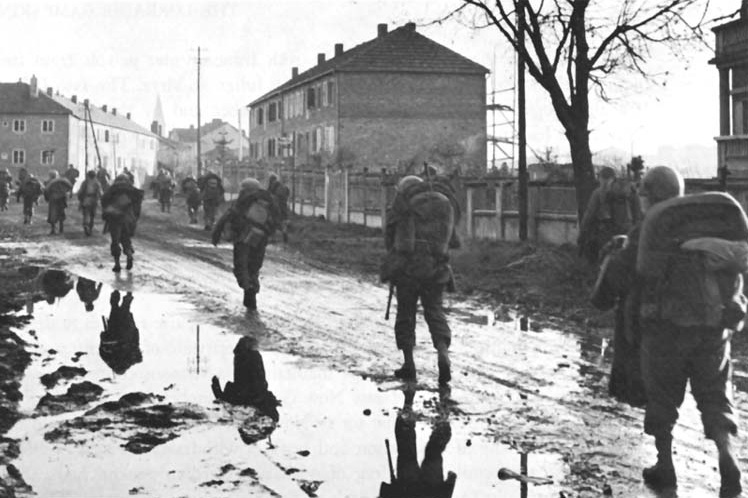
The Battle of Metz was fought during World War II at the French city of Metz, then part of Nazi Germany, from late September 1944 through mid-December as part of the Lorraine Campaign between the U.S. Third Army commanded by Lieutenant General George Patton and the German Army commanded by General Otto von Knobelsdorff. Strong German resistance resulted in heavy casualties for both sides. The city was captured by U.S. forces and hostilities formally ceased on 22 November; the last of the forts defending Metz surrendered on 13 December.
Metz is located between the rivers Moselle and Seille. The fortifications of Metz consisted of several forts and observation posts with connecting entrenchments and tunnels. The city had fallen to the German forces when France was defeated in 1940. Following the fall of France, the city was immediately annexed to the Third Reich, as were most districts previously annexed to the Reich that had been lost in 1918. Most of the Nazi dignitaries assumed it was obvious that Metz, where so many German army officers were born, was a German city. At that time, the Wehrmacht did not consider it an important location and the city's defenses were reduced with many guns and equipment removed, although the fortifications were still heavily defended and well armed.
However, after the Allied "break out" from the lodgement established by the Normandy landings, the U.S. Third Army raced 400 miles (640 km) across France, with the German forces retreating in disorder. As Third Army supply lines became stretched, material (especially gasoline) became scarce, and Supreme Commander General Dwight D. Eisenhower called a halt to the Third Army advance so that supplies could be stockpiled for Operation Market Garden, an attempt to break into the vital (and heavily industrialized) German Ruhr Valley in the north. This pause by Third Army gave the Germans time to reorganize and fortify Metz, in an attempt to contain the Allied advance.
By the end of August 1944, German forces in Lorraine had managed to reestablish a defensive line around Metz and Nancy. According to an order issued by Hitler in March 1944, fortress commanders were to hold their positions at all costs, surrendering only with Hitler's approval, which he would never give. Metz was surrounded by forts built by the Germans between 1870 and 1919, then allowed to decay by the French, who possessed the Lorraine region until it was retaken by Germany in 1940. The German commanders of the Metz forts were required to follow Hitler's "hold at all costs" order when attacked, in September 1944, by the U.S. Third Army led by General George S. Patton, who had reached Verdun before Eisenhower's order to halt the advance and conserve supplies. Hitler understood the pause was due to a supply shortage, and would not last, and he recognized that the Third Army posed a threat to the Saar region of Germany. Hitler ordered his commanders to hold the Allies "as far west as possible," to give time for the strengthening of the West Wall, which had been depleted to build up the Atlantic Wall.
The defense of Metz was undertaken by the German First Army, commanded by General Otto von Knobelsdorff. The number of German troops positioned in the vicinity of Metz was equivalent to four and a half divisions.
Armored elements of the United States XX Corps, while on a reconnaissance operation in the direction of the Moselle, made contact with elements from the 17th SS Panzergrenadier Division on 6 September 1944. On 18 September, U.S. reconnaissance units encountered Wehrmacht Panzergrenadiers again. The U.S. forces had not expected the German forces to be in the area, and had to bring together their units that were spread out. Several small scale attacks were made by the U.S. forces after this encounter.
The first U.S. attack was launched by the 95th Infantry Division, in which they attempted to capture a bridgehead to the north of Metz. This attack was repelled by the German forces, as was another attack on the city that followed. In another attack, the US forces captured a small bridgehead across the Moselle to the south of Metz.
By the end of September, German forces positioned to the north had moved to the southern area of Metz. Some troops were also withdrawn from Metz. After this development, the XII Corps launched another attack but was countered by the German defenders. In the following two weeks, the U.S. forces limited themselves to small scale attacks and patrolling in the Metz area. During this time, the XX Corps underwent a training program, experimenting with methods of reducing the defenses of the fortress. By this time, the U.S. command had decided to attack Metz from its rear, coming from the east.
Battle of Metz
The Battle of Metz was fought during World War II at the French city of Metz, then part of Nazi Germany, from late September 1944 through mid-December as part of the Lorraine Campaign between the U.S. Third Army commanded by Lieutenant General George Patton and the German Army commanded by General Otto von Knobelsdorff. Strong German resistance resulted in heavy casualties for both sides. The city was captured by U.S. forces and hostilities formally ceased on 22 November; the last of the forts defending Metz surrendered on 13 December.
Metz is located between the rivers Moselle and Seille. The fortifications of Metz consisted of several forts and observation posts with connecting entrenchments and tunnels. The city had fallen to the German forces when France was defeated in 1940. Following the fall of France, the city was immediately annexed to the Third Reich, as were most districts previously annexed to the Reich that had been lost in 1918. Most of the Nazi dignitaries assumed it was obvious that Metz, where so many German army officers were born, was a German city. At that time, the Wehrmacht did not consider it an important location and the city's defenses were reduced with many guns and equipment removed, although the fortifications were still heavily defended and well armed.
However, after the Allied "break out" from the lodgement established by the Normandy landings, the U.S. Third Army raced 400 miles (640 km) across France, with the German forces retreating in disorder. As Third Army supply lines became stretched, material (especially gasoline) became scarce, and Supreme Commander General Dwight D. Eisenhower called a halt to the Third Army advance so that supplies could be stockpiled for Operation Market Garden, an attempt to break into the vital (and heavily industrialized) German Ruhr Valley in the north. This pause by Third Army gave the Germans time to reorganize and fortify Metz, in an attempt to contain the Allied advance.
By the end of August 1944, German forces in Lorraine had managed to reestablish a defensive line around Metz and Nancy. According to an order issued by Hitler in March 1944, fortress commanders were to hold their positions at all costs, surrendering only with Hitler's approval, which he would never give. Metz was surrounded by forts built by the Germans between 1870 and 1919, then allowed to decay by the French, who possessed the Lorraine region until it was retaken by Germany in 1940. The German commanders of the Metz forts were required to follow Hitler's "hold at all costs" order when attacked, in September 1944, by the U.S. Third Army led by General George S. Patton, who had reached Verdun before Eisenhower's order to halt the advance and conserve supplies. Hitler understood the pause was due to a supply shortage, and would not last, and he recognized that the Third Army posed a threat to the Saar region of Germany. Hitler ordered his commanders to hold the Allies "as far west as possible," to give time for the strengthening of the West Wall, which had been depleted to build up the Atlantic Wall.
The defense of Metz was undertaken by the German First Army, commanded by General Otto von Knobelsdorff. The number of German troops positioned in the vicinity of Metz was equivalent to four and a half divisions.
Armored elements of the United States XX Corps, while on a reconnaissance operation in the direction of the Moselle, made contact with elements from the 17th SS Panzergrenadier Division on 6 September 1944. On 18 September, U.S. reconnaissance units encountered Wehrmacht Panzergrenadiers again. The U.S. forces had not expected the German forces to be in the area, and had to bring together their units that were spread out. Several small scale attacks were made by the U.S. forces after this encounter.
The first U.S. attack was launched by the 95th Infantry Division, in which they attempted to capture a bridgehead to the north of Metz. This attack was repelled by the German forces, as was another attack on the city that followed. In another attack, the US forces captured a small bridgehead across the Moselle to the south of Metz.
By the end of September, German forces positioned to the north had moved to the southern area of Metz. Some troops were also withdrawn from Metz. After this development, the XII Corps launched another attack but was countered by the German defenders. In the following two weeks, the U.S. forces limited themselves to small scale attacks and patrolling in the Metz area. During this time, the XX Corps underwent a training program, experimenting with methods of reducing the defenses of the fortress. By this time, the U.S. command had decided to attack Metz from its rear, coming from the east.
Recent media
Recent media