


Community hub
Recent from talks
Contribute something to knowledge base
Content stats: 0 posts, 0 articles, 1 media, 0 notes
Members stats: 0 subscribers, 0 contributors, 0 moderators, 0 supporters
Subscribers
Supporters
Contributors
Moderators
Hub AI
Battle of Plataea AI simulator
(@Battle of Plataea_simulator)
Hub AI
Battle of Plataea AI simulator
(@Battle of Plataea_simulator)
Battle of Plataea
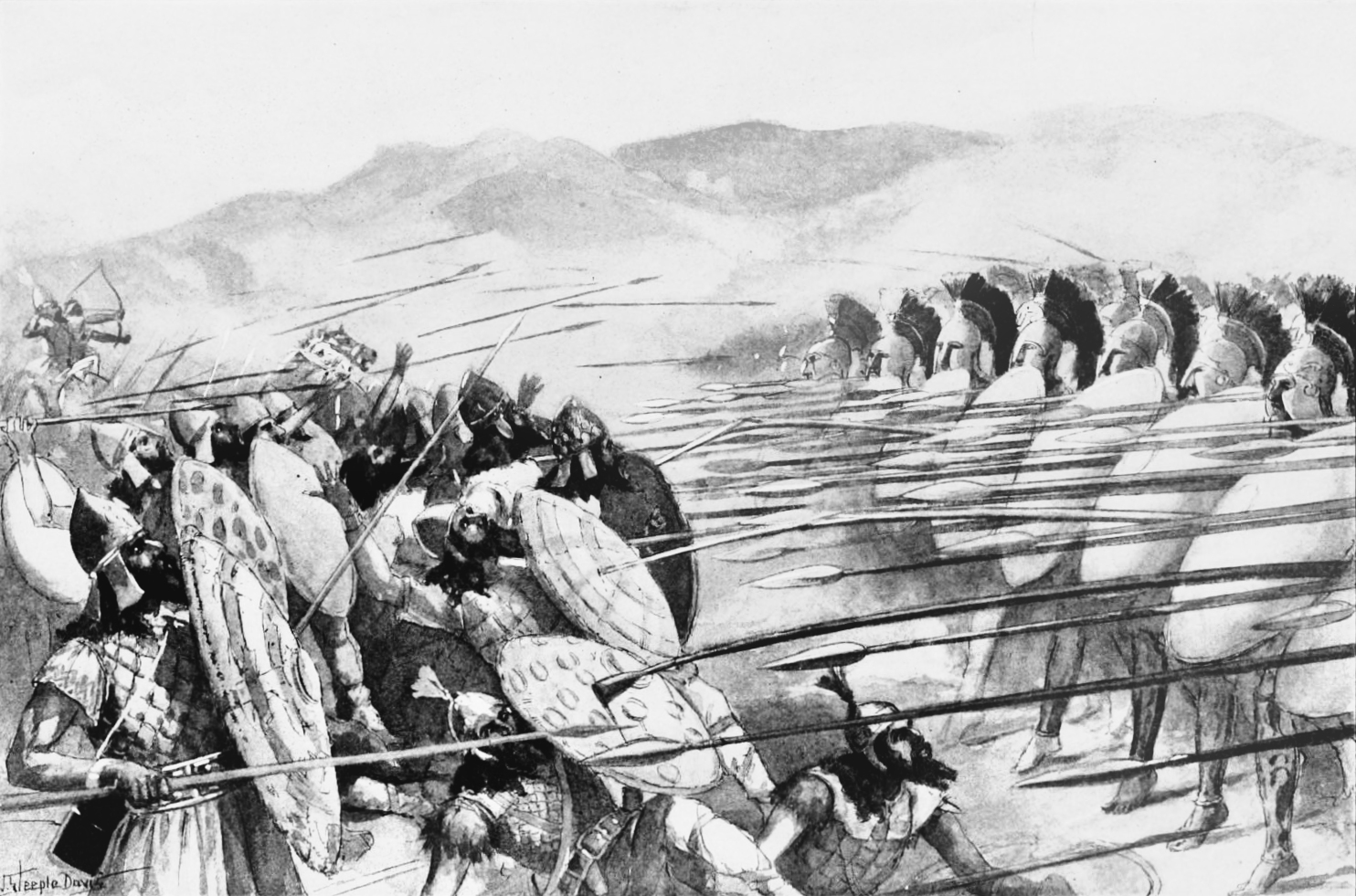
The Battle of Plataea was the final land battle during the second Persian invasion of Greece. It took place in 479 BC near the city of Plataea in Boeotia, and was fought between an alliance of the Greek city-states (including Sparta, Athens, Corinth and Megara), and the Achaemenid Empire of Xerxes I (allied with Greek states including Boeotia, Thessalia, and Macedon).
At the preceding Battle of Salamis, the allied Greek navy had won an unlikely but decisive victory, preventing the conquest of the Peloponnesus region. Xerxes then retreated with much of his army, leaving his general Mardonius to finish off the Greeks the following year. In the summer of 479 BC, the Greeks assembled a huge army and marched out of the Peloponnesus. The Persians retreated to Boeotia and built a fortified camp near Plataea. The Greeks, however, refused to be drawn into the prime terrain for cavalry around the Persian camp, resulting in a stalemate that lasted eleven days.
While attempting a retreat after their supply lines were disrupted, the Greek battle line fragmented. Thinking that the Greeks were in full retreat, Mardonius ordered his forces to pursue them, but the Greeks, particularly the Spartans, Tegeans and Athenians halted and gave battle, routing the lightly armed Persian infantry and killing Mardonius. A large portion of the Persian army was trapped in its camp and killed. The destruction of this army, and the remnants of the Persian navy allegedly on the same day at the Battle of Mycale, decisively ended the invasion.
The Achaemenid Emperor Xerxes I, after his accession, quickly initiated his preparations for an invasion of Greece, including the task of building two pontoon bridges across the Hellespont. A congress of city states met, probably at Corinth, in 481 BC, and a confederate alliance of Greek city-states was formed, generally referred to as the Allies.
In August 480 BC, after hearing of Xerxes' approach, a small Allied army led by Spartan King Leonidas I blocked the pass of Thermopylae. Famously, the massively outnumbered Greek army held Thermopylae for three days before being outflanked by the Persians, who used a little-known mountain path. Following Thermopylae, the Persian army proceeded to burn and sack Plataea and Thespiae, the Boeotian cities that had not surrendered, before taking possession of the now-evacuated city of Athens. The Allied army, meanwhile, prepared to defend the Isthmus of Corinth. The ensuing naval Battle of Salamis in 480 BC ended in a decisive victory for the Allies, marking a turning point in the conflict. Following the defeat of his navy at Salamis, Xerxes retreated to Sardis with a minor portion of his army.
Xerxes left Mardonius in charge of his troops. Mardonius decided to spend the winter in Thessaly. Mardonius tried to win over the Athenians through the mediation of Alexander I of Macedon. Upon their refusal, the Persians marched south again. Athens was again evacuated and left to the enemy, leading to the second phase of the Destruction of Athens. Mardonius now repeated his offer of peace to the Athenian refugees in Salamis. Athens sent emissaries to Sparta demanding assistance, and threatened to accept the Persian terms if it was not provided. These events occurred sometime in the month of June. According to Herodotus, the Spartans were at that time celebrating the festival of Hyacinthus, and delayed making a decision for ten days, until they were persuaded of the danger to all of Greece if the Athenians surrendered. When the Athenian envoys went to the Spartan ephors to deliver an ultimatum, they were told by the ephors that their army had already departed. The 5,000 Spartiates had advanced up the Eurotas River and were now in Oresthasium.
According to Herodotus, the Spartans sent 45,000 men – 5,000 Spartiates (full citizen soldiers), 5,000 other Lacodaemonian hoplites (perioeci) and 35,000 helots (seven per Spartiate). Pausanias, the regent for his cousin Pleistarchus, was chosen to command the Spartan troops. The historian Ian Macgregor-Morris argues that the 5,000 Spartiates sent to Plataea were 3/5th of Sparta's troops, while the historian Hans van Wees argues that these 5,000 were all the Spartan citizens fit to serve at the time. The Spartan troops at Plataea might have been the largest army the Spartans had sent beyond the Isthmus of Corinth. Pausanias chose Euryanax to be his deputy commander. Each phyle of the Athenians had its own strategos (commander).
The historian Nicholas Sekunda argues that Herodotus had assumed that each Greek hoplite was accompanied by a lightly armed attendant from the ranks of the psiloi, which had led to Herodotus inflating his numbers for the allied Greek army to 110,000. Sekunda argues that these attendants were present in the Greek camp but not on the battlefield. He further argues that these attendants served as skeuphoros (baggage carriers), and were either slaves or the relatives of the hoplites who were too young to serve in the military. In addition to the 35,000 helots, there were also 34,000 light infantry soldiers in the Greek camp. Other than the state of Argos, Mantinea and Elis also did not send their troops. The historian Paul A. Rahe estimates that these two states could have sent 6,000 hoplites, and argues that they did not because of Mardonius' bribes.
Battle of Plataea
The Battle of Plataea was the final land battle during the second Persian invasion of Greece. It took place in 479 BC near the city of Plataea in Boeotia, and was fought between an alliance of the Greek city-states (including Sparta, Athens, Corinth and Megara), and the Achaemenid Empire of Xerxes I (allied with Greek states including Boeotia, Thessalia, and Macedon).
At the preceding Battle of Salamis, the allied Greek navy had won an unlikely but decisive victory, preventing the conquest of the Peloponnesus region. Xerxes then retreated with much of his army, leaving his general Mardonius to finish off the Greeks the following year. In the summer of 479 BC, the Greeks assembled a huge army and marched out of the Peloponnesus. The Persians retreated to Boeotia and built a fortified camp near Plataea. The Greeks, however, refused to be drawn into the prime terrain for cavalry around the Persian camp, resulting in a stalemate that lasted eleven days.
While attempting a retreat after their supply lines were disrupted, the Greek battle line fragmented. Thinking that the Greeks were in full retreat, Mardonius ordered his forces to pursue them, but the Greeks, particularly the Spartans, Tegeans and Athenians halted and gave battle, routing the lightly armed Persian infantry and killing Mardonius. A large portion of the Persian army was trapped in its camp and killed. The destruction of this army, and the remnants of the Persian navy allegedly on the same day at the Battle of Mycale, decisively ended the invasion.
The Achaemenid Emperor Xerxes I, after his accession, quickly initiated his preparations for an invasion of Greece, including the task of building two pontoon bridges across the Hellespont. A congress of city states met, probably at Corinth, in 481 BC, and a confederate alliance of Greek city-states was formed, generally referred to as the Allies.
In August 480 BC, after hearing of Xerxes' approach, a small Allied army led by Spartan King Leonidas I blocked the pass of Thermopylae. Famously, the massively outnumbered Greek army held Thermopylae for three days before being outflanked by the Persians, who used a little-known mountain path. Following Thermopylae, the Persian army proceeded to burn and sack Plataea and Thespiae, the Boeotian cities that had not surrendered, before taking possession of the now-evacuated city of Athens. The Allied army, meanwhile, prepared to defend the Isthmus of Corinth. The ensuing naval Battle of Salamis in 480 BC ended in a decisive victory for the Allies, marking a turning point in the conflict. Following the defeat of his navy at Salamis, Xerxes retreated to Sardis with a minor portion of his army.
Xerxes left Mardonius in charge of his troops. Mardonius decided to spend the winter in Thessaly. Mardonius tried to win over the Athenians through the mediation of Alexander I of Macedon. Upon their refusal, the Persians marched south again. Athens was again evacuated and left to the enemy, leading to the second phase of the Destruction of Athens. Mardonius now repeated his offer of peace to the Athenian refugees in Salamis. Athens sent emissaries to Sparta demanding assistance, and threatened to accept the Persian terms if it was not provided. These events occurred sometime in the month of June. According to Herodotus, the Spartans were at that time celebrating the festival of Hyacinthus, and delayed making a decision for ten days, until they were persuaded of the danger to all of Greece if the Athenians surrendered. When the Athenian envoys went to the Spartan ephors to deliver an ultimatum, they were told by the ephors that their army had already departed. The 5,000 Spartiates had advanced up the Eurotas River and were now in Oresthasium.
According to Herodotus, the Spartans sent 45,000 men – 5,000 Spartiates (full citizen soldiers), 5,000 other Lacodaemonian hoplites (perioeci) and 35,000 helots (seven per Spartiate). Pausanias, the regent for his cousin Pleistarchus, was chosen to command the Spartan troops. The historian Ian Macgregor-Morris argues that the 5,000 Spartiates sent to Plataea were 3/5th of Sparta's troops, while the historian Hans van Wees argues that these 5,000 were all the Spartan citizens fit to serve at the time. The Spartan troops at Plataea might have been the largest army the Spartans had sent beyond the Isthmus of Corinth. Pausanias chose Euryanax to be his deputy commander. Each phyle of the Athenians had its own strategos (commander).
The historian Nicholas Sekunda argues that Herodotus had assumed that each Greek hoplite was accompanied by a lightly armed attendant from the ranks of the psiloi, which had led to Herodotus inflating his numbers for the allied Greek army to 110,000. Sekunda argues that these attendants were present in the Greek camp but not on the battlefield. He further argues that these attendants served as skeuphoros (baggage carriers), and were either slaves or the relatives of the hoplites who were too young to serve in the military. In addition to the 35,000 helots, there were also 34,000 light infantry soldiers in the Greek camp. Other than the state of Argos, Mantinea and Elis also did not send their troops. The historian Paul A. Rahe estimates that these two states could have sent 6,000 hoplites, and argues that they did not because of Mardonius' bribes.
Recent media
Recent media