
Recent from talks
Battle of Somosierra
Knowledge base stats:
Talk channels stats:
Members stats:
Battle of Somosierra
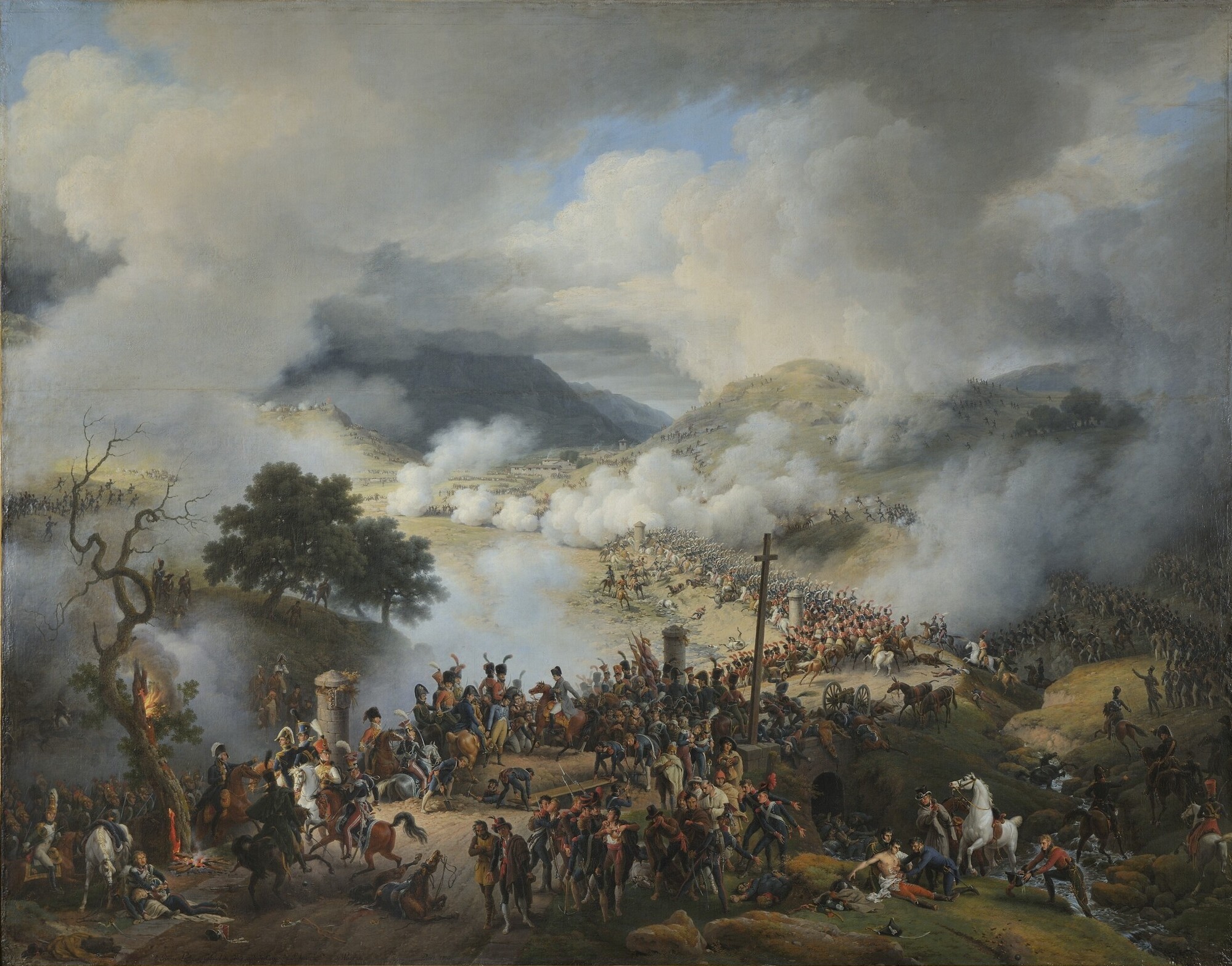
The Battle of Somosierra took place on 30 November 1808, during the Peninsular War, when a combined Franco-Napoleonic Spanish-Polish force under the direct command of Napoleon I forced a passage through a Spanish division stationed at the Sierra de Guadarrama, which shielded Madrid from direct French attack. At the Somosierra mountain pass, 60 miles (97 km) north of Madrid, a heavily outnumbered Spanish detachment of regulars, volunteers and artillery under Benito de San Juan attempted to block Napoleon's advance onto Madrid. Napoleon overwhelmed the Spanish positions in a combined arms attack, sending the Polish Chevau-légers of the Imperial Guard at the Spanish guns while French infantry advanced up the slopes. The victory removed the last obstacle barring the road to Madrid, which fell a few days later.
French invasion of Spain had started with the Battle of Zornoza. By late November 1808 the French Grande Armée had overwhelmed and destroyed both wings of the Spanish popular army. To complete his reconquest of Spain, Napoleon advanced into Madrid with 40,000 men. General Benito de San Juan mustered an ad hoc army of militia, reservists and various regular regiments still reeling from earlier defeats – in all about 12,000 men – to defend Madrid. In order to screen the many approaches to the city, San Juan dispersed his greatly outnumbered forces and 9,000 men were sent west to guard the Guadarrama Pass while 3,000 occupied an advanced post at Sepúlveda, leaving only 9,000 men and 16 guns on the heights of Somosierra. The nature of the terrain and the tenacity of the Spaniards initially worked in their favor.
On the evening of 28 November the brigade at Sepúlveda, made up of the 3rd Battalion of the Walloon Guards, the Jaén and Irlanda Regiments and the 1st Battalion of the Seville Volunteers, repulsed a French attack by the two Fusilier Regiments of the Middle Guard, commanded by General Anne Jean Marie René Savary. The Spanish troops were forced to withdraw in the gathering darkness when their cavalry was defeated by the cavalry brigade of General Antoine Charles Louis de Lasalle. On the morning of 30 November, Napoleon advanced his infantry directly toward the pass while small detachments crept up the flanks. Exchanging musket volleys with the defenders, the French made slow but measurable progress toward the enemy guns.
Because the Spanish forces could not easily be outflanked by infantry movement, and Napoleon was impatient to proceed, he ordered his Polish Chevaux-Légers escort squadron of 125 men to charge the Spaniards and their fortified[citation needed] artillery batteries. To that number must be added members of other squadrons, totaling some 450 men.[citation needed] but these entered the battle later. The charge of 125 against the batteries was joined by Niegolewski's platoon returning from reconnaissance. It is not clear, however, whether the number included only front-line troops (sabres) or all the soldiers in the units, as Napoleon issued no written orders. Jan Kozietulski, who commanded the 3rd Squadron that day, mentioned that he called, "Lekka jazda kłusem!" ("Light cavalry at the trot!") and, passing the little bridge, added, "En avant, Vive l'Empereur!" (Forward, long live the Emperor!").
Some authors have assumed that Napoleon had gone out of his mind in ordering the Polish to charge batteries of 16 cannon over several kilometers of extremely difficult terrain. Others, however, think Napoleon ordered only the closest battery to be taken, in order to open the way for his infantry, and that Kozietulski had misunderstood the order. No matter – once the charge had begun, and the chevaux-légers found themselves under fire from the second battery, they had no choice but to press the attack, as the horses went to the highest speed and were unable to stop. They took the second and third batteries but only a few of them reached the last battery, and the Spanish attempted to recapture it. It was then that Napoleon saw his chance and immediately committed the other squadrons.
Benito de San Juan had 16 cannons at his disposal, arranged in four batteries. Some accounts, based mostly on recollections of French officers, assume that the Spaniards placed all their guns at the peak of Somosierra Pass. However, with a range of 600–800 metres, the cannons, deployed in this fashion, could not have struck much of the French Imperial Army—and there were reports that Napoleon himself was at times under artillery fire.[citation needed] The first battery defended the entrance to the Somosierra pass, the next two covered the pass at its angles and the fourth, only, stood by the heights.
The 13th Bulletin of the Army of Spain mentioned that chevau-légers were commanded by General Louis Pierre, Count Montbrun. However, both Polish charge participants mentioned above and Lieutenant Colonel Pierre Dautancourt, one of the French tutors of the unit, stressed in their accounts that such was not the case. Datancourt mentioned that Montbrun in conversations with him had laughed at that idea. Yet French historian Adolphe Thiers gave him the honor of leading the charge, which caused a protest by surviving Polish participants of the battle. Major Philippe de Ségur in his memoirs wrote that he had commanded the charge, but his accounts were often described as unreliable and, again, both Dautancourt and the Polish sources denied his role in it.
The charge was led by Kozietulski, but he lost his horse after taking the first battery. The squadron was then joined by Lieutenant Andrzej Niegolewski, who had previously been on reconnaissance with his soldiers. The charge was continued under Dziewanowski, and when he fell from his horse after taking the third battery he was replaced by Piotr Krasiński. The charge that continued to the last battery was led by Niegolewski, who miraculously survived a fierce attack by Spanish troops – he received nine wounds from bayonets and two carbine shots to the head.
Hub AI
Battle of Somosierra AI simulator
(@Battle of Somosierra_simulator)
Battle of Somosierra
The Battle of Somosierra took place on 30 November 1808, during the Peninsular War, when a combined Franco-Napoleonic Spanish-Polish force under the direct command of Napoleon I forced a passage through a Spanish division stationed at the Sierra de Guadarrama, which shielded Madrid from direct French attack. At the Somosierra mountain pass, 60 miles (97 km) north of Madrid, a heavily outnumbered Spanish detachment of regulars, volunteers and artillery under Benito de San Juan attempted to block Napoleon's advance onto Madrid. Napoleon overwhelmed the Spanish positions in a combined arms attack, sending the Polish Chevau-légers of the Imperial Guard at the Spanish guns while French infantry advanced up the slopes. The victory removed the last obstacle barring the road to Madrid, which fell a few days later.
French invasion of Spain had started with the Battle of Zornoza. By late November 1808 the French Grande Armée had overwhelmed and destroyed both wings of the Spanish popular army. To complete his reconquest of Spain, Napoleon advanced into Madrid with 40,000 men. General Benito de San Juan mustered an ad hoc army of militia, reservists and various regular regiments still reeling from earlier defeats – in all about 12,000 men – to defend Madrid. In order to screen the many approaches to the city, San Juan dispersed his greatly outnumbered forces and 9,000 men were sent west to guard the Guadarrama Pass while 3,000 occupied an advanced post at Sepúlveda, leaving only 9,000 men and 16 guns on the heights of Somosierra. The nature of the terrain and the tenacity of the Spaniards initially worked in their favor.
On the evening of 28 November the brigade at Sepúlveda, made up of the 3rd Battalion of the Walloon Guards, the Jaén and Irlanda Regiments and the 1st Battalion of the Seville Volunteers, repulsed a French attack by the two Fusilier Regiments of the Middle Guard, commanded by General Anne Jean Marie René Savary. The Spanish troops were forced to withdraw in the gathering darkness when their cavalry was defeated by the cavalry brigade of General Antoine Charles Louis de Lasalle. On the morning of 30 November, Napoleon advanced his infantry directly toward the pass while small detachments crept up the flanks. Exchanging musket volleys with the defenders, the French made slow but measurable progress toward the enemy guns.
Because the Spanish forces could not easily be outflanked by infantry movement, and Napoleon was impatient to proceed, he ordered his Polish Chevaux-Légers escort squadron of 125 men to charge the Spaniards and their fortified[citation needed] artillery batteries. To that number must be added members of other squadrons, totaling some 450 men.[citation needed] but these entered the battle later. The charge of 125 against the batteries was joined by Niegolewski's platoon returning from reconnaissance. It is not clear, however, whether the number included only front-line troops (sabres) or all the soldiers in the units, as Napoleon issued no written orders. Jan Kozietulski, who commanded the 3rd Squadron that day, mentioned that he called, "Lekka jazda kłusem!" ("Light cavalry at the trot!") and, passing the little bridge, added, "En avant, Vive l'Empereur!" (Forward, long live the Emperor!").
Some authors have assumed that Napoleon had gone out of his mind in ordering the Polish to charge batteries of 16 cannon over several kilometers of extremely difficult terrain. Others, however, think Napoleon ordered only the closest battery to be taken, in order to open the way for his infantry, and that Kozietulski had misunderstood the order. No matter – once the charge had begun, and the chevaux-légers found themselves under fire from the second battery, they had no choice but to press the attack, as the horses went to the highest speed and were unable to stop. They took the second and third batteries but only a few of them reached the last battery, and the Spanish attempted to recapture it. It was then that Napoleon saw his chance and immediately committed the other squadrons.
Benito de San Juan had 16 cannons at his disposal, arranged in four batteries. Some accounts, based mostly on recollections of French officers, assume that the Spaniards placed all their guns at the peak of Somosierra Pass. However, with a range of 600–800 metres, the cannons, deployed in this fashion, could not have struck much of the French Imperial Army—and there were reports that Napoleon himself was at times under artillery fire.[citation needed] The first battery defended the entrance to the Somosierra pass, the next two covered the pass at its angles and the fourth, only, stood by the heights.
The 13th Bulletin of the Army of Spain mentioned that chevau-légers were commanded by General Louis Pierre, Count Montbrun. However, both Polish charge participants mentioned above and Lieutenant Colonel Pierre Dautancourt, one of the French tutors of the unit, stressed in their accounts that such was not the case. Datancourt mentioned that Montbrun in conversations with him had laughed at that idea. Yet French historian Adolphe Thiers gave him the honor of leading the charge, which caused a protest by surviving Polish participants of the battle. Major Philippe de Ségur in his memoirs wrote that he had commanded the charge, but his accounts were often described as unreliable and, again, both Dautancourt and the Polish sources denied his role in it.
The charge was led by Kozietulski, but he lost his horse after taking the first battery. The squadron was then joined by Lieutenant Andrzej Niegolewski, who had previously been on reconnaissance with his soldiers. The charge was continued under Dziewanowski, and when he fell from his horse after taking the third battery he was replaced by Piotr Krasiński. The charge that continued to the last battery was led by Niegolewski, who miraculously survived a fierce attack by Spanish troops – he received nine wounds from bayonets and two carbine shots to the head.
Recent media