


Community hub
Recent from talks
Contribute something to knowledge base
Content stats: 0 posts, 0 articles, 1 media, 0 notes
Members stats: 0 subscribers, 0 contributors, 0 moderators, 0 supporters
Subscribers
Supporters
Contributors
Moderators
Hub AI
Battle of the Yarmuk AI simulator
(@Battle of the Yarmuk_simulator)
Hub AI
Battle of the Yarmuk AI simulator
(@Battle of the Yarmuk_simulator)
Battle of the Yarmuk
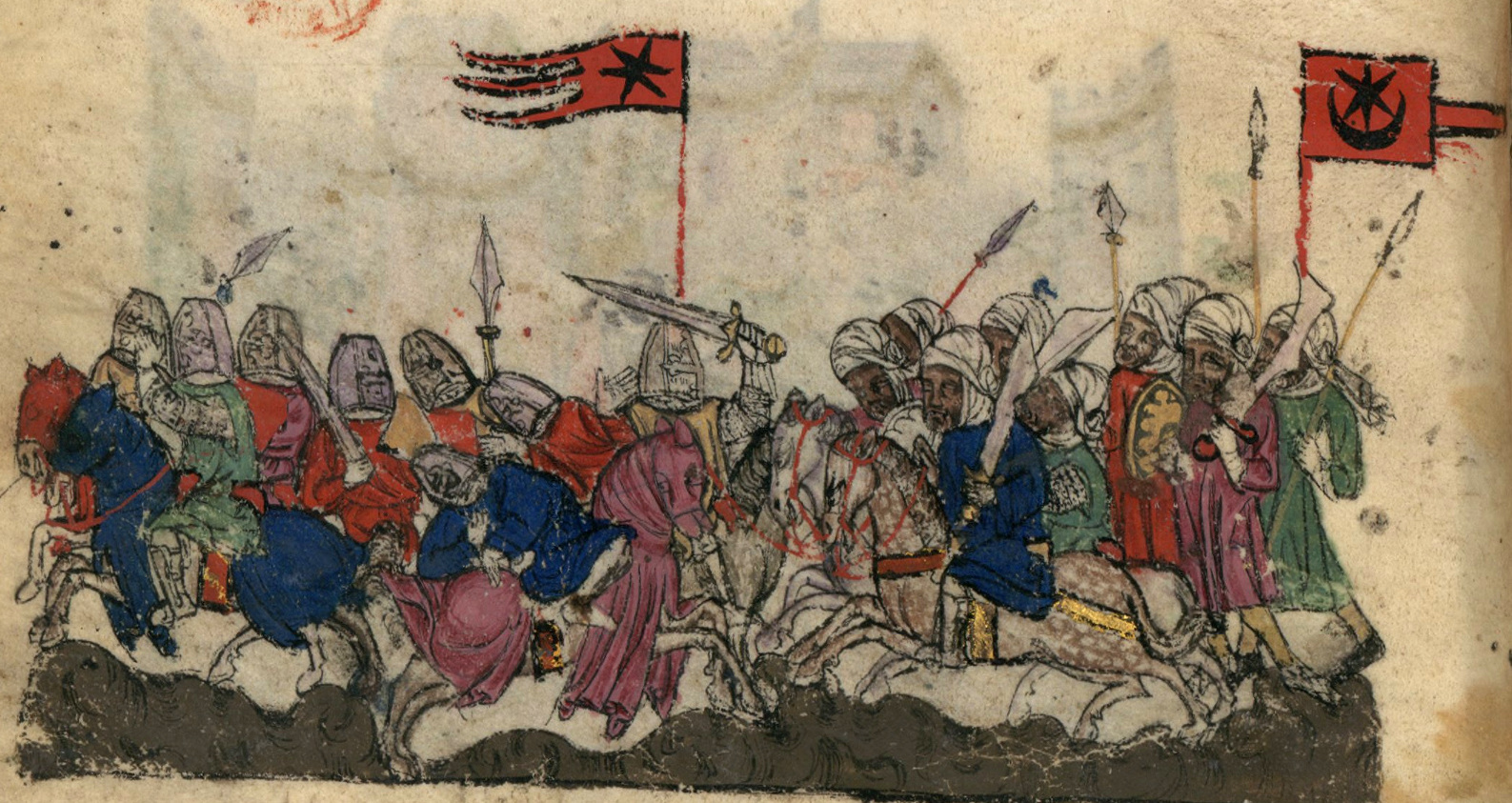
The Battle of the Yarmuk (also spelled Yarmouk; Arabic: معركة اليرموك) was a major battle between the army of the Byzantine Empire and the Arab Muslim forces of the Rashidun Caliphate, and a crucial point in the Muslim conquest of the Levant. The battle consisted of a series of engagements that lasted for six days in August 636, near the Yarmouk River (called the Hieromykes River by the Greeks), along what are now the borders between Syria and Jordan and Syria and Israel, southeast of the Sea of Galilee. The result of the battle was a decisive Muslim victory that ended Roman rule in Syria after about seven centuries. The Battle of the Yarmuk is regarded as one of the most decisive battles in military history, and it marked the first great wave of early Muslim conquests after the death of the Islamic prophet Muhammad, heralding the rapid advance of Islam into the then-Christian/Roman Levant.
To check the Arab advance and to recover lost territory, Emperor Heraclius had sent a massive expedition to the Levant in May 636. As the Byzantine army approached, the Arabs tactically withdrew from Syria and regrouped all their forces at the Yarmuk plains close to the Arabian Peninsula, where they were reinforced, and defeated the numerically superior Byzantine army. The battle is widely regarded to be Khalid ibn al-Walid's greatest military victory and to have cemented his reputation as one of the greatest tacticians and cavalry commanders in history.
In 610, during the Byzantine–Sasanian War of 602–628, Heraclius became the emperor of the Byzantine Empire, after overthrowing Phocas. Meanwhile, the Sasanian Empire conquered Mesopotamia and in 611 they overran Syria and entered Anatolia, occupying Caesarea Mazaca (now Kayseri, Turkey). In 612, Heraclius managed to expel the Persians from Anatolia but was decisively defeated in 613 when he launched a major offensive in Syria against the Persians. Over the following decade, the Persians were able to conquer Palestine and Egypt. Meanwhile, Heraclius prepared for a counterattack and rebuilt his army.
In 622, Heraclius finally launched his offensive. After his overwhelming victories over the Persians and their allies in the Caucasus and Armenia, Heraclius launched a winter offensive against the Persians in Mesopotamia in 627, winning a decisive victory at the Battle of Nineveh, thus threatening the Persian capital city of Ctesiphon. Discredited by the series of disasters, Khosrow II was overthrown and killed in a coup led by his son Kavad II, who immediately sued for peace and agreed to withdraw from all occupied territories of the Byzantine Empire. Heraclius restored the True Cross to Jerusalem with a majestic ceremony in 629.
Meanwhile, there had been rapid political development in the Arabian Peninsula, where Muhammad had been preaching Islam and, by 630, had successfully annexed most of Arabia under a single political authority. When Muhammad died in June 632, Abu Bakr was chosen as caliph and his political successor. Troubles emerged soon after Abu Bakr's succession, and several Arab tribes openly revolted against him. He declared war against the rebels. In what became known as the Ridda wars of 632–633, Abu Bakr managed to defeat his opponents and unite Arabia under the central authority of the caliph at Medina.
Once the rebels had been subdued, Abu Bakr began a war of conquest, beginning with Iraq. His most brilliant general, Khalid ibn al-Walid, conquered Iraq in a series of successful campaigns against the Sassanid Persians. Abu Bakr's confidence grew, and once Khalid had established his stronghold in Iraq, Abu Bakr issued a call to arms for the invasion of Syria in February 634. The Muslim invasion of Syria was a series of carefully planned and well-co-ordinated military operations, which employed strategy, instead of pure strength, to deal with the Byzantine defensive measures.
The Muslim armies, however, soon proved to be too small to handle the Byzantine response, and their commanders called for reinforcements. Khalid was sent by Abu Bakr from Iraq to Syria with reinforcements and to lead the invasion. In July, the Byzantines were decisively defeated at Ajnadayn. Damascus fell in September, followed by the Battle of Fahl, in which the last significant garrison of Palestine was routed.
After Abu Bakr died in 634, his successor, Umar, was determined to continue the Caliphate's expansion deeper into Syria. Though previous campaigns led by Khalid had been successful, he was replaced by Abu Ubaidah. Having secured southern Palestine, Muslim forces now advanced up the trade route, and Tiberias and Baalbek fell without much struggle and conquered Emesa early in 636. The Muslims then continued their conquest across the Levant.
Battle of the Yarmuk
The Battle of the Yarmuk (also spelled Yarmouk; Arabic: معركة اليرموك) was a major battle between the army of the Byzantine Empire and the Arab Muslim forces of the Rashidun Caliphate, and a crucial point in the Muslim conquest of the Levant. The battle consisted of a series of engagements that lasted for six days in August 636, near the Yarmouk River (called the Hieromykes River by the Greeks), along what are now the borders between Syria and Jordan and Syria and Israel, southeast of the Sea of Galilee. The result of the battle was a decisive Muslim victory that ended Roman rule in Syria after about seven centuries. The Battle of the Yarmuk is regarded as one of the most decisive battles in military history, and it marked the first great wave of early Muslim conquests after the death of the Islamic prophet Muhammad, heralding the rapid advance of Islam into the then-Christian/Roman Levant.
To check the Arab advance and to recover lost territory, Emperor Heraclius had sent a massive expedition to the Levant in May 636. As the Byzantine army approached, the Arabs tactically withdrew from Syria and regrouped all their forces at the Yarmuk plains close to the Arabian Peninsula, where they were reinforced, and defeated the numerically superior Byzantine army. The battle is widely regarded to be Khalid ibn al-Walid's greatest military victory and to have cemented his reputation as one of the greatest tacticians and cavalry commanders in history.
In 610, during the Byzantine–Sasanian War of 602–628, Heraclius became the emperor of the Byzantine Empire, after overthrowing Phocas. Meanwhile, the Sasanian Empire conquered Mesopotamia and in 611 they overran Syria and entered Anatolia, occupying Caesarea Mazaca (now Kayseri, Turkey). In 612, Heraclius managed to expel the Persians from Anatolia but was decisively defeated in 613 when he launched a major offensive in Syria against the Persians. Over the following decade, the Persians were able to conquer Palestine and Egypt. Meanwhile, Heraclius prepared for a counterattack and rebuilt his army.
In 622, Heraclius finally launched his offensive. After his overwhelming victories over the Persians and their allies in the Caucasus and Armenia, Heraclius launched a winter offensive against the Persians in Mesopotamia in 627, winning a decisive victory at the Battle of Nineveh, thus threatening the Persian capital city of Ctesiphon. Discredited by the series of disasters, Khosrow II was overthrown and killed in a coup led by his son Kavad II, who immediately sued for peace and agreed to withdraw from all occupied territories of the Byzantine Empire. Heraclius restored the True Cross to Jerusalem with a majestic ceremony in 629.
Meanwhile, there had been rapid political development in the Arabian Peninsula, where Muhammad had been preaching Islam and, by 630, had successfully annexed most of Arabia under a single political authority. When Muhammad died in June 632, Abu Bakr was chosen as caliph and his political successor. Troubles emerged soon after Abu Bakr's succession, and several Arab tribes openly revolted against him. He declared war against the rebels. In what became known as the Ridda wars of 632–633, Abu Bakr managed to defeat his opponents and unite Arabia under the central authority of the caliph at Medina.
Once the rebels had been subdued, Abu Bakr began a war of conquest, beginning with Iraq. His most brilliant general, Khalid ibn al-Walid, conquered Iraq in a series of successful campaigns against the Sassanid Persians. Abu Bakr's confidence grew, and once Khalid had established his stronghold in Iraq, Abu Bakr issued a call to arms for the invasion of Syria in February 634. The Muslim invasion of Syria was a series of carefully planned and well-co-ordinated military operations, which employed strategy, instead of pure strength, to deal with the Byzantine defensive measures.
The Muslim armies, however, soon proved to be too small to handle the Byzantine response, and their commanders called for reinforcements. Khalid was sent by Abu Bakr from Iraq to Syria with reinforcements and to lead the invasion. In July, the Byzantines were decisively defeated at Ajnadayn. Damascus fell in September, followed by the Battle of Fahl, in which the last significant garrison of Palestine was routed.
After Abu Bakr died in 634, his successor, Umar, was determined to continue the Caliphate's expansion deeper into Syria. Though previous campaigns led by Khalid had been successful, he was replaced by Abu Ubaidah. Having secured southern Palestine, Muslim forces now advanced up the trade route, and Tiberias and Baalbek fell without much struggle and conquered Emesa early in 636. The Muslims then continued their conquest across the Levant.
Recent media
Recent media