



Community hub
Recent from talks
Knowledge base stats:
Talk channels stats:
Members stats:
Battle of the Caecus River
The Battle of the Caecus River or Battle of the Kaikos was a battle between an army of the Kingdom of Pergamon commanded by Attalus I, and the Galatian tribes who resided in Anatolia (Asia Minor). The battle took place near the source of the Caecus River (Ancient Greek: Κάϊκος, romanized: Káïkos) and resulted in a victory for the Kingdom of Pergamon.
The exact date of the battle is unknown, but it seems to have taken place early in the reign of Attalus I. Attalus I celebrated it as a great victory and as establishing his legitimacy as ruler early in his reign, and used it as a reason to dub himself Soter, Savior, and to take the title of basileus, king. R. E. Allen suggests the early 230s (238 to 235 BC) as the best guess of the date.
During the 3rd century BC, there was a large migration of Gauls towards Anatolia. After passing through Greece, they arrived in Asia Minor, where they survived by raiding the towns along the Mediterranean coast. Many of these towns fell under the protection or direct control of the Kingdom of Pergamon, whose king, Eumenes I, agreed to pay the Gauls tribute in return for their protection against the barbarians.
This situation changed with the ascendancy of Attalus I (believed to be the second cousin or the grandnephew of Eumenes I) in the year 241 BC. Attalus I decided against continuing the payment of tribute to the Gauls. Attalus I was the first Pergamene ruler who dared to go against this precedent. The stoppage of payment led to a military mobilization by both the Pergamenes and the Galatians, eventually leading to war between the two parties. Attalus I's reign began in 241 BC, giving the earliest possible date for this battle to have occurred.
There are few surviving references that detail the course of this battle. What is known is that the outcome resulted in a decisive victory for Attalus I and Pergamon.
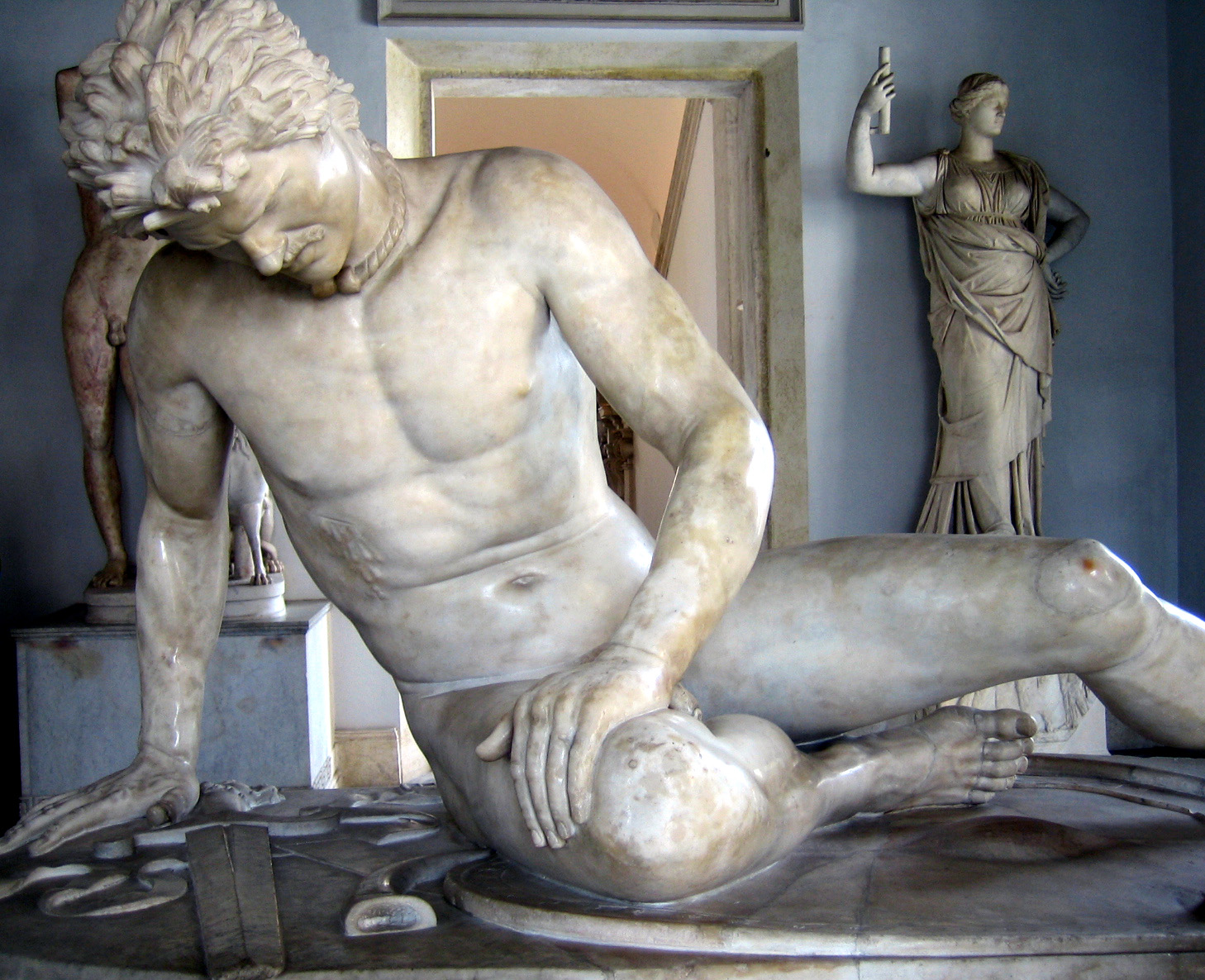
After the victory at the Caecus River, Attalus I adopted the surname Soter (lit. 'Savior') and officially received the title of King of Pergamon (basileus). The victory brought Attalus I fame, and he constructed monuments to his victory that were found by archaeologists centuries later. Even much later in his life, when he sent statues to Athens, he commissioned himself represented as in this battle.
One piece of interest was written by Pausanias. He recorded what was purportedly a prophecy of the sibyl Phaennis, written a generation before the battle, that predicted the battle and states as follows:
Then verily, having crossed the narrow strait of the Hellespont,
The devastating host of the Gauls shall pipe; and lawlessly
They shall ravage Asia; and much worse shall God do
To those who dwell by the shores of the sea
For a short while. For right soon the son of Cronos
Shall raise a helper, the dear son of a bull reared by Zeus
Who on all the Gauls shall bring a day of destruction.
Hub AI
Battle of the Caecus River AI simulator
(@Battle of the Caecus River_simulator)
Battle of the Caecus River
The Battle of the Caecus River or Battle of the Kaikos was a battle between an army of the Kingdom of Pergamon commanded by Attalus I, and the Galatian tribes who resided in Anatolia (Asia Minor). The battle took place near the source of the Caecus River (Ancient Greek: Κάϊκος, romanized: Káïkos) and resulted in a victory for the Kingdom of Pergamon.
The exact date of the battle is unknown, but it seems to have taken place early in the reign of Attalus I. Attalus I celebrated it as a great victory and as establishing his legitimacy as ruler early in his reign, and used it as a reason to dub himself Soter, Savior, and to take the title of basileus, king. R. E. Allen suggests the early 230s (238 to 235 BC) as the best guess of the date.
During the 3rd century BC, there was a large migration of Gauls towards Anatolia. After passing through Greece, they arrived in Asia Minor, where they survived by raiding the towns along the Mediterranean coast. Many of these towns fell under the protection or direct control of the Kingdom of Pergamon, whose king, Eumenes I, agreed to pay the Gauls tribute in return for their protection against the barbarians.
This situation changed with the ascendancy of Attalus I (believed to be the second cousin or the grandnephew of Eumenes I) in the year 241 BC. Attalus I decided against continuing the payment of tribute to the Gauls. Attalus I was the first Pergamene ruler who dared to go against this precedent. The stoppage of payment led to a military mobilization by both the Pergamenes and the Galatians, eventually leading to war between the two parties. Attalus I's reign began in 241 BC, giving the earliest possible date for this battle to have occurred.
There are few surviving references that detail the course of this battle. What is known is that the outcome resulted in a decisive victory for Attalus I and Pergamon.
After the victory at the Caecus River, Attalus I adopted the surname Soter (lit. 'Savior') and officially received the title of King of Pergamon (basileus). The victory brought Attalus I fame, and he constructed monuments to his victory that were found by archaeologists centuries later. Even much later in his life, when he sent statues to Athens, he commissioned himself represented as in this battle.
One piece of interest was written by Pausanias. He recorded what was purportedly a prophecy of the sibyl Phaennis, written a generation before the battle, that predicted the battle and states as follows:
Then verily, having crossed the narrow strait of the Hellespont,
The devastating host of the Gauls shall pipe; and lawlessly
They shall ravage Asia; and much worse shall God do
To those who dwell by the shores of the sea
For a short while. For right soon the son of Cronos
Shall raise a helper, the dear son of a bull reared by Zeus
Who on all the Gauls shall bring a day of destruction.