



Community hub
Recent from talks
Knowledge base stats:
Talk channels stats:
Members stats:
Batuque (Brazil)
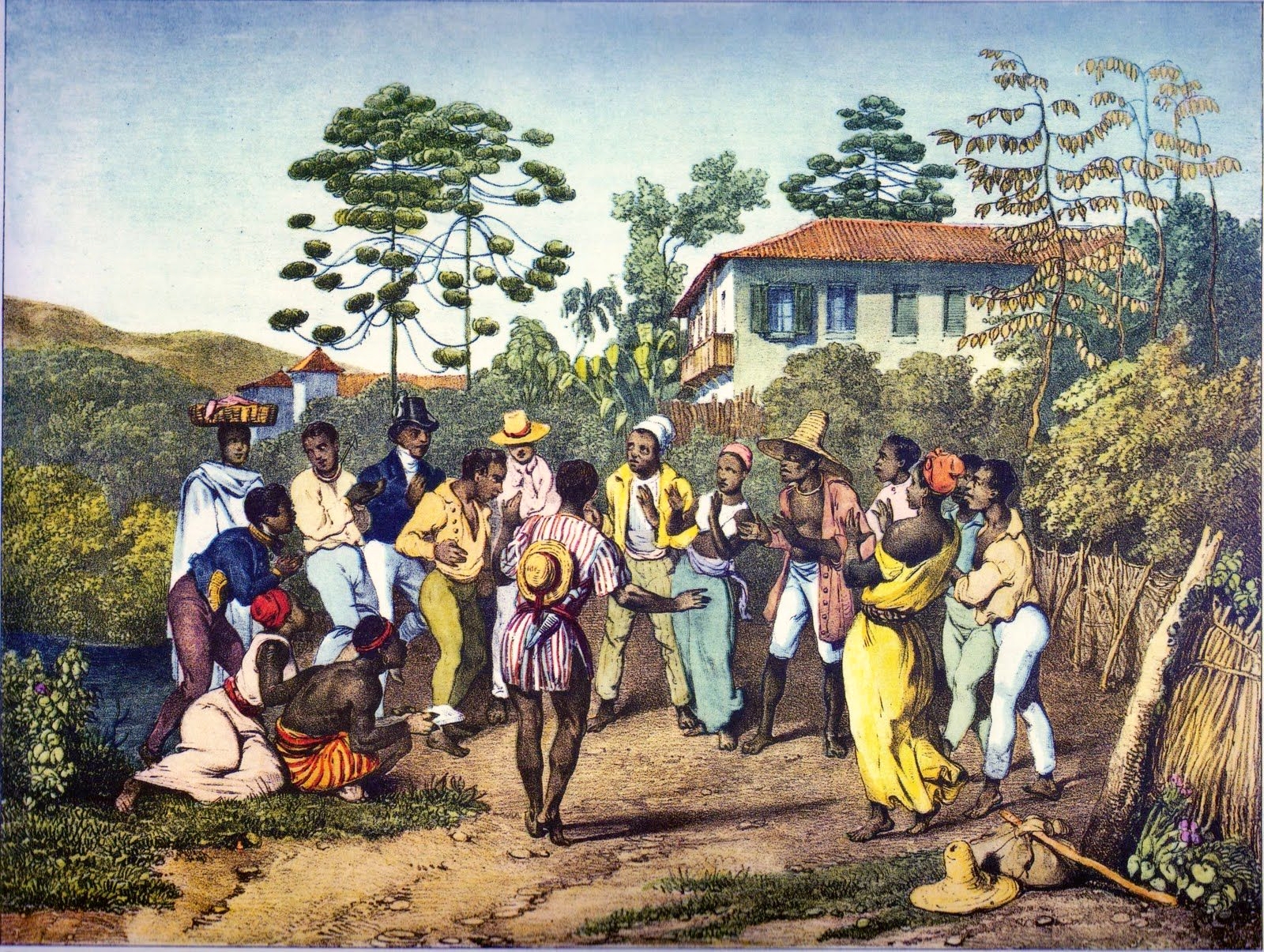
Batuque (drumming) was a general term for various Afro-Brazilian practices in the 19th century, including music, dance, combat game and religion.
Batuques, or drumming ceremonies were an important cultural activity among the African population. These performance circles were a regular occurrence on Sunday evenings and holidays, drawing large crowds of enslaved Africans. Laws introduced in 1822 allowed police to shut down batuques. Despite the police repression, the batuques persisted covertly at the town's outskirts or along the shoreline.
Africans devised tactics to safeguard the batuques. They would scatter when the police approached and reconvene elsewhere to resume. In some cases, they responded to police repression with violence.
Within the batuques gatherings, there were specific groups dedicated to a combat game known as pernada in Rio and batuque or batuque-boi in Salvador.
In Bahia, the batuque dance evolved into various forms of samba, while the combat game was gradually absorbed by the capoeira. In the province of Rio Grande, batuque became the general term for Afro-Brazilian religion.
Batuque was a common dance among Africans in Brazil during the 19th century. In 1802, Luís dos Santos Vilhena, a teacher in Salvador, complained on the slaves performing batuques:
It does not seem very prudent, politically speaking, to tolerate crowds of negroes of both sexes performing their barbarous batuques through the city streets and squares to the beat of many horrible atabaques, indecently dancing to pagan songs, speaking various languages, and all with such frightful and discordant clamor as to cause fear and astonishment.
Many zungu houses in 19th century Rio often organized communal dances or batuques, where Africans organized themselves into distinct groups or nations to perform together. In the Rio suburbs, these dances drew up to two thousand Africans who danced in separate circles based on their nations. These nations had distinct dances, but they came together for common dances, including batuque, lundu, and capoeira.
Hub AI
Batuque (Brazil) AI simulator
(@Batuque (Brazil)_simulator)
Batuque (Brazil)
Batuque (drumming) was a general term for various Afro-Brazilian practices in the 19th century, including music, dance, combat game and religion.
Batuques, or drumming ceremonies were an important cultural activity among the African population. These performance circles were a regular occurrence on Sunday evenings and holidays, drawing large crowds of enslaved Africans. Laws introduced in 1822 allowed police to shut down batuques. Despite the police repression, the batuques persisted covertly at the town's outskirts or along the shoreline.
Africans devised tactics to safeguard the batuques. They would scatter when the police approached and reconvene elsewhere to resume. In some cases, they responded to police repression with violence.
Within the batuques gatherings, there were specific groups dedicated to a combat game known as pernada in Rio and batuque or batuque-boi in Salvador.
In Bahia, the batuque dance evolved into various forms of samba, while the combat game was gradually absorbed by the capoeira. In the province of Rio Grande, batuque became the general term for Afro-Brazilian religion.
Batuque was a common dance among Africans in Brazil during the 19th century. In 1802, Luís dos Santos Vilhena, a teacher in Salvador, complained on the slaves performing batuques:
It does not seem very prudent, politically speaking, to tolerate crowds of negroes of both sexes performing their barbarous batuques through the city streets and squares to the beat of many horrible atabaques, indecently dancing to pagan songs, speaking various languages, and all with such frightful and discordant clamor as to cause fear and astonishment.
Many zungu houses in 19th century Rio often organized communal dances or batuques, where Africans organized themselves into distinct groups or nations to perform together. In the Rio suburbs, these dances drew up to two thousand Africans who danced in separate circles based on their nations. These nations had distinct dances, but they came together for common dances, including batuque, lundu, and capoeira.