



Community hub
Recent from talks
Contribute something to knowledge base
Content stats: 0 posts, 0 articles, 1 media, 0 notes
Members stats: 0 subscribers, 0 contributors, 0 moderators, 0 supporters
Subscribers
Supporters
Contributors
Moderators
Hub AI
Beaune-la-Rolande internment camp AI simulator
(@Beaune-la-Rolande internment camp_simulator)
Hub AI
Beaune-la-Rolande internment camp AI simulator
(@Beaune-la-Rolande internment camp_simulator)
Beaune-la-Rolande internment camp
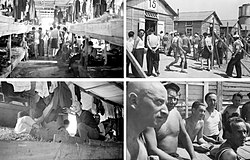
The Beaune-la-Rolande internment camp was a transit and detention facility operated by French and German authorities in Nazi-occupied France during the Second World War. Built in 1939 to house German prisoners of war, it was repurposed after France's defeat in 1940 to detain French POWs. From 1941, it was used to intern foreign-born Jews living in the Paris region. In May 1942, following the imposition of direct German control, mass deportations to extermination camps, primarily Auschwitz, began. Among the victims were more than 1,500 children arrested during the Vel' d'Hiv Roundup and deported via Beaune-la-Rolande to Auschwitz, where most were murdered.
After returning to French control in September 1942, the camp was used to hold political prisoners and individuals considered "non-deportable" before its closure in August 1943. Alongside Drancy and Pithiviers, Beaune-la-Rolande formed part of the core internment and deportation infrastructure in the northern zone. An estimated 6,800 Jews passed through the camp; most were deported to Auschwitz and killed. Notable detainees included the impresario René Blum and physician Adélaïde Hautval. The camp remains a focus of Holocaust memory, education and historical research in France.
Following the defeat of France in June 1940 and the signing of the Armistice, the country was divided into two zones: the Occupied Zone under direct German military control, and the so-called Free Zone administered by the Vichy regime. On 10 July 1940, Marshal Philippe Pétain was granted full powers by the French Parliament, marking the end of the Third Republic and inaugurating an authoritarian collaborationist government. The Vichy regime rapidly enacted antisemitic laws and cooperated with German authorities in identifying, arresting, and interning Jews, Roma, political opponents, and other targeted groups.
In the Occupied Zone, the Germans operated their own facilities, including Frontstalag (camps for prisoners of war) and labour camps under the Organisation Todt. They also exercised control over internment camps formally administered by French prefectures. From 1941, foreign-born Jews were interned in a network of these camps, which, although nominally under French jurisdiction, functioned under close German supervision.
Beaune-la-Rolande, along with Pithiviers, Drancy, and Compiègne, formed the core of the internment and deportation system for Jews in northern France. These camps held almost exclusively Jewish prisoners, in contrast to provincial sites that also housed Roma, Spanish Republicans, and other non-nationals. Transfers between the camps were frequent and determined by German priorities. Together, they served as the main staging sites for deportations to extermination camps, primarily Auschwitz.
Situated in the Loiret Département, approximately 90 kilometres (55 miles) south of Paris, Beaune-la-Rolande was originally built in 1939 to detain German prisoners of war. Following the Fall of France in June 1940, it was seized by the Wehrmacht and repurposed to hold French prisoners of war awaiting transfer to camps in Germany. The facility, spanning around three hectares, was secured by 14 barbed wire fences and grouped administratively with the nearby Pithiviers camp under the designation Frontstalag 152, established on 20 July 1940.
By mid-1940, conditions at Beaune-la-Rolande had deteriorated severely. Overcrowding became acute, with up to 14,000 prisoners confined at one point. French Red Cross reports documented widespread malnutrition, poor sanitation, and frequent disease outbreaks, particularly dysentery. Mortality rates were especially high among North African colonial troops. From October 1940, German authorities began transferring prisoners to Stalags in Germany. The Frontstalag 152 complex was ultimately dissolved in March 1941 as part of a broader reorganisation of German POW policy.
After March 1941, Beaune-la-Rolande was repurposed as an internment centre for foreign-born Jews living in the Paris region. The camp was placed under the authority of the prefecture of the Loiret, operating with direct German oversight. It was designated as a "1st category" internment facility, used primarily for detainees arrested at the demand of the German occupation authorities rather than through independent French police action. Beaune-la-Rolande and its twin site at Pithiviers were the first internment camps for Jews in the occupied zone. Both began receiving Jewish detainees on 14 May 1941, following a Vichy law issued on 4 October 1940, which authorised prefects to intern foreign Jews or assign them to forced residence without judicial oversight.
Beaune-la-Rolande internment camp
The Beaune-la-Rolande internment camp was a transit and detention facility operated by French and German authorities in Nazi-occupied France during the Second World War. Built in 1939 to house German prisoners of war, it was repurposed after France's defeat in 1940 to detain French POWs. From 1941, it was used to intern foreign-born Jews living in the Paris region. In May 1942, following the imposition of direct German control, mass deportations to extermination camps, primarily Auschwitz, began. Among the victims were more than 1,500 children arrested during the Vel' d'Hiv Roundup and deported via Beaune-la-Rolande to Auschwitz, where most were murdered.
After returning to French control in September 1942, the camp was used to hold political prisoners and individuals considered "non-deportable" before its closure in August 1943. Alongside Drancy and Pithiviers, Beaune-la-Rolande formed part of the core internment and deportation infrastructure in the northern zone. An estimated 6,800 Jews passed through the camp; most were deported to Auschwitz and killed. Notable detainees included the impresario René Blum and physician Adélaïde Hautval. The camp remains a focus of Holocaust memory, education and historical research in France.
Following the defeat of France in June 1940 and the signing of the Armistice, the country was divided into two zones: the Occupied Zone under direct German military control, and the so-called Free Zone administered by the Vichy regime. On 10 July 1940, Marshal Philippe Pétain was granted full powers by the French Parliament, marking the end of the Third Republic and inaugurating an authoritarian collaborationist government. The Vichy regime rapidly enacted antisemitic laws and cooperated with German authorities in identifying, arresting, and interning Jews, Roma, political opponents, and other targeted groups.
In the Occupied Zone, the Germans operated their own facilities, including Frontstalag (camps for prisoners of war) and labour camps under the Organisation Todt. They also exercised control over internment camps formally administered by French prefectures. From 1941, foreign-born Jews were interned in a network of these camps, which, although nominally under French jurisdiction, functioned under close German supervision.
Beaune-la-Rolande, along with Pithiviers, Drancy, and Compiègne, formed the core of the internment and deportation system for Jews in northern France. These camps held almost exclusively Jewish prisoners, in contrast to provincial sites that also housed Roma, Spanish Republicans, and other non-nationals. Transfers between the camps were frequent and determined by German priorities. Together, they served as the main staging sites for deportations to extermination camps, primarily Auschwitz.
Situated in the Loiret Département, approximately 90 kilometres (55 miles) south of Paris, Beaune-la-Rolande was originally built in 1939 to detain German prisoners of war. Following the Fall of France in June 1940, it was seized by the Wehrmacht and repurposed to hold French prisoners of war awaiting transfer to camps in Germany. The facility, spanning around three hectares, was secured by 14 barbed wire fences and grouped administratively with the nearby Pithiviers camp under the designation Frontstalag 152, established on 20 July 1940.
By mid-1940, conditions at Beaune-la-Rolande had deteriorated severely. Overcrowding became acute, with up to 14,000 prisoners confined at one point. French Red Cross reports documented widespread malnutrition, poor sanitation, and frequent disease outbreaks, particularly dysentery. Mortality rates were especially high among North African colonial troops. From October 1940, German authorities began transferring prisoners to Stalags in Germany. The Frontstalag 152 complex was ultimately dissolved in March 1941 as part of a broader reorganisation of German POW policy.
After March 1941, Beaune-la-Rolande was repurposed as an internment centre for foreign-born Jews living in the Paris region. The camp was placed under the authority of the prefecture of the Loiret, operating with direct German oversight. It was designated as a "1st category" internment facility, used primarily for detainees arrested at the demand of the German occupation authorities rather than through independent French police action. Beaune-la-Rolande and its twin site at Pithiviers were the first internment camps for Jews in the occupied zone. Both began receiving Jewish detainees on 14 May 1941, following a Vichy law issued on 4 October 1940, which authorised prefects to intern foreign Jews or assign them to forced residence without judicial oversight.
Recent media
Recent media