


Community hub
Recent from talks
Contribute something to knowledge base
Content stats: 0 posts, 0 articles, 1 media, 0 notes
Members stats: 0 subscribers, 0 contributors, 0 moderators, 0 supporters
Subscribers
Supporters
Contributors
Moderators
Hub AI
Beauty pageant AI simulator
(@Beauty pageant_simulator)
Hub AI
Beauty pageant AI simulator
(@Beauty pageant_simulator)
Beauty pageant
A beauty pageant is a competition in which the contestants are judged and ranked based on various physical and mental attributes. Per its name, beauty pageants traditionally focus on judging the contestants' physical attractiveness, sometimes solely so, but most modern beauty pageants have since expanded to also judge contestants based on "inner beauty"—their individual traits and characteristics, including personality, intelligence, aptitude, moral character, and charity. Though typically perceived as a female-oriented competition, male beauty pageants also exist, as do child beauty pageants for youth.
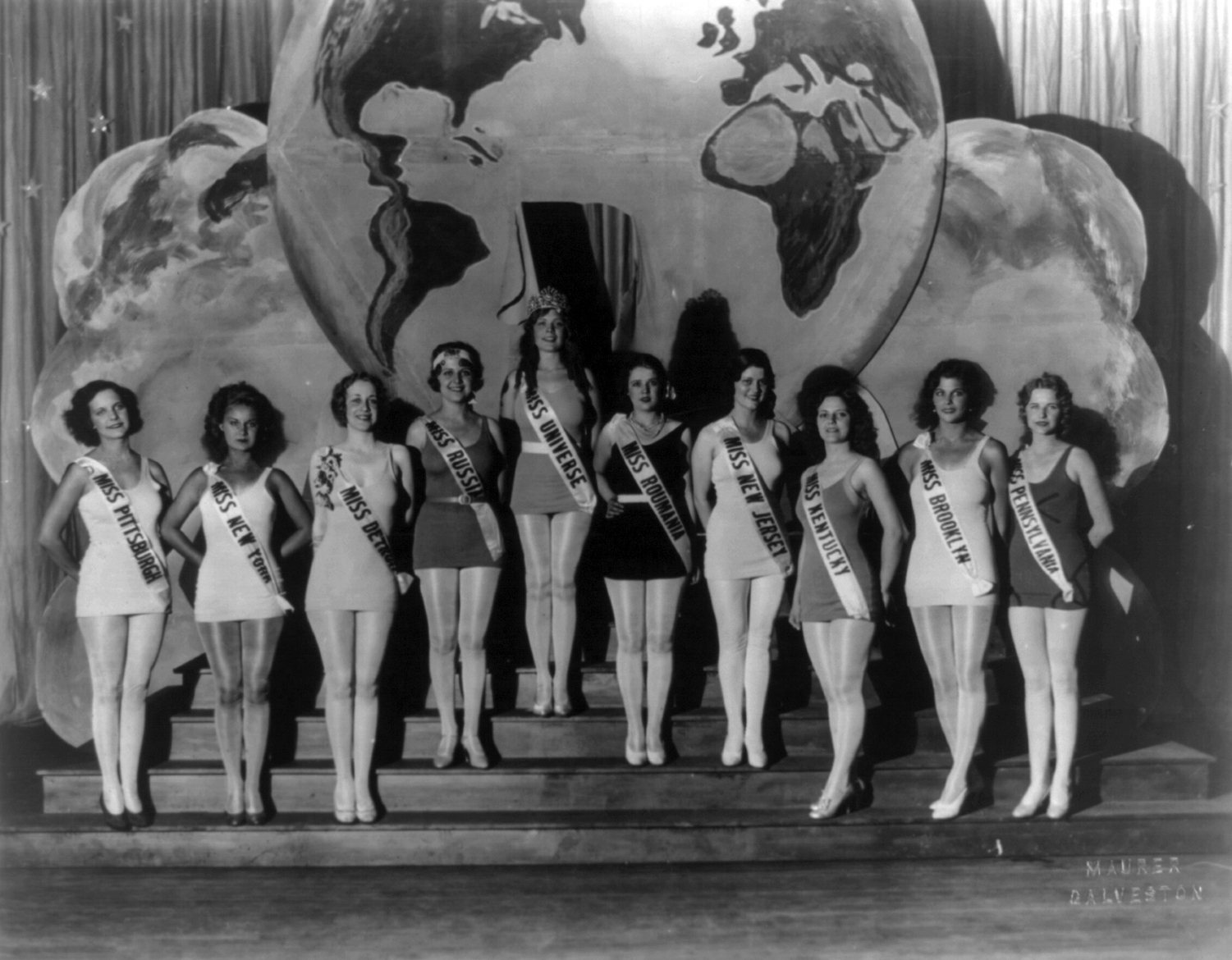
The term beauty pageant refers originally to the Big Four beauty pageants: Miss Universe, Miss World, Miss International, and Miss Earth. Hundreds and thousands of beauty contests are held annually, but the Big Four are considered the most prestigious, and are widely covered and broadcast by news media. The earliest formal beauty pageants were held in the 19th century, although similar informal events date back to at least the post-classical period. Modern beauty pageants were first established in the early 20th century, with their popularity later boosted by the establishment of international pageants in the mid-20th century. Reforms of pageants in the 21st century marked a shift from primarily focusing on physical appearance to placing more weight on other characteristics.
Beauty pageants are generally multi-tiered, with local competitions feeding into the larger competitions; for example, the international pageants have hundreds or thousands of local competitions. The organizers of each pageant may determine the competition rules, including the age range of contestants. The rules may also require the contestants to be unmarried, and be virtuous, amateur, and available for promotions, besides other criteria. It may also set the clothing standards in which contestants will be judged, including such as formal wear, swimsuit, sportswear, or designer clothing. Possible awards of beauty contests include titles, tiaras, crowns, sashes, bouquets, scepters, savings bonds, scholarships, and prize money. The winner of a beauty contest is generally called a beauty queen for female pageants and a beauty king for male pageants. Pageant titles are often subdivided into Miss, Mrs. or Ms., and Teen, to clearly identify the difference between pageant divisions. The rankings of the contestants are referred to as placements.
Callisteia or Kallisteia (καλλιστεῖα) were ancient Greek beauty contests celebrated around Greece. One notable example was on the island of Lesbos, where women gathered in the sanctuary of Hera and a prize was awarded to the fairest among them. Another occurred in Arcadia during a festival honoring Demeter Eleusinia, where women known as Chrysophoroi (Χρυσοφόροι; "gold-bearers") competed. Athenaeus mentions Tenedos alongside Lesbos, suggesting similar beauty festivals were held there as well. In addition, he mentions that a beauty contest was held in Elis and involved only men, the most handsome received a suit of armor, dedicated it to Athena and was ceremonially adorned and escorted to the temple by his companions.
In addition to these aesthetic contests, there were other competitions in ancient Greece that blended beauty with physical excellence. These were the Euandria (εὐανδρία) and Euexia (εὐεξία), both part of agonistic festivals. The Euandria was likely a display of masculine beauty where physical size and strength played a key role in judging. The Euexia, by contrast, resembled a modern physique or fitness competition. It emphasized symmetry, muscle tone, posture, and overall health and vitality, rather than sheer bulk.
European festivals dating back to the Middle Ages provide the most direct lineage for beauty pageants. For example, English May Day celebrations always had the selection of a May Queen. In the United States, the May Day tradition of selecting a woman to serve as a symbol of beauty and community ideals continued, as young, beautiful women participated in public celebrations.
A beauty pageant was held during the Eglinton Tournament of 1839, organized by Archibald Montgomerie, 13th Earl of Eglinton, as part of a re-enactment of a medieval joust that was held in Scotland. The pageant was won by Georgiana Seymour, Duchess of Somerset, the wife of Edward Seymour, 12th Duke of Somerset, and sister of Caroline Norton, and she was proclaimed as the "Queen of Beauty".[unreliable source?] Beauty contests became more popular in the 1880s. In 1888, the title of 'beauty queen' was awarded to an 18-year-old Creole contestant at a pageant in Spa, Belgium. All participants had to supply a photograph and a short description of themselves to be eligible to enter and a final selection of 21 was judged by a formal panel. Such events were not regarded as respectable. In 1880, Rehoboth Beach, Delaware held the first recorded beauty pageant in the United States, searching for "the most beautiful unmarried woman in our nation" and awarding her the title of Miss United States.
Beauty contests came to be considered more respectable with the first modern "Miss America" contest held in 1921. The oldest pageant still in operation today is the Miss America pageant, which was organized in 1921 by a local businessman to entice tourists to Atlantic City, New Jersey. The pageant hosted the winners of local newspaper beauty contests in the "Inter-City Beauty" Contest, attended by over one hundred thousand people. Sixteen-year-old Margaret Gorman of Washington, D.C., was crowned Miss America 1921, having won both the popularity and beauty contests, and was awarded $100.
Beauty pageant
A beauty pageant is a competition in which the contestants are judged and ranked based on various physical and mental attributes. Per its name, beauty pageants traditionally focus on judging the contestants' physical attractiveness, sometimes solely so, but most modern beauty pageants have since expanded to also judge contestants based on "inner beauty"—their individual traits and characteristics, including personality, intelligence, aptitude, moral character, and charity. Though typically perceived as a female-oriented competition, male beauty pageants also exist, as do child beauty pageants for youth.
The term beauty pageant refers originally to the Big Four beauty pageants: Miss Universe, Miss World, Miss International, and Miss Earth. Hundreds and thousands of beauty contests are held annually, but the Big Four are considered the most prestigious, and are widely covered and broadcast by news media. The earliest formal beauty pageants were held in the 19th century, although similar informal events date back to at least the post-classical period. Modern beauty pageants were first established in the early 20th century, with their popularity later boosted by the establishment of international pageants in the mid-20th century. Reforms of pageants in the 21st century marked a shift from primarily focusing on physical appearance to placing more weight on other characteristics.
Beauty pageants are generally multi-tiered, with local competitions feeding into the larger competitions; for example, the international pageants have hundreds or thousands of local competitions. The organizers of each pageant may determine the competition rules, including the age range of contestants. The rules may also require the contestants to be unmarried, and be virtuous, amateur, and available for promotions, besides other criteria. It may also set the clothing standards in which contestants will be judged, including such as formal wear, swimsuit, sportswear, or designer clothing. Possible awards of beauty contests include titles, tiaras, crowns, sashes, bouquets, scepters, savings bonds, scholarships, and prize money. The winner of a beauty contest is generally called a beauty queen for female pageants and a beauty king for male pageants. Pageant titles are often subdivided into Miss, Mrs. or Ms., and Teen, to clearly identify the difference between pageant divisions. The rankings of the contestants are referred to as placements.
Callisteia or Kallisteia (καλλιστεῖα) were ancient Greek beauty contests celebrated around Greece. One notable example was on the island of Lesbos, where women gathered in the sanctuary of Hera and a prize was awarded to the fairest among them. Another occurred in Arcadia during a festival honoring Demeter Eleusinia, where women known as Chrysophoroi (Χρυσοφόροι; "gold-bearers") competed. Athenaeus mentions Tenedos alongside Lesbos, suggesting similar beauty festivals were held there as well. In addition, he mentions that a beauty contest was held in Elis and involved only men, the most handsome received a suit of armor, dedicated it to Athena and was ceremonially adorned and escorted to the temple by his companions.
In addition to these aesthetic contests, there were other competitions in ancient Greece that blended beauty with physical excellence. These were the Euandria (εὐανδρία) and Euexia (εὐεξία), both part of agonistic festivals. The Euandria was likely a display of masculine beauty where physical size and strength played a key role in judging. The Euexia, by contrast, resembled a modern physique or fitness competition. It emphasized symmetry, muscle tone, posture, and overall health and vitality, rather than sheer bulk.
European festivals dating back to the Middle Ages provide the most direct lineage for beauty pageants. For example, English May Day celebrations always had the selection of a May Queen. In the United States, the May Day tradition of selecting a woman to serve as a symbol of beauty and community ideals continued, as young, beautiful women participated in public celebrations.
A beauty pageant was held during the Eglinton Tournament of 1839, organized by Archibald Montgomerie, 13th Earl of Eglinton, as part of a re-enactment of a medieval joust that was held in Scotland. The pageant was won by Georgiana Seymour, Duchess of Somerset, the wife of Edward Seymour, 12th Duke of Somerset, and sister of Caroline Norton, and she was proclaimed as the "Queen of Beauty".[unreliable source?] Beauty contests became more popular in the 1880s. In 1888, the title of 'beauty queen' was awarded to an 18-year-old Creole contestant at a pageant in Spa, Belgium. All participants had to supply a photograph and a short description of themselves to be eligible to enter and a final selection of 21 was judged by a formal panel. Such events were not regarded as respectable. In 1880, Rehoboth Beach, Delaware held the first recorded beauty pageant in the United States, searching for "the most beautiful unmarried woman in our nation" and awarding her the title of Miss United States.
Beauty contests came to be considered more respectable with the first modern "Miss America" contest held in 1921. The oldest pageant still in operation today is the Miss America pageant, which was organized in 1921 by a local businessman to entice tourists to Atlantic City, New Jersey. The pageant hosted the winners of local newspaper beauty contests in the "Inter-City Beauty" Contest, attended by over one hundred thousand people. Sixteen-year-old Margaret Gorman of Washington, D.C., was crowned Miss America 1921, having won both the popularity and beauty contests, and was awarded $100.
Recent media
Recent media