
Recent from talks
Ben Het Camp
Knowledge base stats:
Talk channels stats:
Members stats:
Ben Het Camp
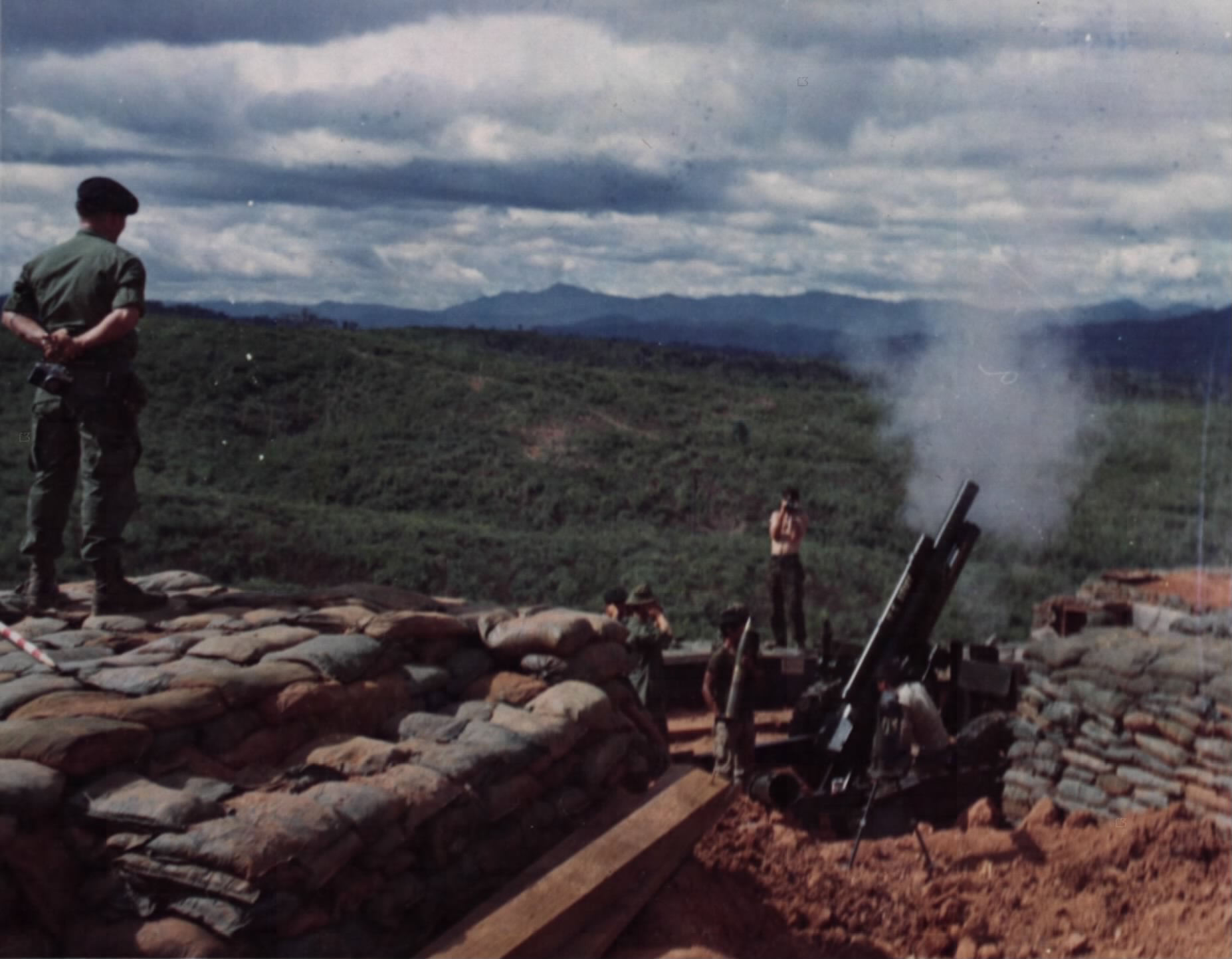
Ben Het Camp (also known as Ben Het Special Forces Camp, Ben Het SF/CIDG Camp, Ben Het Ranger Camp, FSB Ben Het and Firebase 12) is a former U.S. Army and Army of the Republic of Vietnam (ARVN) base in western Kon Tum Province in the Central Highlands of Vietnam. The camp was notable for being the site of a tank battle between the U.S. Army and the People's Army of Vietnam (PAVN), one of the few such encounters during the Vietnam War.
The 5th Special Forces Group Detachment A-244 first established a base at Ben Het, then a hill tribe village, in the early 1960s to monitor North Vietnamese infiltration along the Ho Chi Minh Trail. The base was located approximately 13 km from the Vietnam-Laos-Cambodia tri-border area, 15 km northwest of Đắk Tô and 53 km northwest of Kon Tum.
On 29 August 1967, in preparation for the construction of an airfield west of Dak To, Co C, 299th Engineer Battalion (Combat) and the 15th Engineer Company (LE) (-) moved from Pleiku to old Dak To Airfield.
On 22 October 1967, Company C, 299th Engineer Battalion moved to the Ben Het area to build a proposed basecamp with a firebase complex and a Type II, C-7 capable airfield with provision for expansion to accommodate C-130s.
On 3 November, the 4th Battalion, 503d Infantry, 173rd Airborne Brigade was moved to Ben Het. On 6 November Company C engineers began providing direct support to the 503rd colocated with them. Bulldozer support was provided on the average of one per day to excavate defensive positions, living bunkers, a tactical operations center and 8" and 155mm gun positions. C Company later improved Route 512 from Đắk Tô Base Camp to Ben Het and maintained the C-130 airstrip at Dak To 2. Company C finished the basecamp on 31 January 1968. The requirement to upgrade the Ben Het airfield to a C-130 capacity was rescinded by MACV in December, 1967. The engineers left Ben Het and returned to their home base in Pleiku on 3 Feb 1968, as the Tet Offensive came to a close, and undertook projects in the area.
In November 1968, a helicopter pilot from the 7th Squadron, 17th Cavalry Regiment reported four unidentified tanks west of the camp, but the report was never confirmed. The U.S. 4th Infantry Division had other reports of PAVN tanks in the area.
By early 1969, there were about 440 Civilian Irregular Defense Group (CIDG) personnel, 511 ARVN soldiers, 207 Artillery troops and 25 US Advisors at Ben Het. Free world forces at Ben Het included three Vietnamese infantry companies and their Special Forces advisers, two M42A1 Duster self-propelled anti-aircraft guns and an artillery battery of M107 self-propelled guns. To counter a buildup of PAVN forces in the area, a unit of the 1st Battalion, 69th Armor Regiment, equipped with four M48 Patton tanks was sent to reinforce the camp. Three of the four tanks took up dug-in positions on a hill facing west towards Cambodia, while the last tank occupied a firing position in the main camp overlooking the resupply route.
Throughout February the PAVN attacked the camp by fire. The shelling decreased at the beginning of March, but at 21:00 on 3 March the PAVN shelling began again and men of the 1/69th Armor heard the sound of tank engines coming from the west. A PT-76 of the PAVN 16th Company, 4th Battalion, 202nd Armored Regiment detonated an antitank mine 1,100 meters to the southwest of the base, which alerted the camp and lit up the other PT-76s attacking the base. Flares were sent up, exposing the attacking tanks, but by sighting in on muzzle flashes, one PT-76 scored a direct hit on the turret of an M48, killing two crewmen and wounding the other two. Another M48, using the same technique, destroyed a PT-76 with their second shot. At daybreak, the battlefield revealed the wreckage of two PT-76s and one BTR-50 armored personnel carrier but no PAVN dead. Intelligence later revealed that the main object of the attack was to destroy the M107 guns.
Hub AI
Ben Het Camp AI simulator
(@Ben Het Camp_simulator)
Ben Het Camp
Ben Het Camp (also known as Ben Het Special Forces Camp, Ben Het SF/CIDG Camp, Ben Het Ranger Camp, FSB Ben Het and Firebase 12) is a former U.S. Army and Army of the Republic of Vietnam (ARVN) base in western Kon Tum Province in the Central Highlands of Vietnam. The camp was notable for being the site of a tank battle between the U.S. Army and the People's Army of Vietnam (PAVN), one of the few such encounters during the Vietnam War.
The 5th Special Forces Group Detachment A-244 first established a base at Ben Het, then a hill tribe village, in the early 1960s to monitor North Vietnamese infiltration along the Ho Chi Minh Trail. The base was located approximately 13 km from the Vietnam-Laos-Cambodia tri-border area, 15 km northwest of Đắk Tô and 53 km northwest of Kon Tum.
On 29 August 1967, in preparation for the construction of an airfield west of Dak To, Co C, 299th Engineer Battalion (Combat) and the 15th Engineer Company (LE) (-) moved from Pleiku to old Dak To Airfield.
On 22 October 1967, Company C, 299th Engineer Battalion moved to the Ben Het area to build a proposed basecamp with a firebase complex and a Type II, C-7 capable airfield with provision for expansion to accommodate C-130s.
On 3 November, the 4th Battalion, 503d Infantry, 173rd Airborne Brigade was moved to Ben Het. On 6 November Company C engineers began providing direct support to the 503rd colocated with them. Bulldozer support was provided on the average of one per day to excavate defensive positions, living bunkers, a tactical operations center and 8" and 155mm gun positions. C Company later improved Route 512 from Đắk Tô Base Camp to Ben Het and maintained the C-130 airstrip at Dak To 2. Company C finished the basecamp on 31 January 1968. The requirement to upgrade the Ben Het airfield to a C-130 capacity was rescinded by MACV in December, 1967. The engineers left Ben Het and returned to their home base in Pleiku on 3 Feb 1968, as the Tet Offensive came to a close, and undertook projects in the area.
In November 1968, a helicopter pilot from the 7th Squadron, 17th Cavalry Regiment reported four unidentified tanks west of the camp, but the report was never confirmed. The U.S. 4th Infantry Division had other reports of PAVN tanks in the area.
By early 1969, there were about 440 Civilian Irregular Defense Group (CIDG) personnel, 511 ARVN soldiers, 207 Artillery troops and 25 US Advisors at Ben Het. Free world forces at Ben Het included three Vietnamese infantry companies and their Special Forces advisers, two M42A1 Duster self-propelled anti-aircraft guns and an artillery battery of M107 self-propelled guns. To counter a buildup of PAVN forces in the area, a unit of the 1st Battalion, 69th Armor Regiment, equipped with four M48 Patton tanks was sent to reinforce the camp. Three of the four tanks took up dug-in positions on a hill facing west towards Cambodia, while the last tank occupied a firing position in the main camp overlooking the resupply route.
Throughout February the PAVN attacked the camp by fire. The shelling decreased at the beginning of March, but at 21:00 on 3 March the PAVN shelling began again and men of the 1/69th Armor heard the sound of tank engines coming from the west. A PT-76 of the PAVN 16th Company, 4th Battalion, 202nd Armored Regiment detonated an antitank mine 1,100 meters to the southwest of the base, which alerted the camp and lit up the other PT-76s attacking the base. Flares were sent up, exposing the attacking tanks, but by sighting in on muzzle flashes, one PT-76 scored a direct hit on the turret of an M48, killing two crewmen and wounding the other two. Another M48, using the same technique, destroyed a PT-76 with their second shot. At daybreak, the battlefield revealed the wreckage of two PT-76s and one BTR-50 armored personnel carrier but no PAVN dead. Intelligence later revealed that the main object of the attack was to destroy the M107 guns.
Recent media