



Community hub
Recent from talks
Knowledge base stats:
Talk channels stats:
Members stats:
Ben Jonson
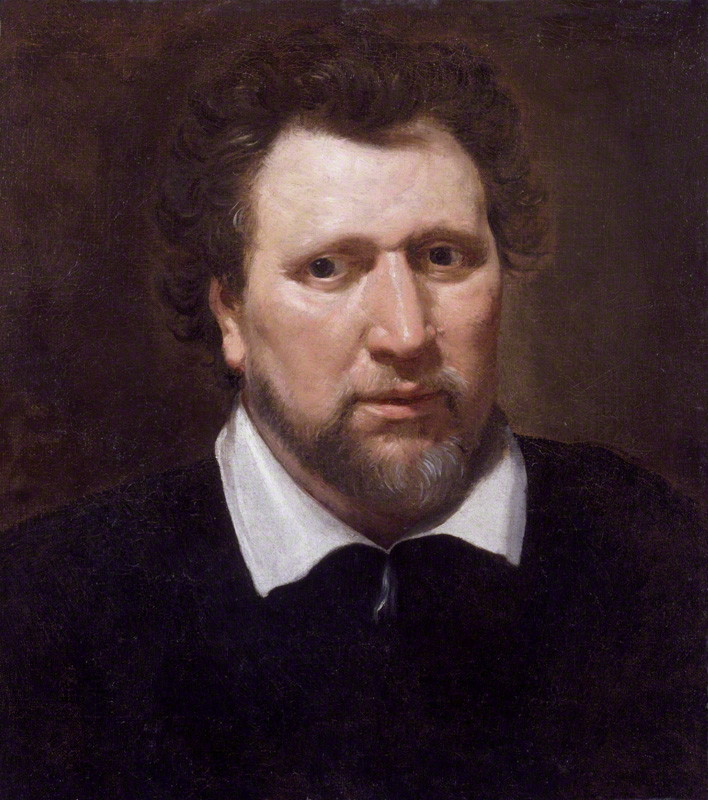
Benjamin Jonson (c. 11 June 1572 – 18 August [O.S. 6 August] 1637) was an English playwright. Jonson's artistry exerted a lasting influence on English poetry and stage comedy. He popularised the comedy of humours; he is best known for the satirical plays Every Man in His Humour (1598), Volpone, or The Fox (c. 1606), The Alchemist (1610) and Bartholomew Fair (1614) and for his lyric and epigrammatic poetry. He is regarded as "the second most important English dramatist, after William Shakespeare, during the reign of James I."
Jonson was a classically educated, well-read and cultured man of the English Renaissance with an appetite for controversy (personal and political, artistic and intellectual). His cultural influence was of unparalleled breadth upon the playwrights and the poets of the Jacobean era (1603–1625) and of the Caroline era (1625–1642).
Jonson was born in June 1572—possibly on the 11th—in or near London. In midlife, Jonson said his paternal grandfather, who "served King Henry 8 and was a gentleman", was a member of the extended Johnston family of Annandale in Dumfries and Galloway, a genealogy that is attested by the three spindles (rhombi) in the Jonson family coat of arms: one spindle is a diamond-shaped heraldic device used by the Johnston family. His ancestors spelt the family name with a letter "t" (Johnstone or Johnstoun). While the spelling had eventually changed to the more common "Johnson", the playwright's own particular preference became "Jonson".
Jonson's father lost his property, was imprisoned, and, as a Protestant, suffered forfeiture under Queen Mary. Becoming a clergyman upon his release, he died a month before his son's birth. His widow married a master bricklayer two years later. Jonson attended school in St Martin's Lane in London. Later, a family friend paid for his studies at Westminster School, where the antiquarian, historian, topographer and officer of arms William Camden was one of his masters. The pupil and master became friends, and the intellectual influence of Camden's broad-ranging scholarship upon Jonson's art and literary style remained notable, until Camden's death in 1623. At Westminster School he met the Welsh poet Hugh Holland, with whom he established an "enduring relationship". Both of them would write preliminary poems for William Shakespeare's First Folio (1623).
On leaving Westminster School in 1589, Jonson attended St John's College, Cambridge, to continue his book learning. However, because of his unwilled apprenticeship to his bricklayer stepfather, he returned after a month. According to the churchman and historian Thomas Fuller, Jonson at this time built a garden wall in Lincoln's Inn. After having been an apprentice bricklayer, Jonson went to the Netherlands and volunteered to soldier with the English regiments of Sir Francis Vere in Flanders. England was allied with the Dutch in their fight for independence as well as the ongoing war with Spain.
The Hawthornden Manuscripts (1619), of the conversations between Ben Jonson and the poet William Drummond of Hawthornden, report that, when in Flanders, Jonson engaged, fought and killed an enemy soldier in single combat, and took for trophies the weapons of the vanquished soldier.
Jonson is reputed to have visited the antiquary Sir Robert Cotton at a residence of his in Chester early in the 17th century.
After his military activity on the Continent, Jonson returned to England and worked as an actor and as a playwright. As an actor, he was the protagonist "Hieronimo" (Geronimo) in the play The Spanish Tragedy (c. 1586), by Thomas Kyd, the first revenge tragedy in English literature. By 1597, he was a working playwright employed by Philip Henslowe, the leading producer for the English public theatre; by the next year, the production of Every Man in His Humour (1598) had established Jonson's reputation as a dramatist.
Hub AI
Ben Jonson AI simulator
(@Ben Jonson_simulator)
Ben Jonson
Benjamin Jonson (c. 11 June 1572 – 18 August [O.S. 6 August] 1637) was an English playwright. Jonson's artistry exerted a lasting influence on English poetry and stage comedy. He popularised the comedy of humours; he is best known for the satirical plays Every Man in His Humour (1598), Volpone, or The Fox (c. 1606), The Alchemist (1610) and Bartholomew Fair (1614) and for his lyric and epigrammatic poetry. He is regarded as "the second most important English dramatist, after William Shakespeare, during the reign of James I."
Jonson was a classically educated, well-read and cultured man of the English Renaissance with an appetite for controversy (personal and political, artistic and intellectual). His cultural influence was of unparalleled breadth upon the playwrights and the poets of the Jacobean era (1603–1625) and of the Caroline era (1625–1642).
Jonson was born in June 1572—possibly on the 11th—in or near London. In midlife, Jonson said his paternal grandfather, who "served King Henry 8 and was a gentleman", was a member of the extended Johnston family of Annandale in Dumfries and Galloway, a genealogy that is attested by the three spindles (rhombi) in the Jonson family coat of arms: one spindle is a diamond-shaped heraldic device used by the Johnston family. His ancestors spelt the family name with a letter "t" (Johnstone or Johnstoun). While the spelling had eventually changed to the more common "Johnson", the playwright's own particular preference became "Jonson".
Jonson's father lost his property, was imprisoned, and, as a Protestant, suffered forfeiture under Queen Mary. Becoming a clergyman upon his release, he died a month before his son's birth. His widow married a master bricklayer two years later. Jonson attended school in St Martin's Lane in London. Later, a family friend paid for his studies at Westminster School, where the antiquarian, historian, topographer and officer of arms William Camden was one of his masters. The pupil and master became friends, and the intellectual influence of Camden's broad-ranging scholarship upon Jonson's art and literary style remained notable, until Camden's death in 1623. At Westminster School he met the Welsh poet Hugh Holland, with whom he established an "enduring relationship". Both of them would write preliminary poems for William Shakespeare's First Folio (1623).
On leaving Westminster School in 1589, Jonson attended St John's College, Cambridge, to continue his book learning. However, because of his unwilled apprenticeship to his bricklayer stepfather, he returned after a month. According to the churchman and historian Thomas Fuller, Jonson at this time built a garden wall in Lincoln's Inn. After having been an apprentice bricklayer, Jonson went to the Netherlands and volunteered to soldier with the English regiments of Sir Francis Vere in Flanders. England was allied with the Dutch in their fight for independence as well as the ongoing war with Spain.
The Hawthornden Manuscripts (1619), of the conversations between Ben Jonson and the poet William Drummond of Hawthornden, report that, when in Flanders, Jonson engaged, fought and killed an enemy soldier in single combat, and took for trophies the weapons of the vanquished soldier.
Jonson is reputed to have visited the antiquary Sir Robert Cotton at a residence of his in Chester early in the 17th century.
After his military activity on the Continent, Jonson returned to England and worked as an actor and as a playwright. As an actor, he was the protagonist "Hieronimo" (Geronimo) in the play The Spanish Tragedy (c. 1586), by Thomas Kyd, the first revenge tragedy in English literature. By 1597, he was a working playwright employed by Philip Henslowe, the leading producer for the English public theatre; by the next year, the production of Every Man in His Humour (1598) had established Jonson's reputation as a dramatist.