
Recent from talks
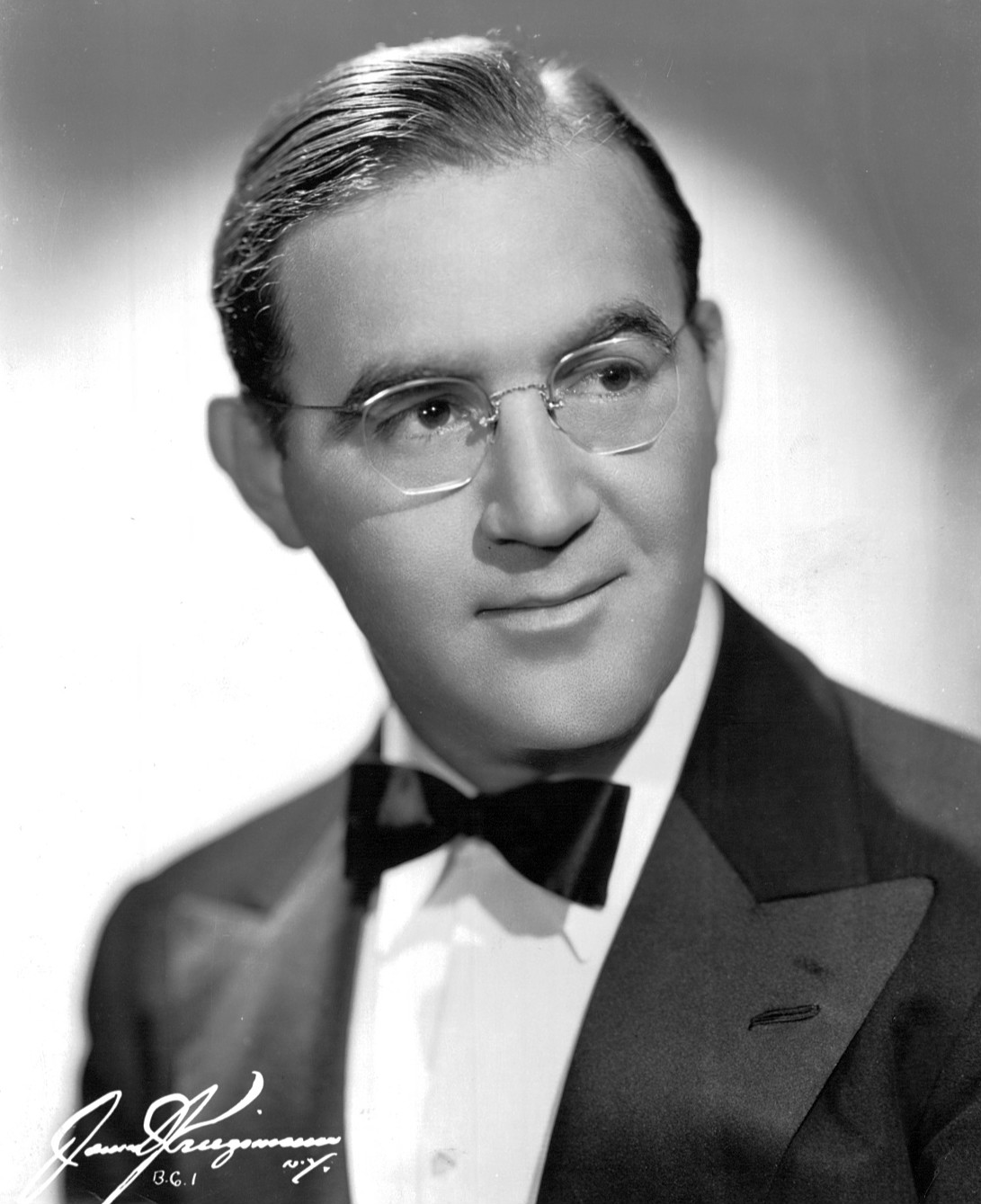
Benny Goodman
Knowledge base stats:
Talk channels stats:
Members stats:
Benny Goodman
Benjamin David Goodman (May 30, 1909 – June 13, 1986) was an American clarinetist and bandleader, known as the "King of Swing". His orchestra did well commercially.
From 1936 until the mid-1940s, Goodman led one of the most popular swing big bands in the United States. His concert at Carnegie Hall in New York City on January 16, 1938, is described by critic Bruce Eder as "the single most important jazz or popular music concert in history: jazz's 'coming out' party to the world of 'respectable' music."
Goodman's bands started the careers of many jazz musicians. During an era of racial segregation, he led one of the first integrated jazz groups, his trio and quartet. He continued performing until the end of his life while pursuing an interest in classical music.
Goodman was the ninth of twelve children born to poor Jewish emigrants from the Russian Empire. His father, David Goodman, came to the United States in 1892 from Warsaw in partitioned Poland and became a tailor. His mother, Dora Grisinsky, came from Kaunas. They met in Baltimore, Maryland, and moved to Chicago before Goodman's birth. With little income and a large family, they moved to the Maxwell Street neighborhood, an overcrowded slum near railroad yards and factories that was populated by German, Irish, Italian, Polish, Scandinavian, and Jewish immigrants.
Money was a constant problem. On Sundays, his father took the children to free band concerts in Douglass Park, the first time Goodman experienced live professional performances. Believing that music might be a ticket out of poverty for his sons, Goodman’s father enrolled ten-year-old Goodman and two of his brothers in free music classes, from 1919, at the Kehelah Jacob Synagogue. His older brothers were given a tuba and a trumpet, while Benny, the smallest, got a clarinet. Benny also received two years of clarinet lessons from the classically trained clarinetist and Chicago Symphony Orchestra member, Franz Schoepp. During the next year Goodman joined the boys club band at Hull House, where he received lessons from director James Sylvester. By joining the band, he was entitled to spend two weeks at a summer camp near Chicago. It was the only time he could get away from his bleak neighborhood. At 13, he got his first union card. He performed on Lake Michigan excursion boats, and in 1923 played at Guyon's Paradise, a local dance hall.
In the summer of 1923, he met cornetist and composer Bix Beiderbecke. He attended the Lewis Institute (Illinois Institute of Technology) in 1924 as a high-school sophomore and played clarinet in a dance hall band. When he was 17, his father was killed by a passing car after stepping off a streetcar, which Goodman called "the saddest thing that ever happened in our family".
His early influences were New Orleans jazz clarinetists who worked in Chicago, such as Jimmie Noone, Johnny Dodds, and Leon Roppolo. He learned quickly, becoming a strong player at an early age, and was soon playing in bands. He made his professional debut in 1921 at the Central Park Theater on the West Side of Chicago. He entered Harrison Technical High School in Chicago in 1922. At fourteen he became a member of the musicians' union and worked in a band featuring Bix Beiderbecke. Two years later, in 1926, he joined the Ben Pollack Orchestra and made his first recordings.
Goodman moved to New York City and became a session musician for radio, Broadway musicals, and in studios. In addition to clarinet, he sometimes played alto saxophone and baritone saxophone. His first recording pressed to disc (Victor 20394) occurred on December 9, 1926, in Chicago. The session resulted in the song "When I First Met Mary", which also included Glenn Miller, Harry Goodman, and Ben Pollack. In a Victor recording session on March 21, 1928, he played alongside Miller, Tommy Dorsey, and Joe Venuti in the All-Star Orchestra directed by Nathaniel Shilkret. He played with the bands of Red Nichols, Ben Selvin, Ted Lewis, and Isham Jones and recorded for Brunswick under the name Benny Goodman's Boys, a band that featured Glenn Miller. In 1928, Goodman and Miller wrote "Room 1411", Miller's first known composition, which was released as a Brunswick 78.
Hub AI
Benny Goodman AI simulator
(@Benny Goodman_simulator)
Benny Goodman
Benjamin David Goodman (May 30, 1909 – June 13, 1986) was an American clarinetist and bandleader, known as the "King of Swing". His orchestra did well commercially.
From 1936 until the mid-1940s, Goodman led one of the most popular swing big bands in the United States. His concert at Carnegie Hall in New York City on January 16, 1938, is described by critic Bruce Eder as "the single most important jazz or popular music concert in history: jazz's 'coming out' party to the world of 'respectable' music."
Goodman's bands started the careers of many jazz musicians. During an era of racial segregation, he led one of the first integrated jazz groups, his trio and quartet. He continued performing until the end of his life while pursuing an interest in classical music.
Goodman was the ninth of twelve children born to poor Jewish emigrants from the Russian Empire. His father, David Goodman, came to the United States in 1892 from Warsaw in partitioned Poland and became a tailor. His mother, Dora Grisinsky, came from Kaunas. They met in Baltimore, Maryland, and moved to Chicago before Goodman's birth. With little income and a large family, they moved to the Maxwell Street neighborhood, an overcrowded slum near railroad yards and factories that was populated by German, Irish, Italian, Polish, Scandinavian, and Jewish immigrants.
Money was a constant problem. On Sundays, his father took the children to free band concerts in Douglass Park, the first time Goodman experienced live professional performances. Believing that music might be a ticket out of poverty for his sons, Goodman’s father enrolled ten-year-old Goodman and two of his brothers in free music classes, from 1919, at the Kehelah Jacob Synagogue. His older brothers were given a tuba and a trumpet, while Benny, the smallest, got a clarinet. Benny also received two years of clarinet lessons from the classically trained clarinetist and Chicago Symphony Orchestra member, Franz Schoepp. During the next year Goodman joined the boys club band at Hull House, where he received lessons from director James Sylvester. By joining the band, he was entitled to spend two weeks at a summer camp near Chicago. It was the only time he could get away from his bleak neighborhood. At 13, he got his first union card. He performed on Lake Michigan excursion boats, and in 1923 played at Guyon's Paradise, a local dance hall.
In the summer of 1923, he met cornetist and composer Bix Beiderbecke. He attended the Lewis Institute (Illinois Institute of Technology) in 1924 as a high-school sophomore and played clarinet in a dance hall band. When he was 17, his father was killed by a passing car after stepping off a streetcar, which Goodman called "the saddest thing that ever happened in our family".
His early influences were New Orleans jazz clarinetists who worked in Chicago, such as Jimmie Noone, Johnny Dodds, and Leon Roppolo. He learned quickly, becoming a strong player at an early age, and was soon playing in bands. He made his professional debut in 1921 at the Central Park Theater on the West Side of Chicago. He entered Harrison Technical High School in Chicago in 1922. At fourteen he became a member of the musicians' union and worked in a band featuring Bix Beiderbecke. Two years later, in 1926, he joined the Ben Pollack Orchestra and made his first recordings.
Goodman moved to New York City and became a session musician for radio, Broadway musicals, and in studios. In addition to clarinet, he sometimes played alto saxophone and baritone saxophone. His first recording pressed to disc (Victor 20394) occurred on December 9, 1926, in Chicago. The session resulted in the song "When I First Met Mary", which also included Glenn Miller, Harry Goodman, and Ben Pollack. In a Victor recording session on March 21, 1928, he played alongside Miller, Tommy Dorsey, and Joe Venuti in the All-Star Orchestra directed by Nathaniel Shilkret. He played with the bands of Red Nichols, Ben Selvin, Ted Lewis, and Isham Jones and recorded for Brunswick under the name Benny Goodman's Boys, a band that featured Glenn Miller. In 1928, Goodman and Miller wrote "Room 1411", Miller's first known composition, which was released as a Brunswick 78.
Recent media