
Recent from talks
Berenberg Bank
Knowledge base stats:
Talk channels stats:
Members stats:
Berenberg Bank
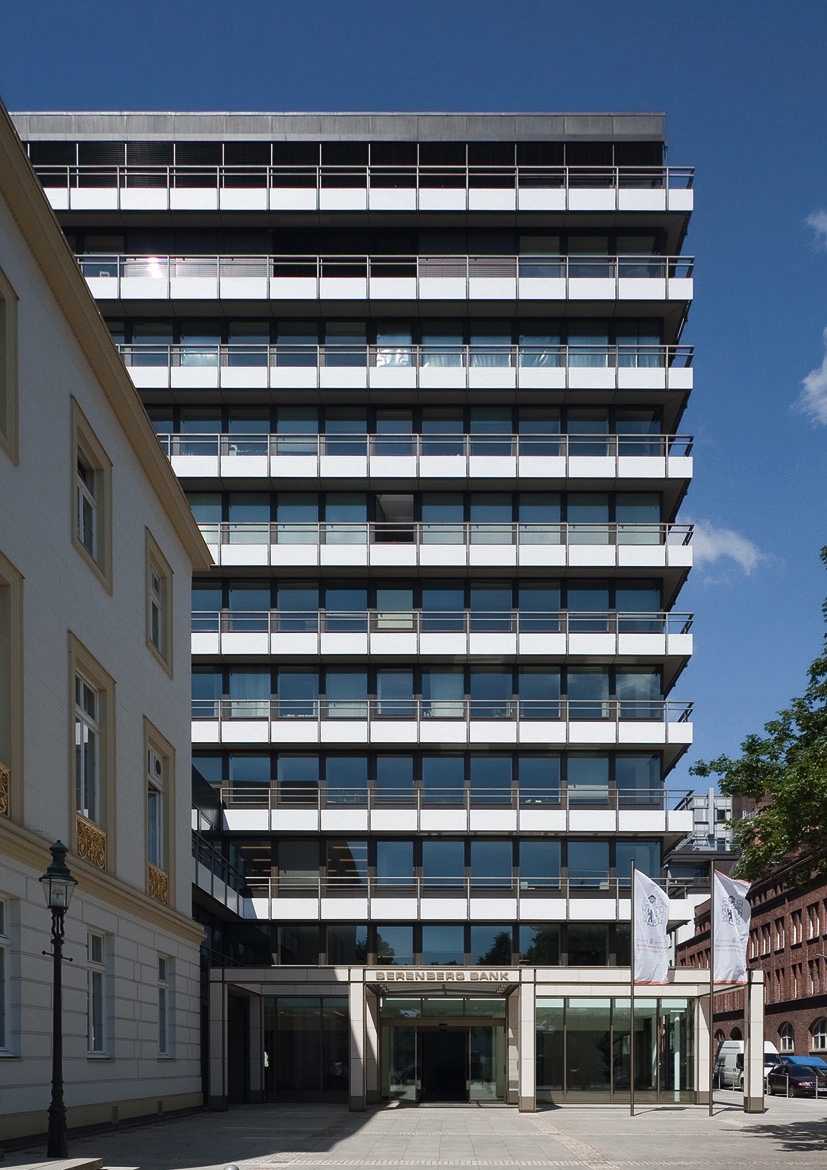
Joh. Berenberg, Gossler & Co. KG, commonly known as Berenberg Bank and also branded as simply Berenberg, is a German multinational full-service private and merchant bank headquartered in Hamburg, Germany. It is considered the world's oldest merchant bank.
It was founded around 1590 by Hans and Paul Berenberg, Protestant Flemish refugees from Antwerp in the Spanish Netherlands (now Belgium). Their descendants, the Berenberg and Gossler families, belonged to the ruling elite of Hanseatic merchants of the city-republic of Hamburg and several family members served in the city-state's government from 1735. Like many other merchant bankers, the Berenbergs were originally cloth merchants. The company involved itself in shipping, whaling and ship insurance from the late 19th century, and in extensive trade with colonial goods imported from the Americas and Asia. By the early 19th century the company was one of Northern Europe's leading sugar merchants. During the 18th and 19th centuries the company focused increasingly on financial services. The company's name refers to Johann Berenberg, his son-in-law Johann Hinrich Gossler and the latter's son-in-law L.E. Seyler, and has remained unchanged since 1791. The bank has operated continuously since 1590 and is still part-owned by members of the Berenberg-Gossler family. As of 2023, the family's share was about 30%.
Berenberg Bank is active in investment banking, particularly pan-European equity research, brokerage and equity capital markets transactions, in addition to private banking for wealthy customers, asset management and corporate banking. Since the 1876, the company has increasingly focused on investment banking. Berenberg Bank has around 1,670 employees; in addition to its headquarters in Hamburg, it has significant presences in London, Frankfurt and New York City, and 16 further offices in Europe and the Americas. After years of expanding its activities in London, which is now home to its second largest office with a staff of around 500 and seat of most of its investment banking activities, Berenberg Bank has recently focused on expanding in the United States and Asia.
The bank is organized as a limited partnership with personally liable partners, and is noted for its conservative business strategy. After the 2008 financial crisis, the bank has expanded rapidly. The former senior partner and head of the bank Hans-Walter Peters was also president of the Association of German Banks from 2016 to 2021, having succeeded Deutsche Bank CEO Jürgen Fitschen. In 2018 Berenberg Bank, in line with its increasing focus on investment banking, sold its Swiss private banking subsidiary Berenberg Bank (Schweiz) AG to a group of investors; the Swiss company became known as Bergos. From 2021 to 2026, the bank was run by the managing partners Hendrik Riehmer, David Mortlock, and Christian Kühn. In June 2026, the BaFin ordered their removal after indications of possible corporate‑governance violations emerged during the audit of the 2025 financial statements. BaFin suspended their powers on 19 June 2026 and appointed two special commissioners, Hans‑Walter Peters and Michael Horf, to assume management responsibilities.
The Berenberg Company was founded in Hamburg in 1590 by the brothers Hans (1561–1626) and Paul Berenberg (1566–1645). In 1585, the Protestant Berenbergs left Antwerp in the Duchy of Brabant (today's Belgium), at the time one of Europe's commercial centres, as Protestants in the southern Low Countries were given the choice either to convert to Catholicism or leave the country. The bank has been continuously owned by their descendants ever since.
The Berenbergs were originally cloth merchants and quickly extended their business to other commodities. Hans Berenberg's grandson Cornelius Berenberg (1634–1711) was the first to engage in merchant banking and developed the company into a very successful merchant house and merchant bank. He forged trade links with France, Spain, Portugal, Italy, Scandinavia and Russia. Family connections of the Berenbergs were instrumental to the development, especially in Livorno and Lisbon with their colonies of wealthy Dutch merchants. Members of the Berenberg family were also merchants in London from the 17th century.
Cornelius Berenberg's son, Rudolf Berenberg (1680–1746), was elected a senator, that is, a member of the government of the city-state, in 1735. By the mid 18th century, investment banking and acceptance credits comprised a significant part of the firm's activities. Rudolf Berenberg was married to Anna Elisabeth Amsinck (1690–1748), a daughter of the Lisbon and Hamburg merchant Paul Amsinck (1649–1706) and a descendant of the Welser family. Their sons, Senator Paul Berenberg (1716–1768) and Johann Berenberg (1718–1772), became owners of the Berenberg company.
In 1768 Senator Paul Berenberg died childless, while his brother Johann Berenberg lost his only son in the same year. To ensure the continuation of the firm, Johann Berenberg took on his son-in-law Johann Hinrich Gossler (1738–90) as a new partner in 1769; he had married Berenberg's only daughter Elisabeth Berenberg (1749–1822) the previous year. The Gossler family is known since the 17th century, when Johann Hinrich Gossler's great-grandfather was a Hamburg burgher. Elisabeth Berenberg was the last member of the Hamburg Berenberg family, which became extinct in the male line upon her death in 1822. Johann Hinrich Gossler and Elisabeth Berenberg were the founders of the Berenberg-Gossler family, which rose to great prominence in Hamburg from the late 18th century. In the 19th-century city republic of Hamburg the (Berenberg-)Gossler family and the closely related Amsinck family were widely regarded as the city state's two most prominent families.
Hub AI
Berenberg Bank AI simulator
(@Berenberg Bank_simulator)
Berenberg Bank
Joh. Berenberg, Gossler & Co. KG, commonly known as Berenberg Bank and also branded as simply Berenberg, is a German multinational full-service private and merchant bank headquartered in Hamburg, Germany. It is considered the world's oldest merchant bank.
It was founded around 1590 by Hans and Paul Berenberg, Protestant Flemish refugees from Antwerp in the Spanish Netherlands (now Belgium). Their descendants, the Berenberg and Gossler families, belonged to the ruling elite of Hanseatic merchants of the city-republic of Hamburg and several family members served in the city-state's government from 1735. Like many other merchant bankers, the Berenbergs were originally cloth merchants. The company involved itself in shipping, whaling and ship insurance from the late 19th century, and in extensive trade with colonial goods imported from the Americas and Asia. By the early 19th century the company was one of Northern Europe's leading sugar merchants. During the 18th and 19th centuries the company focused increasingly on financial services. The company's name refers to Johann Berenberg, his son-in-law Johann Hinrich Gossler and the latter's son-in-law L.E. Seyler, and has remained unchanged since 1791. The bank has operated continuously since 1590 and is still part-owned by members of the Berenberg-Gossler family. As of 2023, the family's share was about 30%.
Berenberg Bank is active in investment banking, particularly pan-European equity research, brokerage and equity capital markets transactions, in addition to private banking for wealthy customers, asset management and corporate banking. Since the 1876, the company has increasingly focused on investment banking. Berenberg Bank has around 1,670 employees; in addition to its headquarters in Hamburg, it has significant presences in London, Frankfurt and New York City, and 16 further offices in Europe and the Americas. After years of expanding its activities in London, which is now home to its second largest office with a staff of around 500 and seat of most of its investment banking activities, Berenberg Bank has recently focused on expanding in the United States and Asia.
The bank is organized as a limited partnership with personally liable partners, and is noted for its conservative business strategy. After the 2008 financial crisis, the bank has expanded rapidly. The former senior partner and head of the bank Hans-Walter Peters was also president of the Association of German Banks from 2016 to 2021, having succeeded Deutsche Bank CEO Jürgen Fitschen. In 2018 Berenberg Bank, in line with its increasing focus on investment banking, sold its Swiss private banking subsidiary Berenberg Bank (Schweiz) AG to a group of investors; the Swiss company became known as Bergos. From 2021 to 2026, the bank was run by the managing partners Hendrik Riehmer, David Mortlock, and Christian Kühn. In June 2026, the BaFin ordered their removal after indications of possible corporate‑governance violations emerged during the audit of the 2025 financial statements. BaFin suspended their powers on 19 June 2026 and appointed two special commissioners, Hans‑Walter Peters and Michael Horf, to assume management responsibilities.
The Berenberg Company was founded in Hamburg in 1590 by the brothers Hans (1561–1626) and Paul Berenberg (1566–1645). In 1585, the Protestant Berenbergs left Antwerp in the Duchy of Brabant (today's Belgium), at the time one of Europe's commercial centres, as Protestants in the southern Low Countries were given the choice either to convert to Catholicism or leave the country. The bank has been continuously owned by their descendants ever since.
The Berenbergs were originally cloth merchants and quickly extended their business to other commodities. Hans Berenberg's grandson Cornelius Berenberg (1634–1711) was the first to engage in merchant banking and developed the company into a very successful merchant house and merchant bank. He forged trade links with France, Spain, Portugal, Italy, Scandinavia and Russia. Family connections of the Berenbergs were instrumental to the development, especially in Livorno and Lisbon with their colonies of wealthy Dutch merchants. Members of the Berenberg family were also merchants in London from the 17th century.
Cornelius Berenberg's son, Rudolf Berenberg (1680–1746), was elected a senator, that is, a member of the government of the city-state, in 1735. By the mid 18th century, investment banking and acceptance credits comprised a significant part of the firm's activities. Rudolf Berenberg was married to Anna Elisabeth Amsinck (1690–1748), a daughter of the Lisbon and Hamburg merchant Paul Amsinck (1649–1706) and a descendant of the Welser family. Their sons, Senator Paul Berenberg (1716–1768) and Johann Berenberg (1718–1772), became owners of the Berenberg company.
In 1768 Senator Paul Berenberg died childless, while his brother Johann Berenberg lost his only son in the same year. To ensure the continuation of the firm, Johann Berenberg took on his son-in-law Johann Hinrich Gossler (1738–90) as a new partner in 1769; he had married Berenberg's only daughter Elisabeth Berenberg (1749–1822) the previous year. The Gossler family is known since the 17th century, when Johann Hinrich Gossler's great-grandfather was a Hamburg burgher. Elisabeth Berenberg was the last member of the Hamburg Berenberg family, which became extinct in the male line upon her death in 1822. Johann Hinrich Gossler and Elisabeth Berenberg were the founders of the Berenberg-Gossler family, which rose to great prominence in Hamburg from the late 18th century. In the 19th-century city republic of Hamburg the (Berenberg-)Gossler family and the closely related Amsinck family were widely regarded as the city state's two most prominent families.
Recent media