
Recent from talks
Berenice Abbott
Knowledge base stats:
Talk channels stats:
Members stats:
Berenice Abbott
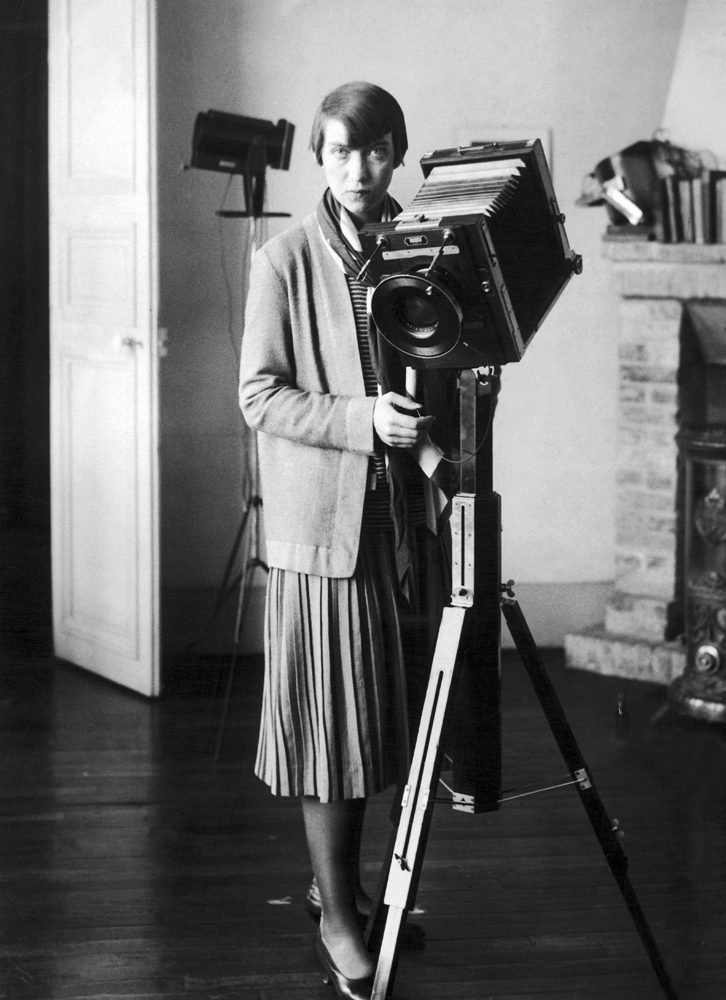
Berenice Alice Abbott (July 17, 1898 – December 9, 1991) was an American photographer best known for her portraits of cultural figures of the interwar period, New York City photographs of architecture and urban design of the 1930s, and science interpretation of the 1940s to the 1960s.
Super Sight, also known as the Abbott Process, is a form of macro photography developed in the early 1940s by Berenice Abbott.
Abbott was born in Springfield, Ohio, on July 17, 1898, and was raised in Ohio by her divorced mother, née Lillian Alice Bunn (m. Charles E. Abbott in Chillicothe, Ohio, 1886).
She attended The Ohio State University for two semesters, but left in early 1918 when her professor was dismissed because he was a German teaching an English class. She moved to New York City, where she studied sculpture and painting. In 1921 she traveled to Paris and studied sculpture with Emile Bourdelle. While in Paris, she became an assistant to Man Ray, who wanted someone with no previous knowledge of photography. Abbott took revealing portraits of Ray's fellow artists.
Her university studies included theater and sculpture. She spent two years studying sculpture in Paris and Berlin. She studied at the Académie de la Grande Chaumière in Paris and the Prussian Academy of Arts in Berlin. During this time, she adopted the French spelling of her first name, "Berenice," at the suggestion of Djuna Barnes. In addition to her work in the visual arts, Abbott published poetry in the experimental literary journal transition. Abbott first became involved with photography in 1923, when Man Ray hired her as a darkroom assistant at his portrait studio in Montparnasse. Later, she wrote: "I took to photography like a duck to water. I never wanted to do anything else." Ray was impressed by her darkroom work and allowed her to use his studio to take her own photographs. In 1921 her first major works was in an exhibition in the Parisian gallery Le Sacre du Printemps. After a short time studying photography in Berlin, she returned to Paris in 1927 and started a second studio, on the rue Servandoni. Berenice Abbott's trip to Europe, particularly Paris, was a pivotal moment in her artistic development, leading to her career as a renowned photographer. She spent two years studying sculpture in Paris and Berlin, and during her time in Paris, she began assisting Man Ray, which sparked her interest in photography. While in Paris, she also published poetry in the experimental literary journal, transition.
Abbott's subjects were people in the artistic and literary worlds, including French nationals (Jean Cocteau), expatriates (James Joyce), and others just passing through the city. According to Sylvia Beach, "To be 'done' by Man Ray or Berenice Abbott meant you rated as somebody". Abbott's work was exhibited with that of Man Ray, André Kertész, and others in Paris, in the "Salon de l'Escalier" (more formally, the Premier Salon Indépendant de la Photographie), and on the staircase of the Théâtre des Champs-Élysées. Her portraiture was unusual within exhibitions of modernist photography held in 1928–1929 in Brussels and Germany.
In 1925, Man Ray introduced her to Eugène Atget's photographs. She became interested in Atget's work, and managed to persuade him to sit for a portrait in 1927. He died shortly thereafter. She acquired the prints and negatives remaining in Eugène Atget's studio at his death in 1927. While the government acquired much of Atget's archive – Atget had sold 2,621 negatives in 1920, and his friend and executor André Calmettes sold 2,000 more immediately after his death — Abbott was able to buy the remainder in June 1928, and quickly started work on its promotion. An early tangible result was the 1930 book Atget, photographe de Paris, in which she is described as photo editor. Due to a lack of funding, Abbott sold a one-half interest in the collection to Julien Levy for $1,000. Abbott's work on Atget's behalf would continue until her sale of the archive to the Museum of Modern Art in 1968. In addition to her book The World of Atget (1964), she provided the photographs for A Vision of Paris (1963), published a portfolio, Twenty Photographs, and wrote essays. Her sustained efforts helped Atget gain international recognition.
Before his work was discovered by a group of young foreign artists connected to Surrealism, specifically American photographers Man Ray and Berenice Abbott, Atget was not well known outside of Paris. Abbott met the photographer shortly before Atget died in 1927 and bought the remainder of his estate, which contained thousands of prints and over a thousand negatives. Abbott supported Atget's ideas of Paris as "realism unadorned" and chronicled the architectural environment of New York City. She preserved the creative heritage of the humble "author-producer," who never called himself a photographer, by promoting Atget's images to audiences around the world for decades through books and exhibitions. Her significant contribution to upholding Eugène Atget's legacy is sometimes overlooked. She helped ensure his posthumous position as a pioneer in documentary photography by actively promoting his archive through books and exhibitions in addition to buying it.
Hub AI
Berenice Abbott AI simulator
(@Berenice Abbott_simulator)
Berenice Abbott
Berenice Alice Abbott (July 17, 1898 – December 9, 1991) was an American photographer best known for her portraits of cultural figures of the interwar period, New York City photographs of architecture and urban design of the 1930s, and science interpretation of the 1940s to the 1960s.
Super Sight, also known as the Abbott Process, is a form of macro photography developed in the early 1940s by Berenice Abbott.
Abbott was born in Springfield, Ohio, on July 17, 1898, and was raised in Ohio by her divorced mother, née Lillian Alice Bunn (m. Charles E. Abbott in Chillicothe, Ohio, 1886).
She attended The Ohio State University for two semesters, but left in early 1918 when her professor was dismissed because he was a German teaching an English class. She moved to New York City, where she studied sculpture and painting. In 1921 she traveled to Paris and studied sculpture with Emile Bourdelle. While in Paris, she became an assistant to Man Ray, who wanted someone with no previous knowledge of photography. Abbott took revealing portraits of Ray's fellow artists.
Her university studies included theater and sculpture. She spent two years studying sculpture in Paris and Berlin. She studied at the Académie de la Grande Chaumière in Paris and the Prussian Academy of Arts in Berlin. During this time, she adopted the French spelling of her first name, "Berenice," at the suggestion of Djuna Barnes. In addition to her work in the visual arts, Abbott published poetry in the experimental literary journal transition. Abbott first became involved with photography in 1923, when Man Ray hired her as a darkroom assistant at his portrait studio in Montparnasse. Later, she wrote: "I took to photography like a duck to water. I never wanted to do anything else." Ray was impressed by her darkroom work and allowed her to use his studio to take her own photographs. In 1921 her first major works was in an exhibition in the Parisian gallery Le Sacre du Printemps. After a short time studying photography in Berlin, she returned to Paris in 1927 and started a second studio, on the rue Servandoni. Berenice Abbott's trip to Europe, particularly Paris, was a pivotal moment in her artistic development, leading to her career as a renowned photographer. She spent two years studying sculpture in Paris and Berlin, and during her time in Paris, she began assisting Man Ray, which sparked her interest in photography. While in Paris, she also published poetry in the experimental literary journal, transition.
Abbott's subjects were people in the artistic and literary worlds, including French nationals (Jean Cocteau), expatriates (James Joyce), and others just passing through the city. According to Sylvia Beach, "To be 'done' by Man Ray or Berenice Abbott meant you rated as somebody". Abbott's work was exhibited with that of Man Ray, André Kertész, and others in Paris, in the "Salon de l'Escalier" (more formally, the Premier Salon Indépendant de la Photographie), and on the staircase of the Théâtre des Champs-Élysées. Her portraiture was unusual within exhibitions of modernist photography held in 1928–1929 in Brussels and Germany.
In 1925, Man Ray introduced her to Eugène Atget's photographs. She became interested in Atget's work, and managed to persuade him to sit for a portrait in 1927. He died shortly thereafter. She acquired the prints and negatives remaining in Eugène Atget's studio at his death in 1927. While the government acquired much of Atget's archive – Atget had sold 2,621 negatives in 1920, and his friend and executor André Calmettes sold 2,000 more immediately after his death — Abbott was able to buy the remainder in June 1928, and quickly started work on its promotion. An early tangible result was the 1930 book Atget, photographe de Paris, in which she is described as photo editor. Due to a lack of funding, Abbott sold a one-half interest in the collection to Julien Levy for $1,000. Abbott's work on Atget's behalf would continue until her sale of the archive to the Museum of Modern Art in 1968. In addition to her book The World of Atget (1964), she provided the photographs for A Vision of Paris (1963), published a portfolio, Twenty Photographs, and wrote essays. Her sustained efforts helped Atget gain international recognition.
Before his work was discovered by a group of young foreign artists connected to Surrealism, specifically American photographers Man Ray and Berenice Abbott, Atget was not well known outside of Paris. Abbott met the photographer shortly before Atget died in 1927 and bought the remainder of his estate, which contained thousands of prints and over a thousand negatives. Abbott supported Atget's ideas of Paris as "realism unadorned" and chronicled the architectural environment of New York City. She preserved the creative heritage of the humble "author-producer," who never called himself a photographer, by promoting Atget's images to audiences around the world for decades through books and exhibitions. Her significant contribution to upholding Eugène Atget's legacy is sometimes overlooked. She helped ensure his posthumous position as a pioneer in documentary photography by actively promoting his archive through books and exhibitions in addition to buying it.
Recent media